Nahar Khan
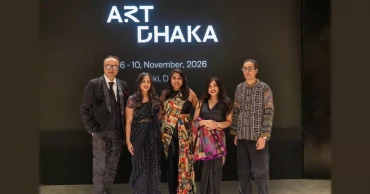
First edition of Art Dhaka to take place on November 6–10
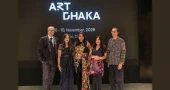
An exciting chapter in Bangladesh’s cultural landscape has begun with the official launch of Art Dhaka, a new art fair scheduled to be held in Dhaka from November 6–10 this year.
The launch event held at Aloki on Sunday brought together diplomats, corporate leaders and members of the country’s arts and culture community, formally introducing the initiative to the public.The initiative is led by a group of individuals and institutions deeply committed to promoting the country’s arts and culture.
The founding members include Durjoy Rahman, Aumia Khundkar, Amreen Bashir Ali, Fahd Sattar, and Nahar Khan. Together, they bring a powerful convergence of cultural leadership, media, philanthropy, and institutional experience.
Art Dhaka has been conceived as a hybrid art fair designed to bring together artists, galleries, collectors, and institutions within a single curated environment. The fair will feature gallery presentations, curated exhibitions, public programming, and dedicated spaces for emerging artists and new collectors.
The fair will be designed to create multiple points of engagement. Talks, panels, and interactive experiences will offer audiences insight into artistic practice, collecting, and the evolving role of art in society.
A central focus of Art Dhaka is to bridge the generational gap among patrons and cultivate new audiences, said a press release on Thursday.
Through accessible entry points, educational programming, and direct engagement with artists and curators, the platform aims to demystify the art world and build familiarity with artistic practice.
By creating pathways for students, young professionals, and first-time buyers to engage with art in a meaningful way, Art Dhaka seeks to establish an informed next generation of collectors who can support and strengthen the cultural ecosystem over time.
With the tagline, “Art for All,” this platform aims to be a place where artists, collectors, and institutions can meet, where new audiences can engage with confidence, and where the cultural energy of Bangladesh can be experienced at scale.
The first edition of Art Dhaka aims to facilitate a space where artistic practice, audiences, and patronage come together with clarity and purpose.
About the founders:
Durjoy Rahman is the Founder of the Durjoy Bangladesh Foundation (DBF) and one of Asia’s foremost art collectors and cultural philanthropists. For over three decades, he has been deeply involved in building a distinguished collection that spans international masters alongside emerging and established South Asian artists. Through DBF, Durjoy actively supports creative practice by initiating exhibitions, artist residencies, publications, and cross-cultural collaborations worldwide. The name “Durjoy Bangladesh” translates to “Invincible Bangladesh,” reflecting a spirit of resilience and cultural strength that aligns with the foundation’s mission.
DBF has long-term partnerships with leading international institutions including the Victoria and Albert Museum (V&A) and the Los Angeles County Museum of Art (LACMA), among others, playing a vital role in placing Bangladeshi and South Asian art within major global discourses.
Nahar Khan works across media, culture, and global engagement, shaping narratives that move across borders. She is the Executive Editor of the United News of Bangladesh (UNB), one of the country’s leading and most trusted independent news agencies. She oversees editorial integrity, newsroom innovation, and the agency’s ongoing transformation within an evolving information ecosystem.
She is the founder of Solis, a multi-pillar platform working across strategic insights and intelligence, convening and culture. Her practice is shaped through directing exhibitions, artist residencies, high-level symposia, and international exchange programs that place Bangladeshi art in dialogue with global platforms.
Her broader work includes her role on the board of Cosmos Foundation, supporting conservation, cultural and heritage initiatives. Through exhibitions and cross-border collaborations, she has worked to position Bangladesh’s narratives within wider global conversations. Her most recognised project, The Black Story, brought together artists and scholars across continents to explore shared histories through an Afro–South Asian lens.
Amreen Bashir Ali is a strategist and academic working at the intersection of art, education, and global development. She leads initiatives at the Mubarak Ali Foundation focused on cultural diplomacy and education, including partnerships with institutions such as Harvard Business School, Frieze Art Fair and South by Southwest (SXSW) London. She holds degrees from McGill, Harvard, and Oxford University, and is currently pursuing a PhD in Education at Trinity College Dublin.
T. Aumia Khundkar is the Deputy Managing Director of ICE Media, Bengal Group Limited and leads the operations and editorial direction of the company’s two publications, ICE Today and ICE Business Times. Beyond publishing, Khundkar has extensive experience in managing public relations and communications, and organising events such as Bengal Classical Music Festival and Dhaka Makers. With a deep-rooted affinity for art, culture, and music, her work is driven by a continued commitment to nurturing and elevating Bangladesh’s evolving creative landscape.
Fahd Sattar is the Founder and CEO of Aloki, a multidisciplinary cultural space in Dhaka working across the intersections of art, music, design, performance, and public programming. He is also the co-founder of Dhaka Makers, a platform dedicated to supporting independent artisans, designers, artists, and creative entrepreneurship within Bangladesh’s evolving cultural landscape.
His work focuses on building accessible and community-driven cultural infrastructure through exhibitions, festivals, markets, performances, and cross-disciplinary collaborations. Through both Aloki and Dhaka Makers, Sattar has worked to create spaces that bring together artists, craftspeople, musicians, curators, and audiences in ways that encourage dialogue, experimentation, and new forms of cultural exchange.
With a background rooted in creative direction, event-making, and independent cultural production, his practice explores how alternative platforms can contribute to the growth of contemporary culture and creative economies in Bangladesh.
5 months ago
France, Bangladesh share common vision for peace, multilateralism: French Ambassador
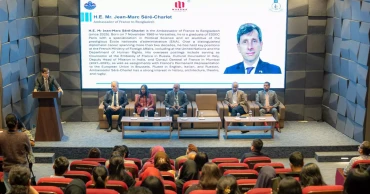
France and Bangladesh share a common commitment to peace, multilateralism and the rules-based international order, French Ambassador to Bangladesh Jean-Marc Séré-Charlet said on Monday, stressing the need for closer cooperation amid growing global instability and unilateralism.
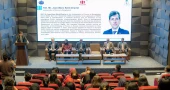
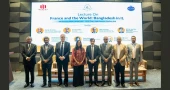
He made the remarks while delivering the keynote speech at at a lectures series titled “France and the World: Bangladesh in it” jointly organised by the Center for the Bay of Bengal Studies and Marana Foundation in partnership with the Department of Global Studies and Governance of Independent University, Bangladesh.
Highlighting the long-standing historical ties between the two countries, the Ambassador said France has consistently supported Bangladesh on global platforms and considers the country a key partner in advancing peace and international cooperation.
“The world is changing very fast and not necessarily for the better. What was true a year ago may not be true today,” he said, describing what he termed the ‘brutalisation’ of the global order marked by unilateralism, disregard for international law and growing conflict.
The Ambassador praised Bangladesh’s significant contribution to UN peacekeeping operations, calling the country a vital actor in global peace and security.
He said both nations remain firm supporters of the United Nations, multilateralism and international law, which he described as ‘the only viable framework for global stability.’
Referring to France’s foreign policy priorities, Séré-Charlet said Paris declared a feminist diplomacy a decade ago and places strong emphasis on gender equality.
He commended the host university for maintaining near gender parity, calling it reflective of shared values.
The Ambassador also expressed concern over violations of international law, citing Russia’s actions in Ukraine as a serious challenge to the rules-based order.
He also warned about the growing use of hybrid warfare including cyberattacks and disinformation campaigns.
“Disinformation has become a weapon. Democracies must work together to counter fake news and manipulation especially during elections,” he said.
He said France is keen to deepen collaboration with Bangladesh in climate action, biodiversity conservation, maritime security and Indo-Pacific cooperation.
He also reaffirmed France’s support for the rights of Palestinians and a peaceful solution in the Middle East based on international law.
8 months ago
Bangladesh–France relations evolve amid shared innovation and global goals: Marana President
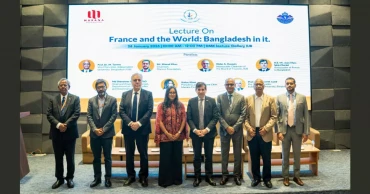
President and Executive Chair of the Marana Foundation Nahar Khan on Sunday said Bangladesh–France relations are evolving beyond traditional development cooperation, increasingly shaped by economic complementarities, shared innovation agendas and long-term strategic alignment.
She said while delivering the concluding remarks at a lectures series titled “France and the World: Bangladesh in it” jointly organised by the Center for the Bay of Bengal Studies and Marana Foundation in partnership with the Department of Global Studies and Governance of Independent University, Bangladesh.
Khan said the day-long discussion examined bilateral ties from diplomatic, strategic, environmental, economic and regional perspectives, reflecting the growing depth and maturity of the partnership.
“What emerges clearly is that this partnership is no longer defined solely by traditional development cooperation,” she said. “It is increasingly shaped by economic complementarities, shared innovation agendas and a long-term strategic alignment.”
Ambassador of France to Bangladesh Jean‑Marc Séré‑Charlet delivered the keynote speech at the event as the chief guest while chairman of the Marana Foundation Masud Khan delivered the opening speech.
Nahar noted that both countries contribute uniquely to shared global goals, citing France’s expertise in technology and sustainable development and Bangladesh’s strong economic growth, creative industries and demographic dynamism.
“We are uniquely positioned to complement and learn from one another,” Khan said, adding that sustainable partnerships are also forged through universities, research centres and dialogue platforms, where ideas are tested and future leaders are engaged.
Expressing hope for expanded cooperation, she said such exchanges could deepen collaboration in cultural diplomacy through arts and people-to-people connectivity, climate action, digital innovation, security cooperation, and ethical and inclusive frameworks for emerging technologies.
“At Marana Foundation, we believe that meaningful dialogue must go beyond statements and symbolism,” she said. “It must create space for honest discussion, mutual learning and long-term collaboration—and today’s seminar was intended to be a space just for that.”
Khan expressed gratitude to French Ambassador to Bangladesh Jean‑Marc Séré‑Charlet, saying his engagement reflected the depth and future potential of Bangladesh–France relations.
She also thanked the Centre for Bay of Bengal Studies and the Department of Global Studies and Governance at the International University of Bangladesh (IUB) for co-organising the seminar.
Acknowledging institutional leadership, Khan expressed appreciation to IUB Vice-Chancellor Professor M Tamim, Board of Trustees Chairman Didar A. Hossain, Pro-Vice-Chancellor Professor Daniel W. Lund, Rear Admiral Khurshid Ullam, Director of the Centre for Bay of Bengal Studies, and Ambassador Tariq Kareem, Advisor to the Centre, for advancing dialogue and research on regional, maritime and governance issues.
She also thanked all participants, noting that their contributions enriched the discussion and reinforced the importance of sustained Bangladesh–France engagement.
8 months ago
Nahar Khan Represents Cosmos Group at High-Level EAST × EAST Forum in Taipei
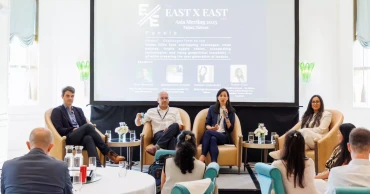
Nahar Khan, Global Vice President of Cosmos Group, attended and spoke at the EAST X EAST Asia Meeting 2025, an invitation-only gathering held on November 6–7 in Taipei, Taiwan. The forum brought together CEOs, founders, family offices, technologists, and policy thinkers for two days of high-level dialogue on leadership, technology, climate, culture, and global resilience.
Positioned by EAST X EAST as a private circle for leaders shaping the future, the meeting addressed the profound shifts driven by AI, sustainability pressures, geopolitical instability, and rapidly changing workforce dynamics.
10 months ago
AsiaNet Forum: UNB’s Nahar Khan Calls for Stronger AI Discoverability in News and PR
United News of Bangladesh (UNB) Executive Editor Nahar Khan explained the need for journalism to adapt to the shifting dynamics of AI-driven news consumption.
Speaking at the AsiaNet Forum 2025 panel session in Singapore, Nahar said that audiences are increasingly relying on AI-generated summaries instead of reading full articles.
1 year ago
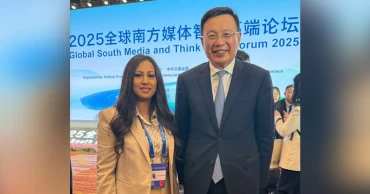
Inclusive AI can drive progress: Nahar Khan tells Global South Media Forum in Kunming
Highlighting the importance of investing in local-language AI (Artificial intelligence) models, UNB Executive Editor Nahar Khan on Sunday said AI can be a tool for progress, but only if people wield it with integrity, inclusivity and foresight.
"The future of news in the Global South will not be written by algorithms alone. It will be written by us, by our choices, by our courage, and by our commitment to truth," she said.
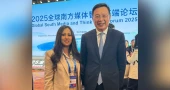
Nahar, also Executive Director of Cosmos Foundation, made the remarks while speaking at a forum titled "The Rise of the Global South: Economic Development and Cultural Confidence" held at the "Global South Media and Think Tank Forum-2025."
She said the Global South has long been spoken about, too rarely spoken for. "AI offers us a chance to change that - but only if we act collectively."
"Let us ensure that our audiences, our languages, and our stories are not left behind in this transformation," Nahar said.
The five-day forum, which opened Saturday, is co-hosted by Xinhua News Agency, the Communist Party of China Yunnan Provincial Committee and the People's Government of Yunnan Province.
Freddy Alfred Niáñez Contreras, Vice President of the Council of Ministers and Minister of Information of Venezuela (video message); Liu Gang, Director-general of Xinhua Institute; Kubatbek Rakhimov, CEO of the Public Foundation Applikata Center for Strategic Solutions of Kyrgyzstan; Wen Jian, Director of the Communication Strategy Center, Xinhua Institute; Erika Hoffmann Jauge, President of the National Public Media of Uruguay; Shakil Ahmed, Chief Executive Officer, Asian Institute of Eco-Civilization Research and Development of Pakistan; Sun Ming, Vice President of the Academy of Contemporary China and World Studies; Li Yuefen, South Centre G20 Sherpa and Senior Advisor on South-South Cooperation and Development Finance; Merthold Macfalle Monyae, Director of the Centre for Africa-China Studies of University of Johannesburg; Hamed Vafaei, Director of the Asian Studies Research Center at the University of Tehran; Selçuk Colakoglu, Founding Director of the Turkish Center for Asia-Pacific Studies; Timofey V. Expert at the Global Fact-Checking Network of Russia; Hou Sheng, Vice President of the Yunnan Academy of Social Sciences, and Moderator: Liu Hua, Director of Communications and Public Affairs, Xinhua Institute, also spoke at the discussion.
Challenge of Voice and Trust
In a rapidly changing information ecosystem, Nahar said, the true test lies in how their voices and perspectives are acknowledged, accurately represented, and valued on the global stage.
At the heart of this is trust, she said, news is only as strong as the credibility it carries, and in the age of AI, that trust is under both great pressure and great possibility.
More and more audiences across the Global South are consuming news in new ways - through platforms, short videos, and increasingly AI-driven feeds and interfaces, Nahar observed.
1 year ago
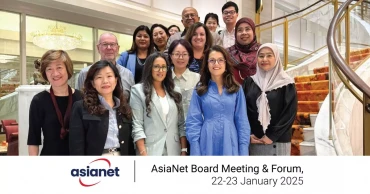
AsiaNet Board Meeting & Forum urges embracing innovation
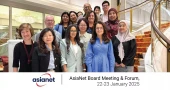
The AsiaNet Board Meeting & Forum was held in Singapore on January 22-23, emphasising the need for digital transformation, industry learning and embracing technological advancements.
The high-profile Forum brought together prominent media leaders to discuss innovation, collaboration, and the future of media and PR in the region, with representatives from AsiaNet partners Xinhua, VNA, Yonhap, Dataxet, Bernama, Kyodo, Medianet, UNB and PTI in attendance.
Among the key participants were Enayetullah Khan, Editor-in-Chief of United News of Bangladesh (UNB), and Nahar Khan, Executive Editor of UNB, who actively contributed to the discussions during the event.
Two-day fact-checking training begins at UNB
AsiaNet's forum focused on operational and strategic growth while delving deeper into the theme of "Embracing Innovation."
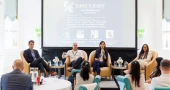
A key highlight was a panel session moderated by Amrita Sidhu from Medianet. The panellists included Nahar Khan (Executive Editor, UNB), Pannee Yongpiyakul (Managing Director, Dataxet), Anubha Verma (CMO, PTI), and Michiko Fujimoto (Director, Kyodo JBN).
Nahar Khan emphasised how UNB leverages technology to optimize news distribution, enhance audience engagement, and improve efficiency while adhering to its core values of trust and information integrity.
UNB Editor-in-Chief Enayetullah Khan invited to World Media Summit
Darren Thayre, Director of Innovation and AI Partnership Lead, Global Strategic Initiatives at Google, delivered an engaging keynote on leveraging AI for strategic initiatives, further inspiring attendees to embrace forward-thinking solutions in the media and PR industry.
1 year ago
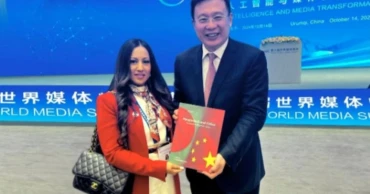
6th World Media Summit: Industry leaders discuss AI’s potential, ethical implications for journalism’s future
The 6th World Media Summit, which concluded on October 17 in Urumqi, China, brought together global media leaders to discuss the transformative impact of artificial intelligence (AI) on journalism. The application of generative AI and large language models (LLMs) was a central theme, with leaders debating both the opportunities and challenges AI presents to the industry.
A major highlight of the summit was the release of a report titled “Responsibilities and Missions of News Media in the Age of Artificial Intelligence” by Xinhua News Agency's National High-end Think Tank Research Group. The report surveyed media organizations across 53 countries and revealed that 10.2% of media outlets have fully integrated AI into their production processes, while 41% are actively exploring its application.
6th World Media Summit kicks off in China with focus on AI-driven media transformation
The report identified three main areas where generative AI is being used or considered by media outlets: auxiliary editing (fact-checking, transcription, translation), content creation (generating summaries, charts, and digital anchors), and topic planning (drafting outlines for news coverage). These tools aim to improve newsroom efficiency without replacing the human creativity essential to in-depth journalism.
Speaking at the summit, Yan Lingsi, Vice President of Reuters Asia Pacific, noted the excitement surrounding AI's ability to reduce repetitive tasks in newsrooms and enhance journalists' capabilities through new AI-driven tools. This shift, Lingsi added, has the potential to redefine the future of journalism.
UNB Editor-in-Chief Enayetullah Khan invited to World Media Summit
Yet, as AI-generated content becomes more prevalent, concerns about job security in the industry have surfaced. Iqbal Sefer, Chairman of South Africa's Independent Media Group, addressed these concerns, likening AI's role in media to that of an architect. AI can build the framework, but the rich details, depth, and human touch that define compelling journalism still require human intervention, he said. Similarly, Suresh Nambas, Editor-in-Chief of The Hindu, emphasized that while AI can enhance creativity by providing new tools, it cannot replace the critical thinking and emotional intelligence that journalists bring to their work.
Beyond newsroom efficiency, the summit also tackled the ethical concerns surrounding AI, particularly the rise of misinformation and disinformation. Chang Qide, Resident Coordinator of the United Nations Development System in China, addressed the importance of combating the spread of false information, particularly as AI advances. “This summit has created an opportunity for global media to enhance the credibility of information in dealing with false information, misinformation, and hate speech,” Chang said in a video message.
To mitigate the risks associated with AI in media, organizations such as Xinhua News Agency, Reuters, BBC, and NPR have introduced AI behavioral guidelines aimed at preserving authenticity. In 2023, AFP joined forces with major European media organizations to call for clearer identification of AI-generated content, ensuring transparency and helping audiences distinguish between human-generated and AI-generated information.
Actively participating in the summit, Nahar Khan, Executive Editor of United News of Bangladesh (UNB), offered her perspective on how AI is reshaping digital newsrooms. UNB, South Asia’s first fully digitalized private wire service, has already integrated AI to boost the speed and accuracy of its news production.
“We’re moving into a future where AI and human intelligence can work together to build a more inclusive, efficient, and responsive media industry,” Khan said, emphasizing the collaborative potential of AI.
She also highlighted the value of the summit as a platform for exchanging ideas and tackling shared challenges. “Events like the World Media Summit allow us to collaborate globally, sharing best practices and ensuring AI is used responsibly in journalism.”
Khan underscored the need for a human-centered approach to AI, stressing the importance of ethics and innovation. “As we embrace AI in media, it’s crucial that this transformation remains ethical and human-focused, aiming to enrich the global media landscape. By harnessing AI, we can create a world that is more informed, connected, and empowered.”
1 year ago

Afro-South Asia in the Global African Diaspora
In a fascinating international webinar titled ‘Afro-South Asia in the Global African Diaspora’ which took place as part of a series of intellectual interventions for The Black Story project, a virtual interactive exhibition - Nahar Khan, curator of The Black Story and Executive Director of Gallery Cosmos and Cosmos Foundation, and Dr Kenneth X Robbins, who is a well-known and prolific researcher, archivist and curator of historical pieces and artworks, delve into conversations recently, on the historical and unexplored ties between the African and South Asian communities.
Alongside being a collector and an independent scholar, Dr Robbins has curated more than a dozen Indian exhibits and five scholarly conferences. In addition to publishing more than 120 articles, he co-edited a three-volume series on Afro-South Asia in the Global African Diaspora; addressing ‘African Rulers and Generals in India’, ‘African Diasporan Communities Across South Asia’ and ‘Black Ambassadors of Politics, Religion and Jazz in India’.
5 years ago

‘The Black Story’ exhibition by Gallery Cosmos launched virtually
Echoing solidarity with the global Black Lives Matter movement against racial injustices, much-anticipated art exhibition “The Black Story,” was launched virtually by Gallery Cosmos on Thursday.
Curated by Nahar Khan, Executive Director of Gallery Cosmos, the special exhibition is shedding the spotlight on the recent wave of protests against racial injustices perpetrated against the Black community in America, which inspired people of all colours across continents to proclaim “Black Lives Matter”, in solidarity with the movement.
5 years ago