Young generation
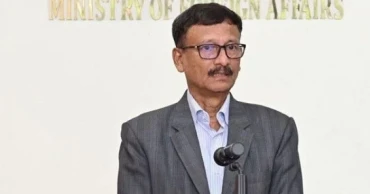
Young generation must be groomed to make basic changes in politics: foreign adviser
Foreign Affairs Adviser Md Touhid Hossain on Friday laid emphasis on building the country and institutions with an improved education system and improving the prospects of the young generation, stressing that the political culture has to change.
He said it is natural that the political parties would like to go to the power but there should be efforts towards building the country and its institutions.
"Politics is still in the hands of our generation of politicians," Hossain said, adding that the young generation will gain experience in the next 10 to 15 years and will be able to make basic changes.
"I am absolutely confident that the young generation will make basic changes in the system," he said while speaking at the inaugural session of the two-day "Bengal Delta Conference 2025" organised by Dacca Institute of Research and Analytics (daira).
"They (youths) may make mistakes along the way, but with time and experience, they will build a stronger and fairer political culture," Hossain said.
Highlighting the importance of gaining knowledge and skills, Hossain said, "We need to learn. If you have proper knowledge, skills and training, sky is the limit (in terms of opportunities) - across the world and within the country."
He said the most important thing for a country like Bangladesh with huge population but limited resources is education.
The adviser said a very small portion of the population receives quality education while the education system in rural areas is in a terrible shape.
"This is one area we need to do a lot. We must do something for the higher education, too," he said as he emphasised the need to redefine political culture.
Adviser Hossain also reflected on the July-August movement and remembered those sacrificed their lives for a change.
Young generation wants to establish a merit-based and professional bureaucracy: Adviser Nahid
Dr. Mushtaq H. Khan, Professor of Economics, SOAS University of London delivered welcome remarks at the session.
Prof. Dr. Maszlee Bin Malik, Chairman, International Institute of Advanced Islamic Studies (IAIS), Prof. Niaz Ahmed Khan, Advisory Board Member, Bengal Delta Conference 2025; Vice Chancellor,University of Dhaka, Dr. Dipak Gyawali, former Minister of Water Resources, Nepal and Mahfuz Anam, Editor and publisher, The Daily Star among others spoke.
The adviser highlighted the significance of the July Uprising in Bangladesh's political history, saying that the youth of Bangladesh will not allow the country to return to the political reality of pre-2024.
He also addressed issues such as the Ukraine war, the genocide in Gaza, the Israel-US-Iran relations, and the global context of US tariffs.
Professor Dr. Maszlee bin Malik, former education minister of Malaysia, said Bangladesh could become a beacon of hope for the Global South.
He praised Chief Adviser Prof Muhammad Yunus for his leadership.
He emphasised the need for Bangladesh to shift from a labor-based economy to a knowledge-based economy and discussed the potential for Bangladesh’s ocean-centered economy.
He also highlighted the positive prospects for Bangladesh's future relationship with the ASEAN regional cooperation organization, saying, “Bangladesh will find ASEAN by its side in resolving the Rohingya crisis.”
Dipak Gyawali, former Minister of Water Resources of Nepal, spoke about the significance of Bangladesh’s people’s uprising, saying, “The people’s uprising in Bangladesh is not only a milestone for the delta but for the entire South Asian region.”
He stressed that alongside democracy, good governance is also crucial for the state.
Professor Niaz Ahmed Khan, vice chancellor of the University of Dhaka, also commented that the delta has not received adequate academic attention, making daira’s initiative highly significant.
Siddharth Varadarajan, founder and editor of the India-based online media The Wire said the path Bangladesh is currently on has global implications.
However, the country’s biggest weakness is economic inequality.”
Mahfuz Anam, reflecting on the political trajectory of the country, said, “Bangladesh’s biggest problem is that politicians use democracy as a ladder to enter parliament.
Prof Mushtaq Khan, reflecting on the hardships faced by students under the previous fascist regime and their subsequent activism post-uprising, welcomed daira’s initiative.
Reinforce tobacco laws to save young generation: Speakers
He discussed Bangladesh’s politics and geopolitics, stating, "Politics must be open. We must rethink the sources of political party funding."
He emphasised that the uprising has made it clear to politicians that returning to the old political settlement is impossible, as the people will no longer accept it.
This year's conference theme was "Bangladesh at Crossroads: Rethinking Politics, Economics, and Geopolitical Strategy."
The opening session of the conference began with the national anthem and a minute of silence to remember the martyrs of the July Uprising.
The session was chaired by Shehrin Amin Bhuiya, assistant professor of Public Administration at the University of Dhaka.
A documentary on the July Uprising and the broader socio-political context of Bangladesh was presented on behalf of daira during this time.
Dacca Institute of Research and Analytics (daira) is a Dhaka-based think tank dedicated to the production and advancement of knowledge about the Bengal Delta.
The institute focuses on understanding the socio-political, economic, and cultural dynamics of Bangladesh in both regional and global contexts.
1 year ago

Young generation to forge greater Bangladesh-Japan cultural ties: Envoy
Japanese Ambassador to Bangladesh Ito Naoki has expressed his hope that the young generation will forge a greater Bangladesh-Japan cultural relationship as the two countries will celebrate the 50 years of diplomatic relations next year.
Ambassador Naoki took part in the cosplay competition as a judge and interacted with many anime fans. He thanked the AnimeCon Dhaka team for organizing this year’s event.
Read: Myanmar to take back Rohingyas gradually, hopes Foreign Minister
4 years ago
Time to allow young generation dream big: Shahriar
State Minister for Foreign Affairs M Shahriar Alam has said it is time to allow young generation dream big and address any skill gaps in their career path through training in communication, cooperation and leadership.
Support and cooperation from all the stakeholders including private sectors, NGOs, development partners in the forms of knowledge, skills and technology as well as investment are needed in the employment generation and skill development of youth to utilise their full potential, he said.
Read:Ambassador Muhith takes over chairmanship of Asia-Pacific Group in Vienna
The State Minister made the remarks while addressing a policy dialogue virtually titled “Skill Development of Youth for Better Employment Opportunity” as the chief guest.
Syeda Saima Ahmed, Councillor, Ilford Town, London Borough of Redbridge and Tasmiah Rahman, Head of Strategy & Business Development, BRAC took part as the panelists at the event held on Saturday evening.
The dialogue was chaired by Tasnuva Ahmed, President, JCI Dhaka Independent and moderated by its Director Mahfuz Mishu.
Junior Chamber International, commonly referred to as JCI, is a non-profit international non-governmental organization of young people aged 18 to 40 years who are engaged and committed to creating impact in their communities.
The State Minister said the government of Bangladesh has already taken numerous initiatives to ensure maximum utilisation of youth potential through promoting their empowerment, morality, humanity and commitment to uphold the responsibilities and glory of Bangladesh.
He said there are certain challenges that they need to address together.
"We need to ensure full employment and decent work for all men and women including the youths by 2030," said the State Minister.
He said global standard education and skill development are twin key factors to this endeavour.
Read:EU delegation launches Climate Adaptation Campaign
5 years ago

GM Quader fears dire social consequences of drug abuse
Voicing deep concerns over the growing abuse of drugs by the young generation, Jatiya Party Chairman GM Quader on Sunday urged the government to form a special unit to deal with it.
“The consequences of the growing drug abuse will be as dire as militancy. If the spread is not controlled, the next generation will be destroyed,” he said in a statement.
Read:People lost faith in govt assurance about vaccination: GM Quader
Referring to media reports, the Jatiya Party chief said people know that the young generation has got addicted to deadly drugs like LSD, Ice and Khat.
“Besides, Yaba, Phensedyl, liquor and hemp are now near at hand. Nothing can be more shocking than this for the nation,” he observed.
Read: GM Quader slams govt. for vaccine uncertainty
GM Quader, also the deputy opposition leader in parliament, said the future generation will become unusable, violent and uncivilised if they cannot be saved from the horrific curse of drugs. “The immense potential of youth will be damaged.”
He also warned that the law-and-order situation will collapse if the spread of narcotic drugs cannot be controlled.
Read: Indian variant of Covid may wreak havoc on Bangladesh: GM Quader
GM Quader said several hundred incidents of extrajudicial killings had taken place in the past three years in the name of anti-drug drives, but there has been no achievement.
Under the circumstances, he said, the government must take effective initiatives right now to eliminate drug abuse and protect the young generation.
5 years ago

Young generation finds hope in PM’s visionary leadership: FM
Foreign Minister Dr AK Abdul Momen on Saturday termed Prime Minister Sheikh Hasina a real visionary leader, saying that she has given hope and vision to the young generation who will help keep the wheels of development moving.
6 years ago