Sustainable plastic management
Why the ‘plastic crisis’ should be seen as a generational call to arms in the fight against pollution
In 2002, Bangladesh made global headlines by becoming the first country in the world to ban thin plastic shopping bags. It was a pioneering step towards environmental protection, driven in part by the role of plastic bags in clogging drainage systems and worsening flooding.
Yet, the decision had to be effectively recycled 22 years later from square one, which itself showed the abject failure across governments to implement the 2002 decision.
However, following the formation of the interim government in 2024, Environment, Forest and Climate Change Adviser Syeda Rizwana Hasan introduced strict measures to reduce single-use plastic, particularly polythene bags.
Key initiatives included banning plastic and polypropylene bags in superstores from October 1, 2024, and extending the ban to fresh markets nationwide from November 1, 2024. The government also launched countrywide enforcement drives, mobile court operations and raids on illegal polythene factories.
On September 5, 2024, the Cabinet Division directed ministries, divisions and public offices to avoid 17 designated single-use plastic items and replace plastic files, water bottles, banners and bags with paper, glass, cotton or jute alternatives.
Although the initiatives had brought success in some places, implementation remained challenging in fresh markets, where vendors and customers continued using inexpensive polythene bags despite the ban.
The lack of affordable, water-resistant alternatives for wet goods such as fish and meat also hindered progress. Meanwhile, a comprehensive Extended Producer Responsibility framework to hold major beverage and consumer-goods companies accountable for their plastic packaging remained under development.
Today, we are still fighting with plastic hazards and a short spell of rain can leave Dhaka's streets waterlogged, while the Buriganga River continues to bear the burden of pollution. The widespread use of plastic bags, despite the ban, exposes a troubling gap between environmental policy and its enforcement.
A material once hailed for its convenience has become a serious threat to our environment.
The scale of the problem is alarming. According to the World Bank's 2021 report, Towards a Multisectoral Action Plan for Sustainable Plastic Management in Bangladesh, annual per capita plastic consumption in Bangladesh's urban areas tripled from 3 kg in 2005 to 9 kg in 2020.
In Dhaka, the figure reached 22.5 kg per person annually. The report also highlighted the growing challenge of managing plastic waste in the capital. These are historical figures rather than current estimates, but they illustrate the scale of the problem Bangladesh must address.
In 2020, Dhaka generated approximately 646 tonnes of plastic waste every day, up from 178 tonnes in 2005, then-World Bank Country Director for Bangladesh and Bhutan Mercy Tembon said at a workshop on "Sustainable Management of Plastic to Leverage Circular Economy and Achieve SDGs in Bangladesh".
According to the WB, only around 37 percent of the city's plastic waste was recycled. The remainder was disposed of in landfills, leaked into rivers and other water bodies, or otherwise mismanaged. These figures raised a fundamental question that still demands a satisfactory answer today: where does all the plastic we use actually end up?
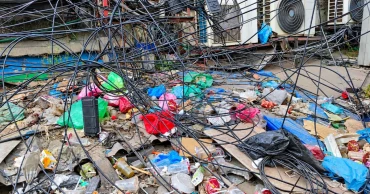
Much of the problem lies in the everyday products we discard without a second thought: thin polythene bags, snack wrappers, food packaging and plastic bottles. When these items enter drains and canals, they obstruct water flow and aggravate urban flooding.
Plastic pollution also threatens aquatic ecosystems and contributes to the spread of microplastics through the environment. Poorly managed waste can create stagnant pools of water that provide breeding grounds for mosquitoes, while unsafe recycling practices can expose workers and nearby residents to hazardous fumes.
20 days ago

Govt meets with WB over sustainable plastic management
The Ministry of Environment, Forest and Climate Change on Thursday held a meeting with the World Bank regarding the implementation of a sustainable plastic management action plan to prevent plastic pollution in the country.
At the same time, discussions were held with Lafarge Holcim regarding the implementation of Geocycle, a modern waste management system.
Presided over by Environment, Forest and Climate Change Secretary Dr Farhina Ahmed, the meeting was attended, among others, by Additional Secretary (Climate Change) Md Moniruzzaman, Additional Secretary (Environment) Sanjay Kumar Bhowmik, Additional Secretary (Environmental Pollution Control) Md Mizanur Rahman, the World Bank's senior environmental expert Yoon Ju Alison Yee and Bangladesh Environmental Lawyers Association (BELA) Executive Director Syeda Rizwana Hasan.
Read: Anti-plastic laws not being implemented: Speakers
At the meeting, on behalf of the World Bank, proposals were presented on policies and financing mechanisms for implementing the Sustainable Plastic Management Action Plan.
The meeting also informed that the World Bank is preparing Extended Producer Responsibility (EPR) as part of the implementation of the action plan.
Syeda Rizwana Hasan spoke on the draft guidelines of EPR on plastics.
Kaushik Mukherjee, head of LafargeHolcim's Geocycle Division, presented the Geocycle waste management approach to control pollution.
Kaushik said LafargeHolcim is implementing the method of burning garbage without any residue in a furnace with a temperature of 80°C-2,000°C.
The Geocycle process burns 100% of the waste, and because it uses garbage instead of fossil fuels, the process does not produce greenhouse gases, he said.
Praising the Geocycle system, Dr Farhina Ahmed said the government will implement it if it is found to be environmentally friendly and feasible after on-site inspections.
"The necessary guidelines for the implementation of the Sustainable Plastic Management Action Plan will be formulated in consultation with all concerned", she added.
3 years ago
.jpg)
Sustainable plastic management plan nears final stage
The government is finalising a sustainable plastic management plan to build a plastic pollution-free Bangladesh, Environment Secretary Md Mostafa Kamal said Sunday.
The initiative to build a plastic waste-free Bangladesh by implementing the 3R principle – reduce, reuse, recycle – will continue, Mostafa added.
He was addressing the review meeting "Toward a Multisectoral Action Plan for Sustainable Plastic Management in Bangladesh" at the ministry.
Now, 37 per cent of plastic waste is recycled. The action plan sets a target of recycling 50 per cent of plastics by 2025 and 80 per cent by 2030, reducing plastic waste production by 30 per cent by 2030, and avoiding single-use plastics by 90 per cent by 2026.
At the meeting, the Federation of Bangladesh Chambers of Commerce and Industries (FBCCI) Jasim Uddin recommended banning the import of plastic waste from abroad. "The country's policy of reuse, recycling and reduction of plastic waste will not be useful if plastic waste is imported from abroad."
5 years ago