Middle-East
Iran says 104 killed in US submarine attack on warship
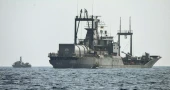
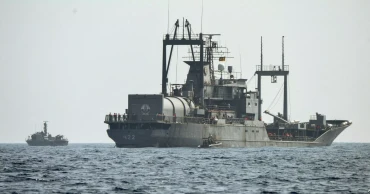
At least 104 Iranian personnel were killed and 32 wounded in a U.S. attack on an Iranian warship last week, Iran’s army said, according to Fars news agency.
The warship, IRIS Dena, was torpedoed and sunk by a U.S. submarine in the Indian Ocean during the ongoing conflict, reports Al Jazeera.
The United States is reportedly pressing Sri Lanka diplomatically over the handover of Iranian sailors who were rescued following the attack.
2 months ago

Iran’s next supreme leader won’t last without US approval: Trump
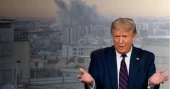
US President Donald Trump on Sunday said Iran’s next supreme leader “is not going to last long” unless Tehran obtains Washington’s approval to replace the slain Ayatollah Ali Khamenei.
Speaking to ABC News, Trump said, “He’s going to have to get approval from us. If he doesn’t get approval from us he’s not going to last long.”
The remarks come as Iran’s clerical body responsible for selecting Khamenei’s successor reportedly completed voting and is expected to announce a name soon, reports Al Jazeera.
2 months ago
US envoy says military action against Iran aims to eliminate long-standing threat
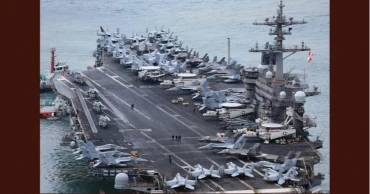
Mike Waltz, U.S. ambassador to the United Nations, said the U.S.-led war on Iran is intended to eliminate a threat Tehran has posed to the Middle East for decades.
Speaking on NBC’s Meet the Press, Waltz described the military progress over the past week as “truly extraordinary,” claiming Iran’s air force and air defenses have been largely destroyed and more than 40 Iranian navy ships have been sunk, reports Al Jazeera.
He added that President Joe Biden and other U.S. officials are outlining the campaign as a measure to “protect the American people and eliminate this threat once and for all.”
2 months ago
US-Israel actions ‘immoral and illegal’: Oman foreign minister
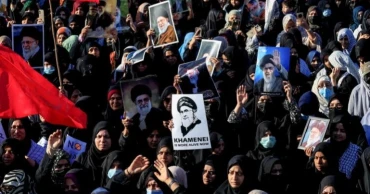
Oman’s Foreign Minister Badr bin Hamad Albusaidi on Sunday criticized recent military actions by the United States, Israel, and Iran, calling for restraint and a return to diplomacy.
In a post on X, Albusaidi said he was “pleased” to participate in a virtual meeting with his Arab League counterparts, reports Al Jazeera.
“The action taken by Israel and the US against Iran is both immoral and illegal,” he wrote. “But the retaliation by Iran against its neighbours is also deeply regrettable and unacceptable. I call for restraint on all sides, a ceasefire, and an urgent return to diplomacy.”
2 months ago
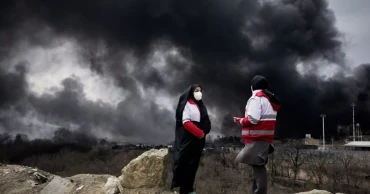
War in Gulf raises threat to desalinated water, vital for millions
As missiles and drones disrupt energy production in the Persian Gulf, analysts warn that water, not oil, may be the region’s most vulnerable resource.
On Sunday, Bahrain accused Iran of damaging a desalination plant, while Tehran said a U.S. airstrike hit one of its facilities. Hundreds of desalination plants line the Gulf coast, supplying millions in cities across Kuwait, Oman, and Saudi Arabia—where up to 90% of drinking water comes from these systems. Without them, urban populations could not be sustained.
Desalination plants, often paired with power stations, are vulnerable to attacks on energy infrastructure. Experts say any disruption—whether from missiles, drones, or cyberattacks—can cascade across interconnected systems. “Each of these critical plants is extremely vulnerable to sabotage or military action,” noted David Michel of the Center for Strategic and International Studies.
The war, which began Feb. 28 with U.S. and Israeli strikes on Iran, has already brought conflict near key facilities. Iranian strikes hit Dubai’s Jebel Ali port near one of the city’s largest plants, while damage was reported at Kuwait’s Doha West facility and the UAE’s Fujairah F1 complex.
The threat echoes past conflicts. During Iraq’s 1990-91 invasion of Kuwait, retreating forces sabotaged desalination and power plants, leaving the country largely without freshwater. Smaller Gulf states like Bahrain and Qatar have fewer backup supplies, heightening the risk of national crises.
Climate change adds another layer of vulnerability. Rising temperatures, cyclones, and rising seas can overwhelm coastal plants, while desalination itself produces high carbon emissions and environmental byproducts.
Iran, facing extreme drought, also struggles with water scarcity. Tehran’s reservoirs dropped to 10% capacity, prompting evacuation warnings, though most of Iran’s water comes from rivers and underground aquifers rather than desalination.
Experts warn that ongoing war, combined with existing water shortages and fragile infrastructure, could trigger severe humanitarian crises across the Gulf.
2 months ago
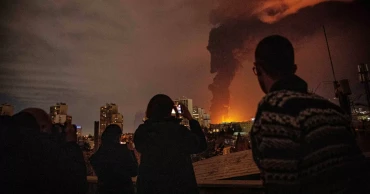
Iran war expands into civilian infrastructure with Bahrain water plant strike
The Iran war’s targets widened dangerously into civilian infrastructure Sunday as Bahrain accused Iran of striking one of the desalination plants that are crucial for Gulf nations’ drinking water.
As Israeli-struck oil depots smoldered in Tehran after a late-night strike, prompting environmental warnings for citizens, Iran’s president vowed to expand attacks on U.S. targets across the region on the ninth day of the war.
U.S. President Donald Trump and Israeli Prime Minister Benjamin Netanyahu have vowed to press ahead with the coordinated campaign, which has rippled across the region and appears to have no end in sight.
Iranian President Masoud Pezeshkian, in his latest threat, backtracked from conciliatory comments a day earlier in which he apologized for attacks on Gulf neighbors' soil. Iranian hard-liners had swiftly contradicted him, saying war strategy wouldn't change.
In Lebanon, intensifying Israeli strikes targeting the Iran-backed militant group Hezbollah pushed the death toll higher as hundreds of thousands were displaced.
In Israel, the military reported the first soldier deaths since the war began, saying two were killed in fighting in southern Lebanon. Three people were injured in Israel in an afternoon strike.
The war, which Israel and the United States launched with airstrikes on Feb. 28 that killed Iran's supreme leader, has killed at least 1,230 people in Iran, at least 397 in Lebanon and at least 11 in Israel, according to officials. Six U.S. troops have been killed.
The conflict has rattled global markets, disrupted air travel and left Iran’s leadership weakened by several thousand Israeli and U.S. airstrikes.
Iran’s president toughens tone
Pezeshkian said Iran's military response would only strengthen.
“The more pressure they impose on us, the stronger our response will naturally be,” Pezeshkian said. “Our Iran, our country, will not bow easily in the face of bullying, oppression or aggression — and it never has.”
A day earlier, Pezeshkian said Iran regretted regional concerns and urged neighboring states not to take part in U.S. and Israeli attacks. He accused the U.S. of trying to pit countries against one another.
As multiple Gulf states continued to report intercepting incoming missiles and drones from Iran, Iranian hard-liners contradicted his remarks.
“The geography of some countries in the region — both overtly and covertly — is in the hands of the enemy, and those points are used against our country in acts of aggression. Intense attacks on these targets will continue," judiciary chief Gholam Hossein Mohseni-Ejei wrote on X.
Mohseni-Ejei and Pezeshkian are part of the three-member leadership council overseeing Iran since Supreme Leader Ayatollah Ali Khamenei was killed.
As Iran awaits the selection of a new supreme leader, Trump and Netanyahu said their war aim remains the replacement of Iran’s leadership altogether.
“We’re not looking to settle,” Trump told reporters Saturday.
Desalination and oil facilities attacked
The Gulf nations of Bahrain, Kuwait and the United Arab Emirates reported additional Iranian missiles launched toward them Sunday, including several that hit new categories of civilian infrastructure.
The UAE said Iran launched more than 100 missiles and drones. Only four drones fell at unnamed locations, the defense ministry said.
Bahrain accused Iran of indiscriminately attacking civilian targets and damaging one of its desalination plants, though its electricity and water authority said supplies remained online.
Desalination plants supply water to millions of residents in the region and thousands of stranded travelers, raising new fears of catastrophic risks in parched desert nations.
Home to the U.S. Navy’s Fifth Fleet, Bahrain also has seen hotels, ports and residential towers hit, with at least one person killed.
The desalination plant strike came after Iran said a U.S. airstrike damaged an Iranian desalination plant. Foreign Minister Abbas Araghchi said the strike on Qeshm Island in the Strait of Hormuz had cut into the water supply to 30 villages.
He warned that in doing so “the U.S. set this precedent, not Iran.”
In response, CENTCOM spokesperson U.S. Navy Capt. Tim Hawkins said that "U.S. forces do not target civilians – period.”
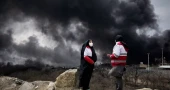
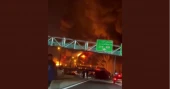
In Iran, authorities said Israel's overnight strikes on four oil storage tankers and a petroleum transfer terminal killed four people. Witnesses in Tehran said the smoke was so thick from a fire at the north Tehran oil depot that it looked as if the sun had not risen.
Israel’s military said the oil depots were being used by Iran’s military for fuel to launch missiles.
The Iranian Red Crescent Society said about 10,000 civilian structures across the country had been damaged, including homes, schools and almost three dozen health facilities. It also warned Tehran residents to take precautions against toxic air pollution and the risk of acid rain after Israel's strikes.
Mohammad Bagher Qalibaf, the speaker of Iran’s parliament, said the war’s impact on the oil industry would continue to spiral, warning it soon could become harder to produce and sell oil. Some regional producers, including in Iraq, have curbed output amid dangers in the Strait of Hormuz.
Iran maintains sufficient fuel, Veys Karami, managing director of the National Iranian Oil Products Distribution Company, told Iran’s state-run news agency.
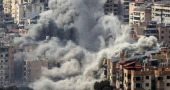
More strikes hit LebanonIsrael renewed its assault early Sunday on parts of Lebanon. Health Minister Rakan Nassereddine said 83 children and 82 women have been among those killed.
Israel's military has ordered large swaths of the country to evacuate, and Lebanese officials said over 400,000 people have been displaced.
In Beirut, sheltering families crammed into schools, slept in cars or in open areas near the Mediterranean Sea, where some burned firewood to keep warm. The government said it would open a sports stadium to shelter thousands more.
Israel’s renewed offensive began last week after Hezbollah launched rockets toward northern Israel during the war's opening days.
The subsequent strikes have been the most intense since a November 2024 ceasefire. Israel withdrew from most of southern Lebanon at that time but continued near-daily strikes, primarily in southern Lebanon, saying Hezbollah had been trying to rebuild its positions there.
Hezbollah said last week that after more than a year of abiding by a ceasefire its patience has ended, leaving it with no option but to fight.
2 months ago
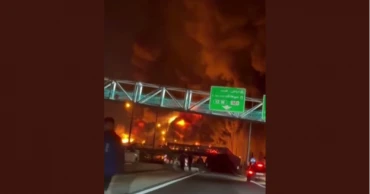
Israel strikes Tehran oil depots; Bahrain desalination plant damaged
The US and Israel continued their strikes on Iran, targeting oil storage depots and refining facilities in Tehran for the first time, sparking large fires across the capital.
Meanwhile, an Iranian drone caused material damage to a water desalination plant in Bahrain, the country’s Interior Ministry reported. The attack follows Iranian Foreign Minister Abbas Araghchi’s claim that the US bombed a freshwater desalination plant on Qeshm Island in southern Iran, setting a “precedent.”
Israel bombs Tehran oil depots; Trump again calls for Iran’s surrender
Following the incidents, Kuwait, Qatar, Saudi Arabia, and the United Arab Emirates reported additional Iranian attacks. Iranian President Masoud Pezeshkian offered an apology and pledged to halt attacks on Gulf states if no strikes originate from their territories.
Authorities continue to monitor the situation, and casualty figures from across the region are being updated.
Sources- Al Jazeera
END/UNB/JH
2 months ago
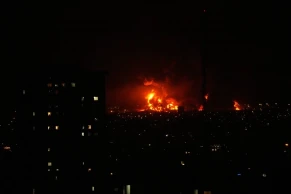
Iranian drone hits Bahrain desalination plant
Bahrain on Sunday reported that an Iranian drone attack caused “material damage” to one of its desalination plants.
This is the first instance of an Arab country reporting that Iran has targeted a desalination facility during the ongoing nine-day conflict.
The Persian Gulf region hosts hundreds of desalination plants, which provide a crucial source of drinking water for the neighboring Arab nations.
2 months ago
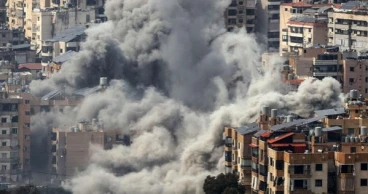
12 killed in Lebanon as Israel strikes oil storage in Tehran
Israel struck southern Lebanon and Beirut early Sunday, killing 12, the Lebanese Health Ministry reported, as the Middle East conflict intensifies. Israeli officials said the strikes targeted commanders of the Lebanese branch of Iran’s Revolutionary Guards’ Quds Force, following Prime Minister Benjamin Netanyahu’s promise of “many surprises” in the next phase of the war.
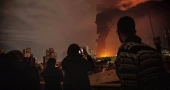
In the Gulf, two Kuwaiti border guards were killed when missiles and drones hit the country. On Saturday, an Israeli strike on an oil storage facility in Tehran sent pillars of fire into the night sky, marking the first reported attack on a civilian industrial site during the conflict.
New strikes illuminate Tehran night as Israel warns of ‘many surprises’
The war, which erupted on Feb. 28 after joint U.S.-Israeli strikes on Iran, has killed at least 1,230 in Iran, over 300 in Lebanon, and around a dozen in Israel.
Bahrain reported that an Iranian drone caused “material damage” to a desalination plant, the first such attack on an Arab country during the nine-day conflict. Three people were injured in Muharraq city when shrapnel from a missile fell on a university building.
Meanwhile, Israel said it struck F-14 fighter jets at Isfahan Airport, purchased pre-revolution from the U.S., along with detection and air defense systems, without confirming whether the jets were destroyed.
2 months ago
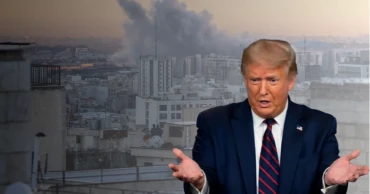
Israel bombs Tehran oil depots; Trump again calls for Iran’s surrender
The United States and Israel have continued their strikes on Iran, targeting oil storage depots and refining facilities in Tehran for the first time and triggering large fires across the capital.
US President Donald Trump has again called for Iran’s “unconditional surrender”, saying the war will only end when Tehran’s leaders “cry uncle” or when the country’s military becomes incapable of operating.
Senior Iranian official Ali Larijani warned that the United States would pay a price for launching the war and claimed Washington was failing to achieve its objectives.
New strikes illuminate Tehran night as Israel warns of ‘many surprises’
Meanwhile, Kuwait, Qatar, Saudi Arabia and the United Arab Emirates reported fresh Iranian strikes after Iranian President Masoud Pezeshkian apologised and pledged to stop attacks on Gulf states if no assaults were launched against Iran from their territories.
For the latest casualty figures from across the region, follow our live tracker.
2 months ago