Middle-East
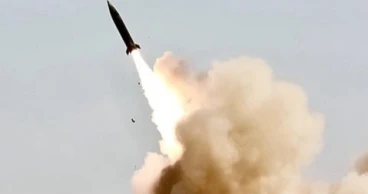
17 Iranian Navy ships, including 1 submarine, says US admiral
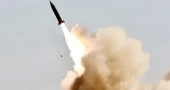
The US military has destroyed 17 Iranian naval vessels, including its most operational submarine, as part of the ongoing Operation Epic Fury, a senior US commander said Tuesday.
Admiral Brad Cooper, head of US Central Command, said in a video posted on X that the campaign, now in its fourth day, has targeted nearly 2,000 sites using over 2,000 munitions. More than 50,000 US troops and over 200 fighter aircraft, including B-1 and B-2 bombers, are involved, reports CNN.
“Today, there is not a single Iranian ship underway in the Arabian Gulf, Strait of Hormuz, or Gulf of Oman, and we will not stop,” Cooper said.
He added that Iran has retaliated with over 500 ballistic missiles and more than 2,000 drones, though its ability to strike US forces is “declining.” Cooper described the strikes as “uncontested surgical” operations aimed at neutralizing threats to US forces and international shipping.
The operation comes amid the broader US-Israel campaign against Iran, which has drawn international scrutiny over its scale and potential consequences for regional stability.
3 months ago
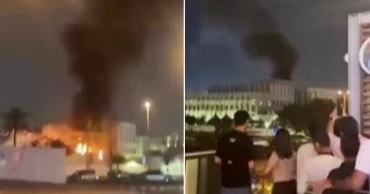
Iranian drone hits US consulate in Dubai
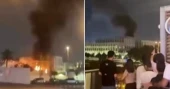
An Iranian drone struck a parking lot outside the U.S. consulate in Dubai on Tuesday, causing a small fire but no injuries, U.S. Secretary of State Marco Rubio said.
Rubio told reporters at the U.S. Capitol that all consulate personnel in Dubai were safe and accounted for, reports Al Jazeera.
He added that U.S. authorities had begun drawing down staff from diplomatic facilities in the region in anticipation of potential attacks.
The incident underscores that, despite a slowdown in Iranian missile and drone strikes, Tehran still possesses the capability to get munitions past U.S. defensive systems.
No further details on the damage or the type of drone used were immediately available. U.S. officials continue to monitor the situation closely.
3 months ago
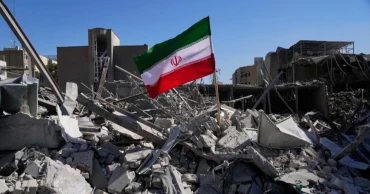
Israel intensifies Tehran strikes as Iran expands retaliation across region
Israel said Tuesday it carried out fresh airstrikes targeting Iranian missile launchers and a nuclear research facility in Tehran, as Iran broadened its counterattacks against Israel and across the Gulf, including drone strikes on U.S. diplomatic missions and disruptions to energy supplies and air travel.
On the fourth day of the conflict, which US President Donald Trump indicated could continue for weeks, the death toll in Iran has climbed to nearly 800. Among those killed, Trump said, were individuals the United States had viewed as possible future leaders of the country.
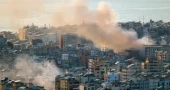
Blasts were reported Tuesday in Tehran and in Lebanon, where Israel said it launched retaliatory strikes against Hezbollah fighters. Drone attacks targeted the U.S. Embassy in Saudi Arabia and the U.S. Consulate in the United Arab Emirates. Iran has fired dozens of ballistic missiles at Israel since the fighting began, though Israeli defenses have intercepted most of them. Eleven people have been killed in Israel.
The Pentagon also confirmed that four U.S. Army Reserve soldiers were killed in a drone strike Sunday on a command facility in Kuwait. Two additional service members died in the same attack.
The escalating exchanges have fueled uncertainty over how and when the conflict might conclude. US officials have outlined a range of objectives, including dismantling Iran’s missile capabilities, destroying its naval assets, preventing it from acquiring nuclear weapons and halting its support for allied armed groups in the region.
Although the initial US-Israeli assault killed Iranian Supreme Leader Ali Khamenei and Trump at one stage encouraged Iranians to rise up against their government, senior officials have since clarified that regime change is not an official goal of the campaign.
Speaking from the Oval Office on Tuesday, Trump appeared to temper expectations that the war would bring an end to Iran’s clerical leadership. He suggested that a successor emerging from within the existing system might be the most viable option once military operations conclude.
Trump also said that Reza Pahlavi, the son of Iran’s former shah living in exile, has not been seriously considered by his administration as a potential leader.
Regarding possible alternatives inside Iran, Trump said, “The people we had in mind are dead,” adding that there was a risk that any replacement could prove as hardline as the previous leadership.
Iranian authorities are now moving to select a new supreme leader following Khamenei’s 37-year rule. It marks only the second such transition since the 1979 Islamic Revolution. Those seen as potential successors range from staunch hardliners advocating continued confrontation with the West to reformists favoring diplomatic engagement.
3 months ago
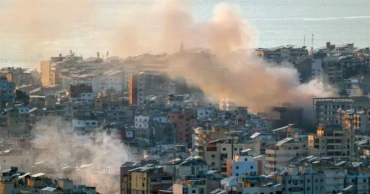
Israel-Hezbollah exchange fire as over 1,000 civilians reported killed in Iran
US-based Human Rights Activists News Agency (HRANA) said 1,097 civilians have been killed in Iran since February 28. According to HRANA, 181 of those killed were children under the age of 10.
The rights group said the number of civilian injuries has reached 5,402, including 100 children. It added that at least 104 attacks were recorded in the past 24 hours alone, hitting military bases, medical centres and residential areas.
HRANA said hundreds more reported deaths are currently being reviewed.
Israel and Hezbollah continued to exchange fire as tensions escalated across the region following the killing of Iran’s Supreme Leader Ayatollah Ali Khamenei.
Hezbollah says it targeted northern Israel's Haifa naval base at 20:00 local time (18:00 GMT). The Israeli military said shortly afterwards that several incoming projectiles were detected, and most were shot down. Hours later, a loud explosion was heard in the Lebanese capital Beirut shortly after midnight (22:00 GMT).
Hezbollah later claimed it had also fired rockets at Israeli forces in the northern Israeli town of Metula. The claim came after it announced carrying out the missile strike on the Haifa naval base.
Meanwhile, the Israeli military issued new forced displacement orders for residents of 16 villages and towns in southern Lebanon. The affected areas include Majdal Selm, Houla and Shaqra.
Lebanon’s Al Mayadeen television reported that an Israeli airstrike on Aramoun and Saadiyat in the Mount Lebanon area killed at least six people. The broadcaster cited the Lebanese Ministry of Health as saying eight others were wounded in the attack.
Earlier, Lebanese authorities said the death toll from what they described as Israel’s “aggression” had risen to 50, with 335 people wounded.
#With inputs from Agencies
3 months ago
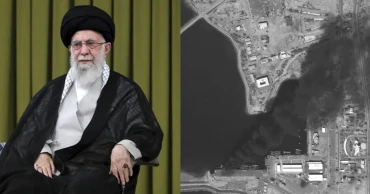
Inside the US-Israel operation that killed Iran’s supreme leader Ayatollah Khamenei
After more than 40 years as Iran’s supreme leader, Ayatollah Ali Khamenei was killed in coordinated US and Israeli airstrikes on Saturday morning, along with several senior military officials, including top commanders of the Iranian Revolutionary Guard Corps (IRGC).
Khamenei, who became supreme leader in 1989 following the death of revolutionary founder Ayatollah Ruhollah Khomeini, had previously served as Iran’s president. His tenure was marked by both domestic upheavals—including protests over election rigging, economic hardship, and human rights abuses—and the country’s survival under international sanctions and war with Iraq in the 1980s.
According to US media reports, the CIA had been tracking Khamenei’s movements for months and shared critical intelligence with Israel, identifying a Saturday morning meeting in Tehran that included the supreme leader and top military officials. While it is unclear whether the US intercepted communications, used satellite imagery, or human intelligence to pinpoint the location, Israel had reportedly been monitoring Khamenei’s routines for years, reports Al Jazeera.
Israeli jets took off around 6:00 am local time and struck Khamenei’s compound near central Tehran at about 9:40 am. Simultaneously, US Cyber Command disrupted Iran’s communications and surveillance capabilities. The attacks reportedly killed Khamenei and at least a dozen senior defense officials, including the IRGC commander Mohammad Pakpour and Defense Minister Azis Nasirzadeh, while targeting several other locations across the country.
The strikes have triggered massive casualties: the Iranian Red Crescent confirmed at least 787 deaths, including 165 schoolgirls and staff in a strike on a school in Minab city. Joint US-Israeli attacks have also hit hospitals and residential areas, while Iran has retaliated by striking Israeli and US military assets in the Gulf region.
In the wake of Khamenei’s assassination, Iran announced a temporary leadership council comprising President Masoud Pezeshkian, Supreme Court Chief Justice Gholam-Hossein Mohseni-Ejei, and Guardian Council member Ayatollah Alireza Arafi.
US officials have portrayed the operation as necessary to weaken Iran’s nuclear and missile programs. President Donald Trump praised the intelligence collaboration with Israel, stating the late leader “was unable to avoid our intelligence and highly sophisticated tracking systems.” Defense Secretary Pete Hegseth said the strikes will continue until US objectives for “peace in the Middle East” are met.
3 months ago
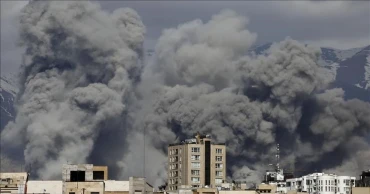
Iran vows to hit all Middle East economic hubs if US-Israeli attacks persist
Iran has threatened to target “all economic centres” in the Middle East if attacks by the United States and Israel persist, according to Islamic Revolutionary Guard Corps (IRGC) General Ebrahim Jabbari.“We are saying to the enemy that if it decides to hit our main centres, we will hit all economic centres in the region,” Jabbari said. He added that the Strait of Hormuz has been closed, pushing oil prices above $80 per barrel, with expectations they could reach $200, reports Al Jazeera.
The narrow strait is a critical chokepoint, handling roughly one-fifth of global oil trade and significant liquefied natural gas exports from Qatar and the United Arab Emirates.
Meanwhile, Farah Pahlavi, widow of Iran’s last shah, said the death of Supreme Leader Ayatollah Ali Khamenei is “historically significant” but will not automatically topple the Iranian system. She emphasized that the country’s future depends on “the ability of the Iranian people to unite around a peaceful, orderly and sovereign transition to a state governed by the rule of law,” noting that her son Reza Pahlavi is preparing for such a transition.
Analysts say the US-Israeli strikes have weakened Iran’s regional network of proxy armed groups, long used against Israel. Groups including Lebanon’s Hezbollah, Yemeni Houthis, and Iraqi militias are reportedly “trying to understand how to survive” in the wake of recent conflicts. Renad Mansour, a senior research fellow at Chatham House, noted that many of these groups now lack the capacity to inflict significant damage and are increasingly integrated into state structures, particularly in Iraq.
In Yemen, the Houthis have remained on the sidelines, taking a cautious approach amid the regional escalation. Ahmed Nagi, senior analyst at the International Crisis Group, said the axis of Iranian-aligned proxies faces an existential threat but is not necessarily on the verge of collapse.
The escalating conflict continues to threaten global energy markets and regional stability, with potential repercussions far beyond the immediate battlegrounds.
3 months ago
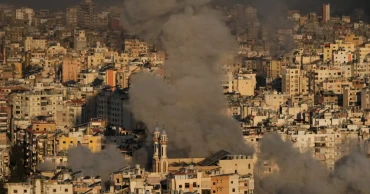
Israel sends troops into southern Lebanon as Hezbollah says it is ready for 'open war'
Israel sent troops into southern Lebanon on Tuesday and warned residents of more than 80 villages to evacuate, as the Iran-backed Hezbollah militia declared it is ready for an “open war” following the U.S.-Israeli campaign against Iran.
The escalation followed Hezbollah’s rocket and drone attacks on northern Israel early Monday. Israel responded with airstrikes that killed 40 people in Lebanon, including a Palestinian militant and a Hezbollah intelligence official in Beirut’s southern suburbs. The figure is a revised count from an earlier report of 52 deaths. Lebanese authorities also reported 246 people wounded and tens of thousands displaced.
Hezbollah confirmed it launched two rocket salvos toward northern Israel on Tuesday morning, while Israeli strikes damaged a building housing Hezbollah’s TV and radio stations in Beirut’s southern suburbs. The Israeli military said it specifically targeted Hezbollah officials during these operations.
Israeli military spokesman Avichay Adraee warned residents of more than 80 southern Lebanese villages not to return until further notice. “The troops’ movements inside Lebanon are aimed at bolstering Israel's forward defense system and adding a layer of security,” he said.
A senior Hezbollah official, Mohamoud Komati, said the group had exhausted its patience after abiding by a ceasefire for more than a year. “The Zionist enemy wanted an open war, which it has not stopped since the ceasefire agreement. So let it be an open war,” he said.
Lebanese President Joseph Aoun informed ambassadors from Saudi Arabia, Qatar, the U.S., France, and Egypt that Hezbollah has been firing rockets from areas north of the Litani River. The Lebanese army is reportedly repositioning along the border as Israeli troops take new positions on strategic points in southern Lebanon.
The U.N. peacekeeping force UNIFIL confirmed that its peacekeepers observed Israeli troops crossing the border and returning, though it was unclear how many remained inside Lebanon.
The conflict traces back to the Oct. 7, 2023 Hamas attack on southern Israel and subsequent escalations in Gaza, culminating in Israel’s ground invasion of Lebanon in September 2024. Israeli forces withdrew from most of southern Lebanon after a U.S.-brokered ceasefire in November 2024 but continued occupying five border points and conducting near-daily strikes.
Lebanon’s Health Ministry reported that 397 people were killed in Israeli strikes after the ceasefire and before Hezbollah’s latest attacks.
3 months ago
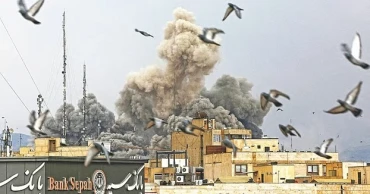
Iran mourns school attack victims as Netanyahu vows continued strikes
A mass funeral for victims of a deadly attack on a girls’ school brought thousands of mourners together in southern Iran, as Israel’s prime minister said his country would continue striking Iran “with force.” At least 165 people, including dozens of children, were killed in the attack, which Iranian authorities have blamed on either Israel or the United States.
The ceremony in Minab drew people from all walks of life, reflecting the depth of shock and grief across the country. Residents described the school tragedy as an “open wound,” saying even those critical of the government were deeply shaken and speaking out about the incident.
Iran death toll hits 787 as Israeli, US strikes intensify
The Iranian government has highlighted the attack, calling it extremely painful for the nation and noting it has been widely condemned.
President Masoud Pezeshkian said there was “no reason whatsoever” for any country to suffer in such a way, especially children. He argued that the attack showed it was not merely a campaign against military and strategic sites but a broader war on the Iranian people.
Meanwhile, Israeli Prime Minister Benjamin Netanyahu said Israel was continuing to strike Iran. Speaking at an air force base in central Israel, he said Israeli pilots were operating over Iran, including Tehran, and over Lebanon.
Who leads Iran after Khamenei’s death?
“We continue to strike Iran with force,” Netanyahu said in a statement from his office.
He also warned Lebanon’s Hezbollah group, saying it had made a “very big mistake” by attacking Israel. “We have already responded forcefully, and we will respond with even greater force,” he added.
3 months ago
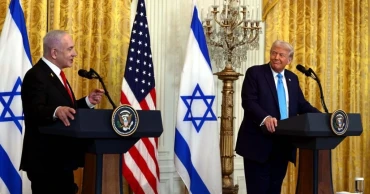
Netanyahu bets on U.S. support as Israel-U.S. war on Iran unfolds
Israeli Prime Minister Benjamin Netanyahu is relying on a strong U.S.-Israel partnership to pursue a war against Iran, a gamble that could either solidify ties with Washington or expose them to strain if the conflict drags on.
Netanyahu, Israel’s longest-serving leader, has long built his foreign policy on two pillars: an unwavering alliance with the United States and a determined campaign against Iran. By persuading U.S. President Donald Trump to join the strikes, he has achieved a major diplomatic victory. Trump’s support has allowed Israel to target Iranian leaders and military infrastructure in what Netanyahu calls an “existential battle” against Tehran.
But analysts warn that prolonged conflict could test U.S. public opinion. “A large part of the American public will view it as the Israeli tail wagging the American dog and that it is dragging the United States to a war in the Middle East that isn’t theirs,” said Ofer Shelah, a research fellow at the Tel Aviv-based Institute for National Security Studies. He added that Netanyahu is focused on short-term political gains rather than long-term consequences.
Recent years have seen U.S. public support for Israel decline, particularly among Democrats, while some Republicans have also voiced concerns over financial and military backing during Israel’s war on multiple fronts, including the 2023 Gaza conflict. Images from past battles have deepened Israel’s diplomatic isolation.
Netanyahu faces a high-stakes decision: confront what he views as an existential Iranian threat, including its nuclear program and support for anti-Israeli militias, while keeping U.S. backing intact. “The U.S. involvement allows us to do what I have been hoping to do for 40 years — to deliver a crushing blow to the terror regime,” Netanyahu said in a recent statement.
The war has already triggered regional disruption. U.S. forces have suffered casualties, global travel has been disrupted, and oil prices have surged, with potential economic repercussions for American consumers. Questions persist over whether airstrikes alone can topple Iran’s leadership, and what political or military outcome should follow.
Analysts say the stakes for Netanyahu are partly domestic. With elections approaching this fall, the war could shift attention from past security failures and bolster his image as a decisive wartime leader. Aaron David Miller, a former U.S. Middle East adviser, noted, “If Trump feels as if it’s going south, he’ll find a way to de-escalate, and his good friend Benjamin Netanyahu will follow.”
Still, the Israeli leader must balance military ambitions with the risk of losing crucial American support, which experts warn could have far-reaching political and diplomatic consequences.
3 months ago

Tens of thousands stranded in Middle East as Iran war disrupts travel
Tens of thousands of people, including tourists, diplomats’ family members, and religious pilgrims, remain stranded across the Middle East as the conflict between Iran, the United States, and Israel intensifies.
Major airlines have canceled flights to and from the region, while airspace across the Gulf remains closed. Some travelers are sheltering amid airstrikes, while others are stuck on cruise ships unable to pass through the Strait of Hormuz.
The U.S. State Department urged Americans to leave more than a dozen countries in the Middle East due to escalating risks. U.S. Assistant Secretary of State for Consular Affairs Mora Namdar urged citizens in Iran, Iraq, Jordan, Lebanon, and Israel to “DEPART NOW” using any available commercial transport.
The U.S. has evacuated non-emergency personnel and families from six nations, adding the United Arab Emirates to its list Tuesday. Americans in Israel were advised to leave via Egypt’s Sinai Peninsula, as Ben Gurion Airport in Tel Aviv remains closed. Embassy staff in Israel are sheltering in place while assisting evacuation requests.
Governments worldwide are mobilizing to repatriate their citizens. Italy helped Defense Minister Guido Crosetto and his family return from Dubai after criticism for traveling during the crisis. Germany is organizing charter flights to bring home roughly 30,000 tourists stranded on cruise ships, in hotels, or at airports. France is facilitating the return of an estimated 25,000 French citizens visiting the region, among 200,000 living there.
Some travelers have begun reaching home safely. Romanian Orthodox pilgrims stranded in Israel returned to Bucharest on Tuesday after cutting short a trip to Bethlehem. Mariana Muicaru, a pilgrim, described the fear: “We called our children at 3 a.m. to ask forgiveness because we might die and to tell them we love them.”
British tourists trapped in the UAE also arrived safely in London, while another flight from Dubai landed in Belgrade with roughly 200 passengers. Passengers said they received urgent alerts to move away from windows due to potential missile attacks.
The disruptions highlight the broader chaos caused by the Iran war, which has severely impacted air travel, shipping, and regional safety. With airports closed and maritime routes blocked, thousands remain in limbo, waiting for flights or safe passage out of the conflict zone.
Officials continue to coordinate with airlines, foreign governments, and local authorities to expedite evacuations and ensure the safety of stranded travelers as the situation in the Middle East remains volatile.
3 months ago