Middle-East
Iran’s top diplomat heads to Geneva for second round of nuclear talks with US
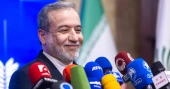
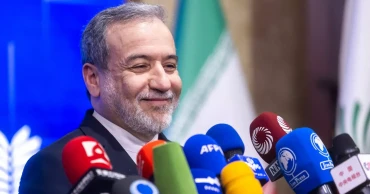
Iran’s top diplomat left Tehran on Sunday for Geneva, where a second round of nuclear negotiations with the United States is set to take place, Iranian state media reported.
Foreign Minister Abbas Araghchi departed for the Swiss city along with his delegation following an initial round of indirect talks held in Oman last week. According to Iran’s state-run IRNA, Oman will again serve as mediator during the Geneva discussions.
Similar negotiations last year collapsed after Israel launched a military campaign against Iran that escalated into a 12-day war, during which the United States bombed Iranian nuclear facilities.
US President Donald Trump has repeatedly warned that force could be used if Iran does not agree to restrict its nuclear programme. Iran has said it would retaliate if attacked. Trump has also threatened Tehran over its violent suppression of nationwide protests.
Gulf Arab nations have cautioned that any military action could trigger a wider regional conflict.
The Trump administration has maintained that Iran must not be allowed to enrich uranium under any agreement, a position Tehran has rejected. Iranian officials continue to insist their nuclear programme is for peaceful purposes, though they have increasingly warned they could pursue nuclear weapons capability.
11 killed in Israeli strikes across Gaza amid ceasefire violations
Before the conflict in June, Iran was enriching uranium to 60 percent purity, a level just short of weapons-grade material.
While in Geneva, Araghchi is also expected to meet with his Swiss and Omani counterparts and hold talks with the head of the International Atomic Energy Agency, the UN’s nuclear watchdog.
Earlier on Sunday, US Secretary of State Marco Rubio said Washington remained committed to a diplomatic solution. He said President Trump’s envoys Steve Witkoff and Jared Kushner were traveling for the upcoming talks.
Trump said on Friday that the USS Gerald R. Ford, the world’s largest aircraft carrier, was being deployed from the Caribbean to the Middle East to reinforce US military assets in the region. He also said a change in leadership in Iran “would be the best thing that could happen.”
Rubio said the recent US military deployments were defensive, aimed at protecting American facilities and interests. Iran has threatened to strike US bases in the region if Washington launches an attack. In June, Tehran targeted the Al Udeid Air Base in Qatar, though no US or Qatari casualties were reported.
Speaking in Bratislava after meeting Slovak Prime Minister Robert Fico, Rubio said the US was prioritising diplomacy. “No one has been able to reach a successful deal with Iran, but we are going to try,” he said.
While Trump has recently indicated that reducing Iran’s nuclear programme is his primary goal, Tehran has said the talks should focus solely on nuclear issues.
However, Israeli Prime Minister Benjamin Netanyahu, who met Trump in Washington earlier this week, has been urging a broader agreement that would also curb Iran’s ballistic missile programme and end its support for proxy groups such as Hamas in Gaza and Hezbollah in Lebanon.
3 months ago
11 killed in Israeli strikes across Gaza amid ceasefire violations
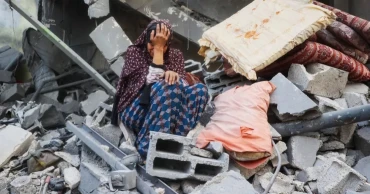
Eleven Palestinians were killed in Israeli air strikes across Gaza on Sunday morning, Palestinian civil defence and health officials said.
The Israel Defense Forces said the strikes targeted what it described as “terror targets” in response to alleged ceasefire violations by Hamas. The military claimed militants were hit after emerging from a tunnel into an area of the strip under Israeli control.
According to the Palestinian Red Crescent, at least six people were killed when a tent encampment in northern Gaza was struck, while another attack in the south of the territory killed five.
Israel and Hamas have repeatedly accused each other of breaching a fragile ceasefire agreement almost daily since it came into force on October 10.
The Hamas-run Gaza health ministry said at least 600 people have been killed since the ceasefire began.
Earlier this month, local officials reported that at least 32 people were killed in a wave of Israeli air strikes across Gaza.
3 months ago
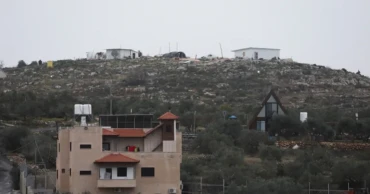
Israel approves plan to register large West Bank areas as ‘state property’
The Israeli government has approved a proposal to register extensive areas of the occupied West Bank as “state property,” marking the first such move since Israel occupied the territory in 1967.
Israeli public broadcaster KAN reported on Sunday that the proposal was put forward by far-right Finance Minister Bezalel Smotrich, Justice Minister Yariv Levin, and Defence Minister Israel Katz.
Smotrich said the move was part of what he described as a “settlement revolution,” adding, “We are continuing the settlement revolution to control all our lands.”
Most Palestinian land in the West Bank has remained unregistered due to a lengthy and complex process that Israel halted in 1967. Land registration establishes permanent ownership. Under international law, an occupying power is prohibited from confiscating land in occupied territories.
Hebron mayor warns Israel tightening grip on West Bank
The Palestinian Presidency strongly criticised the decision, calling it a “serious escalation” that effectively nullifies signed agreements and directly violates resolutions of the United Nations Security Council, according to the Palestinian news agency Wafa.
Katz defended the decision, describing it as an “essential security and governance measure” aimed at ensuring control, enforcement and full freedom of action for the Israel in the area, the Jerusalem Post reported.
The approval follows a decision last week by the Israeli Security Cabinet to endorse additional measures promoted by Smotrich and Katz, which further facilitate what critics describe as the unlawful seizure of Palestinian land in the occupied territory.
Meanwhile, Palestinian group Hamas condemned the move, saying it was an attempt to “steal and Judaise lands in the occupied West Bank by registering them as so-called ‘state lands’.”
In a statement, Hamas described the approval as a “null and void decision issued by an illegitimate occupying power,” adding that it represents an effort to impose settlement expansion and Judaisation in clear violation of international law and relevant UN resolutions.
Analysts have warned that the move amounts to a de facto annexation of Palestinian territory, saying it would significantly alter the civil and legal framework by removing what Israeli officials have termed long-standing “legal obstacles” to the expansion of illegal settlements.
Speaking from Ramallah, political analyst Xavier Abu Eid told that Israel was effectively carrying out annexation through bureaucratic means.
He said the International Court of Justice ruled in 2024 that Israeli actions in the West Bank amount to annexation.
“This is not just a step towards annexation. Annexation is already happening,” he said, adding that the Israeli government is implementing a political programme that has already been publicly declared.
#From Agencies
3 months ago
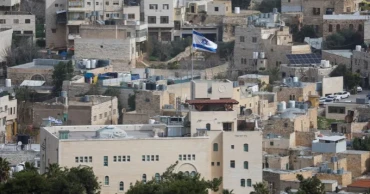
Hebron mayor warns Israel tightening grip on West Bank
The acting mayor of Hebron has warned that Israel’s latest legal and administrative measures in the occupied West Bank amount to the effective end of meaningful negotiations with the Palestinians, saying they leave local authorities powerless and unprotected.
Asma al-Sharabati said recent decisions approved by Israel’s security cabinet would sideline Palestinian institutions from urban planning and development, even in areas officially under Palestinian administration. She described the move as “the end of the road” for the peace process, arguing that Palestinians were being excluded from decisions shaping their own cities.
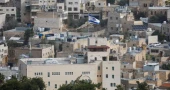
Hebron, a frequent flashpoint, is a deeply divided city where several hundred Israeli settlers live under heavy military protection among tens of thousands of Palestinians. Under arrangements set out in the Oslo Accords in the 1990s, parts of the city remain under Palestinian civil control, while others are overseen by Israel.
On Sunday, Israel approved sweeping changes that expand its authority beyond military occupation into civilian and municipal affairs in Palestinian-run areas. The measures also grant Israel broad powers over so-called heritage sites across the West Bank, citing the protection of water, environmental and archaeological resources.
Among the changes, Israel said it would assume planning authority at the Cave of the Patriarchs, one of Judaism’s holiest sites, which is located within Hebron’s Ibrahimi Mosque compound. Palestinian officials fear the new rules allow Israel to declare properties or land as historic sites and take control without Palestinian consent.
“Now they can simply declare any building ancient, and Palestinian authorities have no say at all in planning or development,” al-Sharabati said, adding that she learned of the details through Israeli media rather than formal notification.
Palestinian activist Issa Amro, who lives in the highly volatile H2 area of Hebron, said the measures marked a turning point. He argued that actions previously taken without a clear legal basis were now being formalised. “This is annexation without rights,” he said, warning that the status of the territory was being shifted from occupation to a unilateral legal claim.
Israel has also said it plans to provide municipal services directly to Jewish settlers in Hebron and to open up land ownership across the West Bank to private Israeli citizens. Palestinians are prohibited from selling property to non-Palestinians under both Jordanian-era and Palestinian laws, and activists warn that planned publication of land registry data could expose sellers to serious risks.
The West Bank, along with Israeli-annexed East Jerusalem, is home to more than 700,000 Israeli settlers. Palestinians seek the territory for a future independent state, together with the Gaza Strip. The settlements are considered illegal under international law.
Israeli Finance Minister Bezalel Smotrich, who oversees settlement policy, said the measures were intended to deepen Israel’s presence across what he calls Judea and Samaria, declaring openly that they would “bury the idea of a Palestinian state.”
Palestinian President Mahmoud Abbas has called for a firm response from the United States, saying the decisions violate international law and undermine regional peace efforts. US President Donald Trump has so far reiterated his opposition to Israel’s formal annexation of the West Bank but has not announced concrete steps.
The United Kingdom, which last year recognised a Palestinian state, said it strongly condemned the Israeli decision. UK Middle East minister Hamish Falconer said London expected the measures to be reversed, calling them a serious mistake that risked further destabilising the region.
Al-Sharabati said Palestinians felt abandoned by the international community. “We are living the ugly truth that we are not protected,” she said, adding that while global attention remains focused on Gaza, developments in Hebron and across the West Bank could have lasting consequences for any future peace efforts in the Middle East.
With inputs from BBC
3 months ago
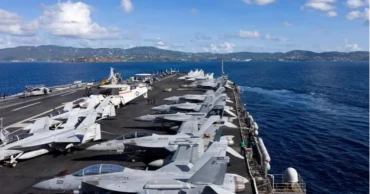
US military preparing for possible weeks-long operations against Iran
The United States military is preparing for the possibility of weeks-long operations against Iran if President Donald Trump orders military action, according to two US officials, raising concerns of a more serious conflict between the longtime rivals.
The officials, speaking on condition of anonymity, said planning is underway for a sustained campaign that could target Iranian state and security facilities beyond nuclear infrastructure. Such operations would carry greater risks for US forces and could trigger wider instability across the Middle East, reports Reuters.
Diplomatic efforts are continuing alongside the military preparations. US and Iranian diplomats held talks in Oman last week aimed at reviving negotiations over Tehran’s nuclear programme. However, Trump said reaching a deal has been “difficult,” warning that the alternative to diplomacy could be “very traumatic.”
The Pentagon has recently deployed additional military assets to the region, including an aircraft carrier, fighter jets, guided-missile destroyers and thousands of troops to strengthen offensive and defensive capabilities.
US officials said Washington fully expects Iran to retaliate if strikes occur, potentially leading to prolonged exchanges of attacks. Experts warn that Iran’s large missile arsenal could threaten US forces and bases across the region.
The White House said Trump is considering all options regarding Iran but will make a final decision based on US national security interests. The Pentagon declined to comment on the operational planning.
Iran’s Islamic Revolutionary Guard Corps has warned that any strike on Iranian territory would be met with retaliation against US bases in the Middle East, including those in Qatar, Bahrain, Kuwait and Saudi Arabia.
Tehran says it is open to negotiations on limits to its nuclear programme in return for sanctions relief, but it has ruled out linking the talks to its missile programme.
3 months ago
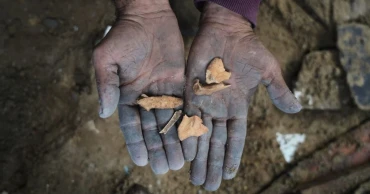
Father in Gaza searches for family under rubble years after airstrike
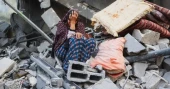
Mahmoud Hammad, a father from Gaza City, is painstakingly digging through the rubble of his destroyed home, searching for the remains of his wife, five children, and unborn daughter who were killed more than two years ago in an Israeli airstrike.
Using picks, shovels, and his hands, Hammad sifts dirt through a large sieve, collecting tiny bones that he believes belong to his unborn baby girl. “I won’t find them all,” he said, describing months of labor in the debris of what once was his family home.
Around 8,000 people remain buried under rubble across Gaza, according to the Health Ministry, as retrieving bodies during Israel’s military campaign was nearly impossible. Since a ceasefire deal in October, recovery efforts have increased, though they are hampered by a lack of heavy equipment and ongoing military control in parts of the territory.
Hammad survived the December 6, 2023, airstrike that destroyed the six-story building where he lived with his family in the Sabra neighborhood. His wife, nine months pregnant, and their children aged 8 to 16 were killed along with his brother, sister-in-law, and their four children. Hammad was hospitalized with multiple injuries but returned to the ruins to continue searching for his family.
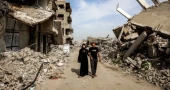
Since the ceasefire, more than 700 bodies have been recovered from collapsed buildings, bringing Gaza’s confirmed death toll to over 72,000. The UN reports that Israeli bombardment destroyed or damaged 81 percent of Gaza’s 250,000 buildings, leaving the enclave with roughly 61 million tons of rubble — a volume equivalent to 15 Great Pyramids of Giza.
Rescue operations remain slow due to restrictions on heavy machinery and ongoing Israeli military presence. Hammad said discovering the fragments of his unborn daughter has given him hope of eventually recovering and burying the rest of his family properly.
3 months ago
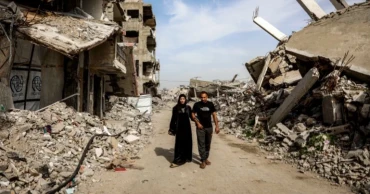
Palestinians return via Rafah as Israeli attacks continue in Gaza
Forty-one Palestinians returned to Gaza on Tuesday through the Rafah crossing with Egypt, becoming the seventh group to enter the enclave since the partial reopening earlier this month, amid continued Israeli attacks and humanitarian challenges.
The returnees, transported in World Health Organization buses, were taken to the Nasser Medical Complex in Khan Younis, according to reports from Al Jazeera correspondents. Many described undergoing humiliating searches and interrogations by the Israeli military, which controls the Palestinian side of the crossing.
The Rafah crossing, the only gateway for most of Gaza’s more than two million residents, remained largely closed during Israel’s military campaign and was reopened partially on February 2 under a US-brokered ceasefire agreement. Since then, 172 Palestinians have returned to Gaza, while only 250, mostly patients needing medical treatment abroad with their companions, have been allowed to leave, far below the numbers outlined in the ceasefire deal.
Gaza’s healthcare system has been severely damaged during the conflict, with 22 hospitals out of service and 1,700 medical staff killed, the Palestinian Health Ministry reported.
Despite the ceasefire, Israeli air strikes and shelling continue. On Wednesday, areas east of Khan Younis were targeted, following at least seven deaths from Israeli attacks the previous day, including three in central Gaza and one north of Khan Younis.
Meanwhile, Israel announced the forced expulsion of two Palestinians convicted of crimes in Israel to Gaza, a move widely condemned by human rights groups. Israeli Prime Minister Benjamin Netanyahu signed orders revoking their citizenship, marking the first implementation of a 2023 law allowing deportation of Palestinian citizens convicted of “terrorism”.
The legal group Adalah described the deportations as “unprecedented” and said they violate international law, leaving the men effectively stateless and unable to access hospitals or register children in schools.
The humanitarian and political situation remains tense as Israeli military operations and restrictions continue to affect daily life in Gaza and the occupied West Bank.
With inputs from ALJAZEERA
3 months ago
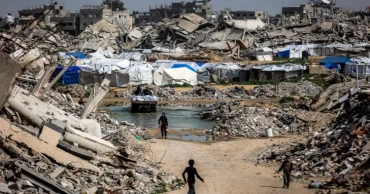
Israeli attacks continue in Gaza and West Bank amid rising tensions
Israeli air strikes and artillery shelling targeted areas east of Khan Younis in southern Gaza on Tuesday, causing further casualties among Palestinians, as violence persisted across Gaza and the occupied West Bank.
The seventh group of wounded Palestinians returned to Gaza via the Rafah crossing. Meanwhile, Gaza held its first organised football tournament in over two years, with young players expressing mixed emotions amid ongoing hardships. “Life is difficult, but playing football gives a little joy,” said 21-year-old Youssef Jendiya, whose team, Jabalia Youth, faced Al-Sadaqa at the Palestine Pitch in Gaza City.
Humanitarian sources reported that Israeli forces continued raids across the West Bank and East Jerusalem. Residents in Silwan, a Palestinian neighbourhood in occupied East Jerusalem, were assaulted by Israeli troops. In the northern Jordan Valley, Israeli settlers wounded two Palestinians with pepper spray. At least 15 families in Deir al-Dik village near Jericho were displaced due to ongoing settler attacks, accompanied by land-levelling operations.
Since October 2023, Israeli operations in the occupied West Bank have killed at least 1,113 Palestinians, including 230 children, and wounded over 11,111 people. More than 21,000 Palestinians have been imprisoned, with 3,358 held without charges.
Former Israeli Prime Minister Ehud Olmert described recent Israeli policies in the West Bank as an attempt at ethnic cleansing to facilitate eventual annexation. He criticized the government for failing to restrain violent settler activities, accusing authorities of tacitly supporting the expansion.
In diplomatic developments, Qatari Emir Sheikh Tamim bin Hamad Al Thani spoke with US President Donald Trump over the phone, discussing the ongoing regional tensions and efforts to strengthen security and peace. Prime Minister Benjamin Netanyahu is scheduled to meet Trump at the White House, with discussions expected to focus on Gaza and ongoing US-Iran nuclear negotiations.
The violence in Gaza has already violated the ceasefire agreement over 1,620 times since October 2025, according to Gaza’s Government Media Office, resulting in 586 deaths and 1,558 injuries. Israeli attacks have targeted civilians, residential areas, and properties, while 50 Palestinians were detained in the same period.
The humanitarian situation remains dire as air strikes, artillery shelling, and raids continue to affect daily life in Gaza and the West Bank, with widespread destruction and displacement compounding the ongoing crisis.
With inputs from ALJAZEERA
3 months ago

Iran marks 47th Islamic Revolution anniversary amid domestic unrest
Iran on Wednesday commemorated the 47th anniversary of its 1979 Islamic Revolution, even as the country faces growing internal and external pressures.
The anniversary comes as U.S. President Donald Trump suggested sending another aircraft carrier group to the Middle East, while many Iranians continue to protest the government’s deadly crackdown on nationwide demonstrations last year. Trump’s comments came as Israeli Prime Minister Benjamin
Netanyahu, a long-time critic of Tehran, visited Washington to push for tougher terms in ongoing nuclear negotiations.
Amid the celebrations, a top Iranian security official traveled to Qatar after earlier visiting Oman, a key mediator in the nuclear talks. Iranian state media showed thousands of people rallying across the country in support of the Islamic Republic and 86-year-old Supreme Leader Ayatollah Ali Khamenei. However, reports from Tehran also captured citizens shouting “Death to the dictator!” from their homes as fireworks lit the night sky.
In public squares, many waved images of Khamenei and the revolution’s founder, Ayatollah Ruhollah Khomeini, alongside Iranian and Palestinian flags, while chanting slogans against the U.S. and Israel. President Masoud Pezeshkian, a reformist, was expected to speak at Tehran’s Azadi Square.
While a segment of the population remains loyal to the theocracy, including members of the paramilitary Revolutionary Guard that crushed last year’s protests, others participate in state-sponsored events more for social or professional reasons.
Iran warns Netanyahu’s US visit could undermine nuclear talks
Iranian Foreign Minister Abbas Araghchi, speaking to Russian media, stressed the country’s lingering mistrust of the U.S., recalling the June attack on Iranian sites amid previous negotiations. He indicated that Tehran still sees a chance for a nuclear deal “better than Obama’s” 2015 agreement, which Trump withdrew the U.S. from during his first term.
The U.S. has already deployed the aircraft carrier USS Abraham Lincoln and other forces to the region. Tensions remain high, with U.S. forces recently shooting down an Iranian drone and intervening in the Strait of Hormuz to protect a U.S.-flagged vessel. Trump told Axios he is considering sending a second carrier, though details are not yet confirmed.
The anniversary highlights the complex challenges Iran faces as it balances internal dissent, hardline loyalty, and international pressure over its nuclear ambitions.
3 months ago
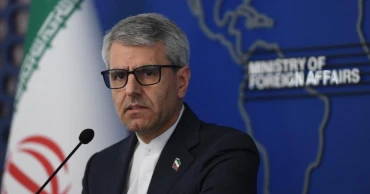
Iran warns Netanyahu’s US visit could undermine nuclear talks
Iran on Tuesday warned that Israeli Prime Minister Benjamin Netanyahu’s visit to the United States could disrupt the newly resumed nuclear negotiations between Tehran and Washington.
Netanyahu left for Washington to meet U.S. President Donald Trump, aiming to push for a tougher stance on Iran’s ballistic missile program. This marks his seventh meeting with Trump since returning to office, including one in Jerusalem last October following a Gaza ceasefire.
“On this trip, we will discuss a range of issues: Gaza, the region, but first and foremost the negotiations with Iran,” Netanyahu told reporters. He said Israel will present its views on “principles of the negotiations,” which he described as crucial for regional peace and security.
Iranian Foreign Ministry spokesman Esmaeil Baghaei criticized the visit, saying Israel has been the main source of insecurity in the region. He accused Israel of turning Iran’s peaceful nuclear program into a “fabricated crisis” and said the U.S. should act independently of “destructive pressures” from foreign lobbies. Baghaei stressed that Iran is serious about diplomacy and seeks the removal of “illegal” sanctions.
Meanwhile, Ali Larijani, secretary of Iran’s Supreme National Security Council, visited Oman, where he met Sultan Haitham bin Tariq to discuss the Iranian-U.S. negotiations and ways to reach a fair agreement. The Omani statement emphasized dialogue, peaceful resolution of disputes, and promotion of regional and global stability.
The talks in Muscat last Friday came amid rising tensions between Tehran and Washington over U.S. military deployments in West Asia. Following the discussions, Trump described them as “very good,” while Iranian Foreign Minister Seyed Araghchi said the process’s continuation depends on consultations in both capitals.
3 months ago