middle-east
Iran’s new supreme leader faces toughest test amid war
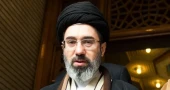
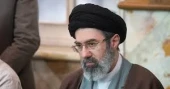
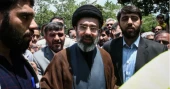
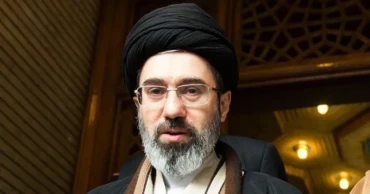
Mojtaba Khamenei has assumed power as Iran’s supreme leader at a time when the country faces one of its most serious crises in decades, following the assassination of his father Ali Khamenei during the initial phase of the ongoing war involving the United States and Israel.
Mojtaba Khamenei, 56, becomes the third supreme leader since the Iranian Revolution. His appointment by the Assembly of Experts comes as the Islamic Republic confronts mounting military pressure and internal divisions.
Supporters of the clerical establishment quickly took to the streets to celebrate the decision, chanting religious slogans and pledging loyalty to the new leader. Security forces also vowed to defend the leadership and the political system.
Iranian state television broadcast footage of missiles launched during the conflict bearing messages dedicated to Mojtaba Khamenei, symbolising the military’s support for the new commander-in-chief.
However, not all reactions inside the country have been supportive. Some Iranians who had previously joined protests against the late leader voiced opposition, with reports of anti-government chants directed at Mojtaba Khamenei in parts of Tehran.
Analysts say Mojtaba Khamenei is widely seen as a continuation of his father’s hardline approach to governance. The cleric spent decades working closely with his father and is believed to have gained deep insight into the workings of Iran’s security and political institutions.
He is also considered closely aligned with the powerful Islamic Revolutionary Guard Corps, which was created after the 1979 revolution to protect the Islamic Republic and now wields extensive political, military and economic influence.
Mojtaba reportedly joined the IRGC as a teenager before pursuing religious studies in the city of Qom.
The new leader’s rise to power comes amid an intensely personal and political conflict. In the Israeli strike on the supreme leader’s compound, Mojtaba reportedly lost several family members, including his mother Mansoureh Khojasteh Bagherzadeh, his wife Zahra Haddad-Adel and a son.
Reports also suggested that Mojtaba himself may have been injured in the attack, although Iranian authorities have not provided details and he has not appeared publicly since the strike.
His leadership has already drawn sharp criticism from US President Donald Trump, who earlier described Mojtaba Khamenei as “unacceptable” and warned that he might not remain in power for long.
Israeli officials have also issued threats against Iran’s new leadership, with Defence Minister Israel Katz saying that any successor to the late supreme leader would remain a potential target.
Despite the hardline image surrounding Mojtaba Khamenei, some figures close to him have suggested he could pursue a different approach. Iranian political figure Abdolreza Davari has described him as “progressive” and compared him to Mohammed bin Salman, who expanded certain social freedoms while maintaining firm political control.
However, analysts say there are currently few signs of such reforms, particularly as Iran remains deeply entangled in a widening regional conflict that has strained relations across the Middle East and triggered global economic concerns.
Observers note that Mojtaba Khamenei’s leadership will now be defined by whether he can navigate the war and maintain control over Iran’s political system during what many describe as an existential moment for the Islamic Republic.
With inputs from BBC
2 months ago
Iranians divided over Mojtaba Khamenei becoming supreme leader
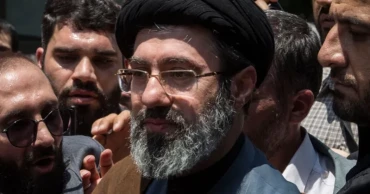
Iranians appear sharply divided over the appointment of Mojtaba Khamenei as the new supreme leader following the killing of his father, Ali Khamenei, during the opening phase of the war involving the United States and Iran.
Some pro-government supporters have taken to the streets to celebrate Mojtaba’s rise to power, while others say the leadership change will not bring meaningful reform to the country’s political system.
Mojtaba Khamenei, 56, was selected by the Assembly of Experts, an 88-member body tasked with choosing Iran’s supreme leader.
Several residents in the capital Tehran told the BBC that the selection signals continuity rather than change.
“Even the smallest chance of reform within the system is gone,” said a man in his 30s in Tehran, adding that the Assembly of Experts could not have chosen anyone closer to the late leader.
“For supporters of the system, nothing will change — they don’t even need to change their slogans,” he said.
For years, Mojtaba Khamenei was widely believed to wield considerable influence behind the scenes during his father’s rule. Analysts expect him to maintain the same hardline policies that characterised the late leader’s tenure.
Some Iranians expressed fears that the new leader could adopt an even tougher stance.
A woman in her 20s in Tehran said she believed Mojtaba would be “more oppressive than his father,” while another resident warned that the war and his father’s death could make his rule more vengeful.
“They killed his father and he won’t forget it,” said a man in his 30s. “If he cannot retaliate against the United States, ordinary people may suffer.”
Despite criticism from some quarters, Iranian state television has broadcast large rallies supporting the new leader in cities including Qom and Mashhad, Mojtaba’s birthplace.
Footage aired by the state-run channel IRINN showed crowds waving Iranian flags and holding posters featuring Mojtaba Khamenei alongside his father.
Supporters praised the decision, saying it would ensure continuity of leadership.
“We are certain the path will continue under his leadership,” one supporter said at a rally in Tehran’s Enghelab Square.
However, social media videos verified by BBC Persian showed some protests as well, with demonstrators chanting slogans opposing Mojtaba Khamenei while others shouted religious slogans in support.
Mojtaba Khamenei largely stayed out of the public spotlight during his father’s rule, though leaked US diplomatic cables published by WikiLeaks described him as a powerful figure behind the scenes and a key gatekeeper to the late supreme leader.
He has also been accused by critics of influencing presidential elections and maintaining close ties with the powerful Islamic Revolutionary Guard Corps and the paramilitary Basij.
His appointment comes as the United States and Israel continue military strikes inside Iran amid the ongoing conflict.
US President Donald Trump has already criticised Mojtaba’s leadership, saying he was “unacceptable” and suggesting that any successor chosen without Washington’s approval “would not last long.”
Israeli officials have also warned that they would continue targeting Iran’s leadership if the conflict escalates further.
Analysts say Mojtaba Khamenei now faces the most serious test of Iran’s leadership since the Iranian Revolution, as the country grapples with war, internal divisions and growing international pressure.
With inputs from BBC
2 months ago
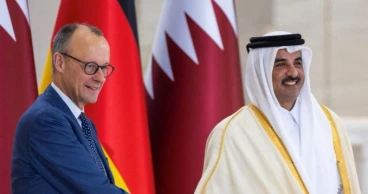
Qatar’s emir, German chancellor emphasise ‘diplomatic solutions’ to end war
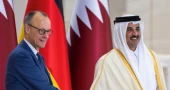
Sheikh Tamim bin Hamad Al Thani, the emir of Qatar, held a phone conversation with Friedrich Merz, the chancellor of Germany, to discuss the escalating situation in the Middle East.
According to a statement from the Qatari ruler’s office, the two leaders reviewed the latest developments amid what was described as continued Iranian aggression against Qatar and other countries in the region. They also discussed regional and international initiatives aimed at containing the tensions and strengthening security and stability.
Both leaders stressed the need to intensify global efforts to de-escalate the situation and prioritise diplomatic solutions to halt further escalation and preserve peace.
The statement added that these de-escalation efforts are consistent with the principles of the United Nations Charter, which calls for resolving disputes through peaceful means and respecting the territorial integrity of states.
#With inputs from ALJAZEERA
2 months ago
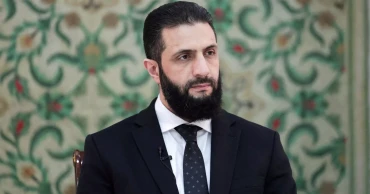
Syria stands with Lebanon in disarming Hezbollah: Al-Sharaa
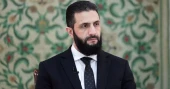
Syrian President Ahmed al‑Sharaa has said that Syria supports Lebanon in efforts to disarm the militant group Hezbollah.
Al-Sharaa said the ongoing conflict in the region is having “direct and serious repercussions” for Syria.
He also voiced support for the position of Lebanese President Joseph Aoun on disarming Hezbollah, stressing that Syria backs Lebanon’s approach on the issue.
The Syrian president added that his country maintains a firm stance in condemning all forms of aggression against the sovereignty of Arab states. #From ALJAZEERA
2 months ago
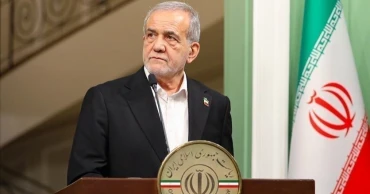
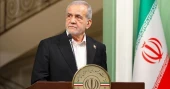
Iran's president praises new supreme leader
Iranian President Masoud Pezeshkian has welcomed the appointment of Mojtaba Khamenei, the son of Ali Khamenei, as the country’s new supreme leader.
In a message posted on the social media platform X, Pezeshkian described Mojtaba’s selection as “a manifestation of the people’s will in governance.”
The president expressed hope that Iran would be able to address its challenges under the new leader’s “wise leadership” and through the creation of an atmosphere built on public trust and participation.
Pezeshkian came to power after winning Iran’s presidential election in July 2024, defeating hardline conservative rival Saeed Jalili with 53.3 percent of the vote. However, the election was marked by widespread dissatisfaction, with millions of voters reportedly boycotting the polls.
On Saturday morning, Pezeshkian apologised to neighbouring countries for recent Iranian strikes targeting their territories.
Despite the apology, regional tensions continued. Turkey, United Arab Emirates and Qatar said on Monday that they had intercepted Iranian missiles, two days after the president’s remarks, with additional strikes reported over the weekend. #From BBC
2 months ago
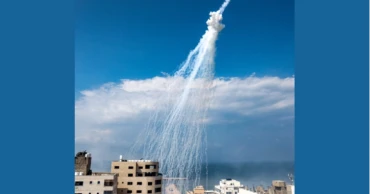
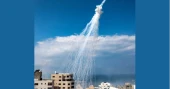
Israel accused of using white phosphorus in southern Lebanon
Human Rights Watch reported Monday that the Israeli military “unlawfully” targeted a village in southern Lebanon with white phosphorus shells, a controversial incendiary weapon.
By geolocating and verifying seven images, the group said Israel fired white phosphorus artillery at residential areas in the village of Yohmor. The strikes occurred hours after the Israeli military warned residents of Yohmor and dozens of other southern Lebanese villages to evacuate. Human Rights Watch could not independently confirm whether anyone remained in the area or if civilians were harmed.
Israeli helicopters conduct overnight raid deep in Lebanon
The Israeli military did not immediately respond to requests for comment. In previous statements, it has said white phosphorus is used as a smoke screen and not to target civilians.
Human rights experts say using white phosphorus in populated areas violates international law. The chemical can ignite buildings and burn human flesh down to the bone, leaving survivors at risk of infection or organ and respiratory failure, even from minor burns.
Ramzi Kaiss, a Lebanon researcher at Human Rights Watch, said, “The Israeli military’s unlawful use of white phosphorus over residential areas is extremely alarming and will have dire consequences for civilians.”
Groups including Human Rights Watch and Amnesty International noted that Israel also used white phosphorus repeatedly during its last war with Hezbollah over a year ago in southern Lebanon while civilians were still present.
2 months ago
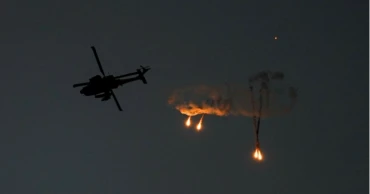
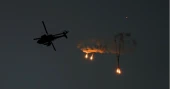
Israeli helicopters conduct overnight raid deep in Lebanon
Lebanon experienced a tense night as reports emerged just before midnight of Israeli helicopters flying along the Lebanese-Syrian border, apparently attempting to land infantry forces. Hezbollah said it engaged the helicopters and ground troops using what it called “appropriate weapons.”
The incident follows a similar Israeli helicopter operation two days ago near Nabi Chit in the Bekaa Valley, about 70 km from the Israeli border. Unlike routine incursions into southern Lebanon, this was a deep air operation. The Israeli military said the mission aimed to recover the remains of an airman missing in the area for more than 40 years. When troops landed, they came under fire from Hezbollah, prompting the Israeli air force to carry out dozens of strikes within minutes, killing 41 people and wounding more than 40 others.
Iran war expands into civilian infrastructure with Bahrain water plant strike
The purpose of Monday night’s attempted infiltration remains unclear.
Meanwhile, military operations across Lebanon continue, with southern regions enduring multiple air strikes over the past 24 hours. Among them, a strike on a residential building caused multiple casualties, adding to the rising toll from the ongoing conflict.
2 months ago
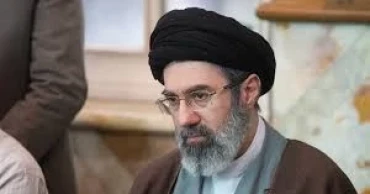
Who is Mojtaba Khamenei? Iran’s new supreme leader amid war
Mojtaba Khamenei, the second son of Iran’s late leader Ayatollah Ali Khamenei, has been chosen as the new supreme leader of Iran amid the ongoing war involving the United States and Israel, according to state media reports.
Ali Khamenei was killed on the first day of the war when attacks targeted his compound in Tehran. The strike also killed Mojtaba’s mother, wife and one of his sisters. The 56-year-old cleric was reportedly not present at the time and survived the bombing.
Iran’s Assembly of Experts, the 88-member clerical body responsible for selecting the country’s supreme leader, confirmed his appointment and called for national unity. In a statement carried by state media on Sunday, the assembly said Mojtaba Khamenei was chosen through a “decisive vote”.
The body urged Iranians, “especially the elites and intellectuals of the seminaries and universities”, to “pledge allegiance to the leadership and maintain unity”.
Although he has never run for public office or faced a nationwide vote, Mojtaba Khamenei has long been considered an influential figure within the inner circle of Iran’s leadership. Over the years he developed strong connections with the powerful Islamic Revolutionary Guard Corps and its affiliated paramilitary forces.
His rise to the top position suggests that hardline factions within Iran’s political establishment continue to hold significant influence, potentially signalling limited willingness by Tehran to enter negotiations in the near future.
For years Mojtaba Khamenei had been mentioned as a likely successor to his father, who served nearly eight years as president and then ruled as supreme leader for more than three decades before his death.
However, the new leader has largely kept a low public profile. He rarely gives speeches or public lectures, and many Iranians have never heard his voice despite his long-standing influence within the ruling establishment.
His possible succession had long been considered sensitive because it could resemble a hereditary transfer of power similar to the monarchy that ruled Iran before the Iranian Revolution.
Allegations over protest crackdowns
For nearly two decades, critics inside and outside Iran have linked Mojtaba Khamenei to the suppression of anti-government protests.
Reformist figures first accused him of influencing the disputed 2009 presidential election that returned Mahmoud Ahmadinejad to power. The election triggered mass demonstrations known as the Green Movement.
Opposition groups claimed that the paramilitary Basij force, which operates under the Revolutionary Guard, was used to crack down on protesters.
The Basij has since played a central role in suppressing several waves of nationwide demonstrations, including recent protests in which international organisations and the United Nations said thousands of people were killed during security operations earlier this year.
Iranian authorities have repeatedly blamed the unrest on “terrorists” and “rioters” allegedly supported by the United States and Israel.
Military ties and economic influence
Mojtaba Khamenei built close links with the Revolutionary Guard during the 1980s when he served in its Habib Battalion during the Iran–Iraq War. Many of his former comrades later secured influential positions in Iran’s security and intelligence institutions.
Western governments have imposed sanctions on him, and media reports have alleged that he controls a large financial network spanning several countries.
According to reports cited by Bloomberg, he has been linked to Iranian businessman Ali Ansari, whose Bank Ayandeh collapsed last year after heavy debts and controversial loans to insiders. The bank’s dissolution reportedly worsened Iran’s inflation as some losses were covered using public funds.
Neither Khamenei nor Ansari has publicly responded to the allegations.
Questions over religious credentials
Another issue surrounding Mojtaba Khamenei’s leadership is his clerical rank. He holds the title of hojatoleslam, a mid-ranking position within the Shiite clerical hierarchy, rather than the higher title of ayatollah traditionally associated with the supreme leadership.
However, his father was also not an ayatollah when he assumed the role in 1989, and Iran’s laws were later adjusted to accommodate his leadership. A similar arrangement could again be made if needed.
With heavy bombing continuing across Iran and authorities imposing widespread internet restrictions, it remains unclear when the government will formally announce the next steps in its leadership transition.
With inputs from Al Jazeera
2 months ago
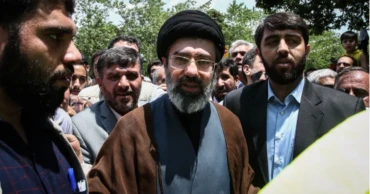
Mojtaba Khamenei named Iran’s new supreme leader
Iranian state television early Monday announced that Mojtaba Khamenei, the son of the country’s late supreme leader, has been appointed as his successor.
Mojtaba had long been viewed as a potential candidate for the position, even before his father was killed in an Israeli strike at the outset of the ongoing war. Despite his influence, he has never held an elected office or been formally appointed to a government post.
As supreme leader, he will oversee key national decisions, including military strategy, with Iran’s powerful paramilitary Revolutionary Guard directly answering to him.
Trump threatens ‘very hard’ strikes; Iran rejects surrender demand
Meanwhile, U.S. President Donald Trump told ABC News on Sunday that he wants a role in determining who ultimately leads Iran after the war, warning that any new leader “is not going to last long” without his approval.
Separately, the U.S. military said a seventh American service member has died from injuries sustained during an Iranian attack while stationed in Saudi Arabia. The previous six casualties were Army reservists killed in a March 1 strike on a port in Kuwait.
U.S. intelligence officials also believe Russia has shared information with Iran to help target American troops and assets in the Middle East.
In response, Iranian Foreign Minister Abbas Araghchi said in an interview on Sunday that military cooperation between Tehran and Moscow “is not something new.”
At the same time, growing evidence indicates that a deadly explosion at an Iranian elementary school on February 28 was likely caused by a U.S. airstrike.
The incident resulted in the highest reported civilian death toll since the war began, drawing strong criticism from the United Nations and human rights organisations.
The United States has not accepted responsibility but said it is looking into the allegations.
The conflict has continued to take a heavy toll, with at least 1,230 people reported killed in Iran, more than 300 in Lebanon and around a dozen in Israel, according to officials in those countries.
2 months ago
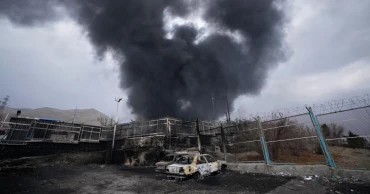
Global oil prices jump above $100 amid Iran war supply fears
Oil prices jumped above $114 per barrel on Monday for the first time since 2022 as the escalating Iran war threatened energy production and shipping routes in the Middle East.
Brent crude, the international benchmark, rose past $114 after trading resumed on the Chicago Mercantile Exchange, marking a 23% increase from Friday’s closing price of $92.69. U.S. benchmark West Texas Intermediate (WTI) was also trading near $114 per barrel, about 25% higher than its Friday close of $90.90.
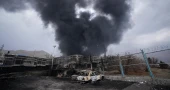
The surge came as the conflict’s impact widened. Bahrain accused Iran of striking a desalination plant vital to drinking water supplies, while Israeli overnight strikes set oil depots in Tehran on fire.
Last week alone, U.S. crude prices rose 36% and Brent crude climbed 28% as the war, now in its second week, spread to areas critical for global oil and gas production and transport.
About 15 million barrels of crude — roughly 20% of the world’s supply — typically pass daily through the Strait of Hormuz, according to Rystad Energy. However, threats of Iranian missile and drone attacks have largely halted tanker traffic through the strategic route.
Major producers such as Iraq, Kuwait and the UAE have cut output as export disruptions filled storage tanks. Meanwhile, Iran, Israel and the United States have targeted energy facilities since the war began, raising fears of supply shortages.
The price spike has unsettled financial markets, with Tokyo’s Nikkei 225 plunging more than 7% early Monday. In the United States, gasoline rose to $3.45 per gallon Sunday, about 47 cents higher than a week earlier, according to AAA. Analysts warn sustained prices above $100 per barrel could strain the global economy.
2 months ago