Gadget

Kieslect Pura Reno Review: A Compact Smartwatch for Women
Renowned Chinese smart-wearable maker Kieslect has launched a new smartwatch, Pura Reno, expanding its Lady Smartwatch Series. Embodying a women-centric aesthetic, the Pura Reno boasts an unrivaled appeal. Let’s go over the key features of this smartwatch.
Essential Features of the Kieslect Pura Reno Smartwatch
The Pura Reno smartwatch is a forerunner in the less crowded, affordable women's smartwatch niche with no remarkable competitors. Here is a complete dissection of its design, display, hardware, software, and other mentionable features.
Design
The Pura Reno’s mainframe is a solid circular 40.5 by 40.5 by 10mm metal body with a plastic back panel. The metal part of the frame glosses with polished gold overcoating, which manifests in a worm aura. Elaborating on that aura, two narrow soft leather straps join the frame through golden strap holders. With the sleekness of the metal body, the warmth of the golden coating, and the softness of the leather straps, Pura Reno’s design relishes femininity.
Read more: Kieslect Kr 2 Ltd Review: A Premium Smartwatch Within Budget
Display
A 1.19-inch rimless AMOLED panel fitted on the mainframe renders vivid imagery at a 390 by 390 px resolution. With a 60Hz refresh rate, the display responds well to touch instructions. For protection, a high-hardness glass piece covers the display. Users can customize the watch face through a dedicated app with over a hundred colorful screens.
Hardware and Software
Pura Reno offers a combination of fitness, connectivity, and lifestyle functionalities. Users will get over a hundred sports modes that cater to diverse measurements and trackers for multifarious athletic moves. Connection with the Kstyle OS app is effortless for Android and iOS devices thanks to its Kstyle OS.
Battery and Charger
A robust 250mAh battery with a typical runtime of 7 to 8 days bolsters relentless usage. The runtime can be further extended to 20 days using the battery-saver mode. A strong magnetic charging device precisely places itself on the charging port and takes around 2.5 hours to charge a completely depleted battery.
Read more: Colmi P78 Smartwatch Review: A Feature-Packed Budget Wearable Worth Considering
Pros and Cons of the Pura Reno Smartwatch
.
Pros
- Elegant design- Vivid AMOLED display- 100+ sports modes- Long battery life- Customizable watch faces- Affordable price
Cons
- No built-in GPS- Limited smart features- Slow charging- Plastic back panel.
Read more: Xinji Nothing 3 Review: Amoled Smartwatch for 5000 Taka
Price of Kieslect Pura Reno in Bangladesh
The Pura Reno smartwatch is available at BDT 5,149. However, the price may vary depending on the sellers.
Conclusion
The Kieslect Pura Reno perfectly balances style and functionality, boasting a feminine design, a vivid AMOLED display, a durable battery, diverse metrics and sensors, and easy customization options. Anyone seeking an affordable smartwatch for women can consider the Pura Reno.
Read more: Havit M9030 Pro Review: A Competent Mid-range Smartwatch
1 year ago
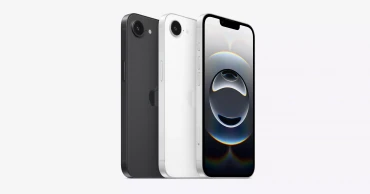
iPhone 16e Review: Budget-Friendly Apple Experience with Premium Features
Apple’s highly anticipated iPhone 16 series has arrived, featuring the iPhone 16, iPhone 16 Pro, and a brand-new budget option, the iPhone 16e. Set to launch on February 28, 2025, the iPhone 16e is designed to offer a premium Apple experience at a more affordable price, positioning it as a strong competitor to its predecessors and rivals like Google’s Pixel 9a.
Key Features of iPhone 16e
.
Design and Build Quality
The iPhone 16e maintains Apple’s signature premium build with a glass front and back and an aluminum frame, ensuring durability while keeping it lightweight at 167g. It retains the IP68 water and dust resistance rating, matching the iPhone 16, Samsung Galaxy S25, and Google Pixel 9a.
However, compared to the OnePlus 13, which boasts a sturdier ceramic guard glass and a high-pressure water resistance rating, the iPhone 16e falls slightly behind in durability. While the iPhone 16 comes in more color options, the iPhone 16e is limited to Black and White, making it less appealing for those who prefer vibrant choices.
Read more: realme 14 Pro+ Review: Know the Pros and Cons
Display Quality
Apple equips the iPhone 16e with a 6.1-inch Super Retina XDR OLED panel, which offers excellent color accuracy, deep blacks, and HDR10 support. The display boasts an 1170 by 2532-pixel resolution with a 60Hz refresh rate like the iPhone 16 and older iPhones which falls behind the 120Hz seen on the iPhone 16 Pro, Samsung Galaxy S25, and OnePlus 13.
Google's Pixel 9a features a slightly larger 6.3-inch OLED display with a 120Hz refresh rate, making it more fluid for scrolling and gaming.
Meanwhile, OnePlus 13 stands out with a 6.82-inch LTPO AMOLED panel at 1440p resolution and 120Hz, providing the sharpest and smoothest visual experience among competitors.
While the iPhone 16e’s display is crisp and bright, peaking at 1200 nits, it does not reach the extreme 2600-nit brightness of the Galaxy S25, making it slightly harder to view under direct sunlight.
Read more: Samsung Galaxy S25 Ultra Review: A Game-Changer or Overpriced Flagship?
Camera Performance
Apple has equipped the iPhone 16e with a 48MP primary sensor, similar to the iPhone 16 but without the ultrawide secondary lens. Despite lacking a second camera, the iPhone 16e still delivers impressive image quality with optical image stabilization (OIS) and Apple’s Smart HDR technology. It excels in low-light photography, producing sharp details and accurate colors.
1 year ago
Kieslect Kr 2 Ltd Review: A Premium Smartwatch Within Budget
Chinese smart-wearable brand Kieslect launched Kieslect Kr 2, in 2024 to demonstrate its ability in crafting quality devices. A limited edition of the watch, the Kieslect Kr 2 Ltd, has entered Bangladesh and garnered attention in the affordable market where premium names like Xiaomi and CMF rule. This article provides a look at Kieslect Kr 2 Ltd's specifications and gives a competitive overview of its key features, strengths, weaknesses, and target audience.
In-Depth Review of Kieslect Kr 2 Ltd
The Kieslect Kr 2 Ltd edition excludes the extra pair of straps offered by the regular Kieslect Kr 2 model; otherwise, both share the same features and capacities.
Design
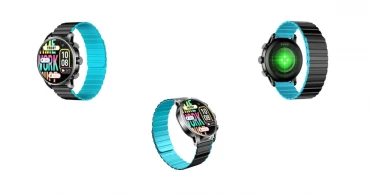
The Kieslect Kr 2 Ltd has a 46.40 by 11.65mm circular stainless steel frame and a silicone strap. Though the mainframe is metal, the watch uses a plastic back panel to reduce extra weight, but it still feels a little heavy at 58 g. To navigate, users will find three metal crowns crowding on the right side. The watch comes in an Iron Gray colour choice and IP68 dust-water resistance.
Read more: Colmi P78 Smartwatch Review: A Feature-Packed Budget Wearable Worth Considering
Competitively, the Kieslect Kr 2 Ltd is slimmer than the CMF Watch Pro 2 and close to the thickness of the Xiaomi Smart Band 9 Pro. But it struggles against the CMF and Xiaomi’s lighter full-metal bodies, leather straps and multiple color options.
Display
The Kieslect Kr 2 Ltd brings a 1.43-inch AMOLED display, larger than CMF’s but smaller than Xiaomi’s. In terms of vivacity and brightness, the Kr 2 stands out with a 466 by 466 px picture resolution and 1000 nit peak brightness level. Its 60Hz refresh rate is also on par, providing a beyond-class touch response. The watch covers the screen with a high hardness that comes with an extra copy.
Hardware and Software
Featuring a 240Mhz dual-core processor and a 2.5D GPU, the Kieslect Kr 2 Ltd provides satisfactory performance. It unpacks over 100 sports modes and diverse sensors. Users will get near-accurate feedback from the built-in biometric sensor.
Read more: Xinji Nothing 3 Review: Amoled Smartwatch for 5000 Taka
For operation, the watch boasts a customizable Kieslect operating system compatible with Android 5.0 and IOS 9.0 and beyond. Connecting to the Kieslect app follows a simple process and provides users with a full range of customization options.
More than standard smartwatch functions, the watch boasts easy pairing and additional features, like AI voice response, mini-games, and a dual-screen display.
Battery and Charger
A giant 360mAh battery surpasses all competition by providing support for 6 to 7 days of typical usage, which reduces to 3 to 4 days with heavy usage. If run on battery saver mode, the watch can survive 50 days at a stretch. The fully depleted battery takes around 2 hours to be charged from zero to full.
Read more: Havit M9030 Pro Review: A Competent Mid-range Smartwatch
Pros and Cons of the Kieslect Kr 2 Ltd
.
Pros
- Premium Build- High-Quality Display- Long Battery Life- Smooth Performance- IP68 Water & Dust Resistance.- 100+ Sports Modes.
- AI Features & Mini-Games.- Easy Connectivity.
Read more: Haylou RS5 Review: A Budget-friendly Smartwatch with Health Monitoring Features
Cons
- Heavy- Limited Color Options- Plastic Back Panel- No Extra Straps- No Full Metal Body
Price of Kieslect Kr 2 Ltd in Bangladesh
The Kieslect Kr 2 Ltd is available at BDT 6,510. However, the price may vary depending on the sellers.
Conclusion
The Kieslect Kr 2 Ltd is a treat for budget buyers. Even at a slightly lower price, the smartwatch is on par with the market-dominating models from renowned brands. With a crisp AMOLED display, attractive design, and a robust battery, the Kieslect Kr 2 Ltd is one of the best buys in the value-for-money segment.
Read more: Xinji Cobee CA1 Review: Waterproof Smartwatch to Monitor Health and Fitness
1 year ago
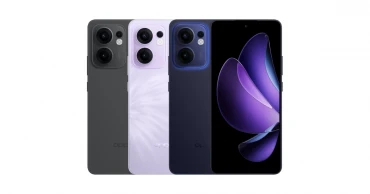
OPPO Reno 13F 5G Review: A Stylish Powerhouse or Just Another Mid-Range Phone?
OPPO has long been a leader in stylish, feature-packed smartphones, catering to casual users and tech enthusiasts. Releasing in January 2025, the OPPO Reno 13F 5G continues this tradition, bringing 5G connectivity, upgraded cameras, and a sleek design. But does it stand out in the crowded mid-range market? Let’s find out.
Key Features of OPPO Reno 13F 5G
.
Design and Build Quality
The OPPO Reno 13F 5G maintains the sleek, premium look that the Reno series is known for. With a thin 7.8mm profile and 192g weight, it is slightly heavier than the Reno 12F (187g) but feels solid in hand.
The biggest improvement is the IP68/IP69 rating, offering better dust and water resistance than the rival vivo Y300 and ancestor Reno 12F’s IP64 rating. This means the Reno 13F can survive high-pressure water jets and immersion up to 2 meters for 30 minutes, making it a more durable option than its predecessor. Another rival realme P3 Pro is equally dust and water-resilient like Reno 13F.
Read more: iPhone SE 4 (2025): Latest Leaks, Rumors, and Features of Apple’s Most Affordable Powerhouse
In terms of aesthetics, the Plume Purple, Graphite Grey, and Luminous Blue color options make it visually appealing, competing well with Realme’s Nebula Glow and Saturn Brown finishes.
Display Quality
The Reno 13F sports a 6.67-inch AMOLED display featuring 1080 by 2400 resolutions with a 120Hz refresh rate, delivering smooth scrolling and fluid animations. It retains the 2100-nit peak brightness from the Reno 12F, ensuring excellent outdoor visibility. The Asahi Glass AGC DT-Star2 protection is the same as its predecessor, offering decent scratch resistance.
Turning to the competitors, realme P3 Pro boasts a slightly larger (6.83”) display, lower peak brightness (1500 nits) with a higher (1272 by 2800) resolution. On the other hand, the vivo Y300 features a similar-sized display and the same resolution with a lower (1800-nit) brightness and lacks HDR support.
Read more: OPPO Reno13 Pro 5G Review: Is It Worth the Hype?
Camera Performance
The 50MP main sensor on the Reno 13F remains the same as the Reno 12F but now supports 4K video recording at 30fps and gyro-EIS for smoother footage. The 8MP ultra-wide and 2MP macro cameras are unchanged, providing versatility for landscape and close-up shots. Daylight photography sees improvements in color accuracy and sharpness, but low-light images still struggle with noise, similar to the Reno 12F.
Against the realme P3 Pro, which also uses a 50MP main camera with OIS, the Reno 13F performs comparably. However, Realme’s larger sensor size (1/1.56”) gives it an edge in night photography. The vivo Y300, featuring only a dual-camera setup with a 50MP main and 2MP depth sensor, offers decent results but lacks an ultra-wide lens, making the Reno 13F the better choice for camera versatility.
In the latest OPPO Reno 12F, the 32MP selfie camera remains unchanged from its ancestor Reno 12F, capturing detailed, well-lit selfies. It outperforms the realme P3 Pro’s 16MP front camera, delivering sharper images. The vivo Y300, also featuring a 32MP sensor, competes closely but slightly lacks in dynamic range.
Read more: Lenovo Yoga Slim 7i Aura Edition Review: A True MacBook Competitor or Just Hype?
Processor Performance
The Reno 13F takes a big leap in performance by upgrading to the Snapdragon 6 Gen 1 (4nm) chipset, replacing the Dimensity 6300 (6nm) in the Reno 12F. This results in better efficiency and faster app launches. The Adreno 710 GPU also brings improved graphics performance, making the device more capable of handling demanding applications.
Compared to competitors, the realme P3 Pro outshines the Reno 13F with its Snapdragon 7s Gen 3, offering higher CPU and GPU clock speeds, making it a better performer for intensive tasks. The vivo Y300, running on Snapdragon 4 Gen 2, falls behind in raw power, making the Reno 13F the better choice for smooth everyday usage.
Gaming Performance
With the Adreno 710 GPU and 120Hz refresh rate, gaming on the Reno 13F is smoother than the Reno 12F. Titles like Call of Duty: Mobile and PUBG Mobile run on high settings with minimal frame drops. Compared to the realme P3 Pro, which has the Adreno 710 GPU clocked at 940MHz, OPPO’s version is slightly underpowered for extended gaming sessions. The vivo Y300 struggles the most, with occasional lags in graphically demanding games due to its weaker Adreno 613 GPU.
Read more: Best Flagship Smartphones of 2024: Top Premium Picks You Shouldn’t Miss
Heat management is better than the Reno 12F, thanks to the more efficient 4nm processor, but it still warms up under prolonged gaming, unlike realme P3 Pro, which features better thermal optimization.
Battery Life
OPPO has significantly improved Reno 12F’s 5000mAh battery to 5800mAh in 13F. This provides longer endurance, lasting nearly two full days on moderate usage. Fast charging remains 45W, allowing it to charge 44% in 30 minutes, which is decent but slower than the realme P3 Pro’s 80W charging.
The vivo Y300 also features an 80W charger, giving it an advantage in charging speed, but its 5000mAh battery means it won’t last as long as the Reno 13F. The increased battery capacity makes the OPPO Reno 13F one of the best choices for users prioritizing battery life.
Read more: Honor 300 Review: New Contender in Midrange Smartphone Segment
Software and User Interface
Running on Android 15 with ColorOS 15, the Reno 13F delivers a cleaner, more polished UI with better customization options. The bloatware situation has improved slightly, but some pre-installed apps remain. Compared to realme UI 6.0 on the P3 Pro, ColorOS offers more visual customization but slightly slower updates.
The vivo Y300 runs on Funtouch OS 14, which is closer to stock Android but lacks feature richness. Of the three, ColorOS remains one of the more optimized and smooth experiences, making the Reno 13F a great daily driver.
Storage Options
The Reno 13F offers four storage configurations: 128GB/8GB, 256GB/8GB, 256GB/12GB, and 512GB/12GB, all using UFS 3.1 for faster read/write speeds. This is a step up from the Reno 12F’s UFS 2.2, providing faster app loading times and better multitasking.
Read more: itel A80 Review: Smartphone under Tk 10k with Standard Features
When compared to competitors, realme P3 Pro lacks a microSD slot, limiting expandability. The vivo Y300, despite having a microSD slot, still uses UFS 2.2, making OPPO the better choice for fast storage performance.
Pros and Cons of OPPO Reno 13F 5G
Pros
- IP68/IP69 dust and water resistance for durability.- 6.67-inch AMOLED display- 120Hz refresh rate- 2100 nits peak high brightness.- 50MP triple rear camera with OIS and 32MP selfie camera.- Snapdragon 6 Gen 1 chipset for smooth performance.- Android 15 with ColorOS 15 for a user-friendly experience.- 5800mAh battery with 45W fast charging.- Stereo speakers for better audio quality.- In-display fingerprint sensor for secure unlocking.- 5G connectivity for faster internet speeds.
Read more: Colmi P78 Smartwatch Review: A Feature-Packed Budget Wearable Worth Considering
Cons
- No 3.5mm headphone jack for wired audio.- No FM Radio support for radio listeners.- Slower 45W charging compared to some competitors with 80W.- Pre-installed bloatware in ColorOS.- Gaming performance is decent but not the best in its price range.
Price of OPPO Reno 13F 5G
The OPPO Reno 13F 5G is priced at around BDT 34,990. However, the price may vary depending on the sellers.
Verdict
The OPPO Reno 13F 5G can be a good pick for users who want a stylish, durable phone with a bright display, solid cameras, and long battery life. It is ideal for casual users, photographers, and multimedia lovers. However, gamers and those needing ultra-fast charging or a 3.5mm jack may prefer other options.
Read more: realme 14 Pro+ Review: Know the Pros and Cons
1 year ago
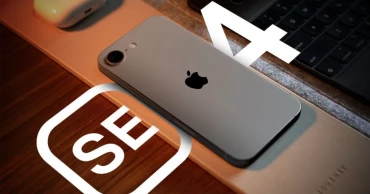
iPhone SE 4 (2025): Latest Leaks, Rumors, and Features of Apple’s Most Affordable Powerhouse
Apple is reportedly set to unveil the iPhone SE 4, the latest addition to its budget-friendly SE lineup, as early as next week. The upcoming iPhone SE 4 (2025) promises to blend premium features with affordability, making it an appealing option for those seeking high performance without a premium price tag. With significant upgrades expected, this release could mark a major shift in Apple’s entry-level offerings. Here’s a deep dive into all the leaks, rumors, and anticipated features surrounding the iPhone SE 4 (2025).
iPhone SE 4 (2025) Rumours and Leaks
The market is abuzz with rumours about the upcoming iPhone SE 4 as the phone's unannounced release date approaches. To trigger more anticipation, frequent leaks are teasing fans over social media. Here are the major rumours and leaks:
Name
The new iPhone SE 4 will be a major overhaul, drastically changing almost every aspect of the entire SE line-up. Reports from several sources claim that the phone won’t be an SE phone; instead, it will be called the iPhone 16E. Experts justify the claim by highlighting Apple’s departure from the affordability tag.
Read more: OPPO Reno13 Pro 5G Review: Is It Worth the Hype?
Design
Rumours say the iPhone SE 4 will resemble the iPhone 14 in design and the primary camera module. This would mark a phenomenal shift for the series, making it leave the iPhone 8 chassis and start a new aesthetic formation. Fans are expecting an aluminium and glass combined frame protected with Apple’s Ceramic Shield glass.
Instead of the iPhone 14’s multi-camera layout, the SE 4 will have a single circular lens holder. If the rumour comes true, it will end the SE series’ far-celebrated home button and bring a larger screen size. Instead of the home button, users will find a cutting-edge Face detection system.
Display
The iPhone SE 4 will make a major leap by replacing the previous model’s 4.7-inch LCD panel with a 6.1-inch Super Retina XDR OLED display. Compatible arrangements for the display indicate a resolution of 1170 by 2532 pixels, an approximately 457 ppi colour density, and a peak brightness level of 1200 nits. To room the larger display, bezels, and chins will become narrower, increasing the screen-to-body ratio.
Read more: Lenovo Yoga Slim 7i Aura Edition Review: A True MacBook Competitor or Just Hype?
Cameras
The new wallet-friendly iPhone's camera will surpass the previous model’s in several aspects: first, it will have a more powerful lens, expectedly of a 48MP capacity, and second, the lens is Apple’s latest invention called “Fusion,” which features 2X optical quality zoom without a telephoto lens.
Processor and GPU
Though a lower-budget phone, the iPhone SE always boasts the same processor as its contemporary flagship iPhone model. So, people are anticipating a 3nm Apple A18 chipset in the SE 4. As for a graphical processor, anticipations suggest a 5-core Apple GPU chipset to keep pace with the A18 processor. There is also a strong chance that the phone will support Apple Intelligence, which is only available in the iPhone 16 series and last year’s Pro models.
Battery
Many reputed sources predict a more powerful battery in the iPhone SE 4. Like many other features, the battery may also resemble the iPhone 14’s to support the larger display and more potent chipsets.
Read more: Best Flagship Smartphones of 2024: Top Premium Picks You Shouldn’t Miss
Price of the iPhone SE 4
The iPhone SE 4 will cost more than its previous models. According to experts, the phone may cost around $500 or BDT 60,000 (at a conversion rate of USD 1 = BDT 121.13).
Conclusion
According to all these rumours and leaks, a new iPhone SE 4 (2025) version is coming to lift the SE lineup to elite status. With a potent 3nm A18 chipset, a modified 48MP primary lens, a larger and better display, and a more durable battery, the iPhone SE 4 (2025) can appear as the ruler of the higher-mid budget segment.
Read more: Honor 300 Review: New Contender in Midrange Smartphone Segment
1 year ago
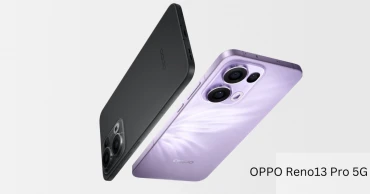
OPPO Reno13 Pro 5G Review: Is It Worth the Hype?
OPPO has consistently pushed the boundaries of smartphone innovation, offering stylish designs and cutting-edge technology. Released in November 2024, the OPPO Reno13 Pro 5G continues this tradition with advanced camera capabilities, a powerful processor, and a smooth display. But does it stand out among competitors in the market? Let’s find out.
Key Features of OPPO Reno13 Pro 5G
.
Design and Build Quality
The OPPO Reno13 Pro 5G refines the sleek and premium design language that OPPO is known for. Featuring a glass front with Gorilla Glass 7i, a sturdy aluminum alloy frame, and a glass back, it feels undeniably premium in hand. Unlike its predecessor, the Reno12 Pro, which had a plastic frame, the new build provides a more solid and high-end feel.
Additionally, OPPO has significantly upgraded its durability, as the Reno13 Pro 5G now comes with an IP68/IP69 rating, making it fully dustproof and capable of withstanding high-pressure water jets. This is a notable improvement over the Reno12 Pro’s IP65 rating, which only protects against low-pressure water jets. In comparison, the Honor 300 Pro offers only IP65 water resistance, while the Xiaomi Redmi K80 Pro goes a step further with IP68 protection up to 2.5m underwater.
Read more: Lenovo Yoga Slim 7i Aura Edition Review: A True MacBook Competitor or Just Hype?
Display Quality
The OPPO Reno13 Pro 5G sports a 6.83-inch AMOLED panel with 1B colors, 120Hz refresh rate, HDR10+, and 1200 nits peak brightness. The display size of the Reno13 Pro has increased slightly from the Reno12 Pro’s 6.7-inch panel. Furthermore, the Reno13 Pro’s resolution has also improved to 1272 by 2800 pixels from Reno12 Pro’s 1080 by 2412 pixels.
The Gorilla Glass 7i protection ensures better scratch resistance and superior surface quality compared to the Reno12 Pro’s Gorilla Glass Victus 2 and the Pedmi K80 Pro’s Longjing Glass 2.
The competitor Honor 300 Pro’s 6.78-inch AMOLED panel outshines the Reno13 Pro with a higher peak brightness (4000 nits), making it more readable under direct sunlight.
Another rival Redmi K80 Pro features a smaller (6.67-inch) OLED display with higher peak brightness (3200 nits) and a sharper (1440 by 3200 pixels) resolution. While the Reno13 Pro’s display is vibrant and smooth, the Xiaomi Redmi K80 Pro delivers a sharper, more detailed viewing experience, especially for those who consume high-resolution content.
Read more: Best Flagship Smartphones of 2024: Top Premium Picks You Shouldn’t Miss
Camera Performance
The OPPO Reno13 Pro 5G enhances its camera game with a 50MP main sensor (OIS, PDAF), a 50MP telephoto lens (3.5x optical zoom), and an 8MP ultrawide sensor. This marks a significant improvement over the Reno12 Pro, which had a smaller 1/1.95" sensor, 2x optical zoom, and a similar ultrawide camera.
Daylight shots are sharp and well-balanced, while low-light performance has improved with a larger sensor and multi-directional PDAF.
The Honor 300 Pro’s 50MP telephoto (3x optical zoom) captures slightly better long-range details, and the Xiaomi Redmi K80 Pro’s 32MP ultrawide camera outperforms the Reno13 Pro’s 8MP ultrawide lens.
For selfies, the Reno13 Pro retains its 50MP front camera but introduces 4K@60fps video recording, a major advantage for content creators missing in the Reno12 Pro. With enhanced AI processing and improved zoom, the Reno13 Pro 5G stands out in mobile photography but faces stiff competition in the ultrawide and telephoto segments.
Read more: Honor 300 Review: New Contender in Midrange Smartphone Segment
Processor Performance
The OPPO Reno13 Pro 5G is powered by the MediaTek Dimensity 8350 (4nm) chipset, a notable leap from the Dimensity 7300 Energy on the Reno12 Pro. This upgrade results in a 40% performance boost in CPU tasks and improved GPU rendering efficiency. The new Mali G615-MC6 GPU ensures smoother gaming and multimedia experiences.
The rival Honor 300 Pro’s Snapdragon 8 Gen 3 chipset offers significantly better performance, particularly in AI-driven tasks and gaming. Similarly, the Xiaomi Redmi K80 Pro, equipped with the Snapdragon 8 Elite, outperforms the Reno13 Pro in CPU-heavy applications and sustained gaming performance.
For daily use, multitasking is flawless on the Reno13 Pro 5G, and heavy apps run without hiccups. However, users seeking raw power might find better options in Honor 300 Pro and Xiaomi Redmi K80 Pro.
Gaming Performance
Gaming on the Reno13 Pro 5G is a smooth and enjoyable experience, thanks to the 120Hz refresh rate, improved cooling system, and upgraded GPU. Games like PUBG Mobile and Genshin Impact run at high settings without major frame drops. The Reno13 Pro also introduces a new vapor cooling system, which helps maintain thermal efficiency better than the Reno12 Pro.
Read more: itel A80 Review: Smartphone under Tk 10k with Standard Features
However, when compared to the Xiaomi Redmi K80 Pro, which features a Snapdragon 8 Elite chipset and Adreno 830 GPU, the Reno13 Pro falls slightly short in performance. The K80 Pro also has a better heat dissipation system, making it a better option for prolonged gaming sessions. Meanwhile, the Honor 300 Pro’s Snapdragon 8 Gen 3 chip also outperforms the Dimensity 8350, offering higher FPS stability in demanding games.
Battery Life
One of the biggest upgrades in the Reno13 Pro 5G is the 5800mAh battery, a significant improvement over the Reno12 Pro’s 5000mAh capacity. The new battery easily provides a full day of use, even under heavy usage. It supports 80W wired charging, 50W wireless charging, and reverse charging—a step up from its predecessor, which lacked wireless charging.
In contrast, the Honor 300 Pro offers a 5300mAh battery with 100W wired and 80W wireless charging, making it one of the fastest-charging phones in its class. The Xiaomi Redmi K80 Pro surpasses them all with a 6000mAh battery and 120W wired charging, capable of charging fully in under 30 minutes.
Read more: Colmi P78 Smartwatch Review: A Feature-Packed Budget Wearable Worth Considering
Software and User Interface
The Reno13 Pro 5G runs on Android 15 with ColorOS 15, bringing several optimizations in performance, AI enhancements, and improved multitasking features. Compared to ColorOS 14.1 on the Reno12 Pro, the UI feels smoother and more refined. OPPO has also promised three years of major Android updates, ensuring long-term software support.
In comparison, Honor 300 Pro runs MagicOS 9 (Android 15), which offers a more streamlined UI but lacks some customization features of ColorOS. Xiaomi Redmi K80 Pro runs HyperOS 2 (Android 15), which offers superior optimization and gaming-focused tweaks.
Storage Options
The Reno13 Pro 5G features RAM capacity from 12 to 16GB and the internal memory reaches up to 1 TB starting from 256GB.
Read more: realme 14 Pro+ Review: Know the Pros and Cons
offers multiple storage variants, including 256GB with 12GB RAM, 512GB with 12GB RAM, 512GB with 16GB RAM, and 1TB with 16GB RAM. However, it lacks a microSD card slot, a downside for users needing expandable storage.
The Honor 300 Pro and Xiaomi Redmi K80 Pro also lack microSD support, but they offer almost similar high-capacity storage variants.
The Xiaomi Redmi K80 Pro’s UFS 4.0 storage is faster than the Reno13 Pro’s UFS 3.1, ensuring quicker read/write speeds.
Read more: Xiaomi 15 Review: Specs, Features, and Price in Bangladesh
Pros and Cons of OPPO Reno13 Pro 5G
Pros
- Premium design with an aluminum alloy frame and IP68/IP69 water resistance.- 6.83-inch AMOLED display with 120Hz refresh rate and 1B colors.- FHD+ resolution with 1200 nits peak brightness for a vivid viewing experience.- Powered by MediaTek Dimensity 8350 for smooth performance and gaming.- 12GB/16GB RAM and up to 1TB storage for multitasking and speed.- Triple rear camera setup with dual 50MP sensors and 3.5x optical zoom.- 50MP front camera with 4K video recording for high-quality selfies.- 5800mAh battery ensures long-lasting usage.- 80W fast wired charging and 50W wireless charging.- Infrared port and under-display fingerprint scanner for convenience.- 5G, NFC, and the latest Android 15 with ColorOS 15.
Read more: Samsung Galaxy S25 Ultra Review: A Game-Changer or Overpriced Flagship?
Cons
- No 3.5mm headphone jack.- No FM radio support.- No microSD card slot for expandable storage.- Lacks Gorilla Glass protection for extra durability.- No stereo speakers for better audio quality.- No 8K video recording support.
Price of OPPO Reno13 Pro 5G
The unofficial OPPO Reno13 Pro 5G’s 12/256GB variant is priced at around BDT 68,000. However, the price may vary depending on the sellers.
Verdict
The OPPO Reno13 Pro 5G is perfect for users seeking a stylish, durable phone with a great display, strong performance, and excellent battery life. However, if you need expandable storage, stereo speakers, or 8K video recording, consider alternatives like the Xiaomi Redmi K80 Pro or Honor 300 Pro.
Read more: Smartphones Launching in February 2025: Top Flagship and Mid-Range Releases
1 year ago

Lenovo Yoga Slim 7i Aura Edition Review: A True MacBook Competitor or Just Hype?
Lenovo unveiled its latest premium ultrabook, the Yoga Slim 7i Aura Edition, on September 5, 2024, positioning it as a serious MacBook competitor. This upgraded model boasts the powerful Lunar Arc chipset, built on Intel’s second-generation Arc architecture, along with extended battery life, enhanced performance, and several cutting-edge features. But does it truly rival the MacBook’s iconic design and top-tier performance? Let’s break down its specifications, strengths, weaknesses, and real-world performance to find out if it lives up to the hype.
Key Features of the Lenovo Yoga Slim 7i Aura Edition
.
Design
The Lenovo Yoga Slim 7i Aura Edition has introduced a plain grey aluminium chassis that adds robustness to the design but lacks aesthetic appeal. Measuring 13.54 by 9.27 by 0.55 inches, its size is well around the size of the MacBook Air 15 M3 model. At a weight of 1.5kg, the Aura Edition doesn’t feel as light as it looks. However, its thin and sleek body can bolster super portability.
The Aura Edition is only available in grey, keeping the appearance as plain as possible. Users will not find any textured or engraved decoration on any front of the laptop, but just a smooth, solid plain touch. The corners are rounded, boosting the overall elegance of its appearance.
Read more: Best Flagship Smartphones of 2024: Top Premium Picks You Shouldn’t Miss
A complete set of essential ports is arranged along the sides, including a full-sized HDMI port, 2x Thunderbolt 4 ports, a 3.5mm audio jack, and a USB-A port. Moreover, on the right side, users will also find a power button and a camera security stutter that lets you disable the camera without meddling with software.
Speaker, Keyboard, and Trackpad
Sandwiching the keyboard in the middle, two sound channels vertically sit just by the sides of the laptop. Both soundbars keep a fair enough distance from the keyboard to justify harmony. In terms of performance, these speakers live up to the mark by sounding loud, bassist, and undistorted. However, it still struggles to overcome Apple’s sound system in providing precise and clear audio.
The keyboard of the Aura Edition gives it an edge over a few market peers, championing a satisfactory feel with crips strokes and springy rebounds. To keep it simple and comfortable, the laptop has chosen not to cram extra keys; instead, it has opted for minimal keys keeping enough breathing room for finger manoeuvre.
Read more: Honor 300 Review: New Contender in Midrange Smartphone Segment
The trackpad will break hearts as it fails to match the quality and performance of the ones introduced in the ThinkPad series, let alone premium competitors, like the one provided by the MacBook 15 M3. Wider, yet shorter, the Aura Edition’s trackpad is not up for executing complex tasks. Besides basic touch navigation, it only supports a couple of gesture inputs and clicks.
Display
The Lenovo Yoga Slim 7i Aura Edition glares back with its 15.3” 2880x1800 IPS LCD display tying with the MacBook 15 M3’s panel. However, the Aura Edition breaks the tie by featuring a 120Hz refresh rate on the face of the M3’s 60Hz.
While the display goes beyond providing a top-of-the-market experience, an OLED display would be preferable in the premium market contender. The typical background glow of the LCD display and the greyish tone in black scenes will feel unacceptable.
Read more: itel A80 Review: Smartphone under Tk 10k with Standard Features
Performance and Hardware
Intel’s Meteor Arc’s next-generation chipset, the Lunar Arc, does its best to offer seamless overall performance, overwhelming many competitors, but not the M3. The Lunar Arc is the code name of the Intel Core Ultra 7 258V, an 8-core chipset that runs at a basic 2.2GHz clock cycle rate, allowing a limit of up to 4.2GHz with the Turbo Booster.
As the GPU, the Aura Edition uses the 140V Intel Arc Graphics, enabling a highly customizable management system and rendering vivid graphics. However, like the chipset, the GPU also doesn’t match Apple’s M3 GPU in performance. In Geekbench 6 tests, the MacBook 15 M3 far exceeds the Aura Edition, resulting in higher scores in single-core and multi-core performance.
Webcam and Microphone
A 1080p/60fps webcam supplies sharp and bright videos but grapples with saturation and colour definitions. Under bright light, the live streams seem explicit with details, but in low light, the screen becomes grainy and obscure.
Read more: Colmi P78 Smartwatch Review: A Feature-Packed Budget Wearable Worth Considering
The featured microphone can filter noise and give a decent performance. It will deliver a clear sound during a video calling session.
Battery and Charging
The Lenovo Yoga 7i Aura Edition comes with a 70Wh battery that lives up to its promise. With heavy usage, the battery can run for 8 to 10 hours at a stretch and can be extended to 12 hours with light usage. No laptop running on Windows has ever shown such supremacy in battery life, and if compared to the M3’s battery performance, it is a sure tie.
Pros and Cons of the Lenovo Yoga Slim 7i Aura Edition
Pros
- Light and sleek design- Robust metal chassis- Bright display- Good speakers- A complete set of ports- Powerful Lunar Arc chipset- Enduring battery life.
Read more: realme 14 Pro+ Review: Know the Pros and Cons
Cons
- Annoying bloatware- High price- Horrendous touchpad- Poor webcam
Price of the Lenovo Yoga Slim 7i Aura Edition
The Lenovo Yoga Slim 7i Aura Edition is priced at $1,299.99 or BDT 1,57,533 (at the current conversion rate, 1 USD = BDT 121.18).
Conclusion
With the cutting-edge Lunar Arc chipset, the Lenovo Yoga Slim 7i Aura edition excels in performance and battery life, defeating its predecessors. But the Aura Edition’s performance is a far cry from MacBook’s. The crispy display, bass-amplifying speakers, potent chipset and GPU, and top-of-the-line battery performance collectively place the Lenovo Yoga Slim 7i Aura edition among the best laptops.
Read more: Samsung Galaxy S25 Ultra Review: A Game-Changer or Overpriced Flagship?
1 year ago

Apple’s foldable iPhone now closer to reality
Apple’s long-rumoured foldable iPhone appears to be making tangible progress, with reports indicating that the tech giant will decide on a supplier for its foldable display by the end of this month or early April.
A foldable iPhone has been a subject of speculation and excitement among tech enthusiasts for years.
However, true to its nature, Apple has imposed stringent requirements on display manufacturers to ensure its entry into the foldable market aligns with its reputation for innovation and perfection.
Apple set to launch its first foldable iPhone: A game-changer for market
The company is known for adopting new technologies at a measured pace, often prioritising refinement over early adoption. The foldable iPhone is expected to follow this pattern, with Apple keen to avoid risks and potential pitfalls.
Manufacturers are reportedly making significant strides towards meeting Apple’s high standards. Once the company finalises its choice of supplier, development on the foldable iPhone is expected to gain momentum.
Some industry insiders have suggested that Apple’s foldable device could see a release as early as 2025.
Apple launches the iPhone into the AI era with free software update
However, this timeline appears overly ambitious. Even a 2026 launch would be unexpected, with most analysts predicting that a foldable iPhone is unlikely to materialise before 2027.
While anticipation remains high, consumers may need to exercise patience before seeing Apple’s take on foldable technology come to fruition.
Source: Agencies
1 year ago

Best Flagship Smartphones of 2024: Top Premium Picks You Shouldn’t Miss
The flagship smartphone market in 2024 was filled with cutting-edge innovations, as top brands unveiled their most powerful and stylish models. These high-performance devices set new benchmarks in design, technology, and user experience, redefining what premium smartphones can offer. From groundbreaking camera systems to next-gen processors, last year’s launches introduced some of the most future-ready smartphones yet. If you’re looking for the best flagship devices and budget isn’t a concern, here are the top pick smartphones from 2024 that are still worth considering.
Best Flagship Smartphones Released in 2024
.
Samsung Galaxy S24 Ultra
The Samsung Galaxy S24 Ultra was launched on Jan 17, 2024. It is a 232g titanium-built flagship smartphone that measures 6.39 by 3.11 by 0.34 inches in dimension. Beyond an overhaul over its predecessor in key areas like design and performance, the phone is a leap forward in its lineup. As the first of the series, it integrates several AI functionalities in an attempt to dwindle competition and empower loyal consumers.
The phone comes with a 4nm Snapdragon 8 Gen 3 chipset 4nm and a 1 GHz Adreno 750 GPU that ensures streamlined operations and maneuvers. For cameras, Samsung keeps the prior version’s 200MP wide, 12MP ultrawide, and 10MP telephoto and adds a 50MP extra-zoom telephoto lens, making a quad camera system. The battery, S Pen Stylus, and major functionalities remain almost the same as in the previous version. Awaiting official launch in Bangladesh, the Samsung Galaxy S24 Ultra’s 12/256GB variant is available unofficially at a starting price of BDT 2,43,999.
Read more: Honor 300 Review: New Contender in Midrange Smartphone Segment
Xiaomi 14 Ultra
Released on February 22, 2024, Xiaomi 14 Ultra manifests Xiaomi’s fight-back effort in a Flagship market ruled by giants like the Apple iPhone 15 Pro Max, Google Pixel 9 Pro, and Samsung Galaxy S24. With a dimensional measurement of 6.35 by 2.96 by 0.36 inches, the phone bolsters the essence of a true flagship.
Drawing performative alignment to that essence, the phone uses a 4nm Snapdragon 8 Gen 3 4nm chipset, and a combined version of Android 14 OS and Hyper OS. However, the Xiaomi 14 Ultra distinguishes itself in the market with its exclusive vegan-leathered back panel and a powerful lens squad.
A massive, circular quad camera module on the back engraves four 50MP lenses, featured by the German brand Leica. Installing a battery beyond the provided 5000mAh and a front camera beyond 32MP would give the phone a better competitive edge.
The unofficial version of the Xiaomi 14 Ultra’s 16/512GB is available in Bangladesh at a price of BDT 1,35,000.
Read more: itel A80 Review: Smartphone under Tk 10k with Standard Features
Motorola Edge 50 Ultra
Motorola expands its horizons with the release of Motorola Edge 50 Ultra on May 15, 2024. Confined to a 6.34 by 2.85 by 0.34-inch dimension, the mainframe is a sandblasted aluminum panel with glass on the front. Components like a P-OLED display, an 8s gen 3 Qualcomm 4nm chipset, an Adreno 735 GPU, and a 4500mAh battery attest to Motorola’s effort to manage the best within budget.
However, the phone hasn’t misered away from employing powerful lenses. The main camera module houses a 50MP wide, 64MP periscope, and 50MP ultrawide lens trio, while the front engraves a whooping 50MP wide selfie shooter.
Motorola Edge 50 Ultra’s 12/512 variant is unofficially available at 74000 TK in Bangladesh.
Samsung Galaxy Z Fold6
Samsung marches forward with its foldable multipane smartphone series, dropping its 6th iteration on July, 2024. Its 4nm Snapdragon 8 Gen 3 chipse 4nm chipsett, 1GHz Adreno 750 GPU, and Android 14 operating system each mark the top of their lines by version upgrade and performance. When folded, the 153.5 by 132.6 by 5.6 mm screen reduces to 153.5 by 68.1 by 12.1 mm. Its firm armour aluminum frame takes extra advantage of Gorilla Glass Victus 2 to provide better resistance against drops and tears.
Read more: Colmi P78 Smartwatch Review: A Feature-Packed Budget Wearable Worth Considering
Samsung employs LTPO AMOLED screens for panes and a triple-lense rear panel for cameras, featuring a 50MP wide, a 10MP telephoto, and a 12MP ultrawide lens on the panel, a 4MP wide lens on the cover, and a 10MP wide lens on the front display. A brief 4400mAh battery provides day-long support while confining the phone’s weight to 232g.
The unofficial version of the Samsung Galaxy Z Fold6’s 12/256 GB variant is priced at BDT 1,58,000.
Google Pixel 9 Series
Launched in August 22, 2024, the Google’s Pixel 9 Pro XL conciliates users with a knack for a big screen that Google’s usual iterations lack. However, its 6.41 by 3.02 by 0.33-inch dimension may still strive a little to make it as a Giant amid other taller flagships. The phone bestows users with a distinctive design perfectly aligned with the original thematic expression of Pixel phones.
The Google Pixel 9 Pro XL reflects its premium qualities, boasting a 4nm Google Tensor G4 chipset, which runs without lagging and heating, Android 14 that supports up to 7 upgrades, a flat LTPO OLED display, and a few great photo shooters.
Read more: realme 14 Pro+ Review: Know the Pros and Cons
The horizontally pill-shaped camera bar on the back holds a 50MP wide, 48MP periscope telephoto, and a 48MP ultrawide lens. The frontal shooter is a 42MP lens. A 5060mAh battery backup runs long and allows for multiple wired and wireless charging access.
Users can buy the unofficial version of the Google Pixel 9 Pro XL’s 16/256 GB variant at BDT 1,15,000.
Much smaller than the Pixel Pro XL, measuring only 6.02 by 2.83 by 0.33 inches, the Google Pixel 9 Pro is a noteworthy Flagship contender manifested by its high-end hardware. Size apart, the phone embodies all the components featured in the Pro XL, including a 4nm Google Tensor G4 chipset, Android 14, an LTPO OLED display, and the same lens range. The Google Pixel 9 only comes short in its scale and battery capacity. However, the 4700mAh battery offers all the changing options as well.
The unofficial version of the phone (12/256 GB) is available at BDT 1,20,000.
Read more: Samsung Galaxy S25 Ultra Review: A Game-Changer or Overpriced Flagship?
Apple iPhone 16 Pro Max
Apple’s latest and largest-ever smartphone, the Apple iPhone 16 Pro Max, was launched on September 9, 2024. Bolstering a dimension of 6.42 by 3.06 by 0.33-inch, the phone outstretches not only its predecessors but also all the major flagships currently available.
The phone comes with the same LTPO Super Retina display as its previous model. Other similarities include a 48MP wide, a 48MP ultrawide lens, and 12MP periscope lens in the primary setup, a 12MP frontal lens, and the graphical processing unit. Apart from its increased scale, the phone distinguishes itself with an upgraded 3nm A18 Pro chipset, iOS version 18, and AI-assisted apps.
Catering to the demand of premium smartphone users, the Apple iPhone 16 Pro Max’s 256 GB variant is unofficially available at BDT 2,26,999.
ROG Phone 9 Pro
Since the ROG Phone 8 series, Asus has shifted towards becoming an all-rounder leaving its niche-focused design. The ROG Phone 9 Pro, launched on November, 2024, further emphasizes that shift offering more to general users at the expense of some gaming features. It strips off bezels around the display and removes the front speakers used in the previous models. However, the 6.45 by 3.02 by 0.35-inch aluminum frame sandwiched by Gorilla glasses doesn’t fall far from the original theme.
Read more: Smartphones Launching in February 2025: Top Flagship and Mid-Range Releases
The 6.78-inch LTPO AMOLED screen now spreads throughout the frame in landscape view, housing the 32MP front lens in a dark punch spot. On the back, a square camera module houses a 50MP wide, a 32MP telephoto, and a 13MP ultrawide lens.
The 3nm Snapdragon 8 Elite 3nm chipset coupled with the Adreno 830 GPU provides an optimal gaming performance. The battery has also seen substantial improvement, boasting a capacity of 5800mAh and multiple charging systems.
The unofficial version of the ROG Phone 9 Pro is available in Bangladesh for BDT BDT 1,70,990.
Conclusion
The smartphone industry is rapidly shifting, making room for futuristic design and functionalities. The revolutionary advancements in the AI sector have opened a whole new world for exploring and innovating customer-centric possibilities. Top brands are competing with each other, increasing their abilities to tame the power of AI technology and use it to sharpen existing tools and create new ones. The 2024 flagship smartphone market shows a gradual upgrade in all aspects while demonstrating the influence of AI.
Read more: Xiaomi 15 Review: Specs, Features, and Price in Bangladesh
1 year ago

Honor 300 Review: New Contender in Midrange Smartphone Segment
Released on December 2, 2024, the Honor 300 aims to contend in the mid-range smartphone segment. Let’s dive into the pros, cons, and pricing of Honor 300 in Bangladesh.
Key Features of Honor 300
.
Design and Build Quality
The Honor 300 boasts a sleek and lightweight design, measuring 161 mm by 74.2 mm by 7 mm and weighing 175g, making it thinner and lighter than the Honor 200 (187g) and Xiaomi Redmi K80 (206g). Its IP65 rating ensures dust and water resistance.
But it falls short compared to the IP68 rating of the Xiaomi Redmi K80 and Vivo T3 Ultra, which offer better water resistance. While the Honor 300’s color choices (Black, White, Green, Purple, and Gray) provide variety, the glass build of the Vivo T3 Ultra adds a more premium touch.
Read more: itel A80 Review: Smartphone under Tk 10k with Standard Features
Display Quality
The Honor 300 sports a 6.7-inch AMOLED display with a 120Hz refresh rate and a peak brightness of 4000 nits, ensuring an ultra-smooth experience and excellent visibility under sunlight. Featuring 1200 by 2664 resolutions Honor 300’s display quality appears similar to the ancestor Honor 200.
The rival Vivo T3 Ultra, with its 1260 by 2800 pixel AMOLED display protected by Schott Xensation Alpha and a peak brightness of 4500 nits, surpasses the Honor 300 in clarity and brightness levels. The Xiaomi Redmi K80's OLED panel protected by Corning Gorilla Glass 7i offers a sharper resolution (1440 by 3200 pixels) and more immersive visuals.
Camera Performance
The Honor 300 features a dual-camera setup that includes a 50MP (f/2.0) main sensor and a 12MP (f/2.2) 119-degree ultrawide sensor, whereas the Honor 200 offers a triple-camera system (50MP main + 50MP telephoto + 12MP ultrawide), making the older model more versatile, especially with 2.5x optical zoom.
Honor 300 can capture 4K video footage at maximum with both the front and rear shooters. It has a gyro-EIS feature.
Read more: Colmi P78 Smartwatch Review: A Feature-Packed Budget Wearable Worth Considering
The Xiaomi Redmi K80 also outshines the Honor 300 with a 50MP primary camera with f/1.6 aperture and an 8MP ultrawide lens, capable of 8K video recording, a feature missing in the Honor 300. The Vivo T3 Ultra provides comparable camera performance with a (50MP + 8MP) dual setup, but its Ring-LED flash offers better night photography.
On the selfie side, the Honor 300 and Honor 200 both have a 50MP (f/2.1) front camera, outperforming the 20MP shooter on the Redmi K80, ensuring sharper selfies and better video calls. However, the Vivo T3 Ultra’s 50MP front camera with autofocus provides added clarity for vloggers.
Processor Performance
The Honor 300 runs on the Snapdragon 7 Gen 3 chipset (4nm), the same as the Honor 200. While this processor handles daily tasks smoothly, it falls behind the Snapdragon 8 Gen 3 chip in the Xiaomi Redmi K80, which offers better AI processing and efficiency for heavy multitasking.
The Vivo T3 Ultra's MediaTek Dimensity 9200+ (4nm) processor is a strong competitor, providing slightly better CPU and GPU performance than the Snapdragon 7 Gen 3 but still trailing behind the Xiaomi Redmi K80.
Read more: realme 14 Pro+ Review: Know the Pros and Cons
Gaming Performance
With the Adreno 720 GPU, the Honor 300 can handle most modern games like PUBG and Genshin Impact at high settings with smooth frame rates. However, the Xiaomi Redmi K80’s Adreno 750 GPU and Vivo T3 Ultra’s Immortalis-G715 MC11 GPU deliver far superior performance, allowing smoother gameplay at higher frame rates. If gaming is a priority, the Redmi K80 is the best choice in this price range.
Battery Life
The Honor 300 packs a 5300mAh battery, offering all-day usage, with 100W fast charging reaching 53% in 15 minutes. This is a slight improvement over the Honor 200’s 5200mAh battery, but the charging speed remains the same.
Xiaomi Redmi K80 leads in battery life with a massive 6550mAh battery, though its 90W wired charging is slightly slower than Honor 300. Meanwhile, the Vivo T3 Ultra’s 5500mAh battery with 80W charging offers a good balance between capacity and charging speed.
Honor 300 offers a 5W reverse wired charging facility. However, the provision of wireless charging could make it a better deal.
Read more: Samsung Galaxy S25 Ultra Review: A Game-Changer or Overpriced Flagship?
Software and User Interface
The Honor 300 ships with Android 15 and MagicOS 9, delivering a clean and feature-rich UI with better AI-powered optimizations compared to MagicOS 8 on the Honor 200. The Xiaomi Redmi K80 features HyperOS 2, providing deep customization but comes with bloatware, while vivo T3 Ultra’s Funtouch OS 14 is a lightweight and smooth alternative.
Storage Options
The RAM capacity of Honor 300 ranges from 8 GB to 16 GB. Its internal storage capacity reaches up to 512 GB starting from 256 GB.
The Honor 300 offers several variants 8/256GB, 12/256GB, 12/512GB, and 16/512GB which is almost similar to the Honor 200. However, the Xiaomi Redmi K80 outperforms the Honor 300 with its 1TB storage option.
On the other hand, the Vivo T3 Ultra offers more limited (128 to 256GB) internal memory options with 8 to 12GB RAM variants, making the Honor 300 a better choice for users who need higher storage flexibility.
Read more: Smartphones Launching in February 2025: Top Flagship and Mid-Range Releases
Pros and Cons of Honor 300
.
Pros
- 6.7-inch FHD+ AMOLED display with 120Hz refresh rate.- Bright 4000 nits peak brightness with 1B colors.- Snapdragon 7 Gen 3 chipset ensures smooth performance.- Powerful RAM for video gaming and multi-tasking.- Dual rear cameras with a 50MP selfie camera.- 4K video recording with OIS and gyro-EIS support.- 5300mAh battery with 100W fast charging.- Stereo speakers with immersive sound.- In-display fingerprint sensor for quick unlocking.- IP65-rated dust and water resistance.- NFC, infrared port, and BDS satellite messaging support.- Supports 5G connectivity for fast internet.
Read more: Xiaomi 15 Review: Specs, Features, and Price in Bangladesh
Cons
- No 3.5mm audio jack.- No information about the display screen protector- No microSD card slot for expandable storage.- Lack of Telephoto lens.- Lacks 8K video recording support.- Lack of IP68 dust and water resistance.- Lack of wireless charging option.- Lack of 1TB internal memory storage option.- No FM Radio support.
Read more: realme Neo7 Review: Is This Mid-Range Gaming Powerhouse Worth Buying?
Price of Honor 300 in Bangladesh
The Honor 300 is available in Bangladesh at an unofficial price of BDT 48,499 for the 12GB RAM and 256GB storage variant. However, the price may vary depending on the sellers.
Final Lines
The Honor 300 is a great choice for users who want a vibrant AMOLED display, solid performance, good cameras, and fast charging at a mid-range price. However, power users and gamers may prefer the Xiaomi Redmi K80 for better performance, and those needing expandable or higher storage, an audio jack, wireless charging, 8K video recording, etc. may look for other options.
Read more: Honor Magic7 Pro Review: A Flagship Killer or Just Another Premium Phone?
1 year ago