tech-news

Mobile internet shutdowns spark rising public frustration across Russia
Russia has been experiencing widespread mobile internet outages, causing daily disruptions — from payment failures on public transport to parents being unable to remotely monitor diabetic children.
Authorities claim the shutdowns help prevent Ukrainian drones from navigating, but experts say the measure hasn’t reduced attacks.
During these blackouts, only a limited set of government-approved “white-listed” websites and services remain accessible, raising public concern about growing state control and loss of digital freedom.
New restrictions also block SIM cards that were recently abroad or inactive, creating problems for devices like utility meters and cars that rely on mobile networks.
Popular messaging apps WhatsApp and Telegram face throttling or partial blocking, while the state promotes its own app, MAX, which critics warn lacks privacy protections and can share user data with authorities.
Although many Russians use VPNs to bypass restrictions, they are routinely blocked. Analysts say the government aims to gradually push people toward state-approved platforms, suggesting that even tighter internet controls may be coming.
6 months ago

OpenAI, Foxconn partner to build AI hardware in US
OpenAI and Taiwanese electronics giant Foxconn have announced a new partnership to jointly design and manufacture key hardware for artificial intelligence data centers in the United States, marking a significant step toward strengthening America’s AI infrastructure.
Under the agreement, Foxconn — the world’s largest contract electronics maker and a supplier for Nvidia and Apple — will co-design AI data center racks with OpenAI. The products to be manufactured at Foxconn’s U.S. facilities will include cabling, networking components and power systems, the companies said in separate statements Thursday and Friday. OpenAI will have early access to evaluate and potentially purchase the equipment.Both sides said the initial partnership does not include financial commitments or binding purchase agreements.
Foxconn, formally known as Hon Hai Precision Industry Co., operates factories in Wisconsin, Ohio and Texas. The company has been expanding beyond consumer electronics, investing in electric vehicles and acquiring additional electronics firms. A Model A electric vehicle produced by its affiliate Foxtron was showcased at Friday’s event, with executives emphasizing affordability.
Alexis Bjorlin, a vice president at Nvidia, said the collaboration could also help Taiwan build up its own computing infrastructure while keeping sensitive technology and data secure.
“This partnership is a step toward ensuring the core technologies of the AI era are built here,” OpenAI CEO Sam Altman said, adding that the initiative would reinforce U.S. leadership in the global AI race.
OpenAI has pledged $1.4 trillion to build out AI infrastructure and recently formed multi-billion-dollar alliances with Nvidia and AMD to bolster computing capacity. It is also working with U.S. chipmaker Broadcom to design and produce custom AI chips.
Meta wins landmark FTC antitrust case, won’t be forced to split off Instagram or WhatsApp
Despite rapid revenue growth — Altman says the company expects more than $20 billion in annualized revenue this year — investors have raised concerns over whether OpenAI can sustain its massive spending plans.
Foxconn’s shares have climbed 25% this year amid the global AI boom. Its July–September net profit rose 17% to NT$57.6 billion ($1.8 billion), driven largely by its cloud and networking business, including AI servers.
“We believe the importance of the AI industry is increasing significantly,” Chairman Young Liu said, expressing optimism that partnerships with major clients will deepen next year.
Source: AP
6 months ago
Asian shares surge as Nvidia's strong quarterly earnings lift sentiments
Asian stock markets surged Thursday following Nvidia’s stronger-than-expected quarterly earnings, easing concerns that AI-driven stock valuations had climbed too high. U.S. futures and oil prices also rose.
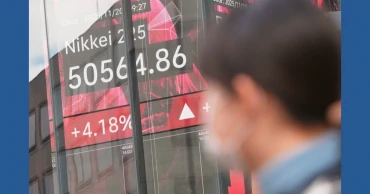
Japan’s Nikkei 225 jumped as much as 4.2% before easing to 2.6%, closing at 49,801.81, boosted by tech stocks after Nvidia reported $57 billion in quarterly revenue. South Korea’s Kospi gained 3% to 4,047.57, led by technology and energy shares. Samsung Electronics rose 6.1%, while SK Hynix added 3.5%.
Chinese markets saw smaller gains, with Hong Kong’s Hang Seng up 0.1% to 25,867.87 and the Shanghai Composite rising 0.4% to 3,961.71. Taiwan’s Taiex climbed 3.2%. Australia’s S&P/ASX 200 advanced 1.2% to 8,546.10, led by tech stocks.
Wall Street had mixed results Wednesday. The S&P 500 rose 0.4%, ending a four-day losing streak, while the Dow Jones gained 47 points (0.1%) and the Nasdaq added 0.6%. Constellation Energy jumped 5.3% after the U.S. Department of Energy approved a $1 billion loan to restart its Three Mile Island nuclear plant. Lowe’s rose 4% on stronger-than-expected summer profits, offsetting a 2.8% drop for Target.
Nvidia, Wall Street’s largest stock, climbed 2.8% before the earnings release and surged 5.1% in after-hours trading. Analysts note that Nvidia’s results significantly influence the S&P 500 and reflect broader AI-driven market sentiment.
Investors also await the U.S. government’s September jobs report, which could affect Federal Reserve interest rate decisions. While the Fed has cut rates twice this year, some officials suggest a pause due to persistent inflation above the 2% target.
In commodities, U.S. crude rose 16 cents to $59.41 per barrel and Brent crude edged up 16 cents to $63.67. The dollar strengthened to 157.32 Japanese yen, while the euro fell to $1.1520.
6 months ago

Meta wins landmark FTC antitrust case, won’t be forced to split off Instagram or WhatsApp
Meta has emerged victorious in a major antitrust battle that threatened the future of its business and could have compelled the company to divest Instagram and WhatsApp. A federal judge ruled Tuesday that Meta does not currently hold a monopoly in social networking.
The decision from U.S. District Judge James Boasberg follows a historic trial that concluded in late May. His ruling stands in sharp contrast to recent court decisions against Google, which was found to have monopolized both search and digital advertising — significant blows to an industry long accustomed to rapid, unrestricted expansion.
Boasberg wrote that the Federal Trade Commission “continues to insist that Meta competes with the same old rivals it has for the last decade,” and that it failed to prove Meta still possesses monopoly power. “Whether or not Meta enjoyed monopoly power in the past,” he wrote, “the agency must show that it continues to hold such power now. The FTC has not done so.”
The FTC argued that Meta maintained dominance by following CEO Mark Zuckerberg’s 2008 philosophy that “it is better to buy than compete,” allegedly using acquisitions to neutralize rising threats. During testimony in April, Zuckerberg rejected claims that Facebook bought Instagram to crush competition, downplaying the significance of old internal emails raised by FTC lawyers.
Boasberg emphasized that the core issue was not the decade-old acquisitions — which the FTC approved — but whether Meta is a monopoly today. Prosecutors would need to show a “current or imminent legal violation” to prevail, he wrote.
The FTC also accused Facebook of imposing policies that hindered smaller competitors as the industry transitioned from desktop to mobile platforms.
Meta welcomed the ruling, saying it reflects the “fierce competition” the company faces. Chief Legal Officer Jennifer Newstead said the company’s products “exemplify American innovation” and that Meta hopes to continue collaborating with the Biden administration.
EU finds Meta and TikTok in breach of transparency rules
Boasberg noted that the social media ecosystem has evolved dramatically since the FTC filed the case in 2020. Previous dismissals of the lawsuit didn’t even mention TikTok, which he now described as Meta’s most formidable rival. Citing the philosopher Heraclitus, he wrote that the online world changes too rapidly to be neatly divided into fixed categories like “social networking” and “social media.”
Industry analysts called the ruling expected, noting Meta’s aggressive efforts to counter TikTok. However, they warned the company still faces major regulatory challenges — including upcoming lawsuits over social media’s impact on children’s mental health.
Facebook’s acquisitions of Instagram in 2012 for $1 billion and WhatsApp in 2014 for $22 billion were pivotal in shifting its operations from desktop to mobile and maintaining relevance among younger users. But the FTC’s definition of Meta’s competitive landscape excludes TikTok, YouTube, and Apple’s messaging service as rivals.
Investors reacted calmly to the ruling. Meta shares slipped $1.52 to $600.49 on Tuesday afternoon, mirroring broader market trends.
Source: AP
6 months ago
What to know about the F-35 fighter jet Trump is selling to Saudi Arabia
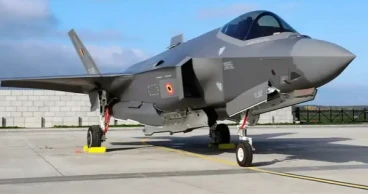
President Donald Trump has approved the sale of the U.S.’s most advanced fighter jet, the F-35, to Saudi Arabia, despite concerns that sensitive American technology could be accessed by China. The sale was reaffirmed during Saudi Crown Prince Mohammed bin Salman’s visit to Washington.
Some in the administration have also expressed worry that supplying the F-35 to Saudi Arabia could affect Israel’s qualitative military edge, particularly as Trump seeks Israeli backing for his Gaza peace plan. Israel, which deployed the jet during a June conflict with Iran, is among 19 nations that either have the plane or are set to acquire it.
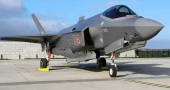
Background and capabilitiesThe F-35 Lightning II first rolled off the assembly line in Fort Worth, Texas, nearly 20 years ago. It was designed to serve multiple branches of the U.S. military: the Air Force, Navy, and Marine Corps, each requiring different capabilities such as carrier launches and vertical takeoffs. Over 1,200 jets have been produced, supporting roughly 300,000 jobs across 49 states and Puerto Rico.
The jet is a fifth-generation fighter, equipped with stealth technology, advanced radar, sensors, and networking capabilities to detect enemies and communicate with allied forces. It allows pilots to switch between bombing and air combat missions in a single sortie.
Trump plans to sell F-35s to Saudi Arabia ahead of Crown Prince’s visit
Costs and controversiesThe program is the Pentagon’s most expensive, with jets costing up to $77 million each in 2023. Maintaining and modernizing the planned fleet of 2,470 aircraft over 77 years is projected to exceed $2 trillion. Production delays, maintenance challenges, and low mission-readiness rates—about 55% in 2023—have fueled criticism. Experts argue that while the F-35 can perform many roles, it is costly and sometimes less reliable than older planes.
Lockheed Martin defended the program, stating that the F-35 is “combat proven,” essential to allied defense, and a critical contributor to global security, with over 1 million flight hours logged and more than 1,255 aircraft in service.
Strategic significanceThe jet’s stealth and sensor technologies make it highly coveted internationally, with Saudi Arabia among nations seeking advanced airpower. While there are lingering concerns about cybersecurity and technology leakage to China, analysts note that continual upgrades and allied use mitigate some of these risks.
Source: AP
6 months ago

Cloudflare glitch disrupts access to major websites
A technical malfunction at Cloudflare on Tuesday evening caused parts of the Internet to go down, leaving many users unable to access popular platforms, including X (formerly Twitter), which showed error messages instead of loading normally.
Cloudflare, a key internet infrastructure provider that helps keep websites secure and functional during heavy traffic or cyberattacks, confirmed it was probing the issue.
“Cloudflare is aware of, and investigating an issue which potentially impacts multiple customers: widespread 500 errors, Cloudflare Dashboard and API also failing,” the company said in an update. “We are continuing to investigate this issue.”
Users affected by the outage reported seeing notices of an “internal server error on Cloudflare’s network,” with prompts asking them to “please try again in a few minutes.”
6 months ago
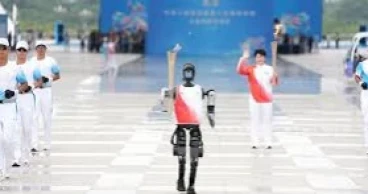
Robots, AI, and High-Tech innovations on display at China’s National Games
Athletes at China’s 15th National Games encountered an unexpected twist during medal ceremonies: humanoid robots stepping in to help present awards.
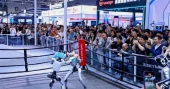
In Shenzhen—one of China’s major tech hubs—robots carried medals and sashes onto the podium, drawing loud cheers and photo-taking from the crowd.
“I was stunned. I didn’t expect it at all,” said Beijing’s Meng Fanlong, who won silver in the men’s 92kg boxing event. “Maybe robots will eventually do more than we can. I’m not sure I’ll be able to outdo them.”
As the first edition of the Games jointly hosted by the Guangdong-Hong Kong-Macao Greater Bay Area, the event has integrated robotics across numerous sports and logistical operations.
On the athletics field, robotic dogs transport javelins, reducing manual labor and improving safety. In other venues, automated machines conduct patrols, check power systems, and even serve as torchbearers.
Organizers say more than 130 advanced technologies—including AI, robotics, and next-generation information systems—are being used throughout the Games.
Pan Helin, an expert with China’s Ministry of Industry and Information Technology, noted that the event provides an important real-world testing ground for robotics and autonomous vehicles, helping accelerate their practical adoption.
“This allows us to thoroughly test our systems and strengthen our team’s capabilities and coordination,” said Zhou Jiahao, chairman of a Shenzhen-based AI company.
High-Tech Support for Boundary-Spanning Events
In a landmark effort, the men’s road cycling race covered all three regions of the Greater Bay Area, supported by extensive technological safeguards, including those across the Hong Kong-Zhuhai-Macao Bridge.
Unmanned patrol boats equipped with radar, HD cameras, and life-saving tools monitored the waters of Lingdingyang, conducting both stationary and roaming patrols.
“Traditional water patrols often faced weather challenges and difficult conditions,” said Li Xinyi of the Zhuhai water police. “Unmanned boats changed everything—operations are more efficient, and officers are much safer, which helps keep the race course secure.”
The cycling competition also required constant weather monitoring, as the bridge is prone to high winds. A mobile meteorological vehicle acted as a traveling weather station, gathering real-time wind and climate data to warn officials and protect riders.
Technology Enhancing the Experience for Everyone
Innovations at the Games extend beyond athletes and officials. Hearing-impaired spectators can instantly connect with remote sign-language interpreters through a one-click digital service.
“It works just like Uber linking riders and drivers,” explained Shi Chengchuan, CEO of a Guangzhou tech firm. “Our platform connects interpreters with users, making the Games more inclusive.”
Experts say these technological applications will have long-term benefits for the industry.
“Our company has supported major events like the 2022 Beijing Winter Olympics, and each large event gives the industry another push forward,” said Li Ji, head of a Shenzhen sports technology company, which supplied LED display solutions for over 20 venues.
“As AI evolves, we’re seeing more imaginative display technologies and tighter integration between sports lighting and digital content,” he added, noting that this has helped chart the company’s future direction.
Pan emphasized that the National Games’ tech demonstrations will provide valuable insights for manufacturers, supporting digital transformation and driving industrial growth across the Greater Bay Area.
6 months ago
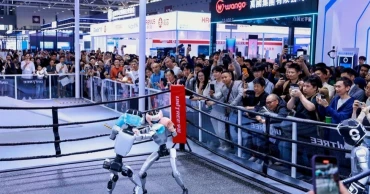
China Hi-Tech Fair records over 170 billion yuan in intended deals
The 27th China Hi-Tech Fair (CHTF), one of China’s largest technology exhibitions, concluded Sunday in Shenzhen, generating 1,023 supply-demand matching and investment projects with an intended deal value exceeding 170 billion yuan (around 24 billion U.S. dollars).
Themed “Technology Leads Development, Industry Integrates Fusion,” the three-day event attracted more than 5,000 companies and organizations from over 100 countries and regions, and welcomed upwards of 450,000 visitors.
Chinese astronauts return safely after debris-damaged capsule forces unexpected delay
The fair showcased over 5,000 new products, technologies, and innovative solutions across 22 major exhibition areas. Highlights included key equipment, artificial intelligence and robotics, national-level machinery, consumer electronics, low-altitude economy, and commercial aerospace, reflecting global scientific advancements alongside China’s innovation achievements.
First launched in 1999, the annual CHTF has grown into China’s largest and most influential science and technology fair, serving as a major platform for international collaboration, investment opportunities, and showcasing cutting-edge technology developments.
Source: XINHUA
6 months ago

Cities, states turn to AI tools to boost safety on aging US roads
With America’s aging road network falling further behind on long-delayed repairs, cities and states are increasingly deploying artificial intelligence to identify the most urgent hazards and prioritize maintenance.
In Hawaii, officials are distributing 1,000 AI-enabled dashboard cameras as part of an effort to curb a recent surge in traffic deaths. The dashcams automatically scan guardrails, road signs and pavement markings, distinguishing minor issues from serious problems that require immediate repair.
“This isn’t a once-a-month review where someone decides where to send their crews,” said Richard Browning, chief commercial officer at Nextbase, the company that built the cameras and imaging system.
Other states are testing similar ideas. San Jose, California, began placing cameras on street sweepers, and city staff found the system identified potholes correctly 97% of the time. The city is now expanding the program to include parking enforcement vehicles.
In Texas — which has more lane miles than the next two largest states combined — officials are rolling out an expansive AI-driven safety program that uses cameras and voluntary cellphone data from participating drivers. Elsewhere, state agencies are using AI to monitor street signs and compile annual congestion reports.
Monitoring every guardrail, every dayHawaii residents can sign up in the coming weeks for a free dashcam worth $499 under the “Eyes on the Road” campaign. The initiative was tested on government vehicles in 2021 but paused during the wildfire crisis.
Roger Chen, an engineering professor at the University of Hawaii helping oversee the project, said the state’s geography and supply-chain challenges complicate road maintenance.
“Equipment has to be shipped in. There are space and topographical constraints. It’s not straightforward,” Chen said.
While the system can detect debris and faded lane paint, its ability to flag damaged guardrails is especially emphasized.
Anthropic, Microsoft unveil massive AI data center projects amid industry expansion
“They are examining every guardrail in the state, every day,” said Mark Pittman, CEO of Blyncsy, the tech firm that aggregates dashcam feeds with mapping tools.
Guardrail maintenance is a sensitive issue in Hawaii. In 2024, the state paid $3.9 million to settle a lawsuit after a driver died in 2020 by hitting a guardrail that had been damaged for 18 months but never repaired.
Hawaii recorded its 106th traffic fatality of 2025 in October — already surpassing the previous year’s total. It is unclear how many were linked to roadway defects, but Chen said the rising toll highlights why the program is timely.
Building a national AI road databaseSan Jose officials say early results from road-scanning cameras have been promising. Mayor Matt Mahan, a Democrat and former tech entrepreneur, said the technology will become far more effective once cities pool their roadway images into a shared AI database.
The software can identify hazards it has encountered elsewhere, Mahan noted.
“It says, ‘That’s a cardboard box wedged between parked cars — that’s debris,’” he said. “We don’t have to wait years for that example locally.”
San Jose helped launch the GovAI Coalition in March 2024 to allow governments to share best practices — and eventually their data. Members include cities in California, Minnesota, Oregon, Texas and Washington, as well as the state of Colorado.
Simple fixes also matterSome states are improving safety without relying on cameras. Massachusetts-based Cambridge Mobile Telematics developed StreetVision, which uses phone data to detect risky driving patterns. The tool helps state agencies identify road conditions that cause sudden braking or unsafe maneuvers.
At a recent Washington, D.C. conference, company executive Ryan McMahon recalled seeing a spike in aggressive braking on a nearby road. The cause: a bush had grown over a stop sign, blocking it from view.
“That pointed to an infrastructure problem — and the fix was just a pair of garden shears,” he said.
Texas has been relying on StreetVision and other AI tools to upgrade its massive road network. The technology recently helped locate thousands of outdated or missing road signs across 250,000 lane miles.
“If something was installed 10 or 15 years ago on paper, good luck digging it out of the records now,” said Jim Markham, a crash-data specialist at the Texas Department of Transportation. “AI lets us cover more ground, faster, than we ever could manually.”
Preparing for autonomous vehiclesResearchers say today’s AI tools lay the groundwork for an era when driverless cars become more widespread.
Pittman of Blyncsy predicts that within eight years, nearly every new vehicle — autonomous or not — will carry road-facing cameras.
“We need to understand the roadway from grandma in a Buick to Elon in a Tesla,” he said. “Transportation agencies are now designing infrastructure for humans and automated drivers, and they need to start closing that gap.”
Source: AP
6 months ago

Disney and YouTube TV strike new deal, ending two-week channel blackout
Disney and YouTube TV have finalized a new agreement that restores major channels—including ABC and ESPN—to Google’s livestreaming service, ending a blackout that lasted more than two weeks.
Disney announced that its full lineup of networks and local stations has begun returning to YouTube TV. The streaming platform confirmed the restoration as well, telling subscribers they would see channels reappear throughout the day and apologizing for the outage.
Disney programming was removed from YouTube TV on Oct. 30 after the companies failed to agree on a new licensing deal, leaving viewers without access to popular sports, news, and entertainment content. The blackout affected major channels such as NatGeo, FX, Freeform, SEC Network, ACC Network, and others—disrupting coverage of major college football games and other live events.
Disney executives Alan Bergman, Dana Walden, and ESPN Chairman Jimmy Pitaro said they were glad the channels were back in time for a busy weekend of programming, including college football.
During the standoff, YouTube TV accused Disney of pushing for price hikes that would reduce subscriber choice and claimed Disney was using the blackout as leverage to boost its own streaming services, including Hulu + Live TV and Fubo. Disney countered that YouTube TV had refused to pay fair market rates and accused Google of leveraging its market dominance. Disney also said YouTube TV pulled its channels before the previous contract officially expired.
Negotiations were especially tense ahead of the Nov. 4 elections, with both companies publicly criticizing each other.
Once the new deal was finalized, YouTube TV said it managed to protect the value and flexibility of its service, while Disney said the agreement reflects its commitment to delivering top-tier entertainment and adapting to viewers’ changing habits.
The dispute is one of many high-profile clashes over streaming rights as competition intensifies—often leaving subscribers caught in the middle. Disney and YouTube TV have had similar conflicts before, including a 2021 breakdown that lasted less than two days. Other networks have also been removed from YouTube TV after expired contracts; Univision, for example, has been off the platform since Sept. 30.
YouTube TV’s base plan costs $82.99 per month and includes live content from NBC, CBS, Fox, PBS and more. The platform previously promised a $20 credit if the Disney dispute continued for an extended period, and customers began claiming it on Nov. 9.
Disney distributes live TV both through traditional channels and its own streaming services. ESPN launched a standalone streaming service earlier this year at $29.99 per month, while other Disney programming is available via Hulu, Disney+, or Fubo. Disney currently offers a bundle of ESPN, Hulu, and Disney+ for $35.99 per month—or $29.99 per month for the first year.
6 months ago