tech-news
North Korea condemns new US cybercrime sanctions, vows countermeasures
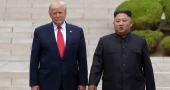
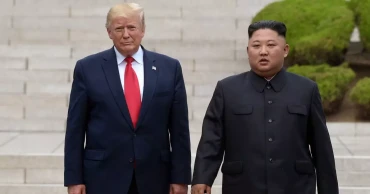
North Korea has strongly criticized the Trump administration’s latest sanctions over alleged cybercrimes funding its nuclear weapons program, warning that Washington’s “hostile” actions will never succeed in forcing Pyongyang to change course.
In a statement issued Thursday, North Korean Vice Foreign Minister Kim Un Chol accused the United States of harboring “wicked hostility” toward his country and said Pyongyang would take “appropriate countermeasures” in response.
The remarks followed the U.S. Treasury Department’s announcement Tuesday of sanctions on eight individuals and two companies, including several North Korean bankers, for allegedly laundering proceeds from cyberattacks. According to the Treasury, North Korea’s state-backed hackers have stolen more than $3 billion — mostly in digital assets — over the past three years to fund its weapons programs. It said Pyongyang relies on an extensive network of banks, shell companies, and representatives operating in countries such as China and Russia to move illicit funds gained through IT fraud, cryptocurrency theft, and sanctions evasion.
Despite President Donald Trump’s stated interest in restarting dialogue with Kim Jong Un, nuclear talks have remained frozen since their 2019 collapse over disagreements on easing sanctions in exchange for denuclearization steps.
Nvidia partners with South Korea to strengthen AI infrastructure
Kim Un Chol said the new sanctions show Washington’s “unchanging hostility” toward the DPRK and that its pressure tactics “will never alter the current strategic balance or our national stance.”
Since the breakdown of talks with Trump, Kim Jong Un has deepened ties with Russia, supplying weapons and troops to support Moscow’s war in Ukraine while positioning North Korea as part of a broader front against the U.S.-led West.
Source: AP
6 months ago

Australia extends social media age ban to Reddit and Kick
Australia has added Reddit and livestreaming platform Kick to the list of social media networks that must ban users under 16 from holding accounts, Communications Minister Anika Wells announced Wednesday.
The two platforms join Facebook, Instagram, Snapchat, Threads, TikTok, X and YouTube in facing the world’s first legal requirement to block children below 16 starting December 10. Companies that fail to take “reasonable steps” to comply could face fines of up to 50 million Australian dollars ($33 million).
“We’ve made it clear to the platforms that there’s no excuse for failing to enforce this law,” Wells told reporters in Canberra. “Online platforms use technology to target children with chilling precision. We’re simply asking them to use that same technology to keep children safe.”
Australia’s eSafety Commissioner Julie Inman Grant, who will oversee enforcement, said the list of restricted platforms would evolve as new technologies emerge. The nine platforms currently covered meet the government’s definition of services whose “sole or significant purpose” is enabling online social interaction.
Who is Zico Kolter? Carnegie Mellon professor leading OpenAI’s powerful AI safety panel
Inman Grant said her office would work with researchers to assess how the ban affects children’s behavior — including sleep patterns, physical activity and social interaction — and monitor any unintended consequences.
Australia’s move has drawn global attention. European Commission President Ursula von der Leyen said at a U.N. forum in New York in September that she was “inspired” by Australia’s “common-sense” approach.
However, critics argue the law could undermine user privacy by requiring all users to verify their age. Over 140 Australian and international experts last year urged Prime Minister Anthony Albanese to drop the proposal, calling it “too blunt an instrument to address risks effectively.”
Source: AP
7 months ago

OpenAI and Amazon strike $38 billion deal for AI computing power
OpenAI has reached a massive $38 billion agreement with Amazon, allowing the ChatGPT creator to run its artificial intelligence systems on Amazon’s U.S.-based data centers.
Under the deal announced Monday, OpenAI will gain access to “hundreds of thousands” of Nvidia AI chips through Amazon Web Services (AWS) to power and expand its AI tools. Following the announcement, Amazon’s shares rose 4%.
The agreement comes just days after OpenAI restructured its longstanding relationship with Microsoft, which had previously been its exclusive cloud computing partner. Regulators in California and Delaware also approved OpenAI’s new corporate structure last week, enabling the San Francisco-based company — originally founded as a nonprofit — to raise capital more easily and operate for profit.
“The rapid advancement of AI technology has created unprecedented demand for computing power,” Amazon said in a statement. The company noted that OpenAI will “immediately begin using AWS computing capacity,” with all infrastructure expected to be in place by the end of 2026, and room to expand further into 2027 and beyond.
Developing and maintaining AI systems like ChatGPT requires enormous amounts of energy and computing resources. OpenAI has made over $1 trillion in financial commitments to secure such infrastructure, including partnerships with Oracle, SoftBank, and major chipmakers Nvidia, AMD, and Broadcom.
Some investors have questioned the sustainability of these deals, given that OpenAI remains unprofitable and relies on future revenue to cover its growing infrastructure costs. CEO Sam Altman, however, dismissed such concerns, saying on a recent podcast with Microsoft CEO Satya Nadella that “revenue is growing steeply” and that OpenAI is “making a forward bet” on continued expansion.
Amazon already serves as the primary cloud provider for Anthropic, one of OpenAI’s top competitors and the developer of the Claude chatbot.
7 months ago
World's first flying car factory starts trial production in China
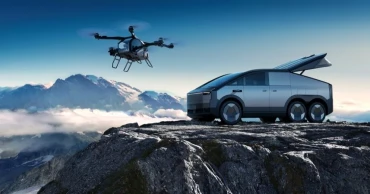
XPENG AEROHT, the flying car affiliate of Chinese electric vehicle maker XPENG, on Monday began trial production at the world's first intelligent factory for mass-produced flying cars -- a milestone in the commercialization of next-generation transport.
Located in the Huangpu district of Guangzhou, the capital of south China's Guangdong Province, the 120,000-square-meter plant has already rolled out the first detachable electric aircraft of its modular flying car, the "Land Aircraft Carrier."
The facility is designed to have an annual production capacity of 10,000 detachable aircraft modules, with an initial capacity of 5,000 units. It has the largest production capacity of any factory of its kind, and will be capable of assembling one aircraft every 30 minutes once fully operational.
XPENG AEROHT has secured orders for nearly 5,000 flying cars since its product release, and mass production and delivery are scheduled in 2026, the company said.
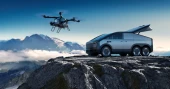
The flying car comprises a six-wheel ground vehicle, referred to as the "mothership," and a detachable electric vertical take-off and landing (eVTOL) aircraft.
The eVTOL aircraft offers both automatic and manual flight modes. Its automatic mode enables smart route planning, as well as one-touch take-off and landing.
At about 5.5 meters in length, the vehicle can be driven on public roads with a standard licence and parked in regular spaces.
7 months ago

New Australian paint cools homes, collects water from air
Scientists in Australia have developed a nanoengineered, paint-like polymer coating that can passively cool buildings and capture water directly from the air — all without any energy input.
The invention could help address global water scarcity while reducing the need for energy-intensive cooling systems, according to a statement released Monday by the University of Sydney, which led the research in collaboration with start-up Dewpoint Innovations.
The research team developed a porous polymer coating capable of reflecting up to 97 percent of sunlight and radiating heat into the atmosphere. This allows surfaces coated with the material to remain up to six degrees Celsius cooler than the surrounding air, even under direct sunlight, the statement said.
This cooling process creates ideal conditions for atmospheric water vapour to condense into droplets on the surface — “much like steam condensing on a bathroom mirror,” the researchers explained.
“This technology not only advances the science of cool roof coatings but also opens the door to sustainable, low-cost and decentralised sources of fresh water — a critical need in the face of climate change and growing water scarcity,” said Professor Chiara Neto of the University of Sydney Nano Institute and the School of Chemistry.
In a six-month outdoor trial on the rooftop of the Sydney Nanoscience Hub, the coating was able to collect dew over 32 percent of the year, harvesting up to 390 millilitres of water per square metre daily — enough for a 12-square-metre surface to meet one person’s daily drinking water needs.
Unlike traditional white paints, the new polymer relies on its internal porous structure rather than ultraviolet-reflective pigments such as titanium dioxide. This not only enhances durability but also reduces glare, according to the study, published in Advanced Functional Materials.
“Imagine roofs that not only stay cooler but also make their own fresh water — that’s the promise of this technology,” Professor Neto added.
7 months ago
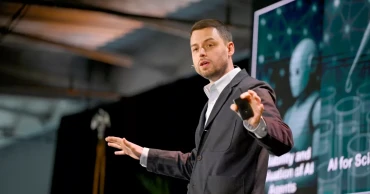
Who is Zico Kolter? Carnegie Mellon professor leading OpenAI’s powerful AI safety panel
A Carnegie Mellon University professor now holds one of the most influential positions in the global technology landscape — overseeing when the world’s most advanced artificial intelligence systems can be safely released.
Zico Kolter, a computer science professor and director of Carnegie Mellon’s machine learning department, leads OpenAI’s four-member Safety and Security Committee, which has the authority to halt the release of any AI model deemed unsafe.
The committee’s mandate ranges from preventing misuse of powerful AI systems — such as those capable of designing weapons of mass destruction — to ensuring new chatbots do not harm users’ mental health.
“We’re not just talking about existential threats,” Kolter told The Associated Press. “We’re talking about the entire spectrum of safety and security issues that arise with widely used AI systems.”
Oversight strengthened by regulatory deal
Kolter has chaired OpenAI’s safety panel for over a year, but his role gained new prominence last week after regulators in California and Delaware made his oversight a key condition for approving OpenAI’s new corporate structure — a move designed to help the ChatGPT maker raise funds more easily while maintaining its non-profit mission.
The agreements, reached with California Attorney General Rob Bonta and Delaware Attorney General Kathy Jennings, reaffirm that safety and security decisions must take precedence over financial interests as OpenAI transitions into a public benefit corporation under the supervision of its non-profit foundation.
Kolter will sit on the non-profit board but not on the for-profit board. However, he will have “full observation rights” — including access to board meetings and all safety-related information — according to Bonta’s memorandum of understanding. Kolter is the only individual named in that document apart from Bonta himself.
Independence from OpenAI leadership
Kolter said the agreements confirm his committee’s authority to delay or block releases of new AI systems until safety mitigations are in place. He declined to say whether the panel has ever exercised that power.
The committee includes three other members who also serve on the OpenAI board, among them former U.S. Army General Paul Nakasone, who previously led the U.S. Cyber Command. CEO Sam Altman stepped down from the panel last year, a move widely seen as reinforcing its independence.
“We can request delays of model releases until certain conditions are met,” Kolter said, emphasizing that future concerns would cover everything from cybersecurity vulnerabilities to the misuse of AI models for malicious purposes.
Balancing innovation with safety
Kolter noted that new types of AI agents bring unprecedented risks. “Do these models enable malicious users to have much higher capabilities — like designing bioweapons or carrying out cyberattacks?” he asked. “And what about the psychological impact of interacting with these systems? All of these need to be addressed from a safety standpoint.”
OpenAI has faced growing scrutiny this year, including a wrongful-death lawsuit from California parents who alleged that their teenage son took his life after extensive interactions with ChatGPT.
From AI researcher to safety overseer
Kolter, 42, began studying artificial intelligence as a Georgetown University freshman in the early 2000s — when “machine learning” was still considered a niche academic field.
“When I started, we used the term ‘machine learning’ because ‘AI’ was viewed as an old discipline that had overpromised and underdelivered,” he recalled.
A longtime observer of OpenAI, Kolter even attended the company’s launch event in 2015. Still, he said few experts foresaw the current pace of progress. “Even those deeply involved in AI research didn’t anticipate the explosion of capabilities — and the corresponding risks — that we’re seeing now,” he said.
Skepticism and cautious optimism
AI safety advocates are closely watching OpenAI’s restructuring and Kolter’s work. Nathan Calvin, general counsel of the AI policy nonprofit Encode, described himself as “cautiously optimistic.”
“I think he’s a good choice for the role — someone with the right background and approach,” Calvin said. “If the safety board members take their commitments seriously, this could be a major step forward. But it could also end up being just words on paper. We don’t yet know which it will be.”
Source: AP
7 months ago
China’s Shenzhou 21 docks with space station, sets national speed record
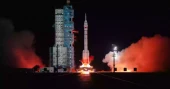
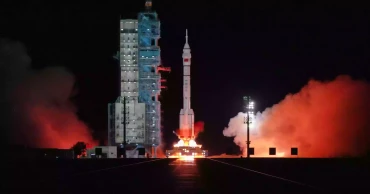
China announced Saturday that its Shenzhou 21 spacecraft successfully docked with the country’s space station, completing the process at a record speed with its latest three-member crew.
The docking took about 3.5 hours, roughly three hours faster than previous missions, according to the China Manned Space Agency. Shenzhou 21 lifted off as planned at 11:44 p.m. local time Friday from the Jiuquan launch center in northwestern China. The crew is scheduled to enter the Tianhe core module of the space station following the dock.
The team includes pilot and mission commander Zhang Lu, who previously flew on the Shenzhou 15 mission two years ago. The other two astronauts, Wu Fei, 32, an engineer, and payload specialist Zhang Hongzhang, are on their first spaceflight. Wu is China’s youngest astronaut to join a space mission, while Zhang Hongzhang previously worked as a researcher in new energy and materials.
Zhang Lu said the crew aims to turn the station into a “utopia,” practicing tai-chi, gardening, and appreciating poetry aboard Tiangong. Like prior crews, they are expected to stay for roughly six months.
During their mission, the astronauts will carry out 27 scientific and applied projects covering biotechnology, aerospace medicine, materials science, and other fields.
For the first time, China is sending mice to its space station. Four mice — two males and two females — will be monitored to study the effects of weightlessness and confinement on behavior, said Han Pei, an engineer at the Chinese Academy of Sciences.
Quiet supersonic travel nears reality as NASA tests X‑59 jet
“This will help us master key technologies for breeding and monitoring small mammals in space and assess their emergency responses and adaptive changes,” Han said. The mice were selected from 300 candidates after over 60 days of training, according to Xinhua News Agency. They are expected to remain in space for five to seven days and return to Earth aboard Shenzhou 20, China National Radio reported.
China’s space program, a source of national pride, reflects the country’s technological advances over the past two decades. Since launching its first crewed mission in 2003, China became the third nation after the Soviet Union and the United States to send humans into space.
Zhang Jingbo, spokesperson for the China Manned Space Agency, said the agency is progressing steadily toward sending astronauts to the moon. “Our goal of landing a person on the moon by 2030 is firm,” he said.
The Tiangong, or “Heavenly Palace,” space station is entirely Chinese-built, following the country’s exclusion from the International Space Station over U.S. national security concerns. The program is managed by the People’s Liberation Army, the military branch of China’s ruling Communist Party.
In collaboration with Pakistan, China is training two Pakistani astronauts, with plans to send one on a short-term mission as a payload expert — the first visit to the space station by a foreign astronaut.
Source: AP
7 months ago

Disney Channels pulled from YouTube TV after contract talks collapse
YouTube TV subscribers have lost access to Disney-owned networks, including ABC, ESPN, FX, National Geographic, and the Disney Channel, after the two companies failed to reach a new content distribution agreement.
In a blog post late Thursday, Google’s YouTube TV confirmed that Disney had followed through on its warning to pull its programming from the platform amid stalled negotiations. The blackout is expected to affect coverage of major sporting events this weekend, including college football, NBA, NFL, and NHL games.
YouTube TV, the largest internet-based TV provider in the U.S. with over 9 million subscribers, said the dispute centers on pricing. Disney, which owns Hulu, the second-largest provider with roughly half as many subscribers, is accused by YouTube of using the threat of a blackout to pressure for higher fees — a move that also benefits Disney’s competing services, Hulu + Live TV and Fubo.
“We know this is frustrating and disappointing for our subscribers,” YouTube said in a statement. “We continue to urge Disney to work with us constructively toward a fair deal that restores their networks to YouTube TV.”
YouTube added that it would issue a $20 credit to users if Disney’s channels remain unavailable “for an extended period.” The service’s standard monthly plan costs $82.99.
Disney, meanwhile, accused YouTube TV of refusing to pay fair market rates for its channels, arguing that the platform’s stance deprives subscribers of popular programming — particularly with several top college football teams playing this weekend.
“With a $3 trillion market cap, Google is using its market dominance to stifle competition and undercut industry-standard terms we’ve successfully reached with every other distributor,” Disney said, adding that it remains committed to finding a resolution quickly.
The standoff highlights ongoing tensions between major content owners and streaming distributors as both sides battle for dominance — and subscriber loyalty — in the crowded online TV market.
7 months ago
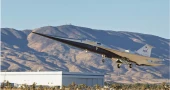
Quiet supersonic travel nears reality as NASA tests X‑59 jet
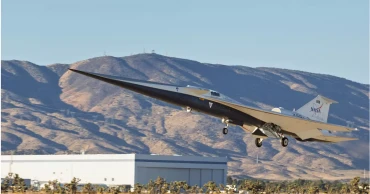
A supersonic jet plane designed to make very little noise took flight for the first time this week, cruising over the southern California desert just after sunrise in what could be the first step toward much faster commercial travel, according to NASA.
NASA and the U.S. weapons and aerospace manufacturer Lockheed Martin successfully tested a jet Tuesday that is capable of traveling faster than the speed of sound.
Aircraft have been capable of flying at supersonic speeds since the 1940s. The problem is that ultra fast planes are banned for commercial travel over land because they make an explosive — and frightening — “sonic boom” that disturbs the public.
The supersonic aircraft Concorde, operated through British Airways and Air France, made transatlantic flights starting in the 1970s. But those were halted in 2003 after a fatal crash three years earlier tanked demand for the expensive service.
If NASA and Lockheed Martin can successfully lower the volume, the new jets could slash travel time between places like New York City and Los Angeles roughly in half, opening up an entirely new air travel industry.
The X-59 is capable of flying faster than the speed of sound with what Lockheed Martin described as only a “gentle thump." Tuesday’s test flight was still slower than the speed of sound and was intended primarily to test the plane's structural integrity. Still, it was celebrated as a significant step toward the widespread use of supersonic travel.
The compact, 100 foot (30 meter) plane launched from the Lockheed Martin Skunk Works facility in Palmdale, about 60 miles (100 km) north of Los Angeles, coasted over the desert and landed near NASA’s Armstrong Flight Research Center about 40 miles (64 km) away.
The first airplane to move faster than the speed of sound — or 767 mph (1,235 kph) — took off nearly 80 years ago in 1947, according to NASA. But flights at that speed were banned over land in the United States soon in response to polling. Residents complained that the noise reverberated through large cities, rattling windows and startling the public.
NASA and Lockheed Martin have for years been working on a solution that would circumvent the noise and lead to regulatory change, in large part to make commercial supersonic travel within the United States possible.
7 months ago
US to share nuclear submarine technology with South Korea, Trump says
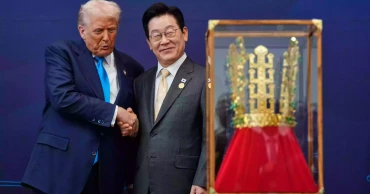
The United States will provide South Korea with advanced technology to help it build a nuclear-powered submarine, President Donald Trump announced Thursday on social media following his meeting with South Korean President Lee Jae Myung.
During their talks on Wednesday, President Lee emphasized the need to modernize the U.S.-South Korea alliance, noting plans to boost Seoul’s defense spending to ease Washington’s financial burden.
Lee clarified that there had been some misunderstanding in their previous conversation in August, saying that South Korea was seeking nuclear fuel for submarine propulsion, not nuclear weapons.
He explained that South Korea’s current diesel-powered submarines are limited in tracking other nations’ undersea operations, while nuclear-powered submarines could strengthen both South Korea’s defense and U.S. military efforts in the region.
Unlike diesel-powered submarines that must surface often to recharge batteries, nuclear-powered ones can remain underwater for extended periods, offering greater endurance and stealth.
Trump added in a separate post that the submarine would be built at the Philly Shipyard, which was acquired last year by South Korea’s Hanwha Group.
Details about the project’s scale and cost were not immediately clear, but South Korea has pledged to invest $150 billion in U.S. shipbuilding facilities as part of ongoing defense cooperation.
North Korea hails cruise missile tests as Trump arrives in South Korea
U.S. nuclear submarine technology is among the country’s most closely guarded military secrets. Even under the AUKUS partnership with the United Kingdom and Australia, Washington has avoided directly transferring such sensitive know-how.
Trump’s announcement comes ahead of his planned meeting with Chinese President Xi Jinping, whose country operates nuclear submarines, and months after North Korea revealed its own nuclear-powered submarine under construction — a development seen as a potential threat to both Seoul and Washington.
Meanwhile, as Trump visited South Korea, Pyongyang said Wednesday it had successfully test-fired new cruise missiles, underscoring its growing military strength.
Pentagon officials have yet to comment on Trump’s statement about sharing nuclear submarine technology with Seoul.
Source: AP
7 months ago