tech-news
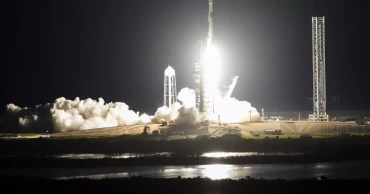
Private company rockets toward the moon in the latest rush of lunar landing attempts
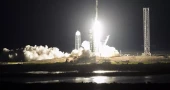
A private company launched another lunar lander Wednesday, aiming to get closer to the moon’s south pole this time with a drone that will hop into a jet-black crater that never sees the sun.
Intuitive Machines’ lander, named Athena, caught a lift with SpaceX from NASA’s Kennedy Space Center. It’s taking a fast track to the moon — with a landing on March 6 — while hoping to avoid the fate of its predecessor, which tipped over at touchdown.
Never before have so many spacecraft angled for the moon’s surface all at once. Last month, U.S. and Japanese companies shared a rocket and separately launched landers toward Earth's sidekick. Texas-based Firefly Aerospace should get there first this weekend after a big head start.
The two U.S. landers are carrying tens of millions of dollars’ worth of experiments for NASA as it prepares to return astronauts to the moon.
“It’s an amazing time. There’s so much energy,” NASA's science mission chief Nicky Fox told The Associated Press a few hours ahead of the launch.
This isn’t Intuitive Machines’ first lunar rodeo. Last year, the Texas company made the first U.S. touchdown on the moon in more than 50 years. But an instrument that gauges distance did not work and the lander came down too hard and broke a leg, tipping onto its side.
vivo Y29 4G Review: What’s special about this budget-friendly phone?
Intuitive Machines said it has fixed the issue and dozens of others. A sideways landing like last time would prevent the drone and a pair of rovers from moving out. NASA’s drill also needs an upright landing to pierce beneath the lunar surface to gather soil samples for analysis.
“Certainly, we will be better this time than we were last time. But you never know what could happen,” said Trent Martin, senior vice president of space systems.
It’s an extraordinarily elite club. Only five countries have pulled off a lunar landing over the decades: Russia, the U.S., China, India and Japan. The moon is littered with wreckage from many past failures.
The 15-foot (4.7-meter) Athena will target a landing 100 miles (160 kilometers) from the lunar south pole. Just a quarter-mile (400 meters) away is a permanently shadowed crater — the ultimate destination for the drone named Grace.
Named after the late computer programming pioneer Grace Hopper, the 3-foot (1-meter) drone will make three increasingly higher and longer test hops across the lunar surface using hydrazine fueled-thrusters for flight and cameras and lasers for navigation.
If those excursions go well, it will hop into the nearby pitch-black crater, an estimated 65 feet (20 meters) deep. Science instruments from Hungary and Germany will take measurements at the bottom while hunting for frozen water.
It will be the first up-close peek inside one of the many shadowed craters dotting both the north and south poles. Scientists suspect these craters are packed with tons of ice. If so, this ice could be transformed by future explorers into water to drink, air to breathe and even rocket fuel.
Apple shareholders reject proposal to scrap company's diversity programs
NASA is paying $62 million to Intuitive Machines to get its drill and other experiments to the moon. The company, in turn, sold space on the lander to others. It also opened up the Falcon rocket to ride-sharing.
Tagalongs included NASA’s Lunar Trailblazer satellite, which will fly separately to the moon over the next several months before entering lunar orbit to map the distribution of water below. Also catching a ride was a private spacecraft that will chase after an asteroid for a flyby, a precursor to asteroid mining.
1 year ago

A swarm of small drones may help artificial reefs attract sea life
A swarm of submersibles will be used to monitor and provide data on offshore artificial reefs that are intended to attract marine life in otherwise barren sections of sea, officials said Monday.
The autonomous underwater vehicles, or AUVs, will be equipped with sensors and high-definition cameras to give scientists at the Cyprus Marine and Maritime Institute a clear picture on the effectiveness of their artificial reefs designed and built using 3D printing.
Made of an environmentally friendly cement mixture, the artificial reefs will be embedded with a docking station at which the AUVs can recharge and transmit collected data including video, said CMMI CEO Zakarias Siokouros.
The advantage of the AUVs lies in their ability to stay underwater for as long as a month at a time and provide continuous data while “protecting” the reefs by alerting scientists to any disturbance in protected waters from illegal fishing and encroaching boats. Scientists would, in turn, notify local authorities.
A trial run of the project, dubbed EONIOS, is underway off Cyprus’ Ayia Napa marina. Scientists plan to place the artificial reefs in waters off Cyprus’ southern coastal town of Limassol at a depth of around 20 meters (66 feet) where sunlight can still reach the seabed.
“The reefs attract everything from vegetation to large fish and for waters off Cyprus where there isn’t enough food for fish, we aim to create the appropriate environment to bring such fish there,” Siokouros told The Associated Press following a demonstration of the AUVs' capabilities at the Ayia Napa Marina.
EONIOS is a partnership between the CMMI, AUV makers Arkeocean of France, Cypriot tech company SignalGeneriX and French consultancy company Lanego.
Siokouros said the partnership aims to market EONIOS to other countries who would want to build up their fish stocks using artificial reefs.
Microsoft Unveils Majorana 1: A Breakthrough in Quantum Computing
A key selling point for the AUVs is that they can provide surveillance, 3D data collection and area protection at a significant discount compared to tethered submersibles, said Arkeocean official Tamara Brizard.
“Our goal is to make a system under which six of our mini-drones can do the same work for the price of one conventional drone,” Brizard said.
Arkeocean AUVs can currently pack a maximum 5 kilograms (11 pounds) of sensors and other gear and can operate to a depth of 300 meters (984 feet) although newer versions are being designed to reach 3,000 meters (9,842 feet). The AUVs receive commands through an attached acoustic antenna and can pinpoint their location.
Battery-powered thrusters make the AUVs very stealthy and nearly undetectable, Brizard said, making them extremely useful for defense purposes such as surveillance in restricted waters. The AUVs can operate anywhere in the world thanks to an Iridium satellite antenna.
Rich in cash, Japan automaker Toyota builds a city to test futuristic mobility
The AUVs can also use undersea currents to roam, extending battery life. Another application is in the energy field where the submersibles can be used to detect seismic activity for offshore oil and gas exploration as well as finding suitable areas on which to build offshore wind and solar farms, said Brizard.
1 year ago

Flush with cash, Japanese automaker Toyota constructs a city to experiment with future mobility
Toyota's Woven City, located near Mount Fuji, is designed as a testing ground for robotics, artificial intelligence, and autonomous zero-emission transportation in daily life.
Daisuke Toyoda, a project executive from Toyota’s founding family, emphasized that it is not a "smart city" but rather a "test course for mobility," differentiating it from real estate development.
On Saturday, during a tour of the site where the first phase of construction has been completed, The Associated Press became the first foreign media outlet to preview the $10 billion project.
The initial phase covers 47,000 square meters (506,000 square feet), roughly the size of five baseball fields, and the entire project will eventually span 294,000 square meters (3.1 million square feet).
Built on the site of a former Toyota Motor Corp. factory, Woven City aims to be a hub for researchers and startups to collaborate and exchange ideas, according to Toyoda.
Many ambitious smart city projects have struggled or remained unfinished, including Google's Alphabet-backed initiative in Toronto, Saudi Arabia's "Neom," a development near San Francisco led by a former Goldman Sachs trader, and Masdar City in Abu Dhabi.
Construction of Woven City began in 2021. The buildings are interconnected by underground passageways, where autonomous vehicles will handle tasks like garbage collection and deliveries.
Currently, no one resides there, but the first 100 residents—referred to as "weavers"—will include employees from Toyota and its partner companies, such as instant noodle manufacturer Nissin and air-conditioning maker Daikin. At the site, coffee brand UCC was already serving hot drinks from an autonomous bus stationed in a plaza surrounded by empty apartment buildings.
The city's name pays tribute to Toyota's origins as an automatic textile loom manufacturer. Daisuke Toyoda’s great-great-grandfather, Sakichi Toyoda, originally invented the loom to ease his mother’s labor-intensive work.
Unlike other projects focusing on electric vehicles, Toyota has prioritized hydrogen as the primary energy source for Woven City, despite lagging behind competitors like Tesla and BYD in the EV market.
Toyota does not anticipate generating profits from Woven City anytime soon. However, auto analyst Keisuke Konishi from Quick Corporate Valuation Research Center suggests that Toyota is investing in robotic mobility to compete with Google's Waymo—even if it requires building an entire city to do so.
“Toyota has the financial resources to make it happen,” he said.
1 year ago

China's Alibaba sees revenue surge on back of artificial intelligence, e-commerce
Chinese e-commerce firm Alibaba Group Holding posted its fastest revenue growth in more than a year, beating analyst expectations as it capitalizes on the artificial intelligence boom in China.
Alibaba said Thursday that its revenue for the quarter ended December grew 8% to 280.2 billion yuan ($38.38 billion) compared to the same period last year.
Net income surged to 48.9 billion yuan ($6.71 billion). Alibaba’s New York-traded stock was up over 12% following the earnings results.
In an earnings call, Alibaba CEO Eddie Wu said that Alibaba plans to “aggressively invest” in artificial intelligence and cloud computing infrastructure in the coming three years, with upcoming spending expected to exceed what the firm has already invested over the past decade.
“This quarter’s results demonstrated substantial progress in our ‘user first, AI-driven’ strategies and the re-accelerated growth of our core businesses,” Wu said.
He said that Alibaba’s artificial intelligence strategy was to pursue artificial general intelligence (AGI), which is artificial intelligence that can match or surpass human intelligence and can self-teach.
He added that such an opportunity for industry transformation is something that comes along “once every several decades” and said that AGI was Alibaba’s primary goal.
Apple unveils a souped-up and more expensive version of its lowest priced iPhone
Alibaba’s plan to go big on artificial intelligence comes as rivalry in the AI space heats up between U.S. and China. Chinese AI firm DeepSeek recently rattled the U.S. AI industry after its AI model appeared to rival those of leading U.S. companies while being trained on cheaper hardware.
The Hangzhou-headquartered firm is one of many technology firms in China who are racing to get ahead in the AI space. In January, it unveiled its latest Qwen AI models that have performed well in benchmark tests, placing Alibaba among the leading companies in China’s AI industry.
Alibaba is working with Apple to incorporate its AI technology into Chinese iPhones, the firm said earlier this month.
Alibaba has already implemented AI technology into its cloud products, with its cloud business unit generating 13% revenue growth compared to the same time last year – the fastest pace in about two years.
Its international commerce unit, which includes platforms such as AliExpress and Lazada, saw revenue growth of 32% driven by “strong performance of cross-border businesses.”
Alibaba was one of several prominent Chinese technology companies which suffered the brunt of a regulatory crackdown on the technology industry in 2020, when authorities scuppered the initial public offering of its financial affiliate Ant Group.
The company was later fined a record $2.8 billion for violating anti-monopoly laws. Jack Ma, one of Alibaba’s cofounders, disappeared from public view and the company’s stock price slumped for several years.
But Beijing appears to have shifted gears towards the technology industry as it pursues technology supremacy and self-sufficiency amid deteriorating U.S.-China relations.
Chinese President Xi Jinping recently held a private symposium, meeting with prominent entrepreneurs including Ma.
Google agrees to pay Italy $340ml to settle tax evasion investigation
The meeting, coupled with DeepSeek’s AI advancements, were among the factors that sparked renewed interest in the Chinese technology industry, sending technology stocks soaring in recent weeks.
Alibaba’s stock price is up more than 60% this year. Its U.S.-listed shares rose 8.5% in morning trading, to $136.58.
1 year ago

Apple unveils a souped-up and more expensive version of its lowest priced iPhone
Apple has released a sleeker and more expensive version of its lowest priced iPhone in an attempt to widen the audience for a bundle of artificial intelligence technology that the company has been hoping will revive demand for its most profitable product lineup.
The iPhone 16e unveiled Wednesday is the fourth-generation of a model that’s sold at a dramatically lower price than the iPhone’s standard and premium models. The previous bargain-bin models were called the iPhone SE, with the last version coming out in 2022.
Like the higher-priced iPhone 16 lineup unveiled last September, the iPhone 16e includes the souped-up computer chip needed to process an array of AI features that automatically summarize text, audio and create on-the-fly emojis while smartening up the device’s virtual assistant, Siri. It will also have a more powerful battery and camera.
All those upgrades will translate into a higher starting price for an iPhone 16e at $600, a 40% increase from $430 for the last iPhone SE. But iPhone 16e will be more affordable than the cheapest standard iPhone 16 at $800. The new phone will be available in stores Feb. 28, but can be pre-ordered beginning Friday.
“We’re so excited for iPhone 16e to complete the lineup as a powerful, more affordable option to bring the iPhone experience to even more people,” said Kaiann Drance, an Apple vice president in charge of promoting a device lineup that accounts for more than half of the company's revenue.
But Apple is also trying to balance its desire to offer a more affordable iPhone that will lure more people into its sphere of product against its self interest in maximizing its profits from selling higher price products, according to Forrester Research analyst Dipanjan Chatterjee.
iPhone SE 4 (2025): Latest Leaks, Rumors, and Features of Apple’s Most Affordable Powerhouse
“The problem with a lower-end product in a luxury portfolio is that you want it to be good but not so good as to cannibalize the crown jewels," Chatterjee said.
Although Apple has been hyping its foray into AI since last June, the complete set of features still haven’t been released in the U.S. and the technology still isn’t even available in some parts of the world.
The delays in making the iPhone’s AI — dubbed “Apple Intelligence’" — more widely available through free software updates dinged the Cupertino, California, company during the past holiday when sales of the device dipped slightly from their 2023 levels.
Apple has primarily been losing the ground in China, where it hasn’t yet specified when the iPhone's AI technology will be available. But the company recently struck an AI partnership with Alibaba in China that could pave the way for the technology coming to iPhones in that country this spring.
Besides being able to handle AI for the first time, the iPhone 16e has a different look from previous SE models. It boasts a 6.1-inch display screen, slightly larger than the 4.7-inch display on SE model and no longer has a home screen button like the SE had. The new iPhone 16e will rely include a facial recognition option for unlocking the device, just like the higher priced models do.
Apple’s foldable iPhone now closer to reality
Apple's shares edged higher Wednesday to close at $244.87, below the stock's peak of roughly $260 reached in late December.
1 year ago

Google agrees to pay Italy $340ml to settle tax evasion investigation
Italian prosecutors said Wednesday they will seek to drop a tax evasion investigation against Google after the tech giant agreed to pay a 326 million euro ($340 million) settlement.
Milan prosecutors had opened an investigation against Google for failure to pay taxes on earnings in Italy from 2015-2019. The investigation focused on revenues from the sale of advertising, and cited the presence of servers and other infrastructure in Italy.
Mexico awaits new response from Google on dispute over Gulf of Mexico name before filing lawsuit
Google acknowledged the settlement in statement, saying it resolves “a tax audit ... without litigation.”
Tech giant Google previously paid over $1 billion to French authorities to settle a years long dispute over allegations of tax fraud.
1 year ago

Mexico awaits new response from Google on dispute over Gulf of Mexico name before filing lawsuit
Mexico said Monday it's awaiting a new response from Google to its request that the tech company fully restore the name Gulf of Mexico to its Google Maps service before filing a lawsuit.
President Claudia Sheinbaum shared a letter addressed to her government from Cris Turner, Google’s vice president of government affairs and public policy. It says that Google will not change the policy it outlined after U.S. President Donald Trump declared the body of water the Gulf of America.
“We will wait for Google’s response and if not, we will proceed to court,” Sheinbaum said Monday during a morning press briefing.
As it stands, the gulf appears in Google Maps as Gulf of America within the United States, as Gulf of Mexico within Mexico and Gulf of Mexico (Gulf of America) elsewhere. Turner in his letter said the company was using Gulf of America to follow “longstanding maps policies impartially and consistently across all regions" and that the company was willing to meet in person with the Mexican government.
“While international treaties and conventions are not intended to regulate how private mapping providers represent geographic features, it is our consistent policy to consult multiple authoritative sources to provide the most up to date and accurate representation of the world," he wrote.
Mexico has argued that the mapping policy violates Mexican sovereignty because the U.S. only has jurisdiction over around 46% of the Gulf. The rest is controlled by Mexico, which controls 49% and Cuba, which controls around 5%. The name Gulf of Mexico dates back to 1607 and is recognized by the United Nations.
Avro Keyboard: Groundbreaking Journey of a Bangla Typing Software by Mehdi Hasan's Team
In response to Google's letter, Mexican authorities said they would take legal action, writing that “under no circumstance will Mexico accept the renaming of a geographic zone within its own territory and under its jurisdiction."
The renaming of the body of water by Trump has flared tensions between Mexico and the U.S. at a pivotal time for the neighboring allies.
Sheinbaum has had to walk a fine line with Trump amid threats of tariffs and Mexico and other Latin American countries have braced themselves for promised mass deportations, the brunt of which has still not been felt.
Along with the legal threat to Google, the Mexican president also announced Monday that Mexico and the U.S. would hold high-level meetings this week on trade and security in an effort to maintain a “long-term plan of collaboration" between the two countries.
It's the latest round of talks between the two countries in which Mexico hopes to hold off a larger geopolitical crisis.
The renaming of the water body has fueled strife within the U.S. as well.
Last week, the White House barred Associated Press reporters from several events, including some in the Oval Office, saying it was because of the news agency’s policy on the name. The AP is using Gulf of Mexico to ensure that names of geographical features are recognizable around the world but also acknowledging Trump’s renaming of it as well.
OpenAI board unanimously rejects Elon Musk's $97.4b proposal
Other journalistic organizations such as the White House Correspondents' Association and the New York Times have echoed the AP in raising alarm about press freedom violations.
1 year ago

Huawei's tri-foldable phone hits global markets despite US curbs
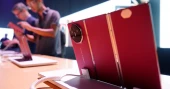
Huawei on Tuesday held a global launch for the industry’s first tri-foldable phone, which analysts said marked a symbolic victory for the Chinese tech giant amid U.S. technology curbs. But challenges over pricing, longevity, supply and app constraints may limit its success.
Huawei said at a launch event in Kuala Lumpur that the Huawei Mate XT, first unveiled in China five months ago, will be priced at 3,499 euros ($3,662). Although dubbed a trifold, the phone has three mini-panels and folds only twice. The company says it's the thinnest foldable phone at 3.6 millimeters (0.14 inches), with a 10.2-inch screen similar to an Apple iPad.
“Right now, Huawei kind of stands alone as an innovator" with the trifold design, said Bryan Ma, vice president of device research with the market intelligence firm International Data Corporation.
Huawei reached the position despite “not getting access to chips, to Google services. All these things basically have been huge roadblocks in front of Huawei,” Ma said, adding that the “resurgence we're seeing from them over the past year has been quite a bit of a victory."
Huawei, China’s first global tech brand, is at the center of a U.S.-China battle over trade and technology. Washington in 2019 severed Huawei’s access to U.S. components and technology, including Google’s music and other smartphone services, making Huawei's phone less appealing to users. It has also barred global vendors from using U.S. technology to produce components for Huawei.
American officials say Huawei is a security risk, which the company denies. China’s government has accused Washington of misusing security warnings to contain a rising competitor to U.S. technology companies.
OPPO Reno13 Pro 5G Review: Is It Worth the Hype?
Huawei launched the Mate XT in China on Sept. 20 last year, the same day Apple launched its iPhone 16 series in global markets. But with its steep price tag, the Mate XT “is not a mainstream product that people are going to jump for,” Ma said.
At the Kuala Lumpur event, Huawei also unveiled its MatePad Pro tablet and Free Arc, its first open-ear earbuds with ear hooks and other wearable devices.
While Huawei’s cutting-edge devices showcase its technological prowess, its long-term success remains uncertain given ongoing challenges over global supply chain constraints, chip availability and limitations on the software ecosystem, said Ruby Lu, an analyst with the research firm TrendForce.
"System limitations, particularly the lack of Google Mobile Services, means its international market potential remains constrained,” Lu said.
IDC's Ma said Huawei dominated the foldable phone market in China with 49% market share last year. In the global market, it had 23% market share, trailing behind Samsung's 33% share in 2024, he said. IDC predicted that total foldable phone shipments worldwide could surge to 45.7 million units by 2028, from over 20 million last year.
Lenovo Yoga Slim 7i Aura Edition Review: A True MacBook Competitor or Just Hype?
While most major brands have entered the foldable segments, Lu said Apple has yet to release a competing product.
“Once Apple enters the market, it is expected to significantly influence and stimulate further growth in the foldable phone sector,” Lu added.
1 year ago

Avro Keyboard: Groundbreaking Journey of a Bangla Typing Software by Mehdi Hasan's Team
“Language must be free”—guided by this solemn statement, Avro, Bangladesh’s first free and open-source graphical keyboard software, emerged in 2003 and revolutionized the Bengali typing system forever. Marking a groundbreaking leap over traditional intricate and paid methods, Avro shattered barriers and made Bengali input on digital devices effortless and free from commercial constraints. Let’s reminisce about this transformative software's dramatic journey and the story of its visionary innovator, Mehdi Hasan's Team.
A Young Dreamer with a Striking Idea
.
At the 2003 Ekushey Book Fair, Mehdi Hasan Khan, then a higher-secondary student with a passion for programming and technology, attended the “Bangla Linux” display held by a voluntary organization, Bangla Innovation through Open Source (BIOS). There he saw the first Bengali website using a Unicode model named, Unibangla, which was designed for Linux.
Moved by the display, young Mehdi began researching “Bangla Linux,” which included an on-screen click-based keyboard for typing Bengali. Overwhelmed by the lack of a similar option for Windows, Mehdi developed the idea of a new simplified multi-platform Bengali keyboard.
Read more: How to Verify If Your Smartphone is Truly Brand New and Never Used Before
From Ideation to Existence
Obsessed with the idea of a unique Bengali typing software, Mehdi Hasan immediately started the project. After looking up the dictionary, he selected “Avro,” which translates to “Sky,” as the project name.
A Windows-compatible prototype of the Avro Keyboard was developed using the Visual Basic programming language. The prototype followed a layout similar to the then-popular Bijoy layout, which was later replaced with Avro Easy, the phenomenal phonetic layout.
On March 26, 2003, Mehdi released a primary version of the Avro Keyboard. To provide broad and easy access to the software, he published a new website, OmicronLab.
By that time, he had become a student at Mymensingh Medical College and was put under a massive study load. In addition, OmicronLab’s forum section slowly began receiving feedback and advice for further upgradation. To help Mehdi cope with the response, joined Rifat Un Nabi, Tanbin Islam Siam, Shabab Mustafa, and Omar Osman in the development.
Read more: 7 Top AI Writing Tools, Software to Generate Human-Like Text
Currently, Avro uses Delphi replacing Visual Basic for the Windows version. The Linux version, primarily developed with C++, has shifted to iBus and JavaScript, while the macOS version uses Objective-C.
1 year ago

YouTube introduces AI-powered video generation in shorts
YouTube has announced a major update to its Dream Screen feature, enabling users to create AI-generated videos for shorts.
This development comes with the integration of Google DeepMind’s latest video generation model, Veo 2, allowing content creators to generate video clips simply by entering a text prompt.
Enhancing AI Capabilities in Shorts
Initially launched in September 2023, Dream Screen allowed users to generate AI-powered backgrounds for their Shorts by inputting a text description.
With the latest upgrade, the feature now extends beyond backgrounds, empowering users to create entire video clips that can be seamlessly incorporated into their short-form content.
New Features and Benefits
The integration of Veo 2 brings several enhancements to the Dream Screen feature. Content creators can now generate independent video clips without the need for extensive stock footage searches or additional scene recordings.
The AI-generated clips can be customised according to specific creative needs, including style, lens effects, and cinematic elements.
Additionally, Veo 2 is designed to enhance efficiency, significantly reducing the time required to generate video content. YouTube asserts that Veo 2 provides high-quality outputs while maintaining realism.
“Veo 2 understands real-world physics and human movement better, making its output more detailed and realistic,” the platform stated.
Safeguards Against Misinformation
To maintain transparency and curb misinformation, YouTube will incorporate SynthID watermarks and clear visual labels on all AI-generated content. Developed by Google DeepMind, these watermarks are invisible to the human eye but can be detected digitally, ensuring that AI-generated or altered footage can be identified.
Availability and Future Rollout
At present, the upgraded Dream Screen feature with Veo 2-powered video generation is accessible to users in the United States, Canada, Australia, and New Zealand. YouTube has confirmed plans to expand availability to more regions in the future.
With AI continuing to reshape content creation, YouTube’s latest update is set to revolutionise how creators produce engaging and innovative Shorts, making high-quality video generation more accessible than ever.
END/UNB/SAM/1800 hrs
1 year ago