tech-news

Speakers demand recognising internet as fundamental right in Bangladesh
Speakers at a seminar in the capital advocated for recognising the internet as a fundamental right and ensuring data protection in the Constitution of Bangladesh.
Bangladesh Mobile Phone Consumers Association organised the seminar at the Dhaka Reporters' Unity on Wednesday.
Former BASIS president Fahim Mashrur said Bangladesh's reliance on the internet has grown exponentially. “The internet is not just an ordinary service; it is now part of basic human rights. It is essential to recognise this in our constitution.”
BTRC working to lower internet data package prices, says chairman
He also said everything from financial transactions to governmental tasks now happens online, making uninterrupted internet access crucial.
Political analyst Barrister Asaduzzaman Fuad said the widespread impact of internet disruptions was seen in July student-led uprising when mobile internet was shut for 13 days, broadband for 8 days, and social media for 15 days.
“The movement spread across the nation because people recognised the importance of unrestricted internet access,” Fuad said.
President of IIAB, Aminul Hakim said the importance of protecting citizens' data online.
“We must ensure that our data is secure on the internet. The government must take initiative and implement measures to protect personal information,” he said.
Internet users to face slower speed for 4 hrs early Sunday: Here's what to expect
Moheeduddin Ahmed, president of the Bangladesh Mobile Phone Consumers Association, said,
“To safeguard citizens’ data, we must clearly include digital protections in the Constitution.”
Technology analyst Tanveer Hasan Joha, telecommunications expert Mustafa Mahmood Hussai Kayyum, spoke, among others, spoke.
1 year ago

Cable damage disrupts 800 telephone lines in Savar
Around 800 telephone lines, including those of key government and private offices in Savar, have been out of service after miscreants vandalized three manholes and cut underground copper cables belonging to Bangladesh Telecommunications Company Limited (BTCL).
Mir Mohammad Morshed, General Manager of Public Relations and Publications at BTCL, confirmed the matter with a press release.
The incident damaged 2,400 and 3,000-pair copper cables, causing widespread disruption in the area. Repair efforts have been delayed due to water accumulation in the manholes from sewerage lines and delays in obtaining road-cutting permits from relevant authorities.
BTCL apologized for the inconvenience caused and assured its valued customers of their dedication to resolving the issue promptly. Customers are encouraged to contact BTCL for updates or further assistance.
1 year ago

Italy's president sharply rebukes Elon Musk over comments on X about migration court rulings
Italian President Sergio Mattarella sharply rebuked Elon Musk on Wednesday for weighing in on Italian court rulings that have stymied the government’s plans to process some asylum-seekers in Albania.
Musk, who is expected to have a top advisory role in Donald Trump’s new administration, wrote Tuesday on X that “these judges need to go.” He was referring to the latest Italian court ruling against right-wing Premier Giorgia Meloni’s much-touted Albania immigration deal.
“This is unacceptable. Do the people of Italy live in a democracy or does an unelected autocracy make the decisions?” he wrote in a subsequent post Wednesday.
The posts concerned a Rome court's refusal to rule on a formal request to detain seven migrants rescued at sea and transferred to Albania for processing. Monday's ruling resulted in the men being brought to Italy for processing.
Mattarella didn’t cite Musk by name but — in an unusually piqued statement — made clear on Wednesday that he was referring to him. Italy's head of state demanded respect for the country's sovereignty, especially from other soon-to-be public officials.
“Italy is a great democratic country and … knows how to take care of itself while respecting its Constitution,” Mattarella said in a statement issued by his spokesman.
“Anyone, particularly if as announced is about to assume an important role of government in a friendly and allied country, must respect its sovereignty and cannot attribute to himself the task of imparting prescriptions,” the statement said.
Trump announced Tuesday that Musk, one of the most influential people around the U.S. president-elect, would help lead a Department of Government Efficiency, essentially an independent advisory panel to eliminate waste and fraud.
Musk is a supporter of Meloni and has met with her in Rome on a few occasions, and in September joined her at an awards ceremony on the sidelines of the U.N. General Assembly. Photos of them together made such news that Musk seemingly felt the need to tamp down speculation by posting “We are not dating.”
Musk has a history of making provocative statements and sparring with leaders on X. Earlier this year, he posted messages insulting U.K. Prime Minister Keir Starmer and saying the United Kingdom was headed for civil war. He has also clashed with a Brazilian supreme court justice over free speech, far-right accounts and purported misinformation on X, and also accused Venezuela’s socialist president, Nicolás Maduro, of “major election fraud” after that country’s disputed election.
Later Wednesday, an Italian representative of X, Andrea Stroppa, tweeted what appeared to be a statement from Musk that said he had spoken during the day with Meloni. According to Stroppa's tweet, Musk “expresses his respect” for Mattarella and the Italian Constitution but insists on his right to freedom of expression.
The courts’ rulings have raised the ire of Meloni’s far-right-led government, which has been seeking strategies to ease the strain on Italy of the arrival of migrants seeking a better life in Europe. The government had held up the opening of the Albanian centers as a centerpiece of its immigration crackdown, also as a means of deterrence, and said they could be a model for Europe.
In both cases, Italian courts referred the cases to the EU court of justice in Luxembourg to rule if the countries of origin for the migrants are considered safe for repatriation. There is no word on when the European court might rule.
But as a result of the Rome court decisions, no migrant has yet been processed in the Albanian centers, which are budgeted to cost Italy 670 million euros ($730 million) over five years to build and operate.
Italy's opposition says the money could be much better spent on reinforcing Italian-operated migrant processing centers, while human rights groups say the outsourcing of asylum processing contravenes international law.
The centers opened in October after a months-long delay, because crumbling soil at one of the facilities needed to be repaired. They are run by Italy and are under the country's jurisdiction, while Albanian guards provide external security.
1 year ago
AI to learn human style and rhythm
Microsoft AI CEO Mustafa Suleyman, currently visiting India for the first time, unveiled his vision for a future where artificial intelligence (AI) tools, such as Copilot Vision, will learn to communicate like humans.
Speaking at Microsoft's "Building AI Companions for India" event in Bengaluru, Suleyman highlighted that AI agents are set to reshape how people interact with technology by adopting human-like conversational styles and rhythms, making them more natural and engaging.
With tools like ChatGPT and Microsoft’s Copilot already gaining popularity worldwide, Suleyman stressed that these innovations are merely the beginning. “Imagine if your personal assistant learned your style, your rhythm, what information matters to you — it’s not just functional but deeply personalised, enhancing your experience,” he explained.
OpenAI’s Whisper invents speech creating phrases no one said
Suleyman envisions future AI agents as integral parts of people’s lives, describing them as “an always-on advisor, a steady presence in your life — connecting dots across tasks, helping you work smarter, live better, and make the most of every moment.”
Accompanying Suleyman at the summit was Puneet Chandok, Microsoft President for India and South Asia. Together, they introduced various AI-driven tools and strategies Microsoft has developed to enhance digital experiences for millions of users in India.
One significant innovation showcased was KissanAI, a tool designed to aid farmers in remote and rural areas by providing real-time data that can help them achieve better crop yields. In a fireside chat with S Krishnan, Secretary of the Ministry of Electronics and Information Technology (MeitY), Suleyman highlighted how KissanAI has strengthened government outreach to support these communities effectively.
A particularly groundbreaking feature presented during the event was Copilot Vision. This intuitive AI tool analyses everything a user views on their digital screen, offering real-time recommendations based on content.
During a live demo, Copilot suggested furniture and clothing styles in real time as a user browsed the web. Once released, Copilot Vision is expected to enable users to benefit from seamless recommendations and relevant web searches.
OpenAI ready to launch Orion AI Model by Dec 2024
However, with such advanced tools comes the concern for user privacy. Microsoft encountered criticism recently over a tool called Recall, which was designed to track and record user activity across their devices.
This tool, intended to allow AI to organise and retrieve data efficiently, faced backlash due to privacy concerns, leading Microsoft to delay its launch.
Addressing these concerns, Puneet Chandok assured that user trust and privacy remain Microsoft’s top priorities. “Trusting an AI agent is about knowing it has your back, that it learns with you and grows to understand not just your tasks, but your values,” he noted.
Chandok emphasised that Microsoft is committed to creating a secure and trustworthy AI ecosystem that prioritises user safety and ethical standards.
Elon Musk's xAI seeks AI tutors with good offer
Suleyman’s visit to India marks a significant moment for Microsoft’s AI division as it seeks to expand its reach and redefine digital experiences through innovative, human-centred AI tools.
With further advancements anticipated, the next generation of AI may soon feel like a familiar, dependable presence in users' daily lives.
Source: With inputs from agencies
1 year ago
Samsung reports 'major' progress in supply deal for AI chips
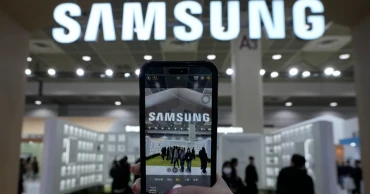
Samsung Electronics on Thursday reported progress on a major supply deal for artificial intelligence-focused chips, aiming to reassure investors following a slowdown in semiconductor profits during the last quarter.
The South Korean technology giant said its operating profit for the July-September period increased by more than 277% from a year earlier to 9.18 trillion won ($6.65 billion). But the figure represented a 12% decline from the second quarter, which Samsung attributed largely to one-off costs, such as provision of employee incentives in its computer chip business, and the effects of a weaker U.S. dollar.
Samsung’s semiconductor division earned 3.86 trillion won ($2.8 billion) in operating profit during the quarter, rebounding from a deficit during 2023 but sharply declining from the 6.45 trillion won ($4.67 billion) it reported in the April-June period.
While Samsung saw solid demand for AI and server chips during the past quarter, its mobile chip business weakened as some customers adjusted inventories. The market was also affected by Chinese manufacturers’ increased supply of legacy memory products, the company said in a statement.
More critically, Samsung lagged behind key competitors such as SK Hynix in HBM3E, the latest generation of high bandwidth memory chips that are used to power AI applications.
During a conference call, Samsung Executive Vice President Jaejune Kim said the company recently made a “meaningful advance” in a qualification test process to provide its HBM3E products to an unspecified “major client,” a development he said could possibly drive up sales during the fourth quarter. Kim’s comments touched off speculation that Samsung was closing in on a supply deal with Nvidia, a major U.S. maker that designs advanced chips powering AI.
“In the fourth quarter, while memory demand for mobile and PC may encounter softness, growth in AI will keep demand at robust levels. Against this backdrop, the company will concentrate on driving sales of high-bandwidth memory and high-density products,” Samsung said.
1 year ago
BASIS Leadership: Rashidul elected President, Mostafizur SVP
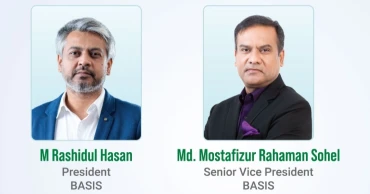
M Rashidul Hasan has become the new president and Mostafizur Rahman Sohel senior vice president of Bangladesh Association of Software and Information Services (BASIS).
This development follows the resignation of former President Russell T. Ahmed and Vice President (Finance) Iqbal Ahmed Fakhrul Hasan, creating vacancies in both positions.
In an urgent executive committee meeting held on Wednesday,, the BASIS Executive Committee (2024-26) voted to elevate Senior Vice President M Rashidul Hasan to President, Director Md. Mostafizur Rahman Sohel to Senior Vice President, and Director M Asif Rahman to Vice President (Finance).
In its 332nd meeting, the committee members collectively decided to proceed without co-opting any external members, intending to manage all functions directly by the elected Executive Committee members.
Earlier on October 20, 2024, BASIS had initiated an automated voting process among members to gauge opinions on two key propositions: 1) whether to undertake necessary reforms to the constitution and subsequently hold mid-term elections, or 2) whether the entire Executive Committee should resign.
Out of 594 participating members, 77.27% voted in favor of completing reforms in collaboration with members and subsequently organizing elections, while 22.72% supported an immediate resignation by the current Executive Committee.
1 year ago

Apple AirPods Pro's new hearing aid feature could help people face a problem they'd rather ignore
Some Apple AirPods wireless headphones can be used as hearing aids with a new software update available Monday. It's a high-profile move that experts applaud, even if they only reach a small portion of the millions of Americans with hearing loss.
An estimated 30 million people — 1 in 8 Americans over the age of 12 — have hearing loss in both ears. Millions would benefit from hearing aids but most have never tried them, according to the National Institute on Deafness and Other Communication Disorders. Countless others have tried them, but don't use them because of cost, poor quality, poor fit, how they look or for other reasons.
Over the past few years, there’s been a push to change that. Two years ago, federal rules changed to allow hearing aids to be sold over-the-counter, a move that many hoped would bring better and cheaper options to patients. And last month, the U.S. Food and Drug Administration approved software from Apple that would turn AirPods Pro 2 into hearing aids.
It's unclear yet whether the rule changed has helped, experts say. But turning AirPods into hearing aids is the kind of creative move advocates had hoped for. Here's what to know about hearing loss, hearing aids, and Apple’s new option.
Hearing loss can contribute to isolation, dementia, even fall risk
About 15% of Americans report some difficulty hearing. Most people with hearing loss are over 60, but hearing problems don't only affect older people. One study found men and people living in rural areas are more likely to have hearing loss.
And it has been linked to many health effects beyond the ear. It contributes to isolation, depression and cognitive decline, experts say. It raises dementia risk and rewires the brain. It's also been linked to an increased risk of falls — a major health concern among older adults.
“Everything we do, all our relationships, whether it’s personal or in our work life, involve hearing conversation,” said Barbara Kelley, executive director of Hearing Loss Association of America. “We’re finding now that the sooner that people can pay attention to their hearing health, the better.”
You don't need to see a doctor to get a hearing aid
Before the 2022 rule change by the U.S. Food and Drug Administration, everyone had to see a doctor and get a prescription for a hearing aid to get one. Now, they're available without one.
“As more of them are sold, then hopefully the price will go down,” said Elizabeth Stangl, an audiologist at the University of Iowa. “But we haven’t seen a big rush to get them.”
Even buying over-the-counter, a decent hearing aid can easily run you $400 to $500, said Stangl, who researches how well people adjust to using hearing aids. And some of the less expensive options are really just “cheap amplifiers," lacking the personalized level settings and noise canceling features that really make hearing aids helpful.
How does the Apple AirPods hearing aid feature work?
The hearing aid feature is available with AirPods Pro 2 models, and requires an iPhone or iPad to set it up. It starts with built-in tests that will help users determine if they have hearing loss, set up the feature if they do, and set personalized amplification levels.
The headphones sell for $249 on Apple's website, and sometimes less from other retailers.
While there are many other earbud-type devices that can function the same way, experts agreed that the AirPods addition is a good one, simply because of the way it could help normalize hearing aids.
“It’s just mainstream,” Kelley said. The ubiquity of AirPods could make people worried about the look of a hearing aid more open to using them.
There may be some drawbacks, though. Fit and comfort during long use might be an issue. And while other hearing aids are built to last through a whole day or more, Stangl said the battery life of the AirPods won't allow for that. She also noted that wearing earbuds can send a message to others that the person doesn't want to be disturbed or spoken to.
"But we’re hoping that more people will try it and realize, ‘Yeah, these do help,’” she said.
Tips for buying OTC hearing aids
Stangl suggests people do plenty of research before buying. She said Facebook and Reddit forums can be especially helpful in vetting devices. The websites Hearing Tracker and Soundly also have reliable reviews and resources for selecting a hearing aid, she said.
The Hearing Loss Association of America and American Academy of Audiology have guides to buying a hearing aid at their websites. If you are stuck, consult an audiologist.
Look for devices that allow you to adjust different pitches. Most people with hearing loss have the hardest time hearing higher pitches, so find a device that can adjust amplification across frequencies.
To avoid the piercing whistle of feedback, buy a device that has a “feedback manager.” Fit is critical, but beware: it might not necessarily be the one that’s initially the most comfortable, so take your time.
Can you use your FSA or HSA money to buy OTC hearing aids — or even AirPods?
Pre-tax money stashed away in flexible spending accounts or health savings accounts can be used to buy hearing aids, including ones sold over the counter.
Does this mean you can score a new set of AirPods Pro2 with pre-tax money? Experts say it’s a gray area that hasn’t been tested yet, so be wary. You may even need a letter of medical necessity. It’s best to check with an accountant before you try it.
Your smartphone can help you even without hearing aids
Even if you can't afford the latest and greatest tech, your smartphone can be a tool to protect and improve your hearing.
Most phones can now turn speech into text, which can help facilitate conversations. iPhone's “Live Listen” feature turns your phone into an amplifying microphone that can beam your dinner date's voice right to your ear even if you're in a noisy restaurant.
There are also many apps and websites that can help beyond hearing aids. Some apps can vibrate your phone if an alarm is going off or the dog is barking. The University of Iowa gathers training resources through its Resource Center for Auditory Training. Free apps like the World Health Organization's “hearWHO” offer hearing tests and the National Institute for Occupational Safety and Health's Sound Level Meter App lets you measure if noise levels are dangerous.
“The majority of people own smart phones and don’t realize all that their phone can do, including functioning as a good amplifier for people with mild to moderate hearing loss,” said Catherine Palmer, director of audiology at the University of Pittsburgh Medical Center and former president of the American Academy of Audiology. “This has made hearing care accessible to many.”
1 year ago

OpenAI ready to launch Orion AI Model by Dec 2024
OpenAI, the developer of the widely-used ChatGPT platform, has revealed plans to launch its latest AI model, codenamed Orion, by the end of 2024.
According to a report from The Verge, the company aims to initially make the model available exclusively to select business partners.
Following the launch of OpenAI o1, Orion is expected to be a significant step forward in artificial intelligence, building upon the advancements of previous models.
Orion promises enhancements in reasoning, problem-solving, and language processing, addressing key challenges like AI hallucinations through advanced synthetic data techniques. While OpenAI’s new model is internally viewed as the successor to GPT-4, there has been no confirmation on whether it will be labelled as GPT-5 upon release.
In keeping with its phased rollout strategy, OpenAI will initially provide Orion to its close business partners rather than releasing it broadly via ChatGPT. This limited-access approach will enable these partners to develop specialised products and features using the cutting-edge platform before a broader public release.
Apple set to introduce Truecaller-like ID service for businesses
Microsoft Collaboration on Azure
Microsoft, OpenAI’s primary partner in AI model deployment, is expected to host Orion on its Azure platform as early as November. Microsoft engineers have reportedly been preparing for the rollout, which is anticipated to cater to industries where accuracy and reliability are paramount, such as healthcare and finance.
This strategic collaboration allows OpenAI to strengthen its presence in the rapidly advancing AI sector, competing with other tech giants like Google DeepMind and Meta.
OpenAI has been developing Orion for several months, utilising synthetic data generated by the recently launched OpenAI o1—an advanced model designed to approach human-like AI capabilities.
OpenAI o1 has demonstrated substantial improvements in handling complex, multistep challenges and generating code. Notably, the model is said to perform at a level similar to PhD students in benchmark tasks within the fields of physics, chemistry, and biology.
As OpenAI continues to evolve its AI offerings, the introduction of Orion aims to further push boundaries in artificial intelligence applications across various industries. Although the launch date remains tentative, with the potential for adjustments, Orion’s release is set to mark a major milestone in AI development, reflecting OpenAI’s ambitions to lead the AI landscape amid growing competition.
1 year ago
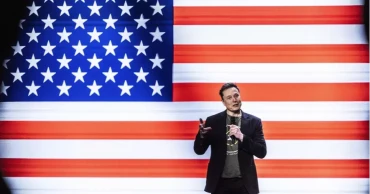
Here's a look at Musk's contact with Putin and why it matters
Elon Musk, the billionaire owner of major government contractor SpaceX and a key ally of Republican presidential nominee Donald Trump, has been in regular contact with Russian President Vladimir Putin for the last two years, The Wall Street Journal reported.
A person familiar with the situation, who spoke on condition of anonymity to discuss the sensitive matter, confirmed to The Associated Press that Musk and Putin have had contact through calls. The person didn't provide additional details about the frequency of the calls, when they occurred or their content.
Musk, the world's richest man who also owns Tesla and the social platform X, has emerged as a leading voice on the American right. He's poured millions of dollars into Trump's presidential bid and turned the platform once known as Twitter into a site popular with Trump supporters, as well as conspiracy theorists, extremists and Russian propagandists.
Musk's contacts with Putin raise national security questions, given his companies' work for the government, and highlight concerns about Russian influence in American politics.
Here's what to know:
What they talked about
Musk and Putin have spoken repeatedly about personal matters, business and geopolitics, The Journal reported Thursday, citing multiple current and former officials in the U.S., Europe and Russia.
During one talk, Putin asked Musk not to activate his Starlink satellite system over Taiwan as a favor for Chinese President Xi Jinping, whose ties to Putin have grown closer, the Journal reported. Putin and Xi have met more than 40 times since 2013.
Elon Musk promises daily $1 million award
Russia has denied the conversations took place. In 2022, Musk said he'd only spoken to Putin once, in a call 18 months earlier focused on space.
The Chinese Embassy in Washington said Friday that it was “not aware of the specifics” of any requests made by Putin on China’s behalf.
There was no immediate response to messages left with X and Tesla seeking Musk's comment.
What the talks mean for national security
Musk’s relationship with Putin raises national security questions given the billions of dollars in government contracts awarded to SpaceX, a critical partner to NASA and government satellite programs.
Trump also has vowed to give Musk a role in his administration if he wins next month.
Former U.S. Ambassador to Russia Michael McFaul said it’s unusual for business leaders to be in contact with Putin without informing U.S. authorities. While CEOs may often interact with foreign leaders, Putin stands apart, given his invasion of Ukraine, McFaul said.
“He’s a war criminal who is slaughtering civilians. That makes this wrong in my view,” McFaul said of Musk’s talks with Putin. “You have to decide what team you are on. Are you on the American team or are you on the Russian team?”
The request from Putin on Starlink as a favor to China is likely to get attention, given U.S. support for Taiwan and concerns about the growing partnership between the Kremlin and Beijing.
Musk, whose Tesla operates Gigafactory Shanghai, has developed a close relationship with China’s leaders. His remarks about China have been friendly, and he has suggested Taiwan cede some control to Beijing by becoming a special administrative region.
Moscow has growing ties to other American adversaries. The U.S. has accused Russia of sending ballistic missiles to Iran and said North Korea sent troops to Russia, possibly for combat in Ukraine.
On Ukraine, Musk's views have shifted since he initially supported Kyiv following Russia's 2022 invasion and provided it with his Starlink system for communications.
Musk then refused to allow Ukraine in 2023 to use Starlink for a surprise attack on Russian soldiers in Crimea.
Elon Musk's xAI seeks AI tutors with good offer
He also floated a peace proposal that would have required Ukraine to drop plans for NATO membership and given Russia permanent control of Crimea, which it seized in 2014. The plan infuriated Ukrainian leaders.
The timing of the calls reported by The Journal and Musk’s changing views on Ukraine was a “disturbing coincidence,” said Bradley Bowman, a former West Point assistant professor who is now senior director of the Center on Military and Political Power at the Foundation for Defense of Democracies, a Washington-based think tank.
“The policy of the U.S. government is to try to isolate Vladimir Putin, and Elon Musk is directly undercutting that,” Bowman said. “What is Putin doing with Musk? Putin is trying to reduce his international isolation and impact American foreign policy.”
One person familiar with the talks between Musk and Putin told The Journal that there is no evidence Musk's contact with Putin represents a security problem for the U.S.
Asked about Musk’s contacts with Putin, White House national security spokesman John Kirby told reporters Friday that he had no information to share.
The Pentagon and U.S. intelligence officials declined to comment. The State Department didn't respond to an email seeking comment.
Musk's close ties to Trump
Musk recently appeared at a Trump rally, sporting a Make America Great Again hat and delivered a ominous warning that if Trump lost the race “this will be the last election.”
Last year, Musk mocked Ukrainian President Volodymyr Zelenskyy’s request for aid and said in February that Ukraine couldn’t win the war.
Trump, who has praised Putin’s leadership and criticized the NATO alliance and U.S. aid for Ukraine, has raised questions about what he would be willing to concede if he's elected in a negotiation over Ukraine's future.
Family outraged as AI Chatbot mimics murdered daughter
U.S. intelligence officials and private sector analysts have concluded that Russia is working to covertly support Trump with disinformation and propaganda targeting his Democratic opponent, Vice President Kamala Harris. Since Musk took over X, it has become a leading online source of Russian propaganda and disinformation aimed at Americans.
Trump has faced scrutiny over his own recent contacts with Putin, outlined in a new book by Watergate journalist Bob Woodward.
Woodward quoted an unnamed Trump aide who said the former president and Putin may have had as many as seven conversations since Trump lost reelection in 2020. Before one of the calls, the aide said they were asked to leave Trump’s office to give the two privacy.
The Trump campaign and the Kremlin have denied those calls occurred.
In response to questions about Musk and Putin, Trump campaign press secretary Karoline Leavitt called Musk “a once-in-a-generation industry leader” whose ideas could benefit “our broken federal bureaucracy.”
“As for Putin, there’s only one candidate in the race that he did not invade another country under, and it’s President Trump,” Leavitt said in a statement. “President Trump has long said that he will re-establish his peace through strength foreign policy to deter Russia’s aggression and end the war in Ukraine.”
Russia confirms one conversation
Kremlin spokesman Dmitry Peskov on Friday rejected The Journal’s report as “absolutely false information.”
Peskov said Putin and Musk once held a “medium-length phone conversation” prior to 2022 that was “more of an introductory nature” and focused on “visionary technologies."
“After that, Musk had no contacts with Putin,” Peskov said, dismissing The Journal’s article as political.
“The election has entered its home stretch, and of course the opponents stop at nothing,” Peskov said. “Remember that a week ago they were saying that Putin allegedly talks to Trump all day long. Now he allegedly talks to Musk all the time. It’s all untrue.”
Ukraine’s military intelligence told the AP that they would “refrain from commenting” about communication between Putin and Musk.
1 year ago

Chinese high-tech zones collaborate to boost AI industry innovation
Eleven major high-tech zones in China have jointly established a collaborative network to promote innovation in the country's AI industry, China Science Daily has reported.
A conference on the establishment of this network held early this week in Beijing revealed that the newly-founded network features 11 major high-tech zones nationwide, including Beijing's Zhongguancun, also dubbed China's "Silicon Valley," and those in the cities of Shanghai, Nanjing, Suzhou, Hangzhou, Hefei, Qingdao, Wuhan, Shenzhen, Chengdu and Xi'an, according to the report published on Tuesday.
Wu Jiaxi, deputy director of the planning department of the Ministry of Industry and Information Technology, expressed hope that the collaborative innovation network would cultivate fertile ground for AI innovation in China -- via an open and inclusive approach.
High-tech zones are the core carriers and major hubs for AI development in China, and they have become a significant force in AI innovation, said Wu.
He also emphasized the importance of building a community for AI innovation and development through shared benefits, as well as deepening the domestic AI industry layout through an innovation-driven model.
During the conference, network participants announced the Zhongguancun Initiative, which aims to accelerate the development of AI technologies in areas such as chips, algorithms and models.
The Zhongguancun Initiative also seeks to establish a comprehensive innovation and entrepreneurship service system for the entire AI industry chain and to build mechanisms for the exchange of technology, industry, capital and talent.
The initiative encourages the establishment of open AI platforms to maximize the sharing of AI development achievements and seeks the active participation of high-tech zones in the formulation of international and national standards.
Furthermore, it emphasizes the importance of strengthening data security and privacy protection, as well as providing regular supervision and regulatory services for AI platform companies, to ensure the traceability and reliability of AI technologies.
1 year ago