Others
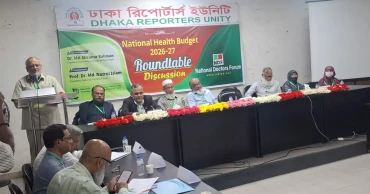
NDF demands increasing health budget allocation to 5 percent of GDP
National Doctors' Forum (NDF), a platform of doctors, on Thursday demanded a phased increase in government spending on the health sector to 5 percent of the Gross Domestic Product (GDP) in the upcoming national budget Of FY2026-27.
The leaders of the organization pointed out that the current allocation for the country's health sector stands at a mere 0.7 percent of the GDP, which is highly inadequate compared to thehealthcare needs of the population. Consequently, healthcare disparities are widening, forcing citizens to bear the lion's share of medical expenses out of their own pockets.
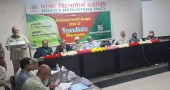
The NDF raised these demands and recommendations during a roundtable discussion titled "National Health Budget 2026-27" held at the Dhaka Reporters' Unity (DRU) in the capital's Segunbagicha on Thursday.
NDF President Professor Dr. Nazrul Islam presided over the roundtable, while General Secretary Professor Dr. Mahmud Hossain moderated the session.
Presenting a keynote paper, economist and researcher Dr. Mizanur Rahman stated that although the World Health Organization (WHO) recommends spending at least 5 percent of the GDP on the health sector, Bangladesh currently spends only 0.7 percent. Furthermore, citizens have to bear around 70 percent of total health expenditures out of their own pockets, which poses a severe financial risk for low-and middle-income groups.
"Sustainable development and human resource optimization are impossible without adequate investment in health. The health sector must be viewed as a long-term state investment, not an expense," Dr. Rahman added.
Speaking as the guest of honour Member of Parliament from Jessore-2 constituency, Dr. Moslehuddin Farid, highlighted the low allocation and existing disparities in the country's healthcare system compared to other nations. He emphasized the importance of reforming the health sector at zero cost, cutting disparities, and establishing an accountable, people-oriented healthcare system alongside increasing budget allocations.
Other speakers noted that the country's healthcare system is currently mired in a "Low Resource, High Demand" crisis. Due to shortages of doctors, nurses, and health workers, a lack of modern treatment facilities at the district level, centralized healthcare in the capital, and administrative weaknesses, ordinary people are being deprived of desired medical care.
Against this backdrop, the NDF urged the government to raise the per capita health allocation to 100 US dollars alongside the 5 percent GDP allocation. It also recommended transforming districts into medical hubs by expanding intensive care units (ICU), neonatal intensive care units (NICU), dialysis, cancer, and cardiac treatment centers at the district level.
The organization further proposed introducing National Health Insurance, increasing allocations for medical education and research, offering special incentives for rural healthcare providers, boosting medicine supplies at government hospitals, and expanding digital healthcare and telemedicine services.
Member of Parliament from the reserved seat, Advocate Sabikunnahar Munni, also spoke at the event.
Health economist Professor Dr. M A Sabur, Professor Dr. Shadrul Alam, Professor Dr. Khorshed Ali Miah, and Professor Dr. Mohsin Ahmed, among others, participated in the panel discussion.
They observed that Bangladesh could build a sustainable healthcare system like Thailand, Sri Lanka, and Malaysia if effective health insurance and robust primary healthcare are ensured.
14 days ago
bKash modernises St. Joseph higher secondary school library
bKash, the country’s largest mobile financial services provider, has modernised the library of the historic St. Joseph Higher Secondary School, Dhaka. As part of bKash’s Corporate Social Responsibility (CSR) programme, the initiative aims to foster an enriched reading and study environment while expanding learning opportunities for students. The initiative was dedicated to the memory of the late Mahfuz Sadique, a former student of the institution and the Chief Communications Officer of bKash.
The modernised library of this seven-decade-old institution will now facilitate around 50 students at a time. Besides, the current students can also borrow books using membership cards to read them at home. Alongside infrastructural renovations, the technical facilities in the library have been further enhanced. Several high-performance desktop computers with internet connectivity have been installed, allowing students to explore a vast collection of e-books, both local and international.
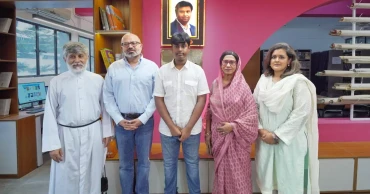
Marking the occasion, a special memorial programme was held at the school premises in remembrance of Mahfuz Sadique. The event was attended by Kamal Quadir, Chief Executive Officer (CEO) of bKash, Major General Sheikh Md Monirul Islam (Retd), Chief External and Corporate Affairs Officer of bKash, Dr. Brother Leo James Pereira, Principal of the school, Dr. Maliha Muzammil, wife of late Mahfuz Sadique, and family members; school alumni including Kazi Mahmood Sattar, IDLC Chairman, and Professor Imran Rahman, Special Advisor to the Board of Trustees of ULAB as well as current students.
14 days ago
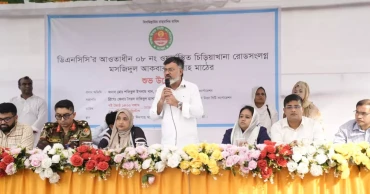
DNCC chief visits renovated Akbaria Eidgah ground, orders eviction drive
Dhaka North City Corporation (DNCC) Administrator Md Shafiqul Islam Khan on Thursday visited the newly renovated Akbaria Eidgah ground in Mirpur and directed authorities to remove illegal fish markets and other encroachments around the area to keep it clean and accessible to the public.
The renovation work of the ground was carried out at a cost of over Tk 1.28 crore under DNCC’s Environment, Climate and Disaster Management Circle.
As part of the renovation, the drainage system has been improved, a 260-metre walkway constructed, a security fence and multiple entry gates installed, street lights set up, and dustbins placed.
The upgraded facility can accommodate around 7,000 worshippers for Eid prayers at a time. Provision has also been made for offering funeral prayers.
During the visit, the DNCC administrator said the field held personal significance for him.
“Many of my childhood memories are associated with this field. It is also linked with my political life. We are determined to develop it into a clean, beautiful and safe space,” he said.
He said illegal fish markets were being set up around the ground without permission, causing environmental pollution, bad odour and public suffering.
“From today, no illegal raw market, fish market or food court will be allowed to occupy the sidewalks around this field. I have given instructions in this regard, and concerned officials will implement them with local cooperation,” he added.
The administrator also said the ground would remain open throughout the day for public use, especially for children’s sports and recreation.
He said necessary sports equipment would be provided by the city corporation if required, adding that sports and physical activity were essential to keep young people away from drugs and crime.
14 days ago
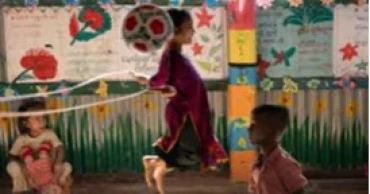
BRAC, LEGO Foundation launch five-year child development initiative in Cox’s Bazar
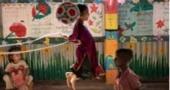
BRAC, in partnership with the LEGO Foundation, has launched a five-year initiative aimed at supporting early childhood development for Rohingya refugee children and vulnerable host communities in Cox’s Bazar.
The programme, based on BRAC’s Humanitarian Play Lab (HPL) model, seeks to reach 2,20,000 children aged between 0 and 18 years through play-based learning, mental health support and educational interventions.
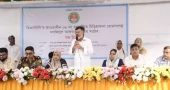
The initiative was formally launched on Thursday at an event titled “Nurturing Childhoods, Preparing for Tomorrow” held at a hotel in Cox’s Bazar.
The event was organised by BRAC’s Humanitarian Crisis Management Programme (HCMP).
Sources said, Bangladesh is home to more than 30 million children under the age of 14, while more than half of the over one million Rohingya refugees living in camps in Cox’s Bazar are children. In 2024 alone, around 40,909 children were born in the camps.
The new partnership aims to promote joyful, safe and developmentally appropriate learning environments for children living in Rohingya camps and nearby host communities.
The inception event brought together government officials, humanitarian practitioners, development partners, and community representatives to align around a shared vision for whole-child development and to establish cross-sectoral collaboration across education, child protection, health and nutrition systems.
Refugee Relief and Repatriation Commissioner (RRRC) Mohammed Mizanur Rahman was present as the chief guest.
The event was facilitated by Dr. Ishaat Nabila, Programme Manager (Technical) of the Health, Nutrition and Early Childhood Development (ECD) Sector under BRAC HCMP.
When speaking, RRRC Mohammed Mizanur Rahman said, “What makes this initiative truly meaningful is how BRAC sees children as a whole. We all can be a part of this initiative, collectively.”
A special presentation on the “Programme Overview” was delivered by Dr. S M Hasanuzzaman, Programme Coordinator of Health, Nutrition & Early Childhood Development (ECD), under BRAC HCMP, and Syeda Sazia Zaman, Programme Head, BRAC Institute of Educational Development(BIED), Brac University.
The presentation highlighted that, according to the World Health Organization (WHO) and UNICEF, 80% of a child’s brain development occurs within the first 1,000 days of life.
The two organisations have developed a globally recognised strategy known as the Nurturing Care Framework, which emphasises five key components of early childhood development: good health, adequate nutrition, responsive caregiving, safety and security, and opportunities for early learning.
The programme's target reflects this ambition: by the end of the five-year partnership, at least 70% children reached will meet age-appropriate developmental benchmarks.
It was also highlighted that BRAC began implementing the HPL model in Cox’s Bazar in 2018, building a strong evidence base over more than six years of implementation. This new partnership chapter brings greater scale and ambition, seeking not only to reach children directly but to embed play-based pedagogy within pre-primary and primary education of camp and host community.
The project will be implemented across 15 Rohingya camps as well as host communities in 8 Upazilas of Cox’s Bazar.
Key activities under the project include responsive caregiving, Humanitarian Play Lab and Play Lab, transition support into pre-primary and primary education, adolescent programming, disability inclusion and mental health and psychosocial support integrated throughout.
Organisers stated that BRAC, recognised as a pioneer in non-formal education, operated 60,000 schools between 1990 and 2000. The BRAC Play Lab model has been implemented successfully in Bangladesh, Uganda, and Tanzania.
14 days ago
CAB opposes proposed power tariff hike, warns of inflation spike
Consumers Association of Bangladesh (CAB) on Thursday strongly protested a proposed hike in electricity tariffs, warning that any further increase would worsen the financial burden on middle- and low-income households and further fuel inflation.
The consumer rights body raised the concern over the possible power tariff hike during a public hearing organised by the Bangladesh Energy Regulatory Commission (BERC).
CAB said ordinary consumers are already under severe economic pressure due to high inflation, rising prices of essential commodities and increased fuel and living expenses.
It said the burden of inefficiencies in the power sector, including system losses, delayed projects, excessive expenditures, and capacity payments, should not be transferred to consumers.
Instead, the organisation called for improved governance, accountability, and operational efficiency within the energy sector to reduce overall costs.
CAB also cautioned that higher electricity tariffs would raise production and supply costs across industries, agriculture, transport, and small businesses, ultimately driving up the prices of essential goods and services.
During the hearing, CAB presented a six-point recommendation to BERC.
First, it urged the regulator to reassess electricity generation costs rationally before considering any tariff changes, especially as international fuel prices have declined.
Second, it called on the regulator to prevent the transfer of costs related to system losses, project delays, and capacity charges onto ordinary consumers.
Third, CAB demanded that BERC strengthen governance and accountability measures across the power sector.
Fourth, it recommended that the government prioritise long-term planning, expand renewable energy use, and improve transmission infrastructure to reduce wastage.
Finally, the organisation advised formulating a consumer-friendly and realistic pricing policy through a transparent review of market conditions and sector management.
CAB expressed hope that BERC would consider the prevailing socio-economic realities and the broader public interest before making a final decision, and refrain from raising electricity prices.
14 days ago
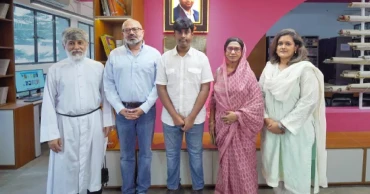
bKash modernises St Joseph Higher Secondary School library
bKash, the country’s largest mobile financial services provider, has modernised the library of the St Joseph Higher Secondary School in Dhaka as part of its Corporate Social Responsibility (CSR) programme.
The initiative aims to create an improved reading and learning environment for students and was dedicated to the memory of late Mahfuz Sadique, a former student of the institution and former Chief Communications Officer of bKash, said a press release issued on Thursday.
The modernised library of this seven-decade-old institution will now facilitate around 50 students at a time. Besides, the current students can also borrow books using membership cards to read them at home.
Alongside infrastructural renovations, the technical facilities in the library have been further enhanced.
Several high-performance desktop computers with internet connectivity have been installed, allowing students to explore a vast collection of e-books, both local and international.
Marking the occasion, a special memorial programme was held at the school premises in remembrance of Mahfuz Sadique.
The event was attended by Kamal Quadir, Chief Executive Officer (CEO) of bKash, Major General Sheikh Md Monirul Islam (Retd), Chief External and Corporate Affairs Officer of bKash, Dr. Brother Leo James Pereira, Principal of the school, Dr. Maliha Muzammil, wife of late Mahfuz Sadique, and family members; school alumni including Kazi Mahmood Sattar, IDLC Chairman, and Professor Imran Rahman, Special Advisor to the Board of Trustees of ULAB as well as current students.
Mahfuz Sadique was an alumnus of St. Joseph Higher Secondary School in Dhaka, where hecompleted his SSC in 1998. During his time at the institution, he was an active debater and laterbecame the president of the Debating Club at North South University.
14 days ago
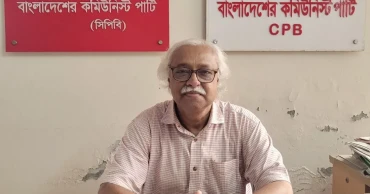
Proposed hike in power tariff akin to picking pockets of low-income people: Ruhin
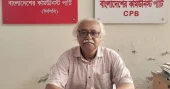
Ruhin Hossain Prince, former General Secretary of the Communist Party of Bangladesh (CPB), on Thursday strongly criticized the proposals to increase electricity prices, saying that the move is akin to picking the pockets of low-income people.
He made the remarks while speaking at a public hearing on proposals on bulk, transmission, and retail electricity tariffs, held at the Krishibid Institution Bangladesh (KIB) in the capital.
Criticizing a proposal that sets a uniform bill for users consuming 0 to 75 units of electricity, the CPB leader asked, "Since this proposal has been made, I would like to ask how many consumers from the 0-50 unit bracket have upgraded to the 75-unit bracket? That would provide an index showing whether people's income has actually increased."
He added that the proposals presented at the hearing primarily target the pockets of the poor and lower-income demographic.
Raising questions about system losses, Ruhin noted that while international standards allow for around 2 percent system loss, Bangladesh's system loss still hovers around 8 percent.
"We want to empower the Bangladesh Power Development Board (PDB) to reduce company-based crises caused by a rising dependency on imports. It may not be completely possible overnight, but it can be achieved gradually," he said.
He also rejected arguments made by rural electrification board’s officials equating village life with city life, stating that rural residents continuously try to be frugal to minimize their monthly bills, unlike urban areas where prepaid systems dominate.
The public hearing on raising retail electricity tariffs was held today (second day of hearing). The Bangladesh Energy Regulatory Commission (BERC) is conducting the hearing on proposals submitted by six power distribution companies of the country.
Earlier this month, PDB first submitted a proposal to hike bulk power prices. Subsequently, the distribution companies followed suit, seeking a proportional increase in retail prices.
In their proposals, the distribution companies cited record-high operating costs driven by the hike in bulk electricity prices, rising fuel oil costs, and the devaluation of the Bangladeshi Taka against the US dollar.
They argued that there is no alternative to increasing retail prices to bridge the massive deficit and maintain an uninterrupted power supply.
BERC also held a public hearing on PDB's proposed bulk electricity price hike yesterday (Wednesday).
14 days ago

Madrasha student among 3 killed in Ctg road crashes
Three people, including a madrasha student, were killed in separate road accidents on Dhaka-Chattogram highway in Sitakunda upazila of Chattogram district on Thursday.
Zakir Rabbani, Officer-in-Charge of Kumira Highway Police Station, said Md Hasan, 14, a student of Mirzabazar Islamia Dakhil Madrasa and son of Muslim Uddin of Mirsharai upazila, was killed when a cattle-laden truck hit him at Choto Kumira Bazar in Sitakunda upazila around 10:30am.
He had gone to Alekdia Beach in Kumira with his classmates. The accident occurred when he jumped out of a mini truck and stepped onto the highway, where he was crushed under the wheels of the truck.
In another incident, Rustom Ali, 69, a resident of Uttar Paschim Syedpur union, was killed after being hit by a motorcycle in the Choto Darogarhat area of the upazila around 11am, said OC Zakir Rabbani.
MA Haque, Officer-in-Charge of Baroawlia Highway Police Station, said Harunur Rashid, 54, son of Mohrom Ali of Hinguri Para, was killed when a sand-laden truck hit him in the Baroawlia area of the upazila early Thursday.
14 days ago
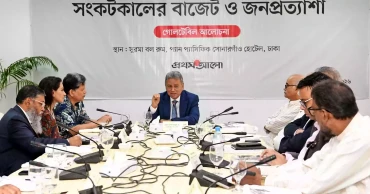
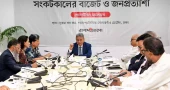
Govt pursuing welfare state through sweeping economic reforms: Khosru
Finance Minister Amir Khosru Mahmud Chowdhury on Thursday said the government has undertaken an all-out reform programme to establish a welfare state by moving away from an ‘oligarchic and patronage-driven’ economic system.
The minister said democratization of the economy is not merely a slogan but the core philosophy of the present government, he said while addressing a roundtable discussion titled “Budget in Times of Crisis and Public Expectations” at a hotel in Dhaka.
He said special emphasis is being placed on bringing marginalised groups including rural blacksmiths, potters and weavers into the mainstream economy after they remained outside the budgetary framework for decades.
The finance minister said the upcoming national budget would include special projects and fund allocations to promote and monetise the creative economy, including theatre, culture, music, painting and artificial jewellery.
He also announced plans to establish “theatre districts” in major cities beyond Dhaka and said Bangladesh’s culture, films and music would be branded and promoted globally to strengthen the country’s soft power, following examples set by neighbouring countries.
Amir Khosru said the government is taking strict measures to reduce the cost of doing business, including excessive charges and bureaucratic harassment at ports and across the supply chain.
He said the number of approvals required for business operations and project implementation would be reduced to 13, down from what he described as an excessively complicated system.
The minister added that the entire economic and administrative system would be brought under digital automation within the next year, while initiatives are underway to introduce a “One Citizen, One Card” system for all public services.
Highlighting plans for financial sector reforms, the finance minister said the government is strengthening the capital and bond markets as alternatives to high-interest bank loans.
He said international investment bankers, fund managers and the International Finance Corporation (IFC) have shown strong interest in the initiative.
On taxation, Amir Khosru said the government would verify the actual market share of multinational and major tobacco companies, including The Coca-Cola Company and PepsiCo, to ensure fair tax collection and prevent tax evasion.
He said plans are also underway to introduce a simplified flat-rate tax system for small restaurants and shop owners to bring them under the tax net and reduce harassment by tax officials.
The finance minister said sweeping changes are being introduced in tax policymaking through a proposed bill that would establish a policy-making body comprising individuals with expertise in the global economy, local trade and human profitability, rather than focusing solely on tax collection.
Urging people to remain patient for the next two years, he said the government’s goal is not only to increase GDP growth but also to ensure that the benefits of growth improve the lives of ordinary citizens.
14 days ago
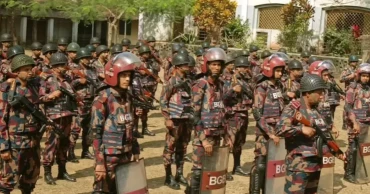
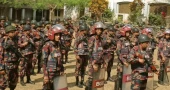
BGB deployed in Dhaka, Gazipur to ease Eid travel rush
Border Guard Bangladesh (BGB) members have been deployed in some key areas the capital and Gazipur to maintain law and order, control traffic congestion and ensure smooth public movement ahead of Eid-ul-Azha.
BGB members have been deployed in Dhaka’s New Market area, the Elevated Expressway, Savar’s Nabinagar and Baipail, Gazipur City Corporation and Gazipur Chourasta, said Shariful Islam, publicrelations officer of BGB.
As per government directives, the deployment has been made to ensure safe and uninterrupted Eid travel for the public and to assist executive magistrates in conducting mobile court operations inimportant toll plazas, highways and traffic-prone areas.
The BGB personnel will remain on duty from seven days before Eid and three days after the religious festival, he said.
14 days ago