Others
NEC approves Tk 3 lakh crore ADP for FY27 with focus on reform, infrastructure
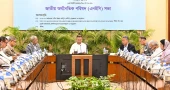
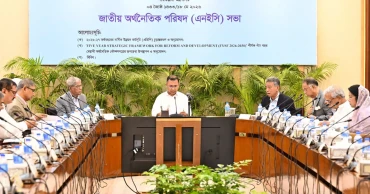
The National Economic Council (NEC) on Monday approved the Annual Development Programme (ADP) worth Tk 3,00,000 crore for the 2026-27 fiscal year.
Prime Minister Tarique Rahman chaired the meeting held at NEC conference room.
Finance Minister Amir Khosru Mahmud Chowdhury briefed reporters after the meeting.
He said the proposed ADP includes Tk 1,90,000 crore from government funds and Tk 1,10,000 crore from foreign loans and grants.
The proposed ADP size marks a 50 percent increase from the revised ADP of the current fiscal year, with domestic resource allocation rising by 48.44 percent and external financing increasing by 52.77 percent.
According to a press release of the Planning Ministry the Annual Development Plan (ADP) for the fiscal year 2026-27 reflects a new vision for development.
Some 1277 new projects have been proposed from different dates and departments.
In addition, 148 projects have been proposed to be included in the PPP cluster and the Bangladesh Change Trust Fund. The symbol reflects the importance of private investment and climate adaptation.
The ADP for the fiscal year 2026-27 has emphasised on the special growth of projects and financial arrangements. There has been a large increase in the stimulus given to the project sector in the current fiscal year, which indicates an improvement in the capacity of development activities.
Out of the 15 sectors in the ADP, the Local Government Department, the Roads and Highways Department, the Healthcare Department and the Media and Higher Education Department have been ranked as the preferred sectors.
A special allocation of Tk 17,000 crore has been made in the development assistance sector, which will play an important role in protecting the poor and the people.
Among the new projects, the number of foreign-financed projects is large, which reflects the confidence of the international development initiative, it said.
Again, the instructions for the early completion of projects that can be completed by June 2027 and the efforts to make development more effective and personal to strengthen the plan are maintained.
In the light of the “Five-Year Strategic Framework for Reform and Development”, the ADP has been organised into five main pillars.
The first pillar “State System Reform” has given importance to the expansion of justice and law services, digitisation, law enforcement agencies, increasing activity and controlling activity. Multi-Year Public Investment Program (MYPIP)
The second pillar “Unequal socio-economic development” has the highest importance. Education, health, agriculture, skilled manpower creation and social security programs, are the forefront here. Education and health sector promotion are among the allocated sectors.
The third pillar “Restructuring and recovery of fragile economies” has given importance to energy security, renewable energy, group infrastructure, energy strengthening and the formation of economic zones. At the same time, plans to increase employment opportunities and peacefulness are included.
The second pillar “Regionalised balanced development” has given importance to the development activities of the north, coastal, hilly and port centers. Chittagong and The issues of supporting Mongla as a logistics hub and building coastal security infrastructure are special.
The fifth pillar “Religion, Society, Culture, Culture and Solidarity” includes the issues of social harmony, cultural development, mass society development and development infrastructure development.
The allocation in the new ADP showed that the transport and communication sector received the highest allocation of Tk 50,092.53 crore, accounting for 16.70 percent of the total proposed ADP.
The education sector received Tk 47,591.12 crore or 15.86 percent, while the health sector got Tk 35,535.50 crore, representing 11.84 percent of the total outlay.
The power and energy sector received Tk 32,691.54 crore or 10.90 percent, while the housing and community facilities sector got Tk 20,361.72 crore, accounting for 6.79 percent of the total allocation.
Together, these five sectors accounted for more than 62 percent of the total proposed sectoral allocation.
Among ministries and divisions, the Local Government Division received the highest allocation of Tk 33,735.10 crore or 11.25 percent of the new ADP.
The Roads and Highways Division got Tk 30,741.36 crore or 10.25 percent, while the Health Services Division received Tk 26,806.26 crore.
The Secondary and Higher Education Division got Tk 20,835.44 crore or 6.95 percent, while the Primary and Mass Education Ministry received Tk 19,440.59 crore or 6.48 percent.
The Power Division received Tk 14,938.66 crore or 4.98 percent of the total allocation.
Besides, the Science and Technology Ministry got Tk 17,403.74 crore, the Health Education and Family Welfare Division Tk 8,220.85 crore, the Shipping Ministry Tk 8,206.53 crore and the Water Resources Ministry a significant allocation under the proposed ADP framework.
17 days ago
BNP announces 7-day programme marking Ziaur Rahman’s 45th death anniversary
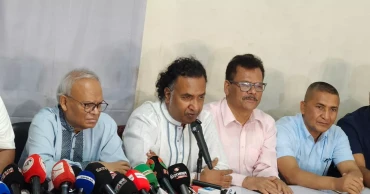
Bangladesh Nationalist Party (BNP) on Monday announced a seven-day programme from May 25 to June 1 marking the 45th death anniversary of the party’s founder and former president Ziaur Rahman.
BNP Senior Joint Secretary General Ruhul Kabir Rizvi announced the programme at a press briefing after a joint meeting organised by the party at its Nayapaltan central office in the capital .
Rizvi, who presided over the meeting, said the programmes were taken to observe the martyrdom anniversary of the party founder.
BNP Joint Secretary General Habib Un Nabi Khan Sohel was also present at the briefing.
He said various associate bodies and affiliated organisations of the party would organise discussion meetings and publish posters marking the occasion.
A discussion meeting organised by BNP will be held at the Institution of Engineers, Bangladesh on May 31, he added.
Rizvi said that, as in previous years, party flags will be kept at half-mast and black flags hoisted at the BNP central office at Nayapaltan and party offices across the country at 6am on May 30.
At 11am on the same day, BNP Secretary General and senior leaders along with leaders of associate bodies will place wreaths at the grave of Ziaur Rahman and offer prayers there.
He also said Prime Minister and BNP Chairman Tarique Rahman is expected to be present during the programme.
The BNP senior joint secretary general said clothes, rice and other food items would be distributed among underprivileged people in every thana under Dhaka North and South city units of the party.
Besides, discussion meetings, doa mahfils and distribution of clothes and food items among the poor will be organised across the country by BNP’s district and metropolitan units, he added.
Different associate and affiliated bodies of BNP will also observe separate programmes marking the day.
Jatiyatabadi Chhatra Dal will arrange milad and doa programmes at educational institutions on the occasion. Krishak Dal, Olama Dal and other associate organisations will also organise different programmes marking the day.
Earlier, joint secretaries general of the party and leaders of Dhaka North and South city units, along with leaders of BNP’s associate and affiliated organisations, attended the joint meeting.
Ziaur Rahman, who founded the Bangladesh Nationalist Party (BNP) in 1978, was assassinated by a group of army officers at Chittagong Circuit House on May 30, 1981.
17 days ago
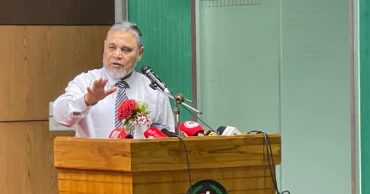
EC had no ‘design’ other than holding fair election: CEC
Chief Election Commissioner AMM Nasir Uddin on Monday said his commission didn't work with any particular ‘design’ to conduct the 13th parliamentary election held on February 12.
“We didn't work with any design. Our design was only to hold a free, fair and credible election,” he said.
The CEC made the remarks, while addressing the inaugural ceremony of the newly elected Executive Committee of Reporters' Forum for Election and Democracy (RFED) at the Electoral Training Institute (ETI) in the city's Agargaon area.
Nasir Uddin said they received full support and cooperation from the interim government during the February-12 general election.
The Election Commission faced no interference from the then interim government during the parliamentary election, he added.
He said the chief adviser of the former interim government asked his administration not to interfere in the activities of the Election Commission at that time.
About the upcoming local government elections, the CEC stressed the need for full cooperation from political parties for fair and peaceful elections.
He asked the political parties, if necessary, to sit in discussions for the sake of holding the local government elections in peaceful and fair manners. “We want to establish a culture of good elections,” he said.
About the tentative timetable for the local body polls, Nasir Uddin said the timetable has not been finalised yet and the EC is now working on amendments to rules and electoral codes now.
Responding to allegations of ‘election engineering’ raised at the same event by National Citizen Party (NCP) Chief Coordinator Nasir Uddin Patwary, the CEC said Patwary is known for his outspoken remarks and the commission has become accustomed to hearing such remarks from him.
“We’ve developed a kind of resistance hearing such remarks from him. During the election, he often met us and criticised us, just going outside the door…. Believe me, I sincerely say that I didn’t feel even the slightest hurt,” the CEC said.
Speaking about the journalists, Nasir Uddin said the commission tried to extend as much freedom as possible to the media during the February election, as it had “nothing to hide.”
“We tried to give you as much freedom as possible because we had nothing to conceal,” he said.
The CEC also said the commission maintained the same policy for all political parties, regardless of whether they were small, medium or large.
At the event, ruling party Whip Mia Nuruddin Ahmed Opu praised the Election Commission for conducting what he described as a credible election, while Jamaat-e-Islami Assistant Secretary General AHM Hamidur Rahman Azad and NCP Chief Coordinator Nasir Uddin Patwary criticised different aspects of the polls.
Mia Nuruddin Ahammed Opu said the February election reflected the aspirations of the people and described it as one of the most inclusive and widely credible elections in the country’s history.
“After people had been deprived of voting rights in the previous three elections, the current Election Commission gave the country an acceptable electoral system,” he said.
Jamaat leader Hamidur Rahman Azad acknowledged what he described as greater transparency at the policy level and noted qualitative improvements in voter participation, particularly among first-time voters, but not in publication of election results.
“There has been a qualitative change in the election. Voters went to polling stations and cast ballots, especially new voters who were able to vote for the first time,” he said.
However, he said some flaws in the election process should also be acknowledged to avoid hiding the truth.
Azad said more political parties participated in the latest election than in previous polls, although the Awami League could not join due to legal reasons. “This time we witnessed no violence in the polling stations,” he said.
“Only casting votes is not enough for fair election, the fair process also should be maintained in the declaration of election results,” said the Jamaat leader.
About the local government elections, he urged the Election Commission to address shortcomings and ensure that the polls do not witness violence or political interference similar to what he termed the “fascist era.”
Meanwhile, NCP Chief Coordinator Nasir Uddin Patwary said bringing changes in the EC from top to bottom is his first target.
"Bangladesh has witnessed how the DGFI, NSI and other intelligence agencies can engineer an election nakedly in the DC offices on election day," he said.
Referring to a previous remark by an election commissioner that loan defaulters had been allowed to contest the election “with a heavy heart,” Patwary said the EC can’t violate the Constitution even with a heavy heart. “It is your commitment that you don’t allow them,” he said.
Four election commissioners Abdur Rahmanel Masud, Tahmida Ahmad, Anwarul Islam Sarker and Brig Gen (Retd) Abdul Fazal Md Sanaullah, President of the National Press Club Hasan Hafiz, RFED newly elected President Kazi Amad Uddin Jabel and general secretary Ekram-Udd Dowla, among others, were present in the event.
17 days ago

Mild heat wave sweeps parts of country: Met office
A mild heat wave is sweeping several parts of the country and it may continue, the Bangladesh Meteorological Department (BMD) said on Monday.
According to a regular bulletin issued by the Met office, the mild heat wave is affecting Madaripur, Rajshahi, Pabna, Lakshmipur, Khulna, Satkhira and Jashore districts.
The Met office said day temperatures may remain nearly unchanged, while night temperatures could rise slightly across the country.
It also forecast light to moderate rain or thundershowers accompanied by temporary gusty or squally winds and lightning flashes at many places in Mymensingh and Sylhet divisions.
A few places in Rangpur, Dhaka and Chattogram divisions and one or two places in Rajshahi, Khulna and Barishal divisions may also experience rain or thundershowers. Moderately heavy to heavy rainfall is likely at places in Mymensingh and Sylhet divisions.
The Met office said a trough lies over West Bengal to the North Bay across the southwestern part of Bangladesh.
17 days ago
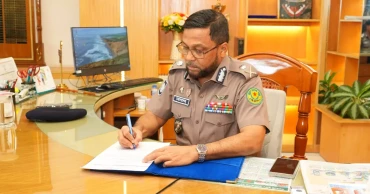
Mosleh Uddin Ahmed takes charge as DMP Commissioner
Additional Inspector General of Police (IGP) Mosleh Uddin Ahmed took over as the Commissioner of Dhaka Metropolitan Police (DMP) on Monday.
Deputy Commissioner of DMP’s Media and Public Relations Division, N M Nasiruddin, confirmed the matter to the media.
Earlier on Sunday, the Ministry of Home Affairs issued a notification appointing him as the DMP Commissioner.
17 days ago
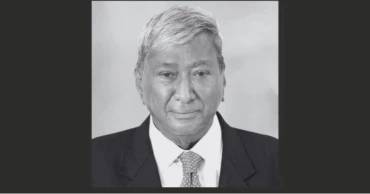
Janaza of Mizanur Rahman Sinha held in front of BNP central office
The namaz-e-janaza of former state minister for health and convener of Munshiganj district BNP Mizanur Rahman Sinha was held on Monday in front of the BNP central office at Nayapaltan in the capital.
The namaz-e-janaza was held around 10am where BNP Senior Joint Secretary General Advocate Ruhul Kabir Rizvi and several central leaders of the party joined.
Before the janaza, BNP leaders highlighted Sinha’s political and personal contributions.
Rizvi said Mizanur Rahman Sinha was greatly needed for building a “new Bangladesh.”
“He worked throughout his life for the welfare of the country and its people. People will remember him forever for his contributions to social development and the country’s economy,” he said.
Special prayers were offered seeking eternal peace for the departed soul and blessings were sought from the country’s people.
Mizanur Rahman Sinha, also managing director of pharmaceutical company Acme Laboratories Ltd, died on Friday while undergoing treatment at a hospital in Singapore. He was 83.
Born on August 18, 1943, in Dohuri village under Kolma Union of Louhajang upazila in Munshiganj district, Sinha completed his graduation in Business Studies from the University of Dhaka and became involved in politics during his student life.
He was elected MP from Munshiganj constituency as a BNP candidate in the seventh parliamentary election in 1996 and again in the eighth parliamentary election in 2001.
Following the 2001 election, he served as state minister for health and family welfare in the cabinet of former Prime Minister Khaleda Zia.
Apart from serving as treasurer of BNP’s central executive committee he was also the convener of Munshiganj district BNP.
Sinha was also nominated by BNP for the 13th parliamentary election from the Munshiganj-2 (Louhajang-Tongibari) constituency. Later, after he fell ill, BNP Joint Secretary General Abdul Salam Azad was nominated in his place.
17 days ago
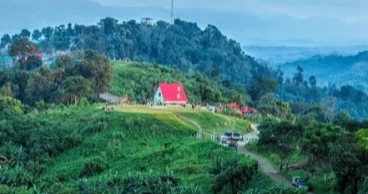
Tourism can be key driver of jobs, growth: State Minister Millat
State Minister for Civil Aviation and Tourism M Rashiduzzaman Millat has said tourism will play a key role in employment generation and strengthening the national economy.
The government views the tourism sector not only as an important economic driver but also as a powerful means of job creation, regional development and cultural exchange, he said.
The state minister came up with the remarks while speaking at the ‘TOAB International Tourism Award 2026’ organised by the Tour Operators Association of Bangladesh (TOAB) at a hotel in Dhaka on Sunday, according to a PID handout.
To develop and promote the country’s 1,498 tourist attractions, the government has adopted an integrated tourism master plan covering eco-tourism, adventure tourism, religious tourism and cultural and heritage-based tourism, he added.
He also invited proposals from TOAB for policy reforms aimed at further developing the tourism sector.
He mentioned that although tourism currently contributes around 3 per cent to Bangladesh’s GDP, the government is working to raise this share to 8–9 per cent in the near future.
He expressed hope for stronger public–private partnerships in developing tourism infrastructure.
He also presented medals of honour to 13 organisations in 13 categories in recognition of their contributions to the tourism sector.
17 days ago
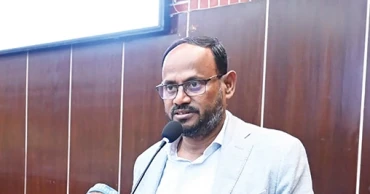
Govt focusing on boosting export capabilities: Tuku
Fisheries and Livestock State Minister Sultan Salauddin Tuku said on Sunday that the government is highly prioritising the enhancement of the country's export capabilities and providing necessary incentives to boost meat exports to international markets.
The government is committed to earning foreign exchange through the export of homegrown and farm-based products while simultaneously meeting domestic demands, he said while exchanging views with journalists after inspecting the Bengal Meat processing plant in Pabna.
He highlighted that Prime Minister Tarique Rahman is working dedicatedly to ensure the economic self-reliance of the country's marginalised population and farmers, said a PID handout.
Highlighting the country's potential, the state minister said, how to utilise these resources to strengthen our economy in the coming days – especially targeting how marginalised communities and farmers can benefit and experience job growth – we have come to inspect the operations of Bengal Meat today.
Responding to a query from journalists, he noted that the Bengal Meat authorities are producing and processing meat using highly scientific, safe, and hygienic methods and are currently exporting on a limited scale. He assured us that the government would review and identify the necessary support mechanisms to ensure that the export process faces no hurdles.
During the visit, the State Minister inspected the factory's production units, hygienic meat processing systems, quality control measures, preservation processes, and overall operations.
Prime Minister's Special Assistant Saiyed Bin Abdullah, Member of Parliament for Pabna-2 constituency A K M Selim Reza Habib, Secretary of the Ministry of Fisheries and Livestock Md. Delwar Hossain, Director General of the Department of Livestock Services (DLS) Md. Shahzaman Khan, and DLS Project Director Dr. Md. Abdur Rahim, along with top officials of Bengal Meat, were present during the inspection.
Visit to Milk Vita Plant Later in the day, the State Minister visited the Baghabarighat Dairy Plant of the Bangladesh Milk Producers' Co-operative Union Limited (Milk Vita).
During his visit there, he inspected the plant’s milk collection mechanism, processing, production activities, quality control systems, storage, and marketing processes.
Fisheries and Livestock Secretary Md. Delwar Hossain, Milk Vita Chairman S M Amir Hamza Shatil, DLS Director General Md. Shahzaman Khan, and Upazila Nirbahi Officer (UNO) Sabrina Sharmin, along with senior officials of Milk Vita, accompanied the State Minister.
18 days ago
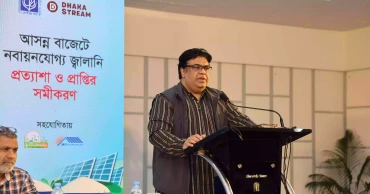
‘Can't sacrifice farmland’: PM’s ICT Adviser sets conditions for renewables expansion
Prime Minister's Adviser on Telecom and ICT Rehan Asif Asad on Sunday stressed the need for a balanced long-term energy strategy for Bangladesh, warning that expanding renewable energy must not come at the cost of agricultural land.
“Renewable energy (RE) is crucial for Bangladesh's future. Our agriculture is also important. We cannot expand renewable energy by sacrificing arable land,” the adviser said at a seminar titled “Renewable Energy in the Upcoming Budget: Expectations and Realities,” organised by the Centre for Policy Dialogue (CPD) at a city hotel.
Asad, who holds degrees in electrical and nuclear engineering from the Massachusetts Institute of Technology (MIT), said energy is one of the key drivers of national development and that sustainable economic growth depends heavily on proper planning and predictability in the sector.
Citing an example from Rajshahi, he said solar panels placed directly on farmland had negatively affected crop output, prompting authorities to relocate them to rooftops of irrigation pumps, an arrangement that proved more effective. “Agriculture is the backbone of our economy. We cannot promote renewable energy by damaging farmland and putting food production at risk.”
The adviser highlighted nuclear power as one of the most reliable electricity sources and noted that fresh nuclear fuel has already begun arriving at the Rooppur plant.
He cautioned, however, that large-scale nuclear projects require seven to ten years from construction to power generation and demand careful long-term planning.
He also pointed to significant advances in nuclear technology over the past two decades, particularly the development of small modular reactors capable of generating between 55 MW and 500 MW, which he said could be well-suited to countries like Bangladesh.
On energy storage, Asad said the government is reviewing possible reductions in taxes and VAT on lithium-ion batteries to make the technology more affordable.
The CPD study presented at the same event had earlier flagged that lithium-ion batteries currently face a total tax incidence of 61.80 percent in Bangladesh, the highest among key renewable energy components.
Regarding electric vehicles, he said the global automotive industry views EVs as the future but cautioned that Bangladesh must first assess the impact of mass EV adoption on the national grid. “Without strengthening charging networks and grid capacity, importing more EVs could create new challenges.”
The adviser acknowledged that discussions are ongoing on whether tax exemptions and incentives should be extended to the renewable energy sector, but said every such decision must be made carefully given the country's limited fiscal space.
He noted that Bangladesh's tax-to-GDP ratio stands at approximately 6.5 percent, among the lowest in the world, compared to 11 to 14 percent in neighbouring Southeast Asian countries. “Every decision regarding tax exemptions, VAT reductions or incentives must be made cautiously to ensure maximum national benefit within limited fiscal capacity.”
Asad expressed hope that some of the recommendations discussed at the event would find reflection in the upcoming national budget. “The government is working toward a holistic approach covering renewable energy, electric vehicles, battery storage technology and overall electricity demand management.”
The CPD seminar was moderated by Research Director Khondaker Golam Moazzem. A study titled “Renewable Energy in the National Budget 2026-27: Overshadowed by Fossil Fuels?” was presented by Programme Associate Md. Khalid Mahmud. Prime Minister's Adviser on Finance and Planning Rashed Al Mahmud Titumir attended as chief guest.
18 days ago
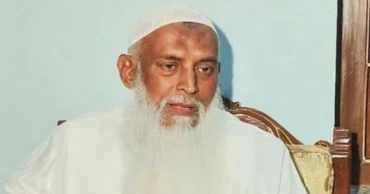
Govt won't tolerate injustice against Islamic scholars: Religious Affairs Minister
Religious Affairs Minister Kazi Shah Mofazzal Hossain Kaikobad has said that he is ready to make any sacrifice, but will not allow injustice, torture or oppression against Islamic scholars.
He said the Prime Minister has instructed that madrasas should not be deprived and that no injustice should be done to them. “We are vocal in implementing this directive,” he added.
The minister made the remarks at a discussion meeting on the preservation of raw hides of sacrificial animals ahead of Eid-ul-Azha, held at the Islamic Foundation Bangladesh auditorium in Agargaon, Dhaka.
He said Islam has survived and will continue to survive through Islamic scholars, adding that no one can stop the spread of Islam or the operation of madrasas.
He also said that unity among religious leaders could bring many positive changes in society.
Referring to the importance of preserving animal hides, he said that in the past, hides were sometimes buried without being sold, which should not happen. He stressed the need to ensure proper skinning and preservation so that quality is maintained.
The minister also warned against the activities of “leather syndicates and brokers” and said the government would take a firm stance against such practices.
He added that Islamic scholars have played an important role in society and referred to their involvement in past political movements, including support for former president Ziaur Rahman during the 1979 referendum.
He expressed his gratitude to the role of Qawmi scholars and ulamas in all democratic movements, including the great war of independence.
The minister said that no government since independence had considered providing honorariums for imams and muezzins until Tarique Rahman took the initiative.
He added that, gradually, those working in mosques and other religious institutions across the country would be brought under the honorarium programme.
Religious Affairs Secretary Munshi Alauddin Al Azad and Islamic Foundation Director General As Salam Khan also spoke at the event.
Participants at the meeting, including madrasa teachers, imams, khatibs and Islamic scholars, urged the government to ensure fair prices for raw hides.
18 days ago