Others
Defence adviser highlights civil-military coordination at DC Conference
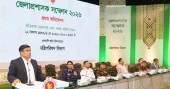
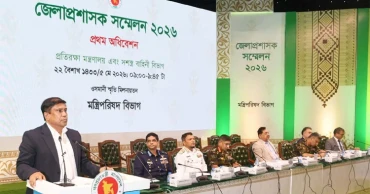
Prime Minister’s Defence Adviser Brig Gen Dr AKM Shamsul Islam (retd) on Tuesday stressed the need for stronger civil-military coordination to ensure national security, good governance and continued development.
He made the remarks at a session on the Ministry of Defence and Armed Forces Division during the ongoing Deputy Commissioners’ Conference 2026 at Osmani Memorial Auditorium in the capital.
The adviser said effective administrative coordination, sound governance and a robust security framework are essential to build a modern, secure and self-reliant Bangladesh. He emphasised that mutual trust, respect and understanding between civil administration and the armed forces remain key to safeguarding sovereignty and stability.
Highlighting emerging global realities, he said national security is no longer limited to traditional military threats but also includes cyberattacks, terrorism, climate change, pandemics and economic risks. Addressing these challenges requires a coordinated “whole of government approach,” involving all state institutions.
He called for building a credible defence system capable of deterring potential threats and urged deputy commissioners to ensure professionalism, efficiency and prompt implementation of government decisions at the field level.
Senior officials, including the chiefs of the Army, Navy and Air Force, attended the session, along with top civil administration representatives.
The conference is expected to further strengthen coordination between military leadership and civil administration, contributing to a stable, secure and developed Bangladesh.
30 days ago
East-West Elevated Expressway to transform capital's traffic landscape: Shaikh Rabiul
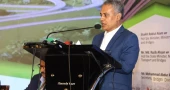
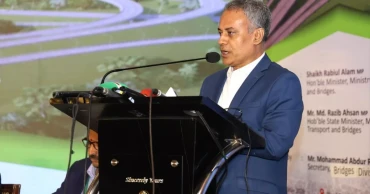
The proposed Dhaka East-West Elevated Expressway will fundamentally transform the transportation network across the capital and its surrounding districts, Road Transport and Bridges Minister Shaikh Rabiul Alam said on Tuesday.
“This 39-kilometre expressway will bypass Dhaka city and connect Hemayetpur with Narayanganj, establishing a direct corridor between the country's eastern and south-western regions. It will significantly improve traffic flow and reduce congestion in Dhaka by nearly half,” Rabiul said at a high-level stakeholder consultation workshop, held at a city hotel to advance the Dhaka East-West PPP project.
He noted that an updated feasibility study for the project has already been completed, adding that delayed implementation carries serious economic consequences.
Citing the Dhaka-Sylhet highway as a cautionary example, he pointed to significant financial losses caused by belated land acquisition. “If a project is not implemented on time, it becomes an economic burden. What we need is commitment and sound planning.”
The minister stressed the current government's intent to break from five decades of flawed infrastructure policy, saying it would not pursue large-scale mega projects indiscriminately as previous administrations had done. “We want to spend public money in a way that eliminates waste and delivers real benefits to people.”
Road Transport and Bridges State Minister Md Razib Ahsan said modern expressway infrastructure is now a pressing necessity, as traffic gridlock continues to erode fuel efficiency and economic productivity.
He said the project would be especially vital for goods transport and inter-city passenger movement. “If a realistic toll structure can be established, this project will be a landmark achievement. We want to implement it through public-private partnership in a way that becomes a true milestone.”
Razib also directed project officials to complete land acquisition within the shortest feasible timeframe and emphasised the need to move away from the perception that large projects inevitably breed large-scale corruption. “Previous projects were mired in controversy from inception. We must change public perception. We want to move this sector forward, inclusively and without dispute.”
Project Details
The expressway: stretching 38.98 kilometres from N5 to N1, will run from Hemayetpur on the Dhaka-Aricha Highway through Atibazar, Abdullahpur, Jolpori Bazar and Narayanganj, ending at Langalbandh on the Chittagong Highway.
It will feature five major interchanges at N5, Atibazar Road, N8, R111 and N10, and will cross two major rivers, the Buriganga and Shitalakshya. The corridor will also connect with the Padma Bridge Rail Link and the Dhaka-Narayanganj railway line, spanning five upazilas across two districts.
Once operational, the expressway will allow vehicles from Chittagong, Sylhet and other eastern districts, as well as from Khulna and Barishal in the south-west, to bypass Dhaka entirely and travel directly to 20 north-western districts. It will also link into the Asian Highway network.
The total project cost has been estimated at Tk 36,000 crore (approximately USD 2.88 billion), comprising Tk 22,000 crore for construction and Tk 14,000 crore for land acquisition and resettlement, excluding contingency and ancillary costs.
Traffic and Financial Projections
According to a 2025 traffic survey, daily vehicle volume is projected at 21,000–25,000 upon the expressway's expected opening in 2030, rising to over 50,000 by 2050. Average vehicle speed is forecast to jump from the current 20–30 km/h to approximately 90 km/h.
A Social Cost-Benefit Analysis (SCBA) put the project's Economic Internal Rate of Return (EIRR) at 16.42 percent. Under the base-case financial model, factoring in a base toll of BDT 9.20 per kilometre and a 30 percent Viability Gap Funding (VGF) support — the Financial Internal Rate of Return (FIRR) stands at 7.66 percent.
Analysts noted that with appropriate VGF support and a realistic toll framework, the project can be made financially sustainable and investment-worthy.
The Cabinet Committee on Economic Affairs (CCEA) approved the project's implementation on a PPP basis on December 8, 2021. Infrastructure Investment Facilitation Company (IIFC) was appointed as transaction adviser on December 24, 2024, to update the feasibility study and cost estimates at current market rates.
Tuesday's workshop primarily reviewed the updated feasibility report prepared by IIFC and gathered feedback from relevant government agencies, development partners and sector experts. Senior officials of the Bridges Division, Bangladesh Bridge Authority and a panel of independent experts were also present.
30 days ago
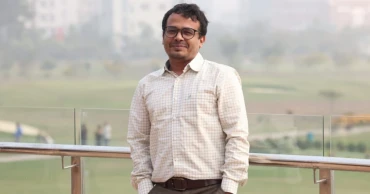
Dhaka Stream journalist alleges abduction attempt in Moghbazar on way home from office
A journalist at new media outlet Dhaka Stream has alleged that he was the target of an attempted abduction at the Moghbazar intersection in the capital on Monday night.
The victim, Ataur Rahman, is a senior reporter at Dhaka Stream.
Describing the incident, Ataur said he was returning home after office in Panthapath around 10:15pm, accompanied by his former colleague Mohir Maroof.
“As we crossed the road, Maroof was looking for a rickshaw. At that time, a man got down from a vehicle (Dhaka Metro-Gha: 11-9899) carrying a stick and tried to force me into the car with the intention of abducting,” he said.
“When I resisted, three more men came out of the vehicle and tried to push me inside. They also physically assaulted me. When people nearby intervened, they tried to create confusion by accusing me of verbally abusing them. Failing to abduct me, they fled the scene in the car,” he added.
Witness Mohir Maroof, who is currently working at UNB, said he noticed a black private car stop at the signal, followed by a man getting out from the front seat and attempting to force Ataur into the vehicle.
“I ran to call the traffic police on duty at the signal. By the time we returned, four men were trying to take him away. When passersby joined and resisted, they instead blamed Ataur, claiming he had abused them. He identified himself as a journalist, but they physically assaulted him before fleeing,” he said.
Other witnesses also said the attackers suddenly stopped their vehicle and tried to force a man inside, but fled when a crowd gathered.
Officer-in-Charge of Hatirjheel Police Station Asaduzzaman said a complaint has been filed over the incident.
“An officer has been assigned to investigate the matter. We have been instructed to collect CCTV footage from the scene, and the vehicle number has been identified. The investigation is ongoing,” he said.
The complaint was filed with Hatirjheel Police Station on Tuesday.
30 days ago
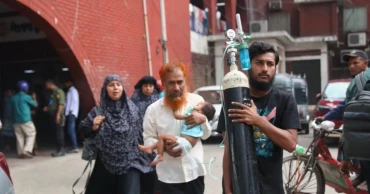
Waiting for a bed: A child’s fight against measles exposes a system under strain
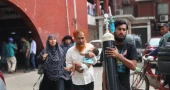
Inside a cramped vehicle, under dim light and rising anxiety, little Abir lies in his family’s arms—his small body weakened, his breathing uncertain.
Around him, worried faces lean in, adjusting an oxygen mask, whispering reassurances that barely conceal their fear.
For Abir’s family, the journey from Tangail to Dhaka was long and exhausting.
30 days ago
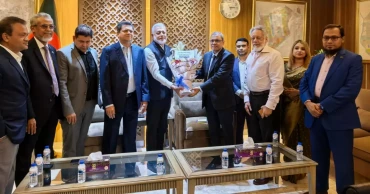
REHAB leaders meet Housing Minister, seek policy support for affordable housing
Leaders of the Real Estate and Housing Association of Bangladesh (REHAB) called on Housing and Public Works Minister Zakaria Taher on Tuesday, seeking stronger government cooperation to develop the country's housing sector and ensure affordable homes for ordinary citizens.
The courtesy call, held at the minister's office, saw wide-ranging discussions on the current challenges facing the real estate sector, the investment climate, and ways to make housing accessible to the general public.
REHAB leaders pressed for policy-level support to sustain the sector's long-term growth. Narayanganj-1 Member of Parliament (MP) Mostafizur Rahman Bhuiyan (Dipu) and Housing and Public Works Secretary Md Nazrul Islam were also present at the meeting.
REHAB President Dr Ali Afzal said the housing sector remains a significant contributor to the national economy, but is currently under strain due to policy complexities, high construction costs and financing constraints.
“We are hopeful that with effective government cooperation, the sector will gain fresh momentum and it will be possible to ensure affordable housing for ordinary people,” he said.
He also stressed that long-term policy support and expanded access to easy-term financing are essential if the sector is to move forward in a planned and sustainable manner.
Minister Taher assured that the government is committed to the sector's advancement and has already taken up several initiatives in that direction.
“Through coordinated efforts with REHAB, a modern, sustainable and people-friendly housing system will be established,” he said, adding that the government will continue to provide necessary policy support to ensure affordable housing for the common people.
Both sides concluded the meeting expressing optimism about working together to drive meaningful progress in Bangladesh's housing sector.
30 days ago
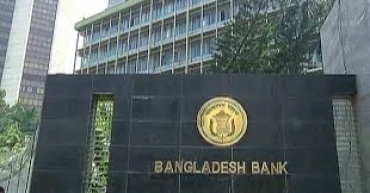
Loan conditions for raw hide traders eased ahead of Eid-ul-Azha to boost leather sector
Bangladesh Bank has relaxed conditions to avail new loans for raw hide traders ahead of Eid ul Azha, allowing them to access funds without having to clear their previous arrears.
The central bank issued a circular to this effect on Tuesday (May 5), prioritizing liquidity flow into the market before the festival, which accounts for the vast majority of the principal input (raw hide) for the export-oriented leather industry.
According to the new decision, the requirement for hide traders with rescheduled loans to pay a specific portion of their outstanding dues before availing fresh financing has been temporarily waived, specifically to facilitate the purchase of raw hides during the upcoming festive season.
The circular emphasizes that the leather industry is a significant export sector in Bangladesh, heavily reliant on the peak supply of raw hides collected during Eid-ul-Azha. Ensuring traders possess sufficient cash reserves during this critical time is essential for the smooth collection, preservation, and subsequent trade of hides, the central bank noted.
Consequently, banks have been directed to sanction and disburse required working capital loans to hide traders. The directive specifically highlights the need to extend credit not just to large-scale tannery owners but also to grassroots level collectors operating in villages and cattle markets.
The circular specifies that the mandatory upfront payment required from borrowers with existing rescheduled loans when seeking new financing for rawhide purchases is suspended until June 30, 2026. This move effectively enables numerous traders to secure fresh funds despite unresolved previous dues.
Furthermore, banks have been instructed to set specific lending targets for the leather sector for the fiscal year 2026. These targets must not be lower than the allocation made in the preceding year. Banks are required to submit their target figures and implementation reports to Bangladesh Bank by July 31.
Stakeholders and sector insiders expect this initiative to significantly ease the anticipated liquidity crunch in the raw hide market during Eid. By accessing financing on easier terms, traders can aggressively pursue rawhide purchases, which in turn is likely to help ensure a fair price for sacrificial animal skins at the producer and middleman levels.
30 days ago
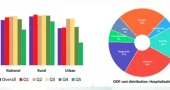
Unmet healthcare needs persist in Bangladesh as OOP spending soars to 79%: BIDS study
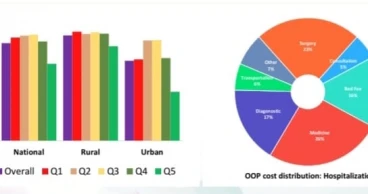
A significant portion of Bangladesh’s population continues to face unmet healthcare needs, driven largely by rising out-of-pocket (OOP) expenditures, according to a study of Bangladesh Institute of Development Studies (BIDS).
Although unmet healthcare needs persist across all segments of society, the financial burden falls disproportionately on the poor, it showed.
The research by Dr Abdur Razzaque Sarker of BIDS underscored that OOP spending remains the dominant mode of healthcare financing in the country, with its share reaching an alarming 79 percent in 2024.
The study titled “Re-thinking unmet healthcare needs and dynamics of out-of-pocket (OOP) expenditure in Bangladesh,” was conducted under BIDS’ Population Studies Division.
The study utilised data from the latest Household Income and Expenditure Survey (HIES) 2022, comprising 14,400 households and 62,387 individuals where descriptive statistics were employed to analyses and summaries the percentage of unmet need, service utilisation across providers.
The distribution of benefits from public spending and progressivity/regressivity is assessed using Benefit and Financing Incidence Analysis.
The findings revealed that around 22 percent of the population reported a need for healthcare services on a monthly basis. Among them, 15 percent experienced unmet healthcare needs, accounting for 65 percent of the total need.
Unmet needs were found to be significantly higher in rural areas compared to urban centres—68 percent versus 59 percent. Regionally, the highest levels of unmet need were recorded in Narail (81 percent) and Habiganj (80 percent), while the lowest was observed in Feni (18 percent).
Healthcare spending and inequality
On average, Bangladeshi households spend TK 3,454 per month on healthcare, representing about 11 percent of total household expenditure. Medicines and diagnostic services were identified as the primary cost drivers.
The study noted that while public healthcare services are relatively equitably utilised, private healthcare services remain disproportionately concentrated among wealthier groups.
Despite higher absolute spending among the rich, poorer households bear a significantly heavier financial burden.
Healthcare expenses account for about 35 percent of total income for the poorest households, compared to just 5 percent for the wealthiest, indicating a regressive healthcare financing system.
The heavy reliance on OOP payments often leads to catastrophic health expenditures, limiting access to necessary care and pushing vulnerable households further into poverty.
The study concluded that although unmet healthcare needs persist across all segments of society, the financial burden falls disproportionately on the poor.
To address these challenges, the researcher recommended urgent reforms in healthcare financing, particularly the development and implementation of risk-pooling mechanisms such as social health insurance.
Such measures, the study suggested, are essential for reducing inequality in healthcare access and achieving Universal Health Coverage (UHC) in Bangladesh.
30 days ago
CAG submits audit reports to PM
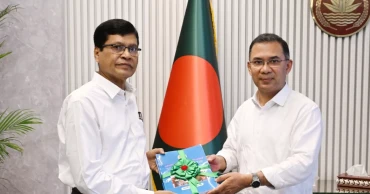
Comptroller and Auditor General (CAG) Md Nurul Islam on Tuesday submitted the audit reports for the 2021-22 fiscal year to Prime Minister Tarique Rahman.
The reports were placed at the Prime Minister’s Office at the Secretariat in the afternoon, his Press Secretary Saleh Shibly said.
He said a total of 38 audit reports on different government ministries, divisions and agencies were submitted, covering both compliance and performance.
“The Prime Minister was briefed on key observations and recommendations highlighted in the reports,” Shibly said.
Cabinet Secretary Nasimul Ghani, Finance Secretary Md Khairuzzaman Mozumder and other senior officials concerned were present during the submission of the reports.
According to the Prime Minister’s Office, the audit reports were prepared under Article 128(1) of the Constitution of Bangladesh and Section 5 of the Comptroller and Auditor General (Additional Functions) Act, 1974.
As part of the process, a total of 38 compliance and performance audit reports covering 17 ministries and divisions, along with their directorates, departments, institutions and projects, were submitted to the Prime Minister before being placed in Parliament.
During the meeting, Tarique Rahman stressed the importance of ensuring transparency and accountability in public spending and in assessing whether development projects are achieving their intended objectives.
He also underscored the need to strengthen performance audits alongside compliance ones.
30 days ago
Two trucks set on fire after trader killed in Rajshahi road accident
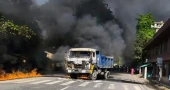
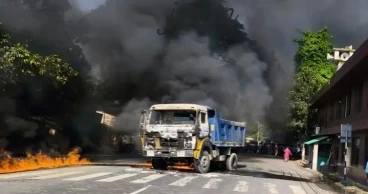
Local people set two dump trucks on fire after a trader was killed after being hit by one of them on Dhaka–Rajshahi highway in Puthia upazila of Rajshahi district on Tuesday.
The deceased was identified as Akram, 60, owner of a tailoring shop in Sardah Thanapara of Rajshahi district.
The Natore-bound sand-laden dump truck knocked Akram down while he was crossing the road and dragged him for a few yards, leaving him dead on the spot around 7 am in front of Biraldah Mazar.
Angered by the accident, local people blocked the highway and set fire to the dump truck. They also set anther dump truck on fire which was passing the highway at that time.
Meanwhile, locals also set fire to some mobile phone sets and vandalised others as some people were found recording video footage of the incident on mobile phones.
Vehicular movement on the highway remained halted for some time following the accident.
On information, police rushed to the spot and brought the situation under control, said Officer-in-Charge of Puthia Police Station Faridul Islam.
Locals demanded a ban on dump truck movement in the area during daytime and the installation of speed breakers on the road.
Farhad Hossain, Deputy Assistant Director of Rajshahi Fire Service and Civil Defence, said they extinguished the fire with the help of police and local people.
30 days ago
Woman, granddaughter killed in Barishal road crash
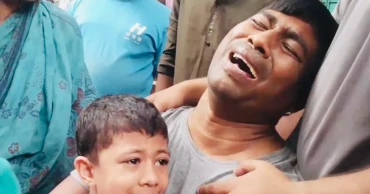
An elderly woman and her granddaughter were killed when a bus ran over them on Dhaka–Barishal highway in Ujirpur upazila of Barishal district on Tuesday.
The deceased were identified as Roksana Yeasmin, 65, wife of Pannu Kazi, and Arfa, 7, daughter of Rubel Kazi of Paschim Joysree village.
The accident occurred around 12:30 pm when a bus of ‘Hanif Paribahan’ hit them while they were crossing the road, leaving them dead on the spot, said Mahsin Hossain, Officer-in-Charge of Gouranadi Highway Police Station.
On information, police recovered the bodies.
30 days ago