others

97 looted arms, 6,585 rounds of ammunition recovered till Wednesday: RAB
Rapib Action Battalion has recovered 97 arms looted from police stations, outposts, and other locations across the country till Wednesday, according to a RAB.
Rab says it assisted army and other forces in maintaining law and order in the country
Besides, 6,585 rounds of ammunition, 30 sound grenades, and 28 magazines were recovered to date, said a RAB press release on Wednesday.
Huge number of arms and ammunition were looted during attacks on police stations and other secured areas before and after August 5.
BGB, Rab, police, Ansar working with Armed Forces to maintain law and order
In response, the interim government’s Home Affairs Adviser Brig Gel (retd) M Sakhawat Hossain, ordered the immediate recovery of the looted weapons and ammunition.
Quota reform protests: RAB arrests 290 more people
The RAB Forces, in coordination with the Bangladesh Army and other security forces, have been working across the country to retrieve the stolen arms and bring the law and order situation under control, added the statement.
1 year ago

No alternative to overhauling BFIU, ACC, relevant institutions: TIB
Transparency International Bangladesh (TIB) has emphasized that there is no alternative to strengthening and comprehensively reforming institutions to effectively combat corruption and money laundering and to ensure accountability by identifying those involved in such crimes.
Despite substantial evidence of undeclared assets belonging to former land minister Saifuzzaman Chowdhury Javed and his wife, Rukhmila Zaman Chowdhury, the authorities have failed to take action for an extended period, TIB said.
The TIB highlighted this case as a clear example of partisanship and ineffectiveness within key institutions, particularly at the leadership level, including the Bangladesh Financial Intelligence Unit (BFIU), the Anti-Corruption Commission (ACC), the Criminal Investigation Department (CID), and the National Board of Revenue (NBR).
Since December of last year, no progress has been made despite the disclosure of specific information regarding the former land minister’s undisclosed assets abroad and widespread public concern.
Terming this highly disappointing, TIB Executive Director Dr. Iftekharuzzaman said, "On December 26 last year, following the release of TIB’s report titled ‘Candidate Profiles in Affidavits,’ along with the ‘Know Your Candidate’ dashboard and subsequent media reports, the public and relevant authorities became aware of the former land minister’s investments and ongoing business activities in the UK, totalling over BDT 2,300 crore.”
On March 4 of this year, through a collaborative initiative between TI UK and TIB, all specific information, evidence, and documents uncovered in TI UK’s investigation were sent to the Bangladesh Financial Intelligence Unit (BFIU), the Anti-Corruption Commission (ACC), the Police Criminal Investigation Department (CID), the National Board of Revenue (NBR), and the Attorney General’s office.
“Although the institutions have ample proof, they failed to take any discernible action against the previous land minister. Visible movement on this topic has only occurred after the government's fall and the resignation of the BFIU head, which is seen as a positive indication. Nevertheless, the persistent inquiry remains: why was no action implemented sooner, despite the significant evidence?” he said.
The TIB ED mentioned that “the lack of action demonstrates that these institutions have become ineffective due to partisan influences, with their leadership exacerbating this ineffectiveness.
In reality, he said, the misuse of authority has legitimized money laundering and the acquisition of undeclared assets.
“The fact that the government agencies are supposed to be looking into financial corruption in the nation have fostered corruption and have opened the door to corruption themselves by hiring, promoting, and providing unscrupulous benefits to party affiliates is a cause for concern,” he said.
The former land minister's enormous overseas assets accumulation that remains undisclosed is only the "tip of the iceberg," as the saying goes.
“These institutions need to undergo a thorough overhaul as part of the drastic changes that the student movement and the new Bangladesh are projected to bring about. The goal of a state that is free from corruption, well-governed, democratic, and accountable will remain a pipe dream otherwise,” said the TIB ED.
1 year ago
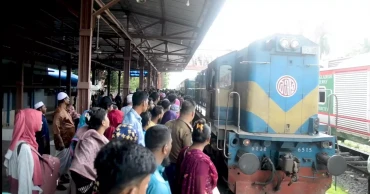
Khulna-Benapole-Mongla commuter train service resumes after 11 days
The Khulna-Benapole-Mongla commuter train service resumed operation on Wednesday morning after 11 days of suspension over security issues.
The commuter train, also known as Betna Express, departed Khuna station around 6:15 am and reached Benapole around 8:30 am.
The train carrying 235 passengers left for Mongla from Benapole around 9:30 am, Saiduzzaman, Benapole station master, said.
The train service was initially halted on July 18 due to violence across the country. Although the train operation resumed on August 1, it was again suspended just two days later.
1 year ago
Students who ousted Hasina are helping lead Bangladesh, from the streets to the ministries
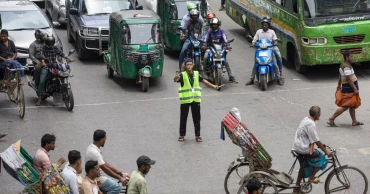
Within a week of unseating Bangladesh’s longest-serving prime minister, the students who drove out Sheikh Hasina were directing Dhaka’s traffic.
Decked out in neon vests, their university IDs slung around their necks, they clutch sticks and umbrellas to wave cars this way and that, filling the void after police went on strike. They stopped drivers, checking their licenses and telling them off for not wearing their seatbelts. Some opened trunks of cars they deemed could belong to officials from the previous government, looking for smuggled riches.
Students have not only manned roads, two who led the charge against Hasina are settling into the interim government they ushered in just a few days after she resigned and fled to India in a military helicopter.
Before Hasina was toppled by the student movement with astonishing speed, she was seen as one of the country's most unshakeable leaders. In total, she governed for more than 20 years, most recently winning four straight terms as her rule became ever more autocratic.
The question now is what comes next in a country still reeling from the violence surrounding her removal that left hundreds dead. The students hope they can restore peace and democracy and create a “new Bangladesh,” said Asif Mahmud, one of the protest leaders now in charge of the Sports and Youth Ministry.
“We’ve got a big responsibility,” he said. “We never thought, never had an ambition, that we would take such a responsibility at this age."
"There is pressure, but confidence is also there,” said 26-year-old Mahmud.
The student-led protests began with a demand to abolish a quota system for government jobs they said favored Hasina’s allies but coalesced into a full-scale revolt against her and her Awami League government. Clashes with security forces, and the deaths that resulted, fueled wider outrage against Hasina's rule, and the students have ridden a wave of popular support.
But concerns are also simmering over their lack of political experience, the extent of their ambitions and crucially, how long it will take the interim government to organize elections. Already, the student ministers along with the protesters have said that before any vote is held, they want to reform the country’s institutions — which they say have been degraded by both the Awami League and its rival, the dynastic Bangladesh Nationalist Party.
Experts warn, however, that the interim government is unelected and as such it has no mandate to implement major changes.
The government, headed by Nobel Laureate Muhammad Yunus who was chosen by the students, “must keep in mind that their main responsibility is to hold an election,” said Zillur Rahman, executive director of the Center for Governance Studies, a Dhaka-based think tank. “They shouldn’t take any policy decisions.”
Yunus, economist and longtime Hasina critic, is known globally for his pioneering use of microcredit to help the poorest of the poor — but also has never run a government. He’s made clear that students will play a critical role in a manner never seen before: “Every ministry should have a student,” he said.
Controlling traffic for a few days is one thing but potentially appointing students into ministries could make them “power hungry” at an especially sensitive time, said Rahman.
Nahid Islam, the other student-turned-minister, acknowledged that they have no governance experience but said the grit and determination they showed in pushing out Hasina was proof that they can get things done.
“We think the students who have succeeded in leading an uprising … and the citizens are capable enough to build the nation,” said Islam, who was born in 1998 and now runs the Ministry of Information and Technology.
In the wake of Hasina's ousting, students have mounted protests and issued ultimatums against authorities seen as close to her, demanding they quit. Six Supreme Court justices, including the chief justice, and the central bank governor all resigned in the past days.
“A modern government cannot be run on such a pattern,” said Mahfuz Anam, the editor-in-chief of The Daily Star newspaper, while adding that there have been some steps towards a stable transition process.
Many of the students who spent the past weeks protesting agree. They want the interim government to be neutral — but insist it must also be untethered to the mainstream political parties their generation has little connection to.
Alvi Mahmud, an 18-year-old student, said that if the interim government does a good job, then “people will not want BNP or Awami League or any traditional, old parties. They will want change. They will want a new way of living."
The burning question is when new elections can be held. Mirza Fakhrul Islam Alamgir, a senior BNP leader, told reporters on Monday that the party told Yunus that it would give the interim government reasonable time to create a conducive and democratic environment for the polls.
This could create “a sense of calm in the political environment,” said Anam. It could also give student leaders time to politically mobilize ahead of elections.
“We are not thinking of a political platform yet,” said Islam, the new minister. “But a young generation is ready to lead this country, that generation has been built."
For now, the country and its students are trying to come to terms with the horror of the last few weeks. More than 300 people were killed and tens of thousands injured as security forces cracked down on the demonstrations.
Students are sweeping up the streets that only recently were a battleground stained by the blood of their friends. They're cleaning up debris at homes and university campuses destroyed in the violence. And though some police have returned to the streets after a strike, many students have remained beside them to help direct traffic.
At an intersection in the heart of the city, a statue of Hasina's father, Sheikh Mujibur Rahman — Bangladesh's first leader after its independence in 1971 — used to tower over the constant flow of traffic. Swept up in both anger and joy after Hasina fled, protesters brought it down.
A few days ago, the site of the statue was defaced with graffiti against her, “Hasina you smell of dead bodies” was scrawled on the walls. Now, students have covered those words with murals depicting unity and their fight for change.
“We salute those who fought for our victory,” someone wrote in red and green, the colors of the Bangladesh’s flag. "We are one," read another.
1 year ago
US again denies any role in former prime minister Hasina's ouster in mass upsurge
After the White House, the US Department of State has also trashed reports that claimed the United States was involved in former Prime Minister Sheikh Hasina's resignation.
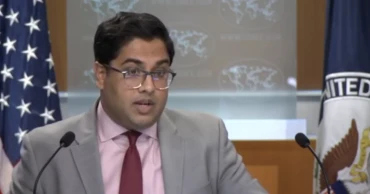
"That’s laughable," Principal Deputy Spokesperson Vedant Patel told reporters at a regular briefing in Washington on August 13.
He said any implication that the United States was involved in Sheikh Hasina’s resignation is absolutely false.
"We have seen a lot of disinformation in recent weeks," Patel said.
Read more: What Dhaka wants from Delhi: Ending border killings, conclusion of Teesta deal, supply of essential commodities
He said they remain incredibly committed to strengthening information integrity across the digital ecosystem, especially with their partners in South Asia.
Earlier, the White House ruled out any involvement of the United States behind the fall of the Sheikh Hasina-led government, stressing that it is false.
"So, we have had no involvement at all. Any — any reports or rumours that the United States government was involved in these — in these events is simply, simply false. That is not true," Press Secretary Karine Jean-Pierre told reporters at a press briefing on August 12.
She said this is a choice for and by the Bangladeshi people.
"We believe that the Bangladeshi people should determine the future of the Bangladeshi government, and that’s where we stand," said the White House Press Secretary.
"Any allegations, certainly, we will continue to say, and I have said here, is simply not true," she added.
A journalist mentioned that former Prime Minister Sheikh Hasina has reported to allies that she was thrown out — or forced to be out of power because the U.S. wanted to have one of the islands given to them - the United States of America.
Read more: Complaint lodged at International Crimes Tribunal against Hasina, top officials for crimes against humanity and genocide
And since — because they didn’t agree to it, she was forced to resign, the questioner mentioned.
The press secretary said they are going to continue to monitor the situation.
1 year ago

Shafiqul Alam appointed as press secretary of CA Yunus
Shafiqul Alam, Bangladesh bureau chief at AFP News Agency, has been appointed as Press Secretary to the Interim Government’s Chief Adviser Prof Dr Muhammad Yunus with the status of a secretary on a contractual basis.
The Public Administration Ministry issued a gazette notification to this end on Tuesday night.
The notification mentioned that Shafiqul will remain in office for the duration of the chief adviser’s term or subject to his satisfaction from the date of his joining.
He will get a fixed salary of Tk 78,000 and other benefits as well.
The order was issued in the public interest, reads the notice.
1 year ago

Army has provided shelter to 'individuals whose lives were in danger': General Waker-uz-Zaman
The Chief of Army Staff General Waker-uz-Zaman said on Tuesday that the Army has provided shelter to individuals whose lives were in danger, regardless of their religion or ethnicity.
He emphasized that the current government is seeking to implement some reforms and hold a free and fair election, and the Army is fully committed to supporting them in achieving these goals.
He made these remarks during a briefing at Rajshahi Cantonment on Tuesday afternoon.
In response to a question about whether the detained Awami League leaders from airports or border posts would be formally arrested, the army chief said that while the army has provided shelter to those whose lives were threatened, anyone against whom there are legal allegations will face justice.
He stressed that the army is committed to preventing any extrajudicial actions against these individuals.
Read more: Money launderers won’t be allowed to sleep in peace: New Bangladesh Bank Governor
The army chief also highlighted the importance of recovering weapons looted from the police. Several have already been recovered, and the search is ongoing and expressed his hope that the remaining weapons would also be recovered soon.
General Waker reassured that the situation has stabilized and is now under control, thanks to the combined efforts of all parties involved and also acknowledged the support received from the media and expressed gratitude for their cooperation.
He noted that the police are currently under some stress but are gradually resuming their duties effectively. The army continues to provide protection to the police, and once the situation normalizes further, the army will return to its cantonment. Until then, the army will remain engaged.
Regarding concerns about possible harsh measures similar to "Operation Clean Heart" or the "One-Eleven" political interventions, he assured that the army will not adopt such strict approaches. Instead, the army is committed to fully supporting the government’s efforts to implement reforms and ensure a free and fair election.
Addressing questions about foreign pressure, the army chief confirmed that there is no external pressure, although there has been some discussion concerning minority issues.
He mentioned that around 30 incidents related to minority unrest have occurred in 20 districts, but none in the eight districts of the Rajshahi division, which is a positive sign. The army aims to maintain the peaceful environment and continue working towards the country’s progress.
On the matter of army vehicles being burned in Gopalganj, the army chief described it as a misunderstanding. The situation is now normal, and dialogue has been established with the local leaders.
He assured that those responsible for the incident would be investigated and brought to justice.
Earlier, the army chief held a meeting with administrative officials in the Rajshahi region to discuss the situation. Present at the meeting were Dr. Dewan Mohammad Humayun Kabir, Divisional Commissioner of Rajshahi; Anisur Rahman, DIG of Rajshahi Range; Bipul Vijay Talukdar, Metropolitan Police Commissioner; and Shami Ahmed, District Commissioner of Rajshahi, along with officials from RAB-5 and BGB.
Read more: Sheikh Hasina, 24 others sued over student killed in Dhaka’s Mirpur during protest
1 year ago
Digital media as a pathway to economic empowerment for Bangladesh's hijra community
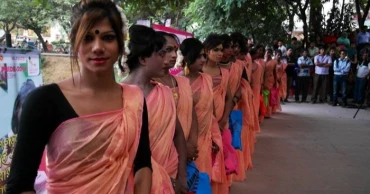
The Hijra community in Bangladesh, often marginalized and overlooked, is finding new avenues for economic empowerment through digital media. A recent study by researchers from Jahangirnagar University highlights the transformative potential of digital platforms in improving the socio-economic conditions of this community, recognized as a third gender by the Bangladeshi government in 2013.
The study, led by Kakulee Akhter and Md. Sayeed Al-Zaman, explores the role of digital media in the economic empowerment of the Hijra community. Despite their official recognition, members of this community continue to face significant challenges, including social exclusion, limited access to education, and widespread stigma. These factors have historically restricted their employment opportunities, often confining them to low-income and informal sectors.
Digital media, however, offers a new frontier. The study reveals that while the Hijra community in Bangladesh is beginning to engage with digital platforms, their participation is still in its nascent stages. For many, digital media has primarily served as a means of social connection and psychological support, providing a much-needed space for expression and community building.
Yet, the potential for economic empowerment is evident. With the right tools and support, digital media could enable members of the Hijra community to access new job opportunities, start online businesses, or engage in freelance work. However, several barriers remain. The study identifies low digital literacy, financial constraints, and fears about online safety as significant hurdles preventing the community from fully harnessing the power of digital platforms.
The researchers emphasize the need for targeted interventions to bridge these gaps. They suggest that government and non-governmental organizations could play a crucial role in providing digital literacy training tailored to the needs of the Hijra community. Additionally, financial support, such as grants or low-interest loans, could help community members invest in the necessary technology and resources to participate in the digital economy.
Public awareness campaigns are also critical. Reducing societal stigma and fostering greater acceptance of the Hijra community could create a more supportive environment for their economic activities, both online and offline.
This study is a call to action for policymakers, social activists, and the broader society to recognize and support the economic potential of the Hijra community. By leveraging digital media, this marginalized group can achieve greater financial independence and social integration, contributing to the overall economic development of Bangladesh.
1 year ago

August 15 public holiday canceled
The Advisory Council, chaired by Chief Advisor Dr. Muhammad Yunus, has decided to cancel the public holiday on August 15, originally declared in observance of National Mourning Day. This decision was announced on Tuesday through an official notification.
According to the press release issued by the Chief Advisor's Office, the cancellation of the August 15 holiday was approved in today's meeting of the Advisory Council.
The decision follows broad consensus reached during dialogues between the Advisory Council and various political parties.
Earlier in the day, Brigadier (retd.) M. Sakhawat Hossain, the Interim Government's Home Affairs Advisor, mentioned while visiting the injured at the BGB Hospital that discussions on the August 15 holiday would take place later in the afternoon, during which a final decision would be made.
1 year ago
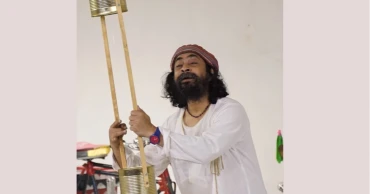
‘Our house was part of collateral damage, not a targeted attack’: Musician Rahul Ananda’s wife
The August 5 arson at renowned musician and Joler Gaan’s frontman Rahul Ananda's Dhanmondi 32 home was not a targeted attack, his wife Urmila Shukla has said.
She described the incident in detail in a Facebook post on Tuesday afternoon, stating that she wanted to clarify the matter earlier but could not write as she was mentally devastated.
Adjacent to the house of Bangabandhu Sheikh Mujibur Rahman which was targeted and torched by miscreants, the 140-year-old Dhanmondi house where Rahul Ananda and his family lived, was also burned. The house had over 3,000 musical instruments—most of which the artist made by himself.
The incident has been highlighted as a “communal attack” in some media reports in India and Bangladesh.
Describing the incident, Shukla wrote: “We heard the shouts of victory march from the crowd outside, and suddenly I saw all the houses behind were on fire. We were instantly disoriented but realized soon that all the houses of (Dhanmondi) 32 had been set on fire.”
“Our house is behind Santoor Restaurant. The three-storey house of our landlord Ainul Haque was the first to be vandalised and set on fire. We did not know what to do when the cheering crowd entered through the Santoor gate and set the restaurant on fire,” she added.
“We went ahead to reason with the miscreants, but they would not hear anything. Some people came forward and tried to talk to the miscreants, but all in vain.”
Shukla stated that one particular individual among the attackers said that it was their 14 years of rage. Rahul and his family were told to leave the area.
“They did not want to burn down our house specifically but wanted to destroy all the houses on road 32. We have lost everything, we are mentally devastated. I hope everyone will understand our state,” she concluded while wishing for a better and united Bangladesh.
The arson attack on Rahul Ananda’s home has been the talk of the town among the netizens in recent times. Several cultural organizations and personalities have expressed their heartfelt grievance over the unbearable loss of the beloved artist and his family while demanding justice against the attack.
1 year ago