others
Stone extraction halted at Maddhapara mine amid ammonium nitrate shortage
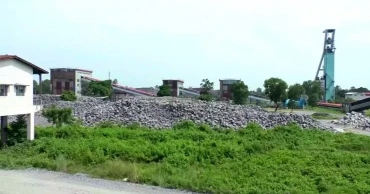
Stone extraction at Maddhapara Granite Mining Company Limited (MGMCL) in Parbatipur upazila of Dinajpur district has been suspended again due to a shortage of ammonium nitrate, anexplosive material used for breaking underground rock layers.
Contractor Company Germania Trench Consortium (GTC) stopped stone extraction from Tuesday due to the shortage.
Officials hope that the operations will resume in the first week of June after a fresh consignment of ammonium nitrate arrives from Thailand.
Managing Director of MGMCL, Engineer DM Zobaed Hossain, said ammonium nitrate is being imported from Thailand but global factors have caused delays in shipment.
Various types of explosives including ammonium nitrate are required to break rock layers inside the mine, he said.
The mine requires explosives worth Tk 5-6 crore annually all of which must be imported from abroad.
According to mine authorities, stone extraction at the mine had previously remained suspended because of explosive shortages for 22 days in 2014, two months in 2015, and seven days in 2018.
15 days ago
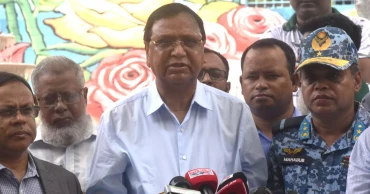
All sacrificial waste to be removed within 8 hours: DSCC Administrator
Dhaka South City Corporation (DSCC) will complete cleaning of its entire area within eight hours after the end of Eid-ul-Azha sacrificial activities, DSCC Administrator Md Abdus Salam said on Wednesday.
He made the remarks while inaugurating beautification and landscaping works at the Vegetable Garden Secondary Transfer Station (STS) in Ward No. 19 on Old Elephant Road in the capital.
Replying to a query on the removal of sacrificial waste during Eid-ul-Azha, the DSCC administrator said that strict instructions have already been issued to leaseholders while the city corporation has also made full-scale preparations.
“Cleaning operations will begin from the night before Eid and continue throughout the day. Insha’Allah, the entire DSCC area will be cleaned within eight hours after the completion of Qurbani,” he said.
Abdus Salam said locations which once faced opposition to the construction of STSs due to foul odour are now being transformed through modern management systems and beautification initiatives.
“Already three STSs have been converted into visually appealing and environment-friendly facilities. Gradually, all STSs will be transformed in this way to provide residents with a more aesthetic urban environment,” he added.
Emphasising public cooperation, he said that improving Dhaka’s appearance, protecting the environment, reducing air pollution and easing traffic congestion are collective responsibilities.
On preparations to tackle dengue and chikungunya during the upcoming monsoon season, the DSCC administrator said surveys are being conducted across all areas, along with special drives to eliminate mosquito breeding grounds in high-risk zones.
He urged residents to keep their homes, yards and drains clean and ensure that no stagnant water remains anywhere.
Senior DSCC officials and local dignitaries were also present at the programme.
15 days ago
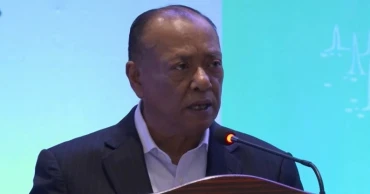
Bangladesh playing key role globally on climate, environment issues: Mintoo
Bangladesh has been playing an important role at both national and international levels on climate and environment-related issues under the visionary leadership of Prime Minister Tarique Rahman, said Environment, Forest and Climate Change Minister Abdul Awal Mintoo on Wednesday.
He said the government remains firmly committed to environmental conservation, biodiversity protection, climate adaptation and sustainable management of natural resources.
He made the remarks while addressing the inauguration workshop of the “Conservation and Restoration Initiatives in the Sundarbans Region (CRIS) Project” at a city hotel.
Mintoo said, “The Sundarbans acts as a natural protective shield for Bangladesh’s coastal communities. It protects us from cyclones, tidal surges, salinity intrusion and climate-induced disasters,” he said.
He added that the forest is deeply connected with biodiversity, fisheries resources, livelihoods, tourism and the cultural identity of coastal people.
“However, due to climate change, environmental pollution, biodiversity degradation and increasing pressure on natural resources, the Sundarbans is now facing multiple challenges,” he said.
“Research and reliable data are essential for effective environmental management. The biodiversity assessments and environmental research conducted under this project will play an important role in future conservation planning,” he said.
He said nature-based solutions are gaining increasing importance globally in addressing climate risks, protecting livelihoods and strengthening ecosystem services.“Bangladesh must also move forward on this path through practical and broad-based initiatives,” he added.
The minister stressed that conservation efforts cannot succeed without recognising people as key stakeholders.
“The communities living adjacent to the Sundarbans are important partners in protecting the forest. Their experience, participation and responsible role are essential for long-term conservation and resilience,” he said.
“This project will contribute significantly to implementing Bangladesh’s international commitments under the Sustainable Development Goals (SDGs), the Paris Climate Agreement and the Kunming-Montreal Global Biodiversity Framework,” he said.
The Bangladesh Forest Department under the Ministry of Environment, Forest and Climate Change is the executing agency, while IUCN Bangladesh Country Office is implementing the project.
According to project details presented at the workshop, the initiative aims to improve biodiversity conservation and sustainable management of the Sundarbans region, including the Sundarbans Reserved Forest (SRF), Sundarbans Impact Zone (SIZ), and Ecologically Critical Areas (ECA), benefiting local communities through restoration practices.
The workshop began with a Poter Gaan performance by a local Sundarbans artist.
It was followed by welcome remarks from Bipasha S Hossain, Country Representative of IUCN Bangladesh; remarks by Cécilia Cortese, Deputy Country Director for Bangladesh of Agence Française de Développement; Imran Ahmed, Conservator of Forests of Khulna Circle and Project Director of CRIS; and special guest Mohammed Rayhan Kaosar, Secretary of the Ministry of Environment, Forest and Climate Change.
The workshop was chaired by Md Amir Hosain Chowdhury, Chief Conservator of Forests of the Bangladesh Forest Department.
Two panel discussions were also held titled “From Data to Action: Faunal Conservation in the Sundarbans” and “From Risk to Resilience: Ecosystem Restoration in the Sundarbans.”
15 days ago
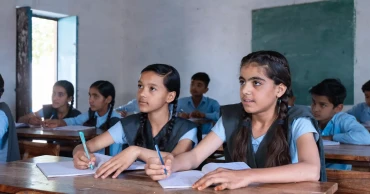
British Council calls for language-responsive education systems
The British Council has launched a new global position paper advocating for language-responsive education systems that better reflect the linguistic realities of learners and support more inclusive, equitable and effective education.
The position paper outlines the organisation’s approach to language policy and practice in education, recognising the evolving and complex role of English globally while emphasising the importance of linguistic diversity and contextual decision-making, said a press release issued on Wednesday.
Across many education systems worldwide, students learn in multilingual environments where the language used at school may differ from the language spoken at home.
While English continues to play an important global role in education, mobility and opportunity, the British Council’s position stresses that there is no single model for language in education that works for every country.
Instead, the British Council advocates for context-sensitive and evidence-informed approaches, where decisions about the language of teaching and learning are made locally by policymakers and education stakeholders, taking into account historical, economic, political and social realities.
Central to the position is the concept of language-responsive education systems. These are education systems that recognise language as a key factor in learning and integrate language considerations across the entire education ecosystem.
This includes policy development, curriculum design, teaching practices, learning materials, assessment, and teaching and teacher education.
The position highlights that successful language policy is not simply about which language is chosen for instruction. Rather, the effectiveness of any approach depends on whether education systems provide the conditions needed for learning to succeed. What matters most is how well education systems support learning.
Where English is a language of learning and teaching, this includes ensuring strong English-as-a-subject provision, enabling learners to develop the language proficiency needed to access the curriculum, while also strengthening learners’ foundations in familiar languages. It also requires well-trained teachers equipped with language-supportive pedagogies, accessible teaching materials, and assessments that are sensitive to language development.
The position paper is informed by an extensive global literature review conducted by the British Council examining research on the teaching and learning of, in and through English across diverse education systems.
The review highlights that outcomes vary widely depending on factors such as teacher proficiency, system capacity, and the extent to which language policies align with local linguistic and cultural contexts. It is also points to the risks associated with poorly supported transitions to English-medium education and reinforces the importance of long-term planning, teacher development and resource investment to ensure positive learning outcomes.
Commenting on the launch, the Director of English and School Education at the British Council, Michael Connolly, said, "Language sits at the heart of learning. When education systems recognise and respond to the linguistic realities of learners, they create more inclusive classrooms and better conditions for learning. Our position highlights the importance of evidence-informed decisions and system-wide planning so that language policies support, rather than hinder, students’ ability to succeed."
By encouraging policymakers and education leaders to adopt language-responsive approaches, the British Council aims to support education systems in designing policies and practices that improve learning outcomes and expand opportunities for all learners.
The new position paper and accompanying literature review will serve as a resource for ministries of education, education practitioners and international partners seeking to develop more inclusive and effective approaches to language in education.
15 days ago

4 sentenced to death in Army officer killing in Cox’s Bazar
A Cox’s Bazar court on Wednesday sentenced four people to death and nine others to life imprisonment for killing an army officer during a drive by joint force in Dulahazara area of Chakaria upazila in 2024.
The condemned convicts are Helal Uddin, Nasir Uddin, Morshed Alam and Nurul Amin.
The lifers are Jalal Uddin, Anwar Hakim, Arif Ullah, Ziabul Karim, Ismail Hossain, Enamul Haque, Mohamamd Enam, Md Kamal and Abdul Karim.
Cox’s Bazar Additional District and Sessions Judge Mohammad Abul MansurSiddique handed down the punishment.
Security was tightened in and around the court premises with additional police and other law enforcement personnel deployed during the announcement of the judgment.
Following the verdict, the convicts were escorted out of the courtroom one by one, placed in prison vans and sent to jail under strict security.
According to the prosecution, Lieutenant Tanjim Sarwar Nirjan, 23, was killed by miscreants during a joint forces operation in Dulahazara area of Chakaria upazila of Cox’s Bazar district on September 24, 2024.
A case was filed against 18 people in this connection.
After examining the records and witnesses, the court acquitted five othersas allegations brought against them could not be proved.
15 days ago
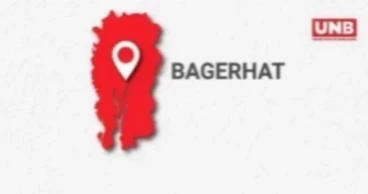
3 killed in Bagerhat road crash
Three people were killed when a truck rammed into a motorcycle on the Khulna-Mongla Highway at the Chulkathi Bhatto area in Sadar upazila of Bagerhat district on Wednesday.
The deceased were identified as Abdul Kader Farazi, 45, of Fakirhat upazila in the district, Bahadur, 32 of Morelganj upazila and Monir Hossain Munna, 43.
Zafor Ahmed, Officer-in-Charge of Katakhali Highway Police, said the accident occurred around 9:15 am when the Mongla-bound goods-laden truck hit the motorcycle coming from the opposite direction, leaving one dead on the spot and two others injured.
The injured were taken to Bagerhat 250-bed Hospital, where they succumbed to their injuries after admission, said Dr Ashim Kumar Samaddar, supervisor of the hospital.
On information, police seized the truck but could not arrest anyone as the driver and his helper managed to flee the scene.
15 days ago
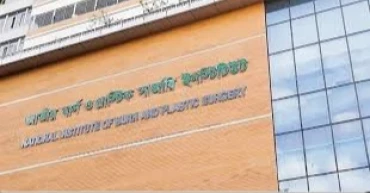
4 workers injured in boiler explosion in N’ganj
Four workers were injured in an explosion at a steel mill in Rasulpur area of Fatullah in Narayanganj district on Wednesday.
The injured were identified as Mizan, 40, Sumon, 33, Milon, 35, and Ujjal, 32.
The explosion occurred in the afternoon at China Steel Mill when the boiler of the mill exploded with a big bang, leaving four people injured.
The injured were taken to the National Institute of Burn and Plastic Surgery, said Dr Shaon Bin Rahman, resident physician at the institute.
“All of them are now out of danger and under observation,” he said.
15 days ago
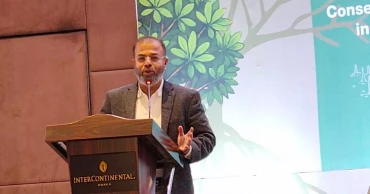
Govt committed to protecting biodiversity, tackling climate risks: State Minister
State Minister for Environment, Forest and Climate Change Shaikh Faridul Islam on Wednesday said the government is committed to protecting biodiversity, nature and addressing the risks posed by climate change.
“Our government is very sincere about protecting biodiversity, nature and tackling climate change risks. We have been working on these issues from the very beginning. Even before forming the government, these priorities were included in the election manifesto,” he said.
The state minister made the remarks while speaking at a workshop as part of “Conservation and Restoration Initiatives in the Sundarbans Region (CRIS) Project” at a hotel in the capital in the morning.
He said the government’s canal excavation programme, tree plantation initiatives and other environmental activities are directly linked to protecting biodiversity and nature.
Referring to the CRIS initiative, he said the workshop marked the beginning of a process and its real success would be measured by how effectively the plans are implemented through proper mapping and execution.
Sundarbans is one of the world’s most significant biodiversity zones and a vital ecological asset for South Asia, he said adding efforts to protect the Sundarbans and natural ecosystems are often reactive rather than preventive.
He warned that while the Sundarbans naturally recovers from cyclones such as Sidr, Aila, Amphan, Bulbul and others, man-made threats remain far more dangerous.
“If poisonous fishing, poaching of tigers and deer, and oil or coal tanker accidents cannot be stopped, it will not be possible to protect the Sundarbans,” he said.
The state minister said poison used in fishing spreads during high tide, affecting aquatic ecosystems and wildlife, including deer that consume contaminated vegetation.
He stressed the need for strict control over illegal activities inside the forest and urged the Forest Department to utilise its full capacity.
Shaikh Faridul also highlighted the absence of buffer zones around ecologically critical areas adjacent to the Sundarbans.
“Beside the Sundarbans there are human settlements. As a result, tigers often enter localities and become vulnerable,” he said.
He urged IUCN to consider plantation-based buffer zones under the CRIS project so that wildlife does not directly enter populated areas.
The state minister also expressed concern over reduced freshwater flow into the Sundarbans due to the Farakka Barrage and blocked river connections with the Padma, which have increased salinity in the region.
“As freshwater flow decreases and saline water enters from the sea, diseases such as top-dying in Sundari trees are increasing,” he said.
The state minister said the government wants to present the Sundarbans, with its vast greenery and the blue waters of the Bay of Bengal — more effectively to the global community while ensuring its protection for future generations.
The CRIS project is a three-year initiative funded by Agence Française de Développement (AFD).
The Forest Department under the Ministry of Environment, Forest and Climate Change is the executing agency, while IUCN Bangladesh Country Office is implementing the project.
15 days ago

Four Injured in Dhaka shopping mall fire
Four people suffered burn injuries in a fire apparently from electrical short circuit at Eastern Plus Shopping Complex in the capital’s Shantinagar area late Tuesday night.
The injured were identified as Sohrab 20, Shamim , 18, Sujit Das, 28 and Monayem Hossain, 33.
They were rushed to the emergency department of the National Institute of Burn and Plastic Surgery shortly after the incident.
Resident surgeon Dr Shaon Bin Rahman said all four victims suffered inhalation injury.
He said two of them were admitted to the hospital while the remaining two were kept under observation at the emergency unit.
15 days ago
63.5% women in Bangladesh face online violence: Seminar
Speakers at a national seminar on Tuesday revealed that 63.51 percent of women in Bangladesh have suffered from online harassment or technology-facilitated gender-based violence (TF-GBV) at some point in their lives.
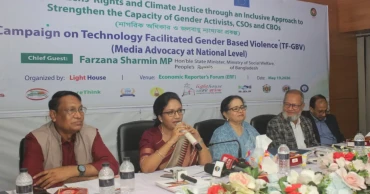
The event titled "Media Advocacy at the National Level to Prevent Technology-Facilitated Gender-Based Violence" was held at the Economic Reporters’ Forum (ERF) auditorium in the capital, drawing a diverse group of government officials, development activists, civil society representatives, and media professionals.
Organised by the human rights and development organisation 'Light House' under the Civic Engagement Fund (CEF) programme, the initiative is funded by Switzerland, Canada, and the European Union, and managed by the GFA Consulting Group.
State Minister for Social Welfare Farzana Sharmin attended the event as the chief guest, with Shah Mohammad Mahbub, Director General (Additional Secretary) of the Department of Social Services, in the chair.
Deepening Digital Vulnerabilities
Presenting the concept paper, organisers revealed that despite digital technology expanding socioeconomic horizons for women in education, online entrepreneurship, and freelancing, its misuse has birthed a dangerous dimension of gender-based crime.
Recent studies indicate that 80.35 percent of online female victims faced obscene and sexually suggestive comments, 53.28 percent were targeted with unsolicited sexual propositions or explicit images, and 17.47 percent were harassed via fake social media profiles.
More alarmingly, an overwhelming 85 percent of victims choose not to lodge formal complaints due to social stigma, fear, or lack of institutional trust, presenting a major barrier to justice.
Data from the Police Cyber Support for Women (PCSW) units, analysed by the ICT research body 'VOICE', showed that 9,117 cyber harassment complaints were registered in 2024 alone. Platforms like Facebook, TikTok, and YouTube have become primary channels for circulating hate speech, deep fakes, doxing (leaking private information), and revenge pornography. A historical trend analysis shows cyber harassment among female internet users shot up from 73 percent in 2017 to 80 percent by 2021.
Real-World Harm and Targeted Attacks
The seminar highlighted that the impact of virtual abuse is not confined to online alone. Approximately 65 percent of victims suffer from severe mental stress, anxiety, or depression, while 42.79 percent face discouragement from expressing their views on social platforms. In many cases, online vitriol translates into offline physical violence.
Publicly visible women, including female journalists, human rights defenders, and political activists, face disproportionately higher risks. An analysis of 64 specific TF-GBV incidents during 2024-25 revealed that 17 high-profile women were deliberately targeted to suppress and discourage female political participation.
Furthermore, technology-facilitated intimate partner violence – involving surveillance, blackmail, and the unauthorised distribution of intimate media – is rising sharply.
Bangladesh Perspective & Strategic Response
From a broader Bangladeshi standpoint, cybercrime experts emphasise that the enactment of successive digital laws has often prioritised state security over citizen-centric safety. The lack of grassroots digital literacy means millions of rural women and girls adopt smartphones without understanding privacy settings or two-factor authentication, making them soft targets for cyber-extortionists.
Addressing the session, Dr Mohammed Jakaria, Director General of the NGO Affairs Bureau at the Prime Minister's Office, and Shaila Sharmin Zaman, Director General of the Department of Women Affairs, called for policy-level synchronisation to make cybercrime reporting friendlier and less re-traumatising for victims.
Former caretaker government Adviser and Executive Director of the Campaign for Popular Education (CAMPE) Rasheda K Choudhury underscored that the country's mainstream media must adopt gender-sensitive reporting guidelines to ensure the privacy of victims is strictly protected.
The seminar concluded with a call to action for a coordinated framework involving government agencies, civil society organisations (CSOs), media houses, and tech platforms to build a safe online ecosystem, upgrade digital security laws, and advance digital literacy among women and youth.
The event was attended by 90 participants, including government officials, gender activists, and 40 senior journalists from television and print media outlets.
16 days ago