others

TIB voices concern over proposed Human Rights Commission law
Transparency International Bangladesh (TIB) has expressed deep concern over several provisions in the proposed National Human Rights Commission Act 2026, saying the law could once again reduce the Commission to an ineffective institution under government control, similar to the authoritarian era of the past.
According to TIB, the draft law proposed by the government includes provisions that will make the Commission dependent on the government or law enforcement agencies concerned, including mandatory permission requirements, when investigating allegations of human rights violations involving law enforcement personnel.
The draft also contains provisions that could ensure overwhelming control of the ruling party in the appointment of commissioners, it said.
Among the few exceptional ordinances issued during the interim government period that held promise for accountability, one of the most notable was the National Human Rights Commission Ordinance, TIB said.
However, by reinstating “controversial” provisions similar to those in the 2009 law, which undermined the independence of the National Human Rights Commission, the BNP government has effectively taken a position completely contrary to its own election manifesto commitment to protecting human rights, it observed.
“Under the ordinance issued during the interim government period, the Commission had been granted the authority to directly investigate allegations of human rights violations, including enforced disappearances and killings allegedly carried out under state patronage by law enforcement agencies, as well as to determine the extent of punishment and recommend punitive measures against responsible individuals and institutions,” TIB Executive Director Dr Iftekharuzzaman said in a statement on Tuesday.
“However, in the new draft law, Section 18 of the 2009 Act has been reinstated verbatim, thereby preserving practices from the authoritarian era. In other words, in cases of human rights violations by law enforcement agencies, the Commission has once again been made dependent on reports from the government or the heads of those agencies,” he said.
Iftekharuzzaman said due to such weaknesses in the 2009 law, the National Human Rights Commission was never granted ‘A’ category status under international standards. “Moreover, in most past incidents of enforced disappearances, killings, and other human rights violations, there have been specific allegations of involvement by certain members of law enforcement agencies. In such a context, retaining this provision would effectively serve as protection for them.”
Referring to Section 13 of the draft law, he said, “The Human Rights Commission has not been given the authority to investigate, on its own initiative, whether human rights violations are taking place. Furthermore, the opportunity that had been provided in the ordinance to inspect, visit, and investigate possible detention sites of intelligence agencies and the military – where detained persons subjected to enforced disappearances and various forms of torture may be kept – as well as to make necessary recommendations to the government for improving such places and conditions, has also been removed.”
Despite the experiences the people of the country, all political parties currently represented in the parliament, and particularly leaders and activists of almost all levels of the ruling party went through during the past authoritarian period, it does not appear that they have learned any lessons from those experiences, which is reflected in the draft law obtained following the consultation meeting held on 17 May at the government’s initiative, the TIB Executive Director said.
The inclusion of the Speaker, Law Minister, Home Minister, a ruling party Member of Parliament, and the Cabinet Secretary as members of the commissioner selection committee creates a serious risk of establishing absolute government control over the National Human Rights Commission, he said.
Iftekharuzzaman further said, “In the draft law, the provision in the repealed ordinance stating that the National Human Rights Commission ‘shall not be under any ministry or department of the government’ has been removed. On one hand, the Commission is described as an independent institution; on the other hand, what could be the justification for removing a clause that safeguards its autonomy and independence?”
Furthermore, in order to make the Commission more inclusive, the requirement in the ordinance to include representatives from ethnic minorities and women as commissioners has been replaced with the condition of “qualified candidates”, which would turn the Commission into a “male-dominated” and “majoritarian” institution, he said.
By allowing 30 percent of the Commission’s total staff to be deputed from government service, and by permitting a serving government employee to be appointed as a commissioner while taking leave from their official post, the institution will essentially be turned into a body fully controlled by bureaucracy and the government, as in the past, the TIB chief said.
He considers this to be a contradictory and ultimately self-defeating step that will reduce the organisation to nothing more than a “figurehead institution” under full bureaucratic control.
Iftekharuzzaman added that by abandoning this contradictory and self-defeating path, and in line with its election manifesto commitment to ensure human rights protection under the Universal Declaration of Human Rights, the government should carefully consider the concerns raised by TIB and other stakeholders regarding the controversial provisions of the draft law.
He expressed the expectation that such considerations will help establish a truly independent and effective National Human Rights Commission.
16 days ago

‘Full-scale fuel supply through Dhaka-Ctg pipeline to begin by June’
The full-scale supply of fuel oil through the Dhaka-Chattogram oil pipeline will begin by the end of next month, the Ministry of Power, Energy and Mineral Resources told a parliamentary committee on Tuesday.
The information was shared at a meeting of the special parliamentary committee formed to address the energy situation, according to a press release issued by the Parliament Secretariat after the meeting.
Power, Energy and Mineral Resources Minister Iqbal Hassan Mahmood presided over the meeting held at the Jatiya Sangsad Bhaban.
During the meeting, the ministry made a presentation on ongoing projects to ensure energy supply, policies and guidelines for expanding renewable energy, and the overall situation of the sector.
The committee reviewed various aspects of the country’s ongoing energy situation and the committee members shared their opinions and recommendations in this regard.
Committee members stressed the need to maintain a three-month stockpile of fuel oil in the country, automate the energy sector, diversify energy sources and expand the use of renewable energy.
They also recommended enhancing the refining capacity of the Eastern Refinery Limited and ensuring that it can process crude oil imported from any country in the world.
According to meeting sources, discussions were also held on encouraging private-sector investment in refinery establishment to increase fuel storage capacity. Both treasury and opposition members agreed on the issue.
Opposition members proposed forming a permanent expert committee on energy to provide long-term policy guidance.
The meeting was also informed that work is underway to modernise the policy framework for the establishment, operation and management of filling stations.
The ministry further said the Gas Marketing Rules 2014 have been updated and the Gas Marketing Rules 2026 have been formulated.
Opposition lawmakers were asked to submit their recommendations in writing to help address the current energy situation.
The committee decided to place a report before Parliament containing necessary recommendations to tackle the emerging energy challenges.
Committee members State Minister for Power, Energy and Mineral Resources Aninda Islam Amit, Whips ABM Ashraf Uddin Nizan and Miah Nuruddin Ahmad Apu, BNP MP Moinul Islam Khan, Bangladesh Jamaat-e-Islami lawmakers Md Saiful Alam, Md Nurul Islam and Md Abdul Baten, National Citizen Party MP Md Abul Hasnat and Khilafat Majlis lawmaker Mohammed Abul Hasan attended the meeting.
16 days ago
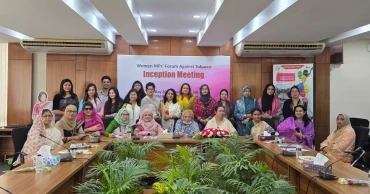
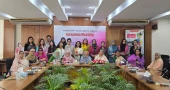
Women MPs pledge to work against tobacco
Members of Parliament (MPs) from reserved women’s seats on Tuesday pledged to work collectively against tobacco to ensure public health protection and save future generations from the devastating impacts of tobacco use.
They made the commitment at a meeting of the “Women MPs Forum Against Tobacco” held at the Bishwo Shahitto Kendro in the capital. The meeting was chaired by Forum Chairperson Selima Rahman, MP.
Get ready to play effective role in JS: PM to BNP women MPs
The meeting highlighted that Bangladesh is one of the world's largest tobacco-consuming countries. Among South Asian nations, Bangladesh has the highest tobacco use rate at 35.3%, compared to 28.6% in India and 19.1% in Pakistan.
According to the Global Adult Tobacco Survey (GATS 2017), approximately 3.78 crore adults currently use tobacco in Bangladesh.
16 days ago
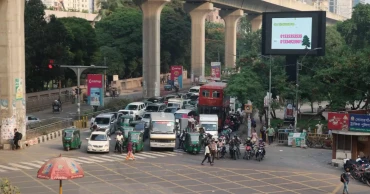
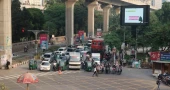
Can AI cameras fix Dhaka’s traffic mess? Early results offer encouragement
For years, Dhaka’s streets have symbolised chaos, frustration and poor traffic management, with endless gridlock and widespread disregard for zebra crossings turning daily commuting into a nightmare for millions.
Against this backdrop of chronic congestion and mismanagement, police have begun introducing AI-based CCTV cameras and modern traffic signal system at major intersections in the capital — a move that is already showing early signs of restoring some discipline on the roads.
Alongside the smart surveillance system, the launch of an e-prosecution or digital case management system has also started reducing incidents of traffic signal and zebra crossing violations by drivers, according to officials.
Traffic officials believe that once fully implemented, the technology-driven system could significantly reduce the need for direct police intervention on roads, improve transparency in law enforcement and make traffic management more efficient in the overcrowded capital.
They also said the long-term success of the initiative will depend on technological capacity, adequate manpower and greater public awareness.
According to officials of Dhaka Metropolitan Police (DMP), AI-powered CCTV cameras have already been installed at 22 key intersections, including Bijoy Sarani, Gulshan-1 and 2, Jahangir Gate, Hotel InterContinental, Shahbagh, High Court Crossing, Kadam Foara, Matsya Bhaban, Kakrail Mosque Crossing, Police Bhaban, Old Ramna Thana Crossing, Banglamotor, Karwan Bazar, Rampura Traffic Box and the Mirpur National Heart Foundation area.
Under the new system, AI-driven cameras automatically detect vehicles and drivers violating traffic signals and zebra crossing rules.
The footage is then reviewed by the DMP Traffic Technical Unit (TTU) which files digital cases against violators.
16 days ago

Girl found beheaded in Pallabi; police suspect rape before murder
A seven-year-old girl was found beheaded in the capital’s Mirpur area on Tuesday, with police suspecting that she was murdered after sexual assault.
The victim was identified as Ramisa, daughter of Abdul Hannan Molla of Block-B, Section-11 of the area, known as Pallabi.
According to police, family members launched a search for Ramisa after she went missing in the morning.
At one stage, they searched the room of Sohel, 32, a tenant of the same building, and found the girl’s decapitated body.
The beheaded body was recovered from beneath the bed, while her severed head was later found inside a bucket kept in the bathroom of the flat.
Officer-in-Charge of Pallabi Police Station Hasan Bashir said preliminary findings suggest the child was raped before being killed.
The accused reportedly fled through a window after the incident, he said, adding that they detained his wife Swapna for questioning.
16 days ago
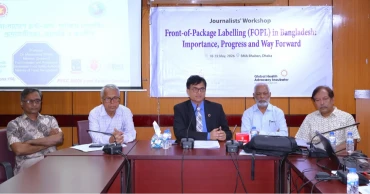
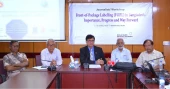
Front-of-Package labeling reduces non-communicable diseases: Speakers
Speakers at a seminar on Tuesday called formandatory warning-based Front-of-Package Labelling (FOPL) on packaged foods to help reduce the growing burden of non-communicable diseases including hypertension, diabetes, cardiovascular diseases, obesity and cancer in Bangladesh.
Speakers made this call at a two-day journalists’ workshop organized by PROGGA (Knowledge for Progress) with support from Global Health Advocacy Incubator (GHAI), held on 18-19 May at the Bangladesh Medical Association (BMA) Bhaban in the capital.
A total of 27 journalists from print, television, and online media participated in the workshop titled “Front-of-Package Labelling in Bangladesh: Importance, Progress and the Way Forward.”
The workshop highlighted that ultra-processed packaged foods and beverages are among the key drivers of non-communicable diseases (NCDs). In Bangladesh, nearly 570,000 people die from NCDs every year, accounting for about 71 percent of all deaths, while 19 percent of these occur prematurely. According to the World Health Organization (WHO), unhealthy diets are one of the major preventable causes of such widespread mortality.
Speakers noted that although packaged foods are often perceived as safe or healthy, the reality is quite different. In 2025, a nationwide cross-sectional survey was conducted among 974 adults, adolescents, and children to identify commonly consumed processed and ultra-processed foods.
The survey found that nearly 97 percent of respondents consumed packaged foods at least once a week. The study also analyzed 105 processed and ultra-processed food products under 14 food categories defined by the World Health Organization (WHO) and found that 63% of these products contained high levels of salt.
Another study conducted in 2023 examined nine categories of processed packaged foods from 24 brands available in the country and found that most of these products contained levels of sugar, salt, and unhealthy fats exceeding the daily limits recommended by the WHO. In many cases, complete information on saturated fat, trans fat, sugar and salt was either unclear or missing from product labels.
Front-of-Package Labelling (FOPL) is recommended as an effective and ‘Best-buy’ public health intervention by WHO. Worldwide, 44 countries have introduced FOPL, of which 10 have made warning-based FOPL mandatory so far. Evidence in these countries suggests that FOPLimplementation has increased consumer awareness and also encouraged manufacturers to reformulate their products.
Professor Dr. Mohammad Shoeb, Member of the Bangladesh Food Safety Authority (BFSA), said, “Work is underway to introduce Front-of-Pack Labelling in order to raise consumer awareness about ultra-processed foods. Once implemented, it will reduce the risk of non-communicablediseases in the country.”
Abu Ahmed Shamim, Associate Scientist at the Center for Non-Communicable Disease and Nutrition of BRAC James P Grant School of Public Health (JPGSPH), said, “FOPL helps consumers quickly identify excessive salt, sugar and harmful fats in ultra-processed foods and enables them to make healthier food choices.”
Samina Israt, Programme Officer (Diet-Related Risk Factors) at the World Health Organization, said, “In Bangladesh, the introduction of Front-of-Pack Labelling (FOPL) is a WHO recommended cost-effective public health intervention to address the rising burden of diet-related noncommunicable diseases (NCDs) that promotes healthier dietary behaviours across all population groups.”
Muhammad Ruhul Quddus, Bangladesh Country Lead of GHAI, said, “If Front-of-Package Labelling is implemented in Bangladesh, the growing burden of non-communicable diseases will be reduced.”
ABM Zubair, Executive Director, PROGGA was also present as discussant while PROGGA’s Program Officer, Shabnam Mostofa delivered a presentation in the workshop.
16 days ago
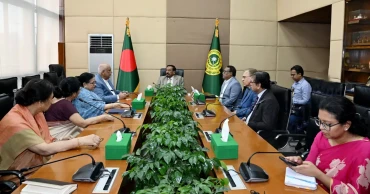
State responsible to eliminate inequalities at all levels of society: Speaker
Speaker of the Jatiya Sangsad Hafiz Uddin Ahmad, Bir Bikram, on Tuesday said it is the responsibility of the state to eliminate inequalities at every level of the society.
He said the All-Party Caucus can work in addressing inequalities at different levels of society and the country and thus would help ensure formal recognition of the contributions of marginalised and disadvantaged communities to the country’s development.
The Speaker made the remarks when a delegation led by Dr Debapriya Bhattacharya, Convener of the Citizen’s Platform for SDGs, Bangladesh, and also Distinguished Fellow of the Centre for Policy Dialogue (CPD), paid a courtesy call on him at the latter’s office at the Jatiya Sangsad Bhaban.
During the meeting, they exchanged views on the role of the caucus in advancing disadvantaged, underprivileged and marginalised communities through the implementation of the Sustainable Development Goals (SDGs), particularly the SDG goals relating to peace, justice and strong institutions.
They also discussed the role of the Caucus to ensure the country’s overall development as well as access to education, healthcare and safe food for disadvantaged communities through the implementation of the government’s political commitments with institutional and technical assistance, transparency and accountability.
The delegation of Citizen’s Platform, Bangladesh, congratulated Hafiz Uddin Ahmad on being elected to the post of the Speaker and also expressed condolences over the recent death of his wife, noted educationist Dilara Hafiz.
16 days ago
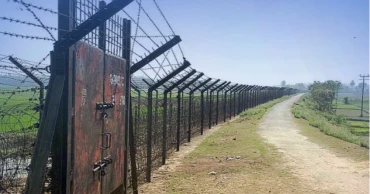
BGB, BSF exchange fire along Sylhet border, avoid casualties
Border Guard Bangladesh (BGB) retaliated with return fire after India’s Border Security Force (BSF) opened fire along the Sonarhat border area in Goainghat upazila under Sylhet district on Monday afternoon, officials said.
The incident took place in the border area under the jurisdiction of Sylhet Battalion (48 BGB), said BGB headquarters public relation officer Shariful Islam on Tuesday.
According to BGB, the force responded immediately and firmly after BSF opened fire, apparently without provocation, in the area. The situation was brought under control quickly following what BGB described as a professional and prompt response by its members.
No casualties were reported in the incident, while the overall border situation currently remains calm and stable, the BGB PRO said.
Following the incident, BGB strengthened patrols and surveillance in the border area.
The border force said it remains on maximum alert over any provocative or unwanted incidents along the frontier and continues to perform its duties with professionalism and firmness to protect the country’s sovereignty and border security.
BGB also said local public representatives and residents living near the border are being advised to refrain from illegal border crossings and any unauthorized activities in the frontier areas.
16 days ago
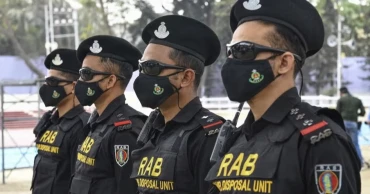
RAB will no longer remain the same, name likely to change: PM’s adviser
Prime Minister’s Information and Broadcasting Adviser Zahed Ur Rahman on Tuesday said Rapid Action Battalion (RAB) would no longer be the same force and its name is also likely to be changed.
“In a sense, RAB will no longer be the same and the name is likely to change,” he said at a press briefing at the Secretariat.
Information and Broadcasting Minister Zahir Uddin Swapon raised the government’s activities in the first three month at the briefing arranged by the information ministry.
Principal Information Officer Syed Abdal Ahmed was also present.
Zahed Ur Rahman said the government is working to formulate a new law for the operation of the elite force.
Noting that Rab has been operating under an option of the Armed Police Battalions Ordinance, he said a complete law is being formulated to run the elite force. “In the law, everything about RAB will be much more well-defined,” he said.
“So, the demand that BNP made for the abolition of RAB, in a sense, I repeat, in a sense, RAB will not exist as it is now and the name will probably change. I am saying this probably because the Honorable Home Minister announced such an option yesterday. And he also said that he is actively working to make this law," he said.
Talking about an issue discussed in the recent meeting between the Prime Minister and Editors’ Council, Zahed Ur Rahman said the current government won’t patronise the loan defaulters.
"This government will not patronise loan default issues. The looting that took place during Hasina's time was done with Sheikh Hasina's endorsement. Similarly, the use of RAB for serious human rights violations was done because of Sheikh Hasina," he said.
Zahed stressed the need for an elite force in the country to combat terrorism and major crimes.
“If we keep aside the criticism surrounding RAB, we can see that the force has effectively tackled various forms of terrorism and crime that the conventional police force could not manage to do so,” he said.
The PM’s Adviser said RAB has better equipment and advanced training, enabling it to address complex security challenges more effectively.
“An elite force will remain—whether under the name RAB or another name—and it will operate under a well-defined law. So, the risks and concerns associated with the force in the past will no longer remain,” he added.
16 days ago
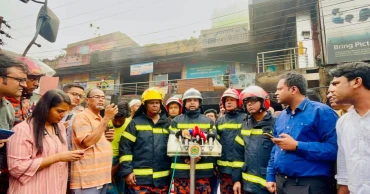
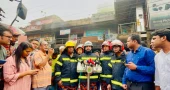
Fire breaks out at market in Bijoy Sarani, 10 firefighter units bring it under control
A fire broke out at a two-storey market in the Bijoy Sarani area of the capital early Monday morning, prompting a swift response from multiple Fire Service units.
According to the Fire Service and Civil Defence (FSCD), the incident was reported at around 5:14am through the national emergency helpline 999. Firefighters reached the spot at about 5:20am.
The fire originated on the ground floor of the market located at Kolmi Lata Bazar in the Bijoy Sarani intersection area.
A total of 10 firefighting units from Tejgaon, Mohammadpur, Mirpur and Siddikbazar fire stations were deployed to bring the blaze under control, said Warehouse Inspector Anwarul Islam of the FSCD headquarters media cell.
The fire was brought under control at around 7:00am. No casualties have been reported so far.
Lieutenant Colonel Md Mahmudul Hasan, Director (Operations and Maintenance) of FSCD, said the extent of damage could not be immediately determined.
“The cause of the fire and the amount of losses will be ascertained after an investigation,” he added.
16 days ago