usa
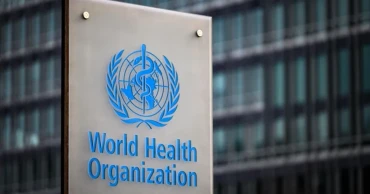
US officially leaves WHO, ending major global health role
The United States has formally withdrawn from the World Health Organization (WHO), removing itself as one of the UN agency’s largest donors and a key participant in global health initiatives.
The decision stems from an executive order signed by US President Donald Trump a year ago, after he repeatedly criticised the WHO for being overly “China-centric” during the Covid-19 pandemic. The US Department of Health and Human Services said the withdrawal was due to the WHO’s alleged mishandling of the pandemic, its inability to implement meaningful reforms, and political influence from certain member states.
WHO Director-General Tedros Adhanom Ghebreyesus rejected the US claims, saying the withdrawal is a “loss for both the United States and the world.” The organisation highlighted its global contributions, including efforts to eradicate polio, combat HIV and AIDS, reduce maternal mortality, and enforce its international treaty on tobacco control.
Following the pandemic, WHO member states worked on an international pandemic treaty to ensure fair sharing of vaccines and treatments and strengthen preparedness for future outbreaks. The treaty, finalised in April 2025, was agreed upon by all member states except the US.
Traditionally, the United States has been one of the largest financial contributors to the WHO, but Washington did not pay its membership fees for 2024 and 2025, causing significant job losses within the organisation. While WHO lawyers maintain that the US is obliged to pay the arrears—estimated at $260 million—Washington has refused, stating there is no reason to do so.
As part of the withdrawal, all US government funding to the WHO has been terminated, US personnel and contractors recalled from Geneva headquarters and offices worldwide, and hundreds of engagements with the agency have been suspended or discontinued. US Health Secretary Robert F. Kennedy and Secretary of State Marco Rubio said in a joint statement that the WHO “tarnished and trashed everything that America has done for it” and “abandoned its core mission,” acting against US interests. They added that future US engagement with the WHO will be limited strictly to safeguard the health and safety of Americans.
Officials noted that the US will continue disease surveillance and pathogen-sharing programs through bilateral relationships with other countries, but they did not specify which countries or partnerships have been established so far. In response to questions about US participation in global health initiatives like polio and HIV programmes, officials said partnerships would continue through NGOs and faith-based groups, though no specific arrangements have been disclosed. US engagement in global flu vaccine development and information-sharing remains uncertain.
After Trump signed the withdrawal order at the start of his second term, the WHO expressed hope that the US would reconsider, stating that “the WHO and the USA have saved countless lives and protected Americans and all people from health threats.” The agency said reconsideration would serve the “health and well-being of millions worldwide.”
The WHO confirmed on Friday that the US withdrawal would be discussed during its upcoming board meeting scheduled from February 2-7. Its secretariat said it will act according to the guidance provided by its governing bodies.
The US exit could remove nearly one-fifth of the WHO’s budget. The defunding and withdrawal come amid criticism of pandemic responses worldwide, including in highly developed countries like the US and the UK, where delays in imposing lockdowns and mask mandates contributed to rapid virus spread. Drew Altman, former US public health official, said the federal government’s inconsistent Covid-19 guidance, politicisation of policy, and failure to implement nationwide preventive measures contributed to one of the highest death rates in the world.
A 2020 study in the British Medical Journal accused the Trump administration of failing to provide national guidance and allowing state-level responses to diverge along political lines. Another research paper published in the UN National Library of Medicine labelled the US federal response as “slow and mismanaged.”
The US withdrawal marks a significant moment for global health governance, highlighting tensions between national interests and multilateral cooperation in pandemic preparedness and response.
With inputs from BBC
4 months ago
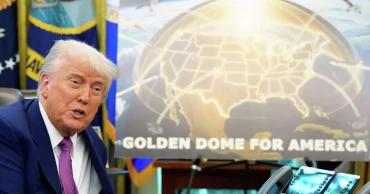
Greenland’s strategic role in nuclear defense comes into focus amid Trump’s ‘Golden Dome’ push
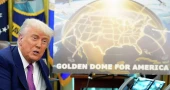
Greenland’s location in the Arctic places it at the heart of global nuclear defense planning, a reality highlighted anew by U.S. President Donald Trump’s renewed push for his proposed “Golden Dome” missile defense system.
In any hypothetical nuclear conflict involving the United States, Russia and China, intercontinental ballistic missiles would likely travel along the shortest routes, over the Arctic. That trajectory makes Greenland a critical point for early detection and potential interception.
Trump has argued that U.S. ownership of Greenland is essential for the success of the multibillion-dollar “Golden Dome,” a layered missile defense system he claims will be operational before 2029. He has said modern offensive and defensive weapons systems make control of the territory especially important, sparking alarm in Denmark and among Greenlanders.
A key element of Greenland’s importance is the Pituffik Space Base, formerly known as Thule Air Base. Located above the Arctic Circle, the base hosts a powerful early-warning radar capable of detecting and tracking ballistic missile launches from thousands of kilometers away, including missiles fired from Russia or China toward the United States.
Defense analysts note that the base gives Washington valuable extra minutes to assess and respond to potential attacks. The radar can monitor large swaths of the Arctic and detect objects as small as a car, according to the U.S. Air Force.
However, experts question Trump’s claim that U.S. ownership of Greenland is necessary. The United States has operated at Pituffik for decades under a 1951 defense agreement with Denmark, without sovereignty over the island. Analysts also point out that other allied locations, such as early-warning radar sites in the United Kingdom, play similar roles without any U.S. ownership claims.
Some experts argue that emerging space-based sensors planned under the “Golden Dome” could eventually reduce Greenland’s strategic importance. They also note that Denmark has historically been a highly cooperative U.S. ally, making expanded military access possible without drastic political steps.
As debates continue, Greenland remains a pivotal, and sensitive, crossroads in global nuclear defense calculations.
4 months ago
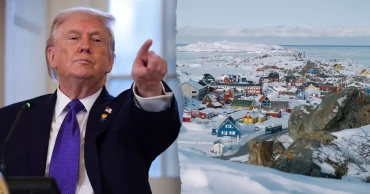
Can US Congress block Trump’s bid to take over Greenland?
President Donald Trump’s renewed push to acquire Greenland has triggered resistance from Republicans in Congress, with lawmakers increasingly uneasy about US military involvement overseas.
However, it remains uncertain whether enough Republicans would join Democrats to stop a takeover of the island territory, or whether Trump would ignore Congress and move ahead on his own, as he has done repeatedly during a second term marked by deeper US entanglements abroad.
What began as a debate over Greenland has now widened into a broader argument over the Trump administration’s unilateral use of military force, as well as diplomatic and economic pressure, to project American power in places such as Venezuela, Iran and beyond.
Read More: Pro-Greenland protesters mock Trump's MAGA slogan with 'Make America Go Away' caps
Republicans have largely supported Trump’s foreign policy since his return to the White House. But a growing number are now siding with Democrats in Congress and Nato allies who say that any attempt to take over Greenland would breach both US and international law, reports BBC.
In recent days, several senior Republicans have said there is little appetite in Washington for buying Greenland or seizing it by force. Some GOP lawmakers have also joined Democrats in opposing Trump’s proposal to impose tariffs on countries that refuse to back his bid for the territory, which is self-governing but remains under Danish control.
The proposed tariffs would be “bad for America, bad for American businesses, and bad for America’s allies,” Senator Thom Tillis of North Carolina wrote on social media, warning that the move would benefit China and Russia. “It’s great for Putin, Xi and other adversaries who want to see Nato divided.”
Other Republicans said Trump’s ambition to annex Greenland risked weakening the Nato alliance, of which both the United States and Denmark are members, at a time of growing strain between Washington and its European partners.
Read More: US forces seize seventh Venezuela-linked oil tanker amid Trump oil crackdown
“Respect for the sovereignty of the people of Greenland should be non-negotiable,” said Senator Lisa Murkowski, co-chair of the Senate Arctic Caucus.
Trump has argued that the US must control the territory to compete more effectively with China and Russia in the Arctic and has vowed to take it “one way or another”.
On Tuesday, he brushed aside concerns that the issue could damage Nato. Asked by the BBC whether he was prepared to see the decades-old security alliance collapse over Greenland, Trump repeated his view that ownership of the island was vital for US and global security.
“We need [Greenland] for national security and even world security,” he said.
Despite Trump’s insistence, the plan is becoming increasingly unpopular on Capitol Hill.
If Republicans and Democrats decide to confront the president, Congress has several tools at its disposal. Lawmakers control federal spending and, in theory, would have to approve any funding used to buy Greenland, according to experts. Denmark and Greenland have both made clear that the island is not for sale.
“If Trump wants to buy Greenland it would require an act of Congress to provide the funds to do so,” said Daniel Schuman, executive director of the American Governance Institute and a specialist in congressional procedure. He added that it would be unlikely for Congress to redirect existing funds for such a purchase.
At the same time, the administration has expanded its use of executive power to implement Trump’s immigration and tariff agenda. Schuman said the White House might attempt to claim new authority to seize Greenland in a way that bypasses congressional opposition.
Read More: Greenland, tariffs and Trump dominate Davos talks
Lawmakers worried about a possible military move have signalled support for measures that would ban any US action in Greenland without congressional approval. But it is unclear whether those proposals have enough Republican backing to pass in either chamber.
Earlier this month, five Senate Republicans joined Democrats to advance a bill aimed at blocking further US military action in Venezuela, following the December attack that removed former president Nicolás Maduro.
That war powers resolution ultimately failed in the Senate, but it highlighted growing frustration among both Republicans and Democrats over Trump’s use of military force abroad, after he campaigned in 2024 on a pledge to scale back US involvement in foreign conflicts. Last week, a bipartisan congressional delegation visited Denmark in a symbolic show of support for Greenland.
Questions also remain over how the Senate would respond if Washington and Copenhagen reached an agreement over part or all of Greenland. The US already has a 1951 defence agreement with Denmark allowing it to expand its military presence on the island. Murkowski and other Republicans argue that this arrangement is sufficient to meet US security needs in the region.
The Senate could also try to block Trump by rejecting any treaty with Denmark. Treaties require a two-thirds majority for ratification, a threshold Republicans currently fall well short of.
Some Republicans have already indicated they may break with Trump over Greenland. Senator Mitch McConnell of Kentucky, the former Senate majority leader, told reporters that a US takeover of the territory would “shatter the trust of allies”.
Faced with growing unease within his own party, Trump could attempt to strike a deal that stops short of a formal treaty and avoids Senate approval. But analysts say it is unclear whether a president has the authority to conclude such an agreement without Congress.
“Plenty of international agreements are concluded in forms other than treaties,” said Josh Chafetz, a law professor at Georgetown University, but added, “I’m sceptical that something of this magnitude could be concluded as a pure executive agreement.”
On Tuesday, Trump declined to say whether he believed there were any limits on his pursuit of Greenland. Asked how far he was willing to go, he told reporters to wait and see.
“I think something is going to happen that’s going to be very good for everybody,” Trump said.
4 months ago
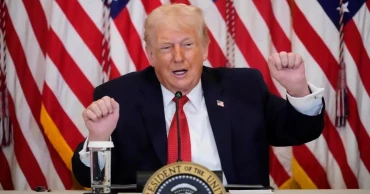
Who is joining Trump’s Board of Peace and what it plans to do
US President Donald Trump’s proposed Board of Peace, initially conceived as a small group of world leaders to oversee the Gaza ceasefire, is rapidly expanding into a far more ambitious international body that Trump says could one day broker global conflicts and rival the United Nations Security Council.
Trump is due to travel to the World Economic Forum in Davos, Switzerland, where more details about the initiative are expected. Ahead of the trip, Israeli Prime Minister Benjamin Netanyahu said on Wednesday that he had agreed to join the board, reversing his earlier criticism of its Gaza oversight committee.
Although the board’s charter has not yet been officially released, a draft obtained by the Associated Press suggests that sweeping authority would be concentrated in Trump’s hands. The document says countries that contribute $1 billion in cash during their first year would be granted permanent membership.
A far broader mission than Gaza
The Trump administration now appears to be positioning the Board of Peace as a global conflict-resolution body, far beyond its original focus on Gaza.
In invitation letters sent to world leaders last Friday, Trump said the board would “embark on a bold new approach to resolving global conflict,” language that signals an ambition to operate as a rival to the UN Security Council.
A draft charter, shared by a European diplomat and confirmed by a US official as accurate as of Monday, describes the need for a more “nimble and effective international peace-building body” and calls for departing from institutions that “have too often failed.” It says the board aims to “secure peace in places where it has for too long proven elusive.”
Under the draft, the chairman — a role Trump says he will hold — would have the authority to invite member states, break tie votes, determine how often the board meets and create or dissolve subsidiary bodies.
Member states would serve three-year terms and fund the board’s operations. Those paying more than $1 billion in cash during their first year could secure a permanent seat.
US officials cautioned that the charter remains under constant revision and is not final.
Countries invited and confirmed
So far, Israel, the United Arab Emirates, Morocco, Vietnam, Kazakhstan, Hungary, Argentina and Belarus have agreed to participate.
Netanyahu’s decision marks a change in position. His office had earlier objected to the Gaza executive committee, citing the inclusion of Turkey, a regional rival of Israel.
Invitation letters have also been sent to Paraguayan President Santiago Peña, Canadian Prime Minister Mark Carney, Egyptian President Abdel-Fattah el-Sissi and Turkish President Recep Tayyip Erdogan. Russia, India, Slovenia, Thailand and the European Union’s executive arm have confirmed receiving invitations.
Kremlin spokesman Dmitry Peskov said Russia is reviewing the proposal and seeking clarification on its details. Trump confirmed on Monday night that Russian President Vladimir Putin had been invited.
It remains unclear how many more countries will ultimately be asked to join.
Some allies say no
France has signalled it does not plan to join, amid tensions with Washington over Trump’s interest in taking over Greenland, a self-governing territory under NATO ally Denmark.
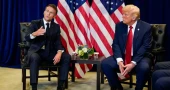
French Foreign Minister Jean-Noel Barrot said Paris supports implementing Trump’s peace plan but opposes creating a new organisation that would replace the United Nations.
Reacting to reports that French President Emmanuel Macron was unlikely to participate, Trump said, “Nobody wants him because he’s going to be out of office very soon,” and joked about imposing tariffs on French wine to pressure him to join.
Other bodies linked to the Board of Peace
The White House said an executive board will be formed to implement the Board of Peace’s vision. Its members include US Secretary of State Marco Rubio, Trump envoy Steve Witkoff, Trump’s son-in-law Jared Kushner, former British prime minister Tony Blair, Apollo Global Management CEO Marc Rowan, World Bank President Ajay Banga and Trump’s deputy national security adviser Robert Gabriel.
Another body, the Gaza Executive Board, will oversee the second phase of the Gaza ceasefire deal, including deploying an international security force, disarming Hamas and rebuilding the territory.
Read More: Netanyahu confirms Israel’s participation in Trump’s proposed Board of Peace
Former UN Mideast envoy Nickolay Mladenov will manage day-to-day operations. Other members include Witkoff, Kushner, Blair, Rowan, Turkish Foreign Minister Hakan Fidan, Qatari diplomat Ali Al-Thawadi, Egypt’s intelligence chief Hassan Rashad, Emirati minister Reem Al-Hashimy, Israeli businessman Yakir Gabay and former Dutch deputy prime minister Sigrid Kaag.
4 months ago

Trump blasts UN, presses Greenland control in rare White House briefing
President Donald Trump delivered a rare, nearly two-hour-long appearance at a White House press briefing on Tuesday, using the platform to highlight what he described as his administration’s achievements, criticise the United Nations and double down on his push for the United States to take control of Greenland, a move that has drawn sharp resistance from America’s European allies.
The extended briefing came on the anniversary of Trump’s inauguration and a day before he is scheduled to address global leaders, billionaires and policymakers at the World Economic Forum in Davos, Switzerland. His trip comes at a time of rising tensions with NATO allies over his aggressive posture on Greenland and his threat to impose new retaliatory tariffs on several European countries.
During the wide-ranging and often meandering session with reporters, Trump leafed through a thick packet of documents that he said listed hundreds of accomplishments from his first year back in office. He claimed his administration had achieved more than any previous government in a similar period and said it would take more than a week to read through the full list.
At several points, Trump turned his focus to foreign policy, renewing his argument that the United States must take control of Greenland for national security reasons, citing concerns about growing strategic competition in the Arctic. While he struck a slightly more conciliatory tone near the end of the briefing, saying Washington and NATO would “work something out,” he repeated his view that U.S. control of the territory is necessary.
Trump also took aim at the United Nations, saying the global body has failed to live up to its potential and has been ineffective in resolving conflicts. He promoted his idea of a Trump-led “Board of Peace,” initially conceived as a small group of world leaders to oversee the Gaza ceasefire plan, but now envisioned as a broader body that could help mediate international disputes.
“The United Nations just hasn’t been very helpful,” Trump said, adding that while he believes the organisation should continue, his proposed board could one day play a major role in peacemaking efforts.
The president’s remarks come as European leaders have warned that his threats to impose new tariffs on countries backing Denmark over Greenland could trigger a major trade dispute and strain long-standing trans-Atlantic ties. France and several other EU members have already signalled they are prepared to respond if Washington moves ahead with punitive measures.
Trump said his speech in Davos on Wednesday would focus on what he called the “tremendous success” of his administration and would recap progress made over the past year. The White House has previously said his address would centre on his affordability agenda, particularly housing, in an effort to convince Americans that his policies can ease cost-of-living pressures.
Speaking to reporters, Trump said other countries needed to hear his views on energy and immigration and suggested that his leadership had brought stability in several conflict zones, a claim that has been disputed by critics and fact-checkers.
The marathon briefing, marked by frequent digressions and a mix of domestic and foreign policy topics, underscored Trump’s combative style and his willingness to use high-profile appearances to press his most controversial priorities.
With European leaders already gathered in Davos and Greenland expected to dominate the agenda, Trump’s appearance at the forum is likely to be closely watched for signs of whether he will seek to defuse tensions or continue his hardline approach.
4 months ago
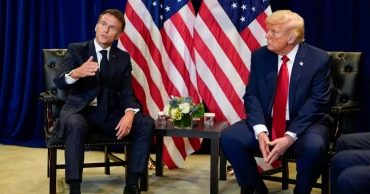
Trump threatens 200% tariff on French wines over Macron snub
U.S. President Donald Trump on Tuesday threatened to impose 200% tariffs on French wines and champagne after reports suggested French President Emmanuel Macron was unwilling to join his “Board of Peace” on Gaza.
“Well, nobody wants him because he’s going to be out of office very soon,” Trump said. “So you know, that’s all right. What I’ll do is, if they feel like hostile, I’ll put a 200% tariff on his wines and champagnes, and he’ll join. But he doesn’t have to join.”
Greenland, tariffs and Trump dominate Davos talks
Macron’s five-year presidential term ends in May 2027, and under French law, he is ineligible for a third term.
The Board of Peace, endorsed by the United Nations Security Council in November, is a global body tasked with overseeing the Israel-Hamas ceasefire. Invitations to world leaders, including Russian President Vladimir Putin, UK Prime Minister Keir Starmer, and Indian Prime Minister Narendra Modi, have been sent.
Trump also reiterated his plans regarding Greenland, saying, “I don’t think they’re going to push back too much. We have to have it ...They can’t protect it.”
#With inputs from Agencies
4 months ago
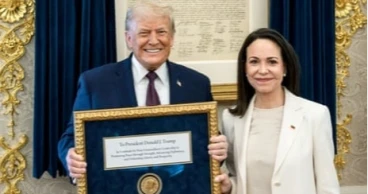
Venezuelan opposition leader Machado presents Nobel Peace Prize to Trump at White House
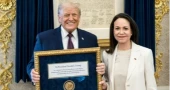
Venezuelan opposition leader María Corina Machado said Thursday she presented her Nobel Peace Prize medal to President Donald Trump at the White House, calling it a recognition of his “unique commitment with our freedom,” even as Trump has questioned her ability to lead Venezuela.
Machado, who spent 11 months in hiding in Venezuela before attending the Nobel ceremony in Norway, said the gesture was symbolic. The Nobel Institute clarified that she could not legally transfer the prize. Trump later confirmed on social media that Machado had left the medal for him and called it an honor.
The meeting lasted about two and a half hours and included a discussion of Venezuela’s political transition, though Trump provided no firm commitments on elections. White House press secretary Karoline Leavitt described the discussion as “frank and positive” but stressed that it did not change Trump’s view of Machado, citing her lack of broad support within Venezuela.
After leaving the White House, Machado greeted supporters outside and later met with a bipartisan group of U.S. senators. She urged progress toward a transition of power and elections, warning that interim President Delcy Rodríguez, Maduro’s former deputy, is “in many ways worse than Maduro.”
The White House praised Machado as a “remarkable and brave voice” but maintained a cautious stance. Meanwhile, U.S. forces in the Caribbean seized another Venezuelan oil tanker as part of broader efforts to secure the country’s oil assets following the capture of Maduro and his wife less than two weeks ago.
Machado, a longtime critic of Venezuela’s ruling party and co-founder of the NGO Súmate, led opposition efforts against Hugo Chávez and his successor Maduro, facing government reprisals over the years. Her visit to Washington highlights her symbolic role in Venezuela’s political opposition amid ongoing U.S. involvement in the country’s transition.
4 months ago
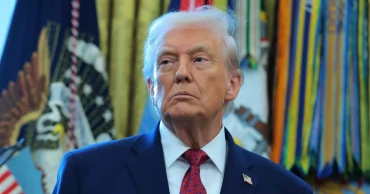
US labels three Muslim Brotherhood branches as terrorist groups
The Trump administration has labelled three Middle Eastern branches of the Muslim Brotherhood as terrorist organizations, imposing sanctions on the groups and their members.
The U.S. Treasury and State departments announced Tuesday that the Lebanese, Jordanian, and Egyptian chapters pose a threat to American security and interests. The Lebanese branch was designated a foreign terrorist organization, while the Jordanian and Egyptian branches were listed as specially designated global terrorists for supporting Hamas.
“These designations reflect a sustained effort to stop Muslim Brotherhood chapters from violence and destabilization,” Secretary of State Marco Rubio said. Treasury Secretary Scott Bessent added that the administration will work to cut the group off from the financial system.
The Muslim Brotherhood branches in Egypt and Lebanon rejected the U.S. decision. Egypt’s branch said it “categorically rejects this designation” and will challenge it legally. The Lebanese branch said it operates openly within the law and called the U.S. decision “without legal effect” in Lebanon.
Trump’s executive order cited the Lebanese chapter’s role in launching rockets on Israel after Hamas’ October 7, 2023 attack and Jordan’s support to Hamas. The Muslim Brotherhood was founded in Egypt in 1928 and banned there in 2013. Jordan banned the group in April 2025.
Iran closes airspace for hours amid US tensions over crackdown on protests
Egypt welcomed the designation, calling it a “significant step” against extremism. Experts said the move may please some U.S. allies like the UAE but could strain relations with countries where the Brotherhood is tolerated, including Qatar and Turkey. It may also affect visa and asylum decisions in the U.S., Europe, and Canada.
4 months ago

US to suspend immmigrant visa processing from Bangladesh, 74 other countries
The United States has announced it will suspend the processing of immigrant visas for citizens of 75 countries including Bangladesh from January 21, citing concerns that applicants may rely on public assistance after entering the country.
The US State Department, led by Secretary of State Marco Rubio, said on Wednesday that consular offices have been instructed to halt immigrant visa processing for nationals of the affected countries under an order tightening scrutiny of applicants who could become “public charges” in the United States.
The move follows broader immigration restrictions introduced by the administration of President Donald Trump and expands earlier travel and visa limitations imposed on nearly 40 countries.
Officials said the decision is aimed at preventing what they described as abuse of the US immigration system.
“The Trump administration is bringing an end to the exploitation of America’s immigration framework by individuals who would draw on public welfare,” the State Department said, adding that visa processing would remain suspended while procedures are reassessed.
The suspension will not apply to non-immigrant visas, including tourist and business visas, which account for most US visa applications.
Read More: Bangladesh among 25 new countries under US costly visa bond rule
Authorities expect demand for such temporary visas to rise ahead of major international events such as the 2026 FIFA World Cup and the 2028 Olympic Games, both to be hosted by the United States.
In a separate directive circulated to US embassies and consulates, officials were also instructed to more rigorously screen non-immigrant visa applicants for the likelihood that they may seek public benefits during their stay in the US.
The guidance requires consular officers to conduct thorough evaluations of applicants’ financial stability, health, education, skills, family situation and English proficiency.
Applicants suspected of potentially relying on public assistance may be asked to submit additional documentation to prove financial self-sufficiency.
US officials said the measures build on existing laws requiring immigrants to demonstrate they will not depend on government benefits, but experts warn the expanded criteria could further narrow access to US visas, particularly for applicants from developing countries.
Read More: Bangladesh issues special visa guidelines ahead of national election
The other countries affected by the suspension announced on Wednesday are:
Afghanistan, Albania, Algeria, Antigua and Barbuda, Armenia, Azerbaijan, Bahamas, Barbados, Belarus, Belize, Bhutan, Bosnia, Brazil, Burma, Cambodia, Cameroon, Cape Verde, Colombia, Congo, Cuba, Dominica, Egypt, Eritrea, Ethiopia, Fiji, Gambia, Georgia, Ghana, Grenada, Guatemala, Guinea, Haiti, Iran, Iraq, Ivory Coast, Jamaica, Jordan, Kazakhstan, Kosovo, Kuwait, Kyrgyzstan, Laos, Lebanon, Liberia, Libya, Macedonia, Moldova, Mongolia, Montenegro, Morocco, Nepal, Nicaragua, Nigeria, Pakistan, Republic of the Congo, Russia, Rwanda, Saint Kitts and Nevis, Saint Lucia, Saint Vincent and the Grenadines, Senegal, Sierra Leone, Somalia, South Sudan, Sudan, Syria, Tanzania, Thailand, Togo, Tunisia, Uganda, Uruguay, Uzbekistan and Yemen.
4 months ago
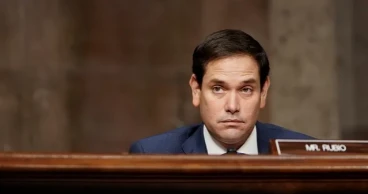
US to suspend immigrant visas for 75 countries from Jan 21
The US State Department on Wednesday announced it will suspend the processing of immigrant visas for citizens of 75 countries whose nationals are considered likely to depend on public assistance while living in the United States.
The department, headed by Secretary Marco Rubio, said consular officers have been instructed to halt immigrant visa applications from the affected countries under a broader order issued in November that tightened rules for prospective immigrants who may become “public charges” in the US.
The suspension will take effect from January 21 and will not apply to non-immigrant visas, including temporary tourist or business visas.
“The Trump administration is bringing an end to the abuse of America’s immigration system by those who would extract wealth from the American people,” the State Department said in a statement. “Immigrant visa processing from these 75 countries will be paused while the State Department reassess immigration procedures to prevent the entry of foreign nationals who would take welfare and public benefits.”
The list of affected countries includes Russia, Iran and Afghanistan, along with several nations in Africa, according to the department.
The Trump administration has already imposed strict restrictions on immigrant and non-immigrant visa processing for citizens of dozens of countries, many of them in Africa.
4 months ago