Others

China-U.S. relations enjoy bright prospects: Chinese FM
Chinese Foreign Minister Wang Yi said Saturday that history advances through twists and turns, and that China-U.S. relations enjoy bright prospects.
Wang, also a member of the Political Bureau of the Communist Party of China Central Committee, made the remarks in response to questions on China-U.S. relations after delivering a speech at the "China in the World" session of the Munich Security Conference.
Wang said that how China and the United States, as the world's two major powers, get along with each other bears on the fundamental direction of the international situation.
China has always viewed and handled its relations with the United States from the vantage point of history, and with a high sense of responsibility to the people and to the world, he said.
President Xi Jinping has summarized the experience and lessons of decades of China-U.S. interactions and solemnly proposed that China and the United States should respect each other, coexist peacefully, and pursue win-win cooperation, and through dialogue and consultation, jointly find the right way for two major powers to get along on this planet, Wang said.
China will continue to follow this general direction, Wang said, as it serves the interests of the peoples of both countries and the common interests of the international community. He, however, also stressed that whether it can be realized depends on the attitude of the United States.
Wang noted it is heartening that U.S. President Donald Trump holds great respect for President Xi Jinping and for the Chinese people. Trump has clearly stated that China and the United States can work together to address major global challenges, and that the two leaders can advance the development of China-U.S. relations.
However, Wang said, there are still some in the United States who do not share this perspective and who continue to make every effort to contain and suppress China, and to attack and slander the country by any means.
Wang noted China-U.S. relations faced two possible scenarios. One is that the United States develops an objective and rational understanding of China, pursues a proactive and pragmatic China policy, works with China in the same direction, and continues to expand common interests, with the two countries moving toward cooperation, which would benefit both countries and the world.
The other, he said, is to decouple and sever supply chains from China, counter and contain China, form various "small circles" and "exclusive blocs" targeting China, and even attempt to plot "Taiwan independence," split China and cross China's red lines. Such moves, he stressed, would lead the two countries into confrontation.
China hopes for the first prospects but is also prepared to deal with various risks, Wang said, adding that the vision and principles of mutual respect, peaceful coexistence and win-win cooperation will ultimately prevail, as they are the only right choice.
3 months ago
Ukraine ready for agreement to bring real peace: Zelensky
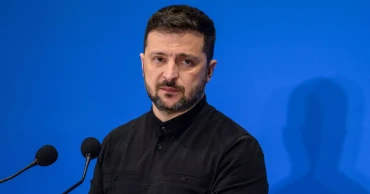
Ukrainian President Volodymyr Zelensky said Saturday in Munich, Germany that Ukraine is ready for an agreement that will bring real peace, the Ukrinform news agency reported.
"Ukraine is ready for an agreement that will bring real peace to us, to Ukraine, to Europe," he said during a speech at the Munich Security Conference, adding that the crisis can be ended, first of all, with dignity. "This is the most important thing for us," Zelensky said.
According to him, Europe is practically not present at the negotiating table, which is a "big mistake." Ukrainians are trying to fully engage Europe in the negotiating process so that "the interests of Europe and the voice of Europe are taken into account."
He added that Ukraine will do everything to make these negotiations successful and is in constant communication with U.S. representatives.
3 months ago
Trump says regime change in Iran “Would be the best Thing”
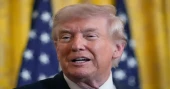
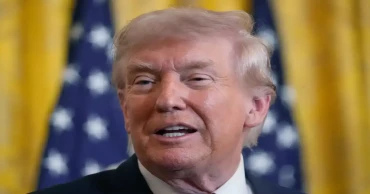
President Donald Trump said Friday that a change in leadership in Iran “would be the best thing that could happen,” as his administration considers possible military action against Tehran.
Trump made the remarks after visiting U.S. troops at Fort Bragg and confirming that he is deploying a second aircraft carrier strike group to the Middle East.
Responding to reporters’ questions about removing Iran’s Islamic clerical leadership, Trump said such a shift in power could be beneficial, noting that the current regime has been in place for decades.
Although Trump has recently emphasized curbing Iran’s nuclear program as his primary objective, he suggested Friday that Washington expects broader concessions from Tehran beyond nuclear limits.
During a visit to Washington this week, Israeli Prime Minister Benjamin Netanyahu urged that any agreement also address Iran’s ballistic missile capabilities and its support for regional proxy groups such as Hamas and Hezbollah.
Trump indicated that dismantling Iran’s nuclear activities — which were significantly damaged in U.S. strikes last year — would represent only part of a wider mission.
Iran maintains that its nuclear program is peaceful. Prior to last year’s conflict, Tehran had enriched uranium to 60% purity, a level close to weapons-grade material.
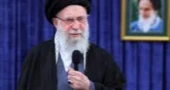
Trump’s comments about potentially ending the rule of Supreme Leader Ali Khamenei came weeks after Secretary of State Marco Rubio cautioned that political change in Iran would be far more complicated than efforts to unseat Venezuelan President Nicolás Maduro.
Rubio noted in a Senate hearing that Iran’s leadership has been entrenched for decades and would require careful consideration if change were pursued.
Trump also announced that the USS Gerald R. Ford, currently in the Caribbean, will head to the Middle East to join the USS Abraham Lincoln and other U.S. naval assets already in the region.
He said the additional carrier would be needed if diplomatic efforts fail, adding that it would depart soon.
While Trump had indicated new talks with Iran might take place this week, negotiations did not occur. Iranian officials instead traveled to Oman and Qatar to exchange messages through intermediaries.
Gulf Arab states have warned that any military strike could trigger broader regional conflict, particularly as the Middle East remains tense following the Israel-Hamas war in Gaza. Inside Iran, authorities are facing renewed domestic pressure as citizens hold 40-day mourning ceremonies for those killed during recent nationwide protests.
Netanyahu to press Trump to widen Iran nuclear talks during White House meeting
The Ford strike group would add more than 5,000 personnel to U.S. forces in the Middle East, effectively doubling available aircraft and munitions. However, given its current location, it could take weeks before it reaches waters near Iran.
Trump has repeatedly threatened military action if Iran does not agree to stricter limits on its nuclear activities. Indirect talks were held in Oman last week, and he warned that failing to reach a deal would have serious consequences.
The Ford was previously redeployed to the Caribbean as part of the U.S. military buildup ahead of last month’s operation that led to Maduro’s capture.
Extending the carrier’s deployment could place strain on its crew. The ship has been at sea since June 2025, approaching eight months. Navy officials have previously said prolonged deployments disrupt service members’ personal lives and complicate maintenance schedules.
Aircraft carriers are typically deployed for six or seven months. Longer missions can increase wear on ships and delay scheduled repairs, as seen with the USS Dwight D. Eisenhower, which underwent a nine-month Middle East deployment in 2023–24 and remains in maintenance beyond its planned completion date.
Senior Navy leaders have recently expressed a preference for deploying smaller, newer vessels where possible instead of relying heavily on large aircraft carriers.
3 months ago
Three killed in latest US strike on alleged narco vessel
The U.S. military announced on Friday that it conducted another fatal strike on a vessel suspected of drug trafficking in the Caribbean Sea.
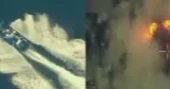
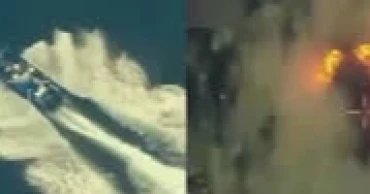
According to U.S. Southern Command, the boat was traveling along recognized drug-smuggling routes and was actively involved in narcotics operations. The strike reportedly resulted in three deaths. Footage shared alongside the announcement shows the vessel moving across the water before erupting into flames.
Rules-based global order collapsing, Europe must prepare for sacrifice: Germany’s Merz
This latest operation brings the total number of fatalities linked to the Trump administration’s actions against suspected drug boats to 133, across at least 38 strikes carried out since early September in the Caribbean Sea and eastern Pacific Ocean.
Last week, Defense Secretary Pete Hegseth stated that several high-ranking cartel traffickers in the region had chosen to halt their drug activities indefinitely following what he described as highly effective military strikes in the Caribbean. However, he did not provide supporting evidence for this assertion, which he made on his personal social media account.
President Donald Trump has characterized the situation as an “armed conflict” with Latin American cartels and defended the strikes as a necessary measure to curb drug trafficking. Nonetheless, the administration has provided limited evidence to substantiate its claims that those killed were “narcoterrorists.”
3 months ago
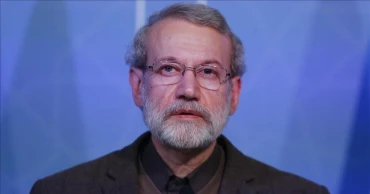
Iran accuses Israel of sabotaging US nuclear talks
Iran’s security chief Ali Larijani has accused Israel of trying to derail ongoing nuclear negotiations between Tehran and Washington in order to trigger conflict in the region.
Speaking to Al Jazeera during a visit to Qatar, Larijani said Iran is negotiating only with the United States and not with Israel. He alleged that Israel is attempting to interfere in the process and undermine talks that are at a sensitive stage.
Larijani claimed Israel wants to destabilise the region and is using Iran as a pretext. He also referred to previous Israeli actions in the region as part of a broader strategy to create tension.
His remarks came as Iran and the US recently held indirect talks in Oman aimed at resolving disputes over Tehran’s nuclear programme. A second round of negotiations is under discussion.
Larijani said there is common ground between the two sides on the issue of Iran not developing nuclear weapons, which Tehran insists it is not pursuing. However, he stressed that Iran’s missile programme and uranium enrichment levels are not open for negotiation.
He warned that Iran would respond if the US carried out any military strike against it.
During his visit to Doha, Larijani also met Hamas officials to discuss regional developments.
With inputs from ALJAZEERA
3 months ago
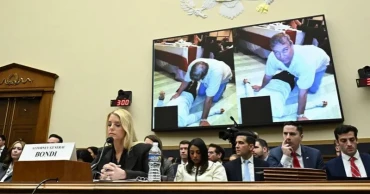
Pam Bondi grilled over Epstein files in fiery US hearing
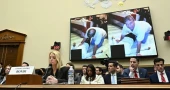
US Attorney General Pam Bondi faced tough questions from lawmakers on Wednesday over the handling of files related to the late sex offender Jeffrey Epstein during a heated House Judiciary Committee hearing.
Bondi defended the Justice Department’s release of millions of documents, saying officials tried to protect victims’ identities and that any errors were immediately corrected. Several Epstein survivors attended the hearing and criticized the department for mishandling redactions.
Lawmakers, including Republicans, pressed Bondi over the removal of certain names from the files, including billionaire Les Wexner. Bondi said some questions were “theatrics” and that officials were following legal timelines for the release. FBI Director Kash Patel said there was no evidence Epstein trafficked women to Wexner.
California Democrat Ted Lieu raised the case of Andrew Mountbatten-Windsor, whose images appear in the files. Bondi suggested Lieu take the matter up with former Attorney General Merrick Garland.
Lawmakers also questioned Bondi on federal immigration agents’ fatal shootings in Minneapolis. Bondi defended the federal response, saying protests had been incited by elected officials opposing law enforcement.
With inputs from BBC
3 months ago
Deaths in Iran’s protests top 7,000, activists say amid rising tensions
Activists say the death toll from Iran’s nationwide crackdown on protests last month has reached at least 7,002, with many more feared dead.
The gradual increase in reported fatalities adds to mounting tensions inside Iran and abroad as the country engages in stalled negotiations with the United States over its nuclear program. A second round of talks remains uncertain, as Israeli Prime Minister Benjamin Netanyahu has reportedly pressed U.S. President Donald Trump to take a harder line on Tehran.
“There was nothing definitive reached other than I insisted that negotiations with Iran continue to see whether or not a Deal can be consummated. If it can, I let the Prime Minister know that will be a preference,” Trump wrote on his TruthSocial account. He added that previous attempts at deals had failed and hoped Iran would now act more reasonably.
At home, Iran continues to face public anger over its harsh suppression of dissent. This resentment may grow as families of the dead begin observing the traditional 40-day mourning period.
Activist figures and verificationThe U.S.-based Human Rights Activists News Agency, which reported the latest figures, has a history of accurately tracking deaths in past unrest in Iran. The organization relies on a network of contacts within the country and has gradually verified fatalities amid difficult communications.
Iran’s government last reported a death toll of 3,117 on Jan. 21. Historically, Iranian authorities have undercounted or withheld fatality figures during unrest. The Associated Press has been unable to independently confirm the latest figures due to restricted internet and international communications in Iran.
Diplomatic developmentsSenior Iranian security official Ali Larijani met in Qatar on Wednesday with Foreign Minister Sheikh Mohammed bin Abdulrahman Al Thani. He also held meetings with Hamas representatives and, in Oman, with Houthi rebels backed by Tehran. Larijani told Al Jazeera there was no formal U.S. proposal but an “exchange of messages” took place.
Qatar, which shares a major offshore natural gas field with Iran, has often played a mediating role. Its state news agency reported that Emir Sheikh Tamim bin Hamad Al Thani discussed regional tensions and de-escalation efforts with President Trump.
Meanwhile, the U.S. has deployed the aircraft carrier USS Abraham Lincoln, additional ships, and warplanes to the Middle East to exert pressure on Iran and maintain strike capabilities if needed. U.S. forces have already shot down a drone near the carrier and intervened to assist a U.S.-flagged ship in the Strait of Hormuz. Trump told Axios that a second carrier may be sent to the region.
Nobel laureate Narges Mohammadi in dangerThe Norwegian Nobel Committee expressed deep concern over reports that 2023 Peace Prize laureate Narges Mohammadi has been subjected to physical abuse, harsh interrogation, and life-threatening mistreatment in prison. The committee called for her immediate and unconditional release.
Mohammadi, 53, was sentenced to over seven more years in prison. She had been on furlough in December 2024 for medical reasons, but supporters had warned she faced re-arrest. The committee noted she has fainted multiple times, suffers from high blood pressure, and has been denied medical follow-up for suspected breast tumors.
3 months ago
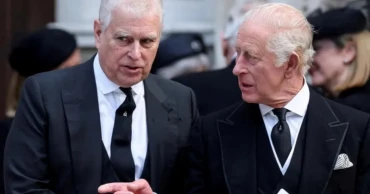
US lawmakers urge Andrew to testify on Epstein case
US officials and the family of Virginia Giuffre have intensified calls for Andrew Mountbatten-Windsor to testify in the United States regarding his ties to convicted financier Jeffrey Epstein.
Democrat Congressman Ro Khanna told the BBC that the British Royal Family had “not been transparent,” while Congresswoman Teresa Leger Fernandez urged King Charles III to direct his brother to appear before the US Oversight Committee. King Charles, through Buckingham Palace, said the Royal Family is “ready to support” police investigations and expressed “profound concern” over allegations against Andrew.
Andrew, who reached an out-of-court settlement with Giuffre in 2022 without admitting liability, has denied any wrongdoing. Thames Valley Police said they are reviewing claims that the former prince shared confidential trade information with Epstein in 2010 and 2011.
The latest release of Epstein-related US Department of Justice files indicates multiple attempts by authorities to obtain Andrew’s cooperation have been unsuccessful. While he cannot be compelled by subpoena to travel to the US, international pressure is mounting, including calls from Giuffre’s brother and Senate Democratic leader Chuck Schumer.
Prince Andrew recently moved out of his Windsor home and is currently residing at Wood Farm on the Sandringham Estate. US lawmakers and advocates continue to demand full disclosure from him and the Royal Family, with calls for justice for Epstein’s victims.
With inputs from BBC
3 months ago
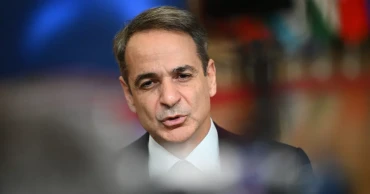
Greek, Turkish leaders meet in Ankara amid rising tensions
Greek Prime Minister Kyriakos Mitsotakis is visiting Turkey on Wednesday to maintain dialogue amid escalating tensions between the two longtime rivals.
Mitsotakis, accompanied by senior ministers, will meet President Recep Tayyip Erdogan under the High-Level Cooperation Council, an initiative aimed at strengthening ties between the NATO allies.
The two countries remain at odds over maritime boundaries, Cyprus, and drilling rights in the Aegean and eastern Mediterranean seas. Turkey has also raised concerns over growing defense and energy cooperation between Greece, Israel, and Cyprus, which Ankara sees as a move to curb its influence in the region.
Greece and Turkey have narrowly avoided conflict multiple times over the past 50 years. In 2020, a dispute over energy exploration rights brought their warships face-to-face in the Mediterranean. Recently, Greek officials reaffirmed plans to extend their territorial waters in the Aegean from six to 12 nautical miles, a move Turkey’s parliament in 1995 called a “cause of war.” Ankara says the extension would violate its rights and limit its maritime access.
The talks in Ankara are expected to focus on a “positive agenda,” including trade, energy, education, and cultural cooperation, with no breakthrough anticipated on disputed issues.
Both countries also remain divided over Cyprus, split since 1974 between ethnic Greek and Turkish communities. Turkey has opposed a federal solution for reunification and, along with the Turkish Cypriot administration, backs a two-state approach.
3 months ago

Russian drone strike kills father and childrens in Ukraine; pregnant mother injured
A Russian drone attack destroyed a home in Ukraine’s northeastern Kharkiv region overnight, killing a father and his three young children and critically injuring their mother, who is 35 weeks pregnant, officials said Wednesday.
The strike flattened the house and sparked a fire, trapping the family under the debris, according to the Kharkiv regional prosecutor’s office. The 34-year-old father and his children — twin boys aged two and a one-year-old daughter — died at the scene. Rescue teams pulled the mother alive from the rubble. She suffered blast injuries, burns, a traumatic brain injury, hearing loss, and remains in critical condition, prosecutors added.
The drone that hit the town of Bohodukhiv was identified as a Geran-2, a Russian-made variant of the Iranian Shahed drone. Ukraine’s Air Force reported that Russia launched 129 long-range drones across the country overnight, nearly four years into the conflict, despite ongoing U.S.-led peace efforts.
Russian airstrike kills 1 in eastern Ukraine as US sets June peace deadline
In a separate incident, a Ukrainian drone strike ignited a fire at an industrial plant in the Russian city of Volgograd. Fragments of the drone also damaged a nearby apartment building, Volgograd region Governor Andrei Bocharov said.
Overnight drone attacks prompted temporary flight suspensions at eight Russian airports, officials confirmed.
The latest strikes underscore the continuing toll of the war on civilians and infrastructure in both countries.
3 months ago