others
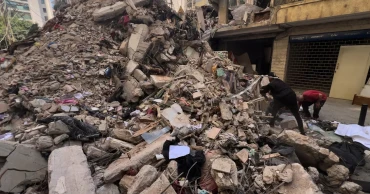
Lebanese PM welcomes Trump announcement of ceasefire
Apr 16 (UNB)--Prime Minister Nawaf Salam said the ceasefire was Lebanon’s first goal in landmark talks that took place with Israel in Washington on Tuesday between the country’s ambassadors to the U.S.
“While I congratulate all Lebanese on this achievement, I offer my condolences to the families of the martyrs who fell, and I affirm my solidarity with their families, with the wounded, and with the citizens forced to flee their cities and villages,” Salam said.
Earlier, US President Donald Trump has announced that Lebanon and Israel have agreed to a 10-day ceasefire, set to begin at 5pm EST, following what he described as “excellent conversations” with the two countries’ leaders.
In a post on Truth Social, Trump said he spoke with Lebanese President Joseph Aoun and Israeli Prime Minister Benjamin Netanyahu, adding that both sides had agreed to the temporary truce “in order to achieve PEACE between their Countries.”
He said the agreement follows the first direct meeting between officials of the two countries in 34 years, held in Washington, D.C. on Tuesday with US Secretary of State Marco Rubio, reports Al Jazeera.
Trump said he had directed Vice President JD Vance, Secretary of State Rubio and the Chairman of the Joint Chiefs of Staff, Dan Razin’ Caine, to work with Israel and Lebanon to achieve a “lasting PEACE.”
“It has been my Honor to solve 9 Wars across the World, and this will be my 10th, so let’s, GET IT DONE!” he added.
1 month ago
No date fixed yet for 2nd round of U.S.-Iran talks: Pakistan
“There are no dates yet,” Pakistan’s Foreign Ministry spokesperson Tahir Andrabi told reporters Thursday.
“We will announce the timing of these talks as and when it is decided,” he said, urging the media to avoid speculation.
Andrabi said Pakistan’s role as a mediator and facilitator did not end when the first round of talks concluded over the weekend.
“It continued,” he said.
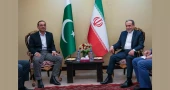
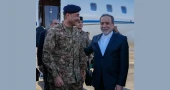
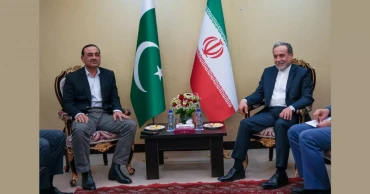
He said Pakistan’s army chief, Field Marshal Asim Munir, is visiting Iran with a delegation, while Prime Minister Shehbaz Sharif is also traveling to regional countries to promote peace.
“We will continue to advocate for peace, prosperity and stability,” he said.
Asked about the first round of talks, Andrabi said there was “certainly not a major breakthrough in terms of any concrete document emanating from these talks, but there was no breakdown as well.”
1 month ago
Progress seen in U.S.-Iran talks despite pressure tactics
Discussions over a new round of face-to-face talks between the United States and Iran are ongoing, the White House said on Tuesday, even as Washington has fully enforced a blockade on Iranian ports and regional mediation efforts have intensified, with no date yet set for the next round of negotiations.
On Wednesday, White House spokesperson Karoline Leavitt told a press briefing that the U.S. willingness to hold talks with Iran is contingent on the reopening of the Strait "with no limitations or delays," adding that the next round of talks is likely to take place again in Islamabad, Pakistan. She also denied reports that Washington had formally requested an extension of the current ceasefire, saying both sides remain engaged in dialogue.
U.S. officials were cited by media reports as saying that U.S. and Iranian negotiators made progress in talks on Tuesday, moving closer to a framework agreement to end the war. One official said both sides have maintained backchannel communications with all the countries and are "getting closer," while another noted that although the U.S. side is eager for a deal, consensus within the Iranian government remains a key hurdle.
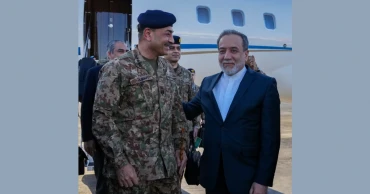
Meanwhile, Pakistan has stepped up its shuttle diplomacy to bridge differences between the two sides. Pakistani Prime Minister Shehbaz Sharif arrived in Saudi Arabia on Tuesday, beginning a four-day tour that will also take him to Qatar and Türkiye. On the same day, Pakistan's Chief of Army Staff Asim Munir led a delegation to Tehran, where Iranian Foreign Minister Abbas Araghchi received him.
According to Iran's semi-official Tasnim news agency, Tehran will assess the outcome of its discussions with the Pakistani delegation before deciding whether to engage in another round of talks with the United States. A source cited by the report said that the ceasefire in Lebanon will be a "positive signal" for Iran's decision for the next round of negotiations, while stressing that Washington must drop "excessive demands" and avoid "violating the promises it made before the ceasefire."
Uncertainty also persists over whether the ceasefire between the United States and Iran will be extended. Iranian Foreign Ministry spokesman Esmaeil Baghaei said on Tuesday that such speculation could not yet be confirmed, citing what he described as inconsistent U.S. positions and questioning Washington's commitment to honoring any potential agreement.
At the same time, the U.S. military said on Tuesday that U.S. forces have completely halted economic trade going into and out of Iran by sea in less than 36 hours since the blockade was implemented.
However, a report by British maritime analytics firm Windward indicated that some ships have managed to bypass the restrictions. It said that "Iranian crude and refined product exports remained active, supported by dark loading activity at Kharg Island, Bandar Abbas, and sanctioned tanker movements."
Diplomatic efforts have also drawn broader international attention. Russia and Saudi Arabia on Tuesday underscored the need to continue political and diplomatic engagement between Washington and Tehran under Pakistan's mediation. In a phone call on Wednesday, Russian Foreign Minister Sergei Lavrov and his Saudi counterpart Faisal bin Farhan Al Saud expressed support for an inclusive dialogue involving all stakeholders aimed at guaranteeing long-term stability and security in the region.
Kremlin spokesman Dmitry Peskov was quoted as saying on Wednesday that the United States had rejected its proposal that Russia take all of Iran's enriched uranium out of the country as a way to help resolve the Middle East conflict, but Russian President Vladimir Putin is ready to return to it.
"This would be a good decision. But unfortunately the American side rejected this proposal," he said.
Despite signs of diplomatic movement, key differences remain and the path toward a comprehensive agreement remains uncertain.
1 month ago
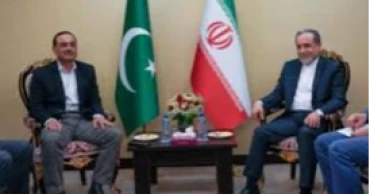
Pakistan Army Chief in Tehran seeking fresh US-Iran talks
Pakistan’s army chief is visiting Tehran on Thursday to hold talks with Iranian officials, aiming to revive negotiations between the United States and Iran and extend an existing ceasefire that has paused nearly seven weeks of conflict in the region.
The war — involving Israel, the U.S. and Iran — has left thousands dead and shaken global markets, particularly by disrupting oil supplies. Although the ceasefire has held so far, doubts remain over whether ongoing diplomatic efforts can produce a lasting agreement as it reaches the midpoint of its initial two-week duration.
The visit comes amid broader diplomatic activity. US President Donald Trump said leaders of Israel and Lebanon could speak later Thursday about ending hostilities, which would mark their first direct contact in over three decades. However, officials from both sides have not confirmed the possible talks, while cross-border attacks between Israel and Hezbollah continued.
The White House indicated that any renewed negotiations between Washington and Tehran may be held in Islamabad, though no final decision has been made. Despite tensions — including a US naval blockade of Iranian ports and threats of retaliation from Tehran — the ceasefire remains largely intact.
Pakistan has positioned itself as a key mediator after previously hosting direct US-Iran discussions in Islamabad, which reportedly helped narrow differences. Efforts are underway to resume dialogue before the ceasefire expires next week.
The conflict has had widespread economic repercussions, disrupting shipping routes and damaging infrastructure across the Middle East. Oil prices have shown signs of easing amid hopes for peace, while US stock markets have rebounded to record levels.
Meanwhile, uncertainty persists over possible Israel-Lebanon talks. Though an Israeli minister suggested Prime Minister Benjamin Netanyahu could speak with Lebanese President Joseph Aoun, neither government has officially confirmed such plans. Hostilities between Israel and Hezbollah have continued, with rocket and drone attacks reported alongside intensified Israeli strikes in southern Lebanon.
Regional officials say there has been some progress in US-Iran negotiations, with reports of a preliminary understanding to extend the ceasefire. However, divisions remain, particularly over Iran’s nuclear programme, the Strait of Hormuz, and compensation for wartime damages.
Iran has signalled willingness to discuss limits on uranium enrichment but insists on maintaining its right to continue the programme. At the same time, military and political tensions remain high, with threats from Iranian officials and continued pressure from the US, including potential new sanctions.
The conflict has claimed thousands of lives across the region, including in Iran, Lebanon, Israel and Gulf countries, as well as US personnel.
Separately, Pakistan’s Prime Minister Shehbaz Sharif arrived in Qatar on Thursday as part of a regional tour focused on supporting peace efforts and promoting stability in the Middle East.
China has also called for de-escalation, urging that the Strait of Hormuz remain open to ensure global energy security, as the sitation stands at a critical point between war and peace.
1 month ago

How TIME selects its 100 most influential people
TIME magazine has explained how it compiles its annual list of the 100 most influential people, highlighting that influence is not measured by a single standard but by impact on the world.
In July 1969, TIME published a detailed report on “la causa,” the protest movement ignited by California’s Mexican American farmworkers. Its cover featured the cause’s leader, Cesar Chavez, and the story inside described a “tiny, tough assistant” named Dolores Huerta. Just a few weeks ago, we learned, yet again, how tough Huerta is when she came forward to join other women in claiming that they had been sexually assaulted by Chavez, a lion of America’s left. “I have kept this secret long enough. My silence ends here,” said Huerta, a fierce advocate for women and workers. Fifty-seven years after first appearing in these pages, Huerta joins the 2026 TIME100, which recognizes the world’s most influential people.
Editor-in-Chief of Time Sam Jacobs said the selection process involves year-round discussions. “There is no single metric that defines influence. Our selections are led by the stories shaping the world each year and the people behind them,” he said.
He noted that while some individuals on the list are widely known, others are recognised mainly within their fields. Selections are made through input from editors, reporters and global sources, along with daily recommendations.
Jacobs said the diversity of the list is part of its appeal, adding that TIME has expanded its focus in recent years to areas shaping the future, including artificial intelligence, climate, health, philanthropy and emerging fields such as digital content creation.
He also highlighted TIME’s efforts to build a global community through events such as the TIME100 Summit and Gala in New York, with a new TIME100 Sports list set to be launched in June.
According to TIME, influence takes many forms—from literature and cuisine to photography and sport. The 2026 list includes figures from diverse backgrounds, ranging from athletes and doctors to political leaders and cultural icons.
Jacobs said the list reflects a changing world shaped by politics, culture and global events, noting that leaders such as Donald Trump, Mark Carney and Mette Frederiksen have played significant roles in recent global developments.
The 2026 covers feature personalities from entertainment and culture, including comedian Nikki Glaser, actors Zoe Saldaña and Wagner Moura, and singer Luke Combs.
Jacobs said the enduring relevance of the TIME100 lies in its ability to capture influence in its many forms, adding that it remains to be seen which of this year’s figures will continue to shape the world decades from now.
1 month ago
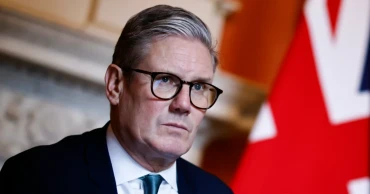
British PM stands firm against Trump pressure on Iran
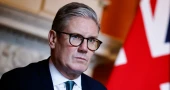
British Prime Minister Keir Starmer said he would not alter his stance to stay out of the war in Iran after U.S. President Donald Trump threatened to tear up a trade deal with the U.K.
Trump told Sky News on Tuesday night that the U.K. had not been there when the U.S. needed their help. Trump said the so-called special relationship between the allies had been better.
“It’s been better, but it’s sad,” Trump said. “And we gave them a good trade deal. Better than I had to. Which can always be changed.”
Starmer said a lot of pressure had been put on him to change course, including Trump’s latest remarks.
“I’m not going to change my mind,” Starmer said. “I’m not going to yield. It is not in our national interest to join this war, and we will not do so.”
1 month ago

Four killed, 20 injured in school shooting in Turkey
A student opened fire indiscriminately in two classrooms at a school in southeastern Turkey on Wednesday, killing four people and injuring 20 others, an official said.
Kahramanmaras provincial governor Mukerrem Unluer said the attacker, who was also killed, arrived at the school armed with weapons belonging to his father, a retired police officer. He was carrying five firearms and seven magazines at the time of the attack.
The victims included a teacher and three students, the governor added. The motive behind the shooting was not immediately known.
Turkey detains 125 more Islamic State suspects in nationwide raids
Earlier, media reports said police and ambulances were dispatched to the school in the Onikisubat district of Kahramanmaras after gunfire was heard on the premises. Video footage from the scene showed at least two people being taken away in ambulances.
The incident came a day after another school shooting in nearby Sanliurfa province, where a former student opened fire at a high school, injuring 16 people, most of them students.
1 month ago
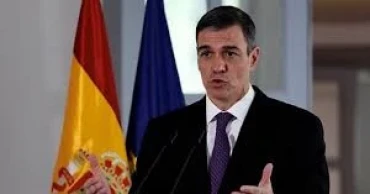
Spain moves to legalise undocumented migrants, including Bangladeshis
Spain has approved a major plan to grant legal status to around 500,000 undocumented migrants, a move that is expected to benefit thousands of Bangladeshis living there without proper documentation.
Prime Minister Pedro Sánchez described the decision as both an “act of justice” and an economic necessity, saying the initiative recognises migrants who are already contributing to Spanish society, reports BBC.
Under the plan, eligible migrants will receive a renewable one-year residence permit, allowing them to work legally and access better living conditions. Applicants must prove they have lived in Spain for at least five months and have no criminal record. The application window will remain open from April 16 to the end of June.
Bangladeshi migrants, many of whom are engaged in sectors like construction, agriculture and small businesses, are expected to be among the beneficiaries of this scheme. The move could help them transition from informal jobs to stable employment, ensuring legal protection and improved livelihoods.
The Spanish government says the initiative will strengthen the workforce in a country facing an ageing population and labour shortages. It also reflects Spain’s own history of emigration, when many Spaniards moved abroad in search of better opportunities.
However, the opposition People's Party has strongly criticised the plan, arguing that it could encourage more illegal migration and has pledged to oppose it.
Despite criticism, support has come from various quarters, including the Catholic Church, which views the measure as a humanitarian step.
According to estimates by the Funcas think-tank, Spain currently hosts around 840,000 undocumented migrants, many from Latin America, along with a significant number from South Asian countries like Bangladesh.
If implemented successfully, the policy could mark a turning point for undocumented Bangladeshis in Spain, offering them legal recognition, job security and a pathway to a more stable future.
1 month ago
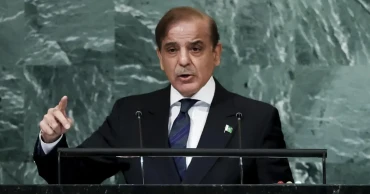
Pakistan PM’s Gulf, Turkey tour aims to push US-Iran talks, boost ties
Pakistan Prime Minister Shehbaz Sharif is set to visit Saudi Arabia, Qatar and Turkey this week as part of a diplomatic effort to help restart talks between the United States and Iran.
The visit comes just days after Islamabad hosted rare negotiations between Washington and Tehran that ended without a formal agreement.
Sharif is trying to help arrange a second round of talks before a temporary ceasefire expires on April 22.
Pakistan’s Foreign Ministry said the four-day trip, beginning Wednesday and ending Saturday, will also focus on strengthening bilateral relations.
During his stops in Saudi Arabia and Qatar, Sharif is expected to discuss cooperation as well as regional peace and security with their leaders.
In Turkey, he will attend the Antalya Diplomacy Forum and hold meetings with President Recep Tayyip Erdogan and other global leaders.
Meanwhile, Saudi Arabia has agreed to deposit $3 billion into Pakistan’s central bank, Finance Minister Muhammad Aurangzeb said Wednesday.
The funds are expected to provide crucial support to Pakistan’s economy, which has been under pressure due to regional tensions linked to the US-Iran conflict.
Aurangzeb, currently in Washington, D.C. for meetings of the World Bank and the International Monetary Fund, said an existing $5 billion Saudi deposit will now be extended for a longer period instead of being renewed annually.
Earlier this month, Pakistani authorities said the country plans to return $2 billion deposited by the United Arab Emirates in 2019 to its central bank.
1 month ago
US-Iran tensions deepen amid blockade, threats; Pakistan pushes for fresh talks
Tensions between the United States and Iran escalated further on Tuesday as Washington announced a blockade of Iranian ports, Tehran warned of retaliatory strikes across the region, and Pakistan stepped up diplomatic efforts to bring both sides back to the negotiating table.
Although a ceasefire reached last week largely held, the situation around the Strait of Hormuz remained volatile, raising fears of renewed conflict and broader economic disruption.
Efforts to reach a lasting agreement in talks over the weekend failed to yield a breakthrough. However, Pakistan has proposed hosting another round of negotiations soon, with officials from both sides indicating that discussions are ongoing and could resume as early as Thursday, though details are yet to be finalised.
Now in its seventh week, the conflict—triggered by US and Israeli strikes on Iran on February 28—has already had a severe impact on global markets. Disruptions to shipping routes and continued airstrikes have damaged key infrastructure across the region, reports AP.
The war has claimed thousands of lives, including around 3,000 in Iran, over 2,000 in Lebanon, and smaller numbers in Israel and Gulf countries. Thirteen US service members have also been killed.
The US military said the blockade, which took effect Monday, applies to vessels traveling to and from Iranian ports. The move could further restrict maritime traffic through the Strait of Hormuz, where Iran has already limited access, allowing only select vessels to pass.
Early indications suggested hesitation among shipping operators, with at least two oil tankers reversing course shortly after the blockade was enforced.
The disruption in the strait—through which about one-fifth of the world’s oil supply normally passes—has driven up global oil prices, increasing the cost of fuel and essential goods worldwide.
Washington says the blockade is aimed at curbing Iran’s oil exports, which have continued despite sanctions, often through covert shipping operations that help sustain its economy.
US President Donald Trump described Iran’s control over the strait as “blackmail,” warning that any vessels approaching the blockade could face immediate military action. Iran, in turn, warned it would strike ports in the Persian Gulf if attacked, with senior officials vowing retaliation.
Meanwhile, diplomatic activity continued on other fronts, with Israel and Lebanon set to begin direct talks in Washington—the first in decades. The discussions are expected to focus on preliminary issues, including ceasefire prospects and security concerns.
Israel has continued its military operations in Lebanon despite the Iran ceasefire, although it has paused strikes in Beirut following international backlash over civilian casualties.
Lebanon is seeking a ceasefire, while Israel has emphasised disarming Hezbollah and exploring a broader peace arrangement, though no commitments have been made to halt military operations.
The developments highlight the fragile and complex nature of the conflict, with military escalation and diplomatic efforts unfolding simultaneously across the region.
1 month ago