others

About 300 Indian travelers stuck in French airport in a human trafficking probe
About 300 Indian citizens heading to Central America were sequestered in a French airport for a third day Saturday after a dramatic police operation prompted by a tip that those aboard might be victims of human trafficking, authorities said.
Those aboard included children and families. The local civil protection agency told regional broadcaster France-3 that the youngest passenger is a toddler of 21 months, and that among the children are 13 unaccompanied minors.
Local authorities hung white tarps across the soaring bay windows of the small Vatry Airport in Champagne country to ensure privacy for the passengers inside. An unmarked plane near the terminal appeared to be the aircraft grounded since Thursday. Other flights were canceled or rerouted as the airport was transformed into the hub of a vast trafficking investigation.
The 15 crew members of the Legend Airlines charter flight — en route from Fujairah airport in the United Arab Emirates to Managua, Nicaragua — were questioned and released, according to a lawyer for the Romania-based airline. She said they are deeply shaken by what happened.
A surreal holiday weekend scene has been unfolding in the Vatry Airport since Thursday. The flight stopped for refueling, and was grounded by French police based on an anonymous tip that it could be carrying victims of human trafficking, the Paris prosecutor’s office said. It said two people have been detained and special investigators are questioning the other passengers.
The unusual and sudden probe disrupted air travel as police cordoned off the airport and flights in and out of the regional airport were disrupted, according to the administration for the Marne region. The airfield is used primarily for charter and cargo flights.
Police sequestered the passengers in the airport, where they have spent two nights on camp beds while the investigation continues, according to an official with the Marne administration. The official said the passengers initially remained in the A340 plane, surrounded by police on the tarmac, but were then transferred into the main hall of the airport to sleep.
Emergency workers, Red Cross workers, a doctor and local volunteers are on the scene to look after the needs of the passengers, including regular meals and medical care and access to toilets and showers, the administration said in a statement Saturday. A special section of the terminal has been equipped for families.
Indian consular representatives are visiting regularly, the administration said. The Indian Embassy in France posted on X that embassy staff had obtained consular access to the passengers. “We are investigating the situation and ensuring the wellbeing of passengers," it said.
Legend Airlines lawyer Liliana Bakayoko said the company denies any role in possible human trafficking, and welcomed the news that the plane's crew had been released after questioning as "good news for the airline.''
A “partner” company that chartered the plane was responsible for verifying the identity documents of each passenger, and communicated the passengers' passport information to the airline 48 hours before the flight, Bakayoko told The Associated Press.
The customer had chartered multiple flights on Legend Airlines from Dubai to Nicaragua, and a few other flights have already made the journey without incident, she said. She would not identify the customer, saying only that it is not a European company.
The crew members, who are of multiple nationalities, “are rather traumatized,” she said. “They wrote me messages that they want to see their families for Christmas.”
The U.S. government has designated Nicaragua as one of several countries deemed as failing to meet minimum standards for eliminating human trafficking.
2 years ago

Israel creates massive obstacles to aid distribution in Gaza -- UN chief
UN Secretary-General Antonio Guterres said Friday that the Israeli offensive is creating massive obstacles to the distribution of humanitarian aid inside Gaza.
Many people are measuring the effectiveness of the humanitarian operation in Gaza based on the number of trucks allowed to unload aid across the Egyptian-Gaza border. This is a mistake, said Guterres.
"The real problem is that the way Israel is conducting this offensive is creating massive obstacles to the distribution of humanitarian aid inside Gaza," he told reporters.
Read: Gaza war's staggering toll reaches a grim milestone: 20,000 dead
An effective aid operation in Gaza requires security, staff who can work in safety, logistical capacity, and the resumption of commercial activity. These four elements do not exist, he said.
Security for aid delivery is absent. The intense Israeli bombardment and active combat in densely populated urban areas throughout Gaza threaten the lives of civilians and humanitarian aid workers alike. The United Nations waited 71 days for Israel finally to allow aid to enter Gaza via the Kerem Shalom crossing. The crossing was then hit while aid trucks were in the area, he said.
The humanitarian operation requires staff who can live and work in safety. Some 136 UN staff members in Gaza have been killed in 75 days -- something unprecedented in the history of the United Nations. Nowhere is safe in Gaza, said Guterres.
Every truck that arrives at Kerem Shalom and Rafah border crossings must be unloaded, and its cargo re-loaded for distribution across Gaza. The United Nations has a limited and insufficient number of trucks available for this. Many of the UN vehicles and trucks were destroyed or left behind following forced, hurried evacuation from northern Gaza. But the Israeli authorities have not allowed any additional trucks to operate in Gaza. This is massively hampering the aid operation, he said.
Delivering in the north is extremely dangerous due to active conflict, unexploded ordnance, and heavily damaged roads. Everywhere, frequent communications blackouts make it virtually impossible to coordinate the distribution of aid, and to let people know how to access it, he added.
The resumption of commercial activities is essential. Shelves are empty, wallets are empty, stomachs are empty. Just one bakery is operating in the whole of Gaza, said Guterres. "I urge the Israeli authorities to lift restrictions on commercial activity immediately. We are ready to scale up our cash grant support to vulnerable families -- the most effective form of humanitarian aid. But in Gaza, there is very little to buy."
Over the last weeks and days, there has been no significant change in the way the war has been unfolding in Gaza. There is no effective protection of civilians. Intense Israeli bombardment and ground operations continue. More than 20,000 Palestinians have reportedly been killed, and the vast majority of them were women and children. Meanwhile, Hamas and other Palestinian factions continue to fire rockets from Gaza into Israel, he said.
Read: JN.1 Covid variant: WHO charts its rapid global spread
Some 1.9 million people -- 85 percent of Gaza's population -- have been forced from their homes. The health system is on its knees. Hospitals in southern Gaza are dealing with at least three times their capacity. In the north, they are barely operational.
According to the World Food Programme, widespread famine looms. More than half a million people, a quarter of the population, are facing what experts classify as catastrophic levels of hunger. Four out of five of the hungriest people anywhere in the world are in Gaza. And clean water is at a trickle, he said.
"In these desperate conditions, it is little wonder that many people cannot wait for humanitarian distributions and are grabbing whatever they can from aid trucks. As I warned, public order is at risk of breaking down," he said.
Israel began its military operation in response to the horrific terror attacks launched by Hamas on Oct. 7. Nothing can possibly justify those attacks or the brutal abduction of some 250 hostages. But at the same time, these violations of international humanitarian law can never justify the collective punishment of the Palestinian people, and they do not free Israel from its own legal obligations under international law, he said.
A humanitarian cease-fire is the only way to begin to meet the desperate needs of people in Gaza and end their ongoing nightmare, he said.
Guterres expressed the hope that Friday's Security Council resolution that calls for the immediate acceleration of aid deliveries in Gaza, may help a humanitarian cease-fire finally to happen.
"I hope that today's resolution will make people understand that a humanitarian cease-fire is indeed something that is needed if we want humanitarian aid to be effectively delivered," he said.
The UN chief stressed the importance of the two-state solution.
"Looking at the longer term, I am extremely disappointed by comments from senior Israeli officials that put the two-state solution into question. As difficult as it might appear today, the two-state solution, in line with UN resolutions, international law and previous agreements, is the only path to sustainable peace," said Guterres. "Any suggestion otherwise denies human rights, dignity and hope to the Palestinian people, fueling rage that reverberates far beyond Gaza. It also denies a safe future for Israel."
Read: Support civil society’s international solidarity efforts for peace: UN experts
The spillover of the war in Gaza is already happening, he warned.
The occupied West Bank is at boiling point. Daily exchanges of fire across the Blue Line between Lebanon and Israel pose a grave risk to regional stability. Attacks and threats to shipping on the Red Sea by the Houthis in Yemen are impacting shipping with the potential to affect global supply chains, he said.
Beyond the immediate region, the conflict is polarizing communities, feeding hate speech and fueling extremism. All this poses a significant and growing threat to global peace and security, he warned.
"As the conflict intensifies and the horror grows, we will continue to do our part. We will not give up. But at the same time, it is imperative that the international community speak with one voice -- for peace, for the protection of civilians, for an end to suffering, and for a commitment to the two-state solution, backed with action," he said.
2 years ago

Gaza war's staggering toll reaches a grim milestone: 20,000 dead
Israel's war to destroy Hamas has killed more than 20,000 Palestinians, health officials in Gaza said Friday, as Israel expanded its offensive and ordered tens of thousands more people to leave their homes.
The deaths in Gaza amount to nearly 1% of the territory’s prewar population — the latest indication of the 11-week-old conflict's staggering human toll.
Israel’s aerial and ground offensive has been one of the most devastating military campaigns in recent history, displacing nearly 85% of Gaza’s 2.3 million people and leveling wide swaths of the tiny coastal enclave. More than half a million people in Gaza — a quarter of the population — are starving, according to a report Thursday from the United Nations and other agencies.
Israel declared war after Hamas militants stormed across the border on Oct. 7, killing some 1,200 people and taking some 240 hostages. Israel has vowed to keep up the fight until Hamas is destroyed and removed from power in Gaza and all the hostages are freed.
After many delays, the U.N. Security Council adopted a watered-down resolution Friday calling for immediately speeding up aid deliveries to desperate civilians in Gaza.
The United States won the removal of a tougher call for an “urgent suspension of hostilities” between Israel and Hamas. It abstained in the vote, as did Russia, which wanted the stronger language. The resolution was the first on the war to make it through the council after the U.S. vetoed two earlier ones calling for humanitarian pauses and a full cease-fire.
ISRAEL VOWS TO KEEP UP PRESSURE ON HAMAS
The U.S. also negotiated the removal of language that would have given the U.N. authority to inspect aid going into Gaza, something Israel says it must do to ensure material does not reach Hamas.
UN again delays vote on watered-down Gaza aid resolution
Israel’s ambassador to the U.N., Gilad Erdan, thanked the U.S. for its support and sharply criticized the U.N. for its failure to condemn Hamas' Oct. 7 attacks. The U.S. vetoed a resolution in October that would have included a condemnation because it didn’t also underline Israel’s right to self-defense.
Hamas said in a statement that the U.N. resolution should have demanded an immediate halt to Israel’s offensive, and it blamed the United States for pushing “to empty the resolution of its essence” before Friday’s Security Council vote.
U.N. Secretary-General Antonio Guterres, meanwhile, reiterated his longstanding call for a humanitarian cease-fire.
Guterres said nothing can justify Hamas' Oct. 7 attacks, its taking of hostages, its rocket launches against Israel and what he called its use of civilians as human shields.
UN says more than 1 in 4 people in Gaza are ‘starving’ because of war
“But at the same time, these violations of international humanitarian law can never justify the collective punishment of the Palestinian people, and they do not free Israel from its own legal obligations under international law,” the secretary-general said.
Israel, shielded by the United States, has resisted international pressure to scale back its offensive. The military has said that months of fighting lie ahead in southern Gaza, an area packed with the vast majority of the enclave’s 2.3 million people, many of whom were ordered to flee combat in the north earlier in the war.
Evacuation orders have pushed displaced civilians into ever-smaller areas of the south as troops focus on Khan Younis, Gaza’s second-largest city.
The military said late Thursday that it is sending more ground forces, including combat engineers, to Khan Younis to target Hamas militants above ground and in tunnels.
US is engaging in high-level diplomacy to avoid vetoing a UN resolution on critical aid for Gaza
On Friday, it ordered tens of thousands of residents to leave their homes in Burej, an urban refugee camp, and surrounding communities in central Gaza, suggesting a ground assault there could be next.
In the city of Rafah, on the border with Egypt, an airstrike on a house killed six people, according to Associated Press journalists who saw the bodies at a hospital. Among the dead were a blind man, his wife and their 4-month-old child, said the infant’s grandfather, Anwar Dhair.
Rafah is one of the few places in Gaza not under evacuation orders, but it has been targeted in Israeli strikes almost every day.
The air and ground campaign continued in the north, where Israel says it is in the final stages of clearing out Hamas militants.
Mustafa Abu Taha, a Palestinian farm worker, said many areas of his hard-hit Gaza City neighborhood of Shijaiyah have become inaccessible because of massive destruction from airstrikes.
“They are hitting anything moving,” he said of Israeli forces.
RISING DEATH TOLL AND HUNGERGaza’s Health Ministry said Friday that it has documented 20,057 deaths in the fighting and more than 50,000 wounded. It does not differentiate between combatant and civilian deaths. It has previously said that roughly two-thirds of the dead were women or minors.
Israel blames Hamas for the high civilian death toll, citing the group’s use of crowded residential areas for military purposes and its tunnels under urban areas.
Israel’s military says 139 of its soldiers have been killed in the ground offensive. It says it has killed thousands of Hamas militants, including about 2,000 in the past three weeks, but it has not presented any evidence to back up the claim.
For most of the war, Israel also stopped entry of food, water, fuel and other supplies except for truck convoys of aid from Egypt, which cover only a fraction of the needs in Gaza.
Because of insufficient aid entering Gaza, the extent of starvation has eclipsed the near-famines of recent years in Afghanistan and Yemen, and the risk of famine is “increasing each day,” Thursday’s U.N. report said.
An Israeli military liaison officer said there is no food shortage in Gaza, saying sufficient aid is getting through.
“The reserves in Gaza Strip are sufficient for the near term,” Col. Moshe Tetro said from the Kerem Shalom cargo crossing, without elaborating.
Israel opened the Kerem Shalom crossing several days ago amid international demands to increase the flow of aid. But the military on Thursday struck the Palestinian side of the crossing, killing four staffers, and the U.N. said it was unable to pick up aid there for delivery. It was not immediately known if the U.N. resumed work there Friday. The Israeli military said it was targeting militants.
The war has also pushed Gaza’s health sector into collapse.
Only nine of its 36 health facilities are still partially functioning, all located in the south, according to the World Health Organization.
The agency reported soaring rates of diseases in Gaza, including a five-fold rise in diarrhea and increases in cases of meningitis, skin rashes and scabies.
2 years ago

UN says up to 300,000 Sudanese fled their homes after a notorious group seized their safe haven
Fighting between Sudan's military and a notorious paramilitary group forced up to 300,000 people to flee their homes in a province that had been a safe haven for families displaced by the devastating conflict in the northeastern African country, the U.N. said Thursday.
The fighting erupted in the city of Wad Medani, the provincial capital of Jazeera province, after the Rapid Support Forces attacked the city earlier this month. The RSF said that it took over Wad Medani earlier this week, and the military said that its troops withdrew from the city, and an investigation was opened.
Sudan’s war began in mid-April after months of tensions between military chief Gen. Abdel-Fattah Burhan and RSF commander Gen. Mohammed Hamdan Dagalo. Both generals led a military coup in October 2021 that derailed Sudan’s short-lived transition to democracy following a popular uprising that forced the removal of President Omar al-Bashir in April 2019.
Read: Putin ratchets up military pressure on Ukraine as he expects Western support for Kyiv to dwindle
The U.N. agency International Organization for Migration said that between 250,000 and 300,000 people fled the province — many reportedly on foot — to safer areas in the provinces of al-Qadarif, Sinnar and the White Nile. Some sheltered in camps for displaced people and many sought shelter in local communities, it said.
Jazeera, Sudan’s breadbasket, was home to about 6 million Sudanese. Since the war, about 500,000 displaced fled to the province, mostly from the capital, Khartoum, which has been the center of fighting, according to the U.N. Office for the Coordination of Humanitarian Affairs. Medani, which is about 100 kilometers (60 miles) southeast of Khartoum, had hosted more than 86,000 of the displaced, OCHA said.
The World Food Program announced Wednesday that it has temporarily halted food assistance in some parts of Jazeera, in what it described a “major setback” to humanitarian efforts in the province.
The U.N. food agency said that it had provided assistance to 800,000 people in the province, including many families that fled the fighting in Khartoum.
The conflict in Sudan has wrecked the country and killed up to 9,000 people as of October, according to the United Nations. However, activists and doctors’ groups say the real toll is far higher.
Read: Support civil society’s international solidarity efforts for peace: UN experts
More than 7 million people were forced out of their homes, including more than 1.5 million who have sought refuge in neighboring countries, according to the U.N. figures.
The fighting in Wad Medani forced many aid groups, including the International Committee of the Red Cross, to evacuate its staff from the city, which was a center of the humanitarian operations in the country.
The RSF takeover prompted fears among Wad Medani residents that they would carry out atrocities in their city as they did in the capital, Khartoum, and the western region of Darfur. The U.N. and rights groups have accused the RSF of atrocities in Darfur, which was the scene of a genocidal campaign in the early 2000s.
The RSF grew out of the state-backed Arab militias known as Janjaweed, which were accused of widespread killings, rapes and other atrocities in the Darfur conflict.
Ahmed Tag el-Sir, a father of three, fled along with his family to the neighboring province of al-Qadarif after the RSF rampaged through their village of al-Sharfa Barakar north of Wad Medani.
Read: Mongolia's capital imposes odd-even car ban to reduce traffic jam
“They shelled the village and took over residents’ homes, like they did in Darfur,” the man said from a relative’s house where he shelters along with two other families. “We fled out of fear of being killed or our women being raped by the Janjaweed.”
2 years ago
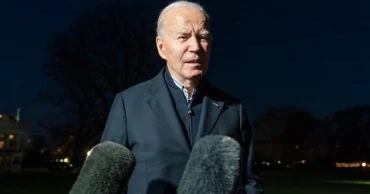
US is engaging in high-level diplomacy to avoid vetoing a UN resolution on critical aid for Gaza
The United States, key allies and Arab nations engaged in high-level diplomacy in hopes of avoiding another U.S. veto of a new U.N. resolution on desperately needed aid to Gaza ahead of a long-delayed vote now scheduled for Thursday morning.
The U.S. has been struggling to change the text’s references to a cessation of hostilities in the Israel-Hamas war. Another sticking point is the inspection of aid trucks into Gaza to ensure they are only carrying humanitarian goods. The current draft proposes a U.N. role, an idea Israel is likely to oppose.
Read: Hunter Biden defies congressional subpoena, says will only testify in public
U.S. President Joe Biden told reporters on his way back from Milwaukee, Wisconsin late Wednesday afternoon that “we’re negotiating right now at the U.N. the contours of a resolution that we may be able to agree to.”
Ambassador Lana Nusseibeh of the United Arab Emirates, which sponsored the Arab-backed resolution, said earlier that high-level discussions are underway to try to reach agreement on a text that can be adopted.
“Everyone wants to see a resolution that has impact and that is implementable on the ground,” she told reporters after the 15 council members held closed consultations early Wednesday afternoon and agreed to the delay. “We believe today, giving a little bit of space for additional diplomacy, could yield positive results.”
The vote — initially postponed from Monday and then pushed back to Tuesday and then Wednesday — is now expected on Thursday morning, said Ecuador’s U.N. Ambassador José Javier De La Gasca López-Domínguez, the current Security Council president.
A U.S. official, speaking on condition of anonymity to discuss the sensitive diplomacy, said U.S. Secretary of State Antony Blinken would speak with his Egyptian and UAE counterparts to try to reach a consensus either late Wednesday or early Thursday.
Read: Biden calls 'surge' in antisemitism 'sickening' during White House Hanukkah reception
As part of the U.S. push at the U.N., Blinken spoke Wednesday with the foreign ministers of France, Germany and the United Kingdom and stressed the need for urgent humanitarian aid to Gaza, “the imperative of minimizing civilian casualties,” and preventing further escalation of the conflict and ”underscored the U.S. commitment to the establishment of an independent Palestinian state,” State Department spokesman Matthew Miller said.
Nusseibeh said the UAE is optimistic, but if the negotiations yield no results by Thursday “then we will assess in the council to proceed ... to a vote on the resolution.”
U.N. Secretary-General António Guterres has said Gaza faces “a humanitarian catastrophe” and that a total collapse of the humanitarian support system would lead to “a complete breakdown of public order and increased pressure for mass displacement into Egypt.”
The U.N. food agency reported last week that 56% of Gaza’s households are experiencing “severe levels of hunger,” up from 38% two weeks earlier.
The draft on the table Monday morning called for an “urgent and sustainable cessation of hostilities,” but this language was watered down in a new version that was to be put to a vote on Wednesday. It would call “for the urgent suspension of hostilities to allow safe and unhindered humanitarian access, and for urgent steps towards a sustainable cessation of hostilities.”
That draft also calls for Guterres to quickly establish a mechanism for exclusive U.N. monitoring of aid deliveries to Gaza — bypassing the current Israeli inspection of aid entering the strip.
A council diplomat, speaking on condition of anonymity because discussions were private, said the U.S. and Egypt are engaging directly to ensure any aid monitoring mechanism can work for everyone.
Read: Trump calls Biden the ‘destroyer’ of democracy
U.S. National Security Council spokesman John Kirby also raised two other issues Wednesday morning that are not in the Arab-sponsored resolution — condemnation of Hamas’ deadly Oct. 7 incursion into southern Israel that sparked the latest war and Israel’s right to self-defense.
The U.S. on Dec. 8 vetoed a Security Council resolution, backed by almost all other council members and dozens of other nations, demanding an immediate humanitarian cease-fire in Gaza. The 193-member General Assembly overwhelmingly approved a similar resolution on Dec. 12 by a vote of 153-10, with 23 abstentions.
In its first unified action on Nov. 15, with the U.S. abstaining, the Security Council adopted a resolution calling for “urgent and extended humanitarian pauses” in the fighting, unhindered aid deliveries to civilians and the unconditional release of all hostages.
Security Council resolutions are important because they are legally binding, but in practice many parties choose to ignore the council’s requests for action. General Assembly resolutions are not legally binding, though they are a significant barometer of world opinion.
Nearly 20,000 Palestinians have been killed, according to the Gaza Health Ministry, since the war started. During the Oct. 7 attack, Hamas militants killed about 1,200 people in Israel and took about 240 hostages back to Gaza.
Hamas controls the Gaza Strip, and its Health Ministry does not differentiate between civilian and combatant deaths. Thousands more Palestinians lie buried under the rubble of Gaza, the U.N. estimates.
2 years ago

JN.1 Covid variant: WHO charts its rapid global spread
A sub-variant of the Omicron strain of coronavirus has been classified as a "variant of interest" by the World Health Organization, because of "its rapidly increasing spread".
JN.1 has been found in many countries around the world, including India, China, UK and the United States, reports BBC.
The risk to the public is currently low and current vaccines continue to offer protection, the WHO says.
But it warns Covid and other infections could rise this winter.
Respiratory viruses such as flu, respiratory syncytial virus (RSV) and childhood pneumonia are also on the rise in the northern hemisphere.
China emerged from 'zero-COVID' in 2023 to confront new challenges in a changed world
The virus which causes Covid is constantly changing over time and sometimes this leads to new variants developing.
Omicron has been the globally dominant variant for some time.
The World Health Organization (WHO) is currently tracking a number of variants of interest linked to Omicron - including JN.1 - although none of them are deemed to be concerning.
But JN.1 is spreading quickly in many corners of the world.
It is currently the fastest-growing variant in the United States, according to the US Centres for Disease Control and Prevention, accounting for 15-29% of infections.
Bangladesh among 5 countries selected for project to strengthen preparedness to COVID-19, other infectious diseases
The UK Health Security Agency says JN.1 currently makes up around 7% of positive Covid tests analysed in a lab. It said it would continue to monitor all available data on this and other variants.
Winter surge
JN.1 is spreading fast in all regions, probably because it has an additional mutation in the spike protein compared to the BA.2.86 variant from which it's descended.
"It is anticipated that this variant may cause an increase in Sars-Cov-2 [coronavirus] cases amid a surge of infections of other viral and bacterial infections, especially in countries entering the winter season," the WHO's risk assessment says.
There is still limited evidence on how capable JN.1 is of getting round the immunity offered by vaccines, the WHO says.
Bangladesh registers 5 new Covid-19 cases in 24hrs
There are no reports of people becoming more ill with this variant than previous ones.
But more studies are needed to work out the health impact, the WHO says, as the number of countries reporting data on people admitted to hospital with Covid has dramatically reduced.
To prevent infections and severe disease, the WHO advises:
• wear a mask in crowded, enclosed areas• cover up coughs and sneezes• clean your hands regularly• stay up to date with Covid and flu vaccinations, especially if vulnerable• stay home if ill• get tested if you have symptoms
2 years ago

Over 150 names of people mentioned in Jeffrey Epstein lawsuit docs ordered to be released
A federal judge has ordered the public disclosure of the identities of more than 150 people mentioned in a mountain of court documents related to the late-financier Jeffrey Epstein, saying that most of the names were already public and that many had not objected to the release.
The people whose names are to be disclosed, including sex abuse victims, litigation witnesses, Epstein's employees — and even some people with only a passing connection to the scandal — have until Jan. 1 to appeal the order, signed Monday by Judge Loretta A. Preska.
Read: Donald Trump banned from Colorado ballot in historic ruling by state's Supreme Court
For several years, Preska has reviewed documents sought by the Miami Herald from a civil case, filed by one of Epstein's victims, that eventually was settled.
Many of the records related to that lawsuit were publicly released in past years, but on Monday the judge made determinations about some portions of the records that were initially withheld on potential privacy grounds and what can be made public about certain people mentioned in the records.
In many instances, she noted that individuals had given media interviews or that their names had previously emerged publicly in various ways, including at a trial two years ago of Epstein’s associate and former girlfriend, Ghislaine Maxwell.
Preska concluded that some portions of the records should remain confidential, including those identifying people who were children when they were sexually abused by Epstein and had tried to maintain their privacy.
Read: US defense secretary arrives in Israel and is expected to press for a more targeted approach in Gaza
The Epstein case has spawned countless conspiracy theories about the possible involvement of rich and powerful people in sex trafficking.
The three criminal cases brought by federal and state authorities, however, have focused on allegations about sexual abuse by Epstein himself and Maxwell.
Epstein took his own life in August 2019 in a federal lockup in Manhattan as he awaited trial on sex trafficking charges. He was accused of luring numerous underage girls to his homes under the guise of giving him massages, and then sexually abusing them.
Maxwell, 61, is serving a 20-year prison sentence after she was convicted in December 2021 of helping Epstein recruit and sexually abuse underage girls.
2 years ago

Putin ratchets up military pressure on Ukraine as he expects Western support for Kyiv to dwindle
After blunting Ukraine's counteroffensive from the summer, Russia is building up its resources for a new stage of the war over the winter, which could involve trying to extend its gains in the east and deal significant blows to the country's vital infrastructure.
Russian President Vladimir Putin seems to be hoping that relentless military pressure, combined with changing Western political dynamics and a global focus on the Israeli-Hamas war, will drain support for Ukraine in the nearly 2-year-old war and force Kyiv to yield to Moscow's demands.
"As far as the Russian leadership is concerned, the confrontation with the West has reached a turning point: The Ukrainian counteroffensive has failed, Russia is more confident than ever, and the cracks in Western solidarity are spreading," said Tatiana Stanovaya, senior fellow with Carnegie Russia Eurasia Center, in a recent analysis.
Russia not here to compete with the West, we’ve been Bangladesh’s trusted partner since its birth: Ambassador
An aid package for Ukraine has stalled in the U.S. Congress as Republicans insist on linking any more money to U.S.-Mexico border security changes opposed by Democrats. The European Union last week failed to agree on a $54 billion package in financial help that Ukraine desperately needs.
Amid these signs of fraying Western support, Russia has ramped up its pressure on Ukrainian forces on several parts of the more than 1,000-kilometer (620-mile) front line.
"The Russian military since October has been trying to seize initiative across the front in a couple of areas," said Michael Kofman, a military expert with the Carnegie Endowment.
Ukraine's military needs to reconstitute and regenerate its combat effectiveness after a grueling five-month counteroffensive, he said.
"Ukrainian forces, while motivated, are exhausted," Kofman said in a recent podcast. "They've lost a lot of units of action. They've lost a lot of assault capable troops."
Russia says ‘Arab Spring’ like situation could be instigated in Bangladesh if US not satisfied with people’s will
One area where Russia has maintained steady pressure is the northeastern city of Kupiansk, a strategically important rail hub that Moscow captured early in the war and then lost in a Ukrainian counteroffensive in September 2022. While Russian forces have failed to make any significant gains in the area, Ukraine has had to maintain a significant force to protect the city.
Starting in early October, Russian troops also have launched an offensive around Avdiivka, a town near Donetsk, the center of the region that was seized by Moscow-backed rebels in 2014 and illegally annexed by Russia in 2022 with three other Ukrainian regions.
Ukraine has built multiple defenses in Avdiivka, complete with concrete fortifications and a web of underground tunnels, allowing them to repel fierce Russian attacks. Despite massive losses, Russian troops have inched forward steadily, seeking to envelop Avdiivka and cut Ukrainian supply lines.
Russia and Ukraine exchange drone attacks after EU funding stalled
That battle has evolved into a gruesome grind for both parties and has been compared to the fighting for Bakhmut, the war's longest and bloodiest battle that ended with Russia capturing it in May.
The Kremlin and the Russian Defense Ministry are silent about specific plans, but some Russian war bloggers say Moscow could launch a massive offensive of its own to forge deep into Ukrainian territory.
Others warn, however, that the Russian military lacks resources for any such big push, saying that would require many more troops and weapons, exposing it to the same risks that doomed initial Russian attempts to capture Kyiv and other cities in the northeast at the start of the war.
In that botched attack, Russian armored convoys stretched along highways leading to the capital, becoming easy prey for Ukrainian drones and artillery. Such setbacks forced the Kremlin to switch to a defensive strategy along the front line.
Putin says there will be no peace in Ukraine until Russia's goals, still unchanged, are achieved
Putin is eager to show battlefield gains as he faces reelection in March. He said last week that Russia has 617,000 fighters in Ukraine, a number that many war bloggers see as far short of the kind of massive force needed to strike deep into Ukraine. President Volodymyr Zelenskyy says his ground forces number about 600,000.
Western observers are emphasizing the need for Ukraine to build fortified defenses like Russia has done to counter any potential big offensive by Moscow.
"Ukrainians have painfully few reserves," warned Mark Galeotti, head of Mayak Intelligence consultancy and a senior associate fellow at Royal United Services Institute in London.
If Moscow manages to break through Ukraine's defensive lines, "Russian forces could then really wreak havoc on lines of communication, lines of supply, rear supply bases," he said.
"In that context, it does make sense to allow fortification to make up for the lack of reserves," Galeotti said in a recent podcast.
Russia against illegal actions like sanctions from US, other western countries: Ambassador
In recent months, the Russian military has reduced the use of its long-range air- and sea-launched cruise missiles in what has been widely interpreted as a sign of Moscow's effort to build up stockpiles of such weapons to strike Ukraine's power grid and other key infrastructure in winter, when it is most vulnerable due to high consumption.
At the same time, Russia has stepped up attacks on Kyiv and other regions with waves of Iranian-made Shahed exploding drones, in an apparent effort to deplete Ukrainian air defenses.
Last winter, Russian relentlessly pounded Ukraine's energy grid, causing long blackouts but failing to knock out the electricity network that showed a high degree of resilience. Ukrainian officials have warned, however, that this winter could be even harder due to Russian strikes.
While the West has provided air defense systems to protect Kyiv and other key areas, it could be challenging for Ukraine to cope with massive missile attacks from different directions. Ukraine's allies also promised it a few dozen U.S.-made F-16 fighter jets, and Ukrainian pilots are training in Romania, but it's unclear when the warplanes will arrive.
NATO Secretary-General Jens Stoltenberg has said the F-16s will strengthen Ukraine's air defenses but noted, "There is not a silver bullet, not a single system that by itself will change fundamentally the situation on the battlefield."
"We must not underestimate Russia," he said. "Russia's economy is on a war footing."
While the West faced problems in maintaining the tempo of weapons supplies, with military aid hitting snags in Washington and Brussels, Russia has been increasingly boosting production of missiles, tanks and other weapons. The U.S. has said that Moscow also has started getting munitions under a deal struck with North Korea in September.
The Russian military has fixed many of its weaknesses and deficiencies that plagued it early in the war, and it has developed new weapons and tactics that helped derail Ukraine's counteroffensive. A key factor that effectively paralyzed attempts by Kyiv to attack with a big mechanized force during the campaign was the sprawling minefields and other fortifications that Russia had built in the south.
One deadly novelty that significantly strengthened Russia's military was converting Soviet-made dumb bombs into smart, gliding weapons equipped with winglets and a GPS system that allowed them to strike targets with precision far from the front.
While Ukraine held a strong edge in drones at the start of the war, Russian forces since then have matched and even overwhelmed Ukrainian troops in using short-range small drones, which are now so prolific that Moscow is even them against individual troops.
Kofman said that while Ukraine pioneered the use of drones, "Russia now has more of them and has an advantage in them."
"Russia will be materially advantaged in 2024 in artillery ammunition, in production of drones and likely long-range drones and cruise missiles, too," Kofman said. "If the West just assumes that it's a stalemate and can reduce its commitment to Ukraine, Russian advantages will compound because Russia doesn't accept the stalemate."
2 years ago

Donald Trump banned from Colorado ballot in historic ruling by state's Supreme Court
A divided Colorado Supreme Court on Tuesday declared former President Donald Trump ineligible for the White House under the U.S. Constitution’s insurrection clause and removed him from the state’s presidential primary ballot, setting up a likely showdown in the nation’s highest court to decide whether the front-runner for the GOP nomination can remain in the race.
The decision from a court whose justices were all appointed by Democratic governors marks the first time in history that Section 3 of the 14th Amendment has been used to disqualify a presidential candidate.
“A majority of the court holds that Trump is disqualified from holding the office of president under Section 3 of the 14th Amendment,” the court wrote in its 4-3 decision.
Trump calls Biden the ‘destroyer’ of democracy
Colorado’s highest court overturned a ruling from a district court judge who found that Trump incited an insurrection for his role in the Jan. 6, 2021, attack on the Capitol, but said he could not be barred from the ballot because it was unclear that the provision was intended to cover the presidency.
The court stayed its decision until Jan. 4, or until the U.S. Supreme Court rules on the case. Colorado officials say the issue must be settled by Jan. 5, the deadline for the state to print its presidential primary ballots.
“We do not reach these conclusions lightly,” wrote the court’s majority. “We are mindful of the magnitude and weight of the questions now before us. We are likewise mindful of our solemn duty to apply the law, without fear or favor, and without being swayed by public reaction to the decisions that the law mandates we reach.”
Trump’s attorneys had promised to appeal any disqualification immediately to the nation's highest court, which has the final say about constitutional matters.
Trump's business and political ambitions poised to converge as he testifies in New York civil case
Trump's legal spokeswoman Alina Habba said in a statement Tuesday night: “This ruling, issued by the Colorado Supreme Court, attacks the very heart of this nation’s democracy. It will not stand, and we trust that the Supreme Court will reverse this unconstitutional order.”
Trump didn't mention the decision during a rally Tuesday evening in Waterloo, Iowa, but his campaign sent out a fundraising email citing what it called a “tyrannical ruling.”
Republican National Committee chairwoman Ronna McDaniel labeled the decision “Election interference” and said the RNC’s legal team intends to help Trump fight the ruling.
Trump lost Colorado by 13 percentage points in 2020 and doesn’t need the state to win next year’s presidential election. But the danger for the former president is that more courts and election officials will follow Colorado’s lead and exclude Trump from must-win states.
Dozens of lawsuits have been filed nationally to disqualify Trump under Section 3, which was designed to keep former Confederates from returning to government after the Civil War. It bars from office anyone who swore an oath to “support” the Constitution and then “engaged in insurrection or rebellion” against it, and has been used only a handful of times since the decade after the Civil War.
“I think it may embolden other state courts or secretaries to act now that the bandage has been ripped off,” Derek Muller, a Notre Dame law professor who has closely followed the Section 3 cases, said after Tuesday's ruling. “This is a major threat to Trump’s candidacy.”
The Colorado case is the first where the plaintiffs succeeded. After a weeklong hearing in November, District Judge Sarah B. Wallace found that Trump indeed had “engaged in insurrection” by inciting the Jan. 6 attack on the Capitol, and her ruling that kept him on the ballot was a fairly technical one.
Trump’s attorneys convinced Wallace that, because the language in Section 3 refers to “officers of the United States” who take an oath to “support” the Constitution, it must not apply to the president, who is not included as an “officer of the United States” elsewhere in the document and whose oath is to “preserve, protect and defend” the Constitution.
The provision also says offices covered include senator, representative, electors of the president and vice president, and all others “under the United States,” but doesn’t name the presidency.
The state’s highest court didn’t agree, siding with attorneys for six Colorado Republican and unaffiliated voters who argued that it was nonsensical to imagine that the framers of the amendment, fearful of former confederates returning to power, would bar them from low-level offices but not the highest one in the land.
“President Trump asks us to hold that Section 3 disqualifies every oathbreaking insurrectionist except the most powerful one and that it bars oath-breakers from virtually every office, both state and federal, except the highest one in the land,” the court’s majority opinion said. “Both results are inconsistent with the plain language and history of Section 3.”
The left-leaning group that brought the Colorado case, Citizens for Responsibility and Ethics in Washington, hailed the ruling.
“Our Constitution clearly states that those who violate their oath by attacking our democracy are barred from serving in government,” its president, Noah Bookbinder, said in a statement.
Trump’s attorneys also had urged the Colorado high court to reverse Wallace’s ruling that Trump incited the Jan. 6 attack. His lawyers argued the then-president had simply been using his free speech rights and hadn’t called for violence. Trump attorney Scott Gessler also argued the attack was more of a “riot” than an insurrection.
That met skepticism from several of the justices.
“Why isn’t it enough that a violent mob breached the Capitol when Congress was performing a core constitutional function?” Justice William W. Hood III said during the Dec. 6 arguments. “In some ways, that seems like a poster child for insurrection.”
In the ruling issued Tuesday, the court's majority dismissed the arguments that Trump wasn’t responsible for his supporters’ violent attack, which was intended to halt Congress' certification of the presidential vote: “President Trump then gave a speech in which he literally exhorted his supporters to fight at the Capitol,” they wrote.
Colorado Supreme Court Justices Richard L. Gabriel, Melissa Hart, Monica Márquez and Hood ruled for the petitioners. Chief Justice Brian D. Boatright dissented, arguing the constitutional questions were too complex to be solved in a state hearing. Justices Maria E. Berkenkotter and Carlos Samour also dissented.
“Our government cannot deprive someone of the right to hold public office without due process of law,” Samour wrote in his dissent. “Even if we are convinced that a candidate committed horrible acts in the past — dare I say, engaged in insurrection — there must be procedural due process before we can declare that individual disqualified from holding public office.”
The Colorado ruling stands in contrast with the Minnesota Supreme Court, which last month decided that the state party can put anyone it wants on its primary ballot. It dismissed a Section 3 lawsuit but said the plaintiffs could try again during the general election.
In another 14th Amendment case, a Michigan judge ruled that Congress, not the judiciary, should decide whether Trump can stay on the ballot. That ruling is being appealed. The liberal group behind those cases, Free Speech For People, also filed another lawsuit in Oregon seeking to bounce Trump from the ballot there.
Both groups are financed by liberal donors who also support President Joe Biden. Trump has blamed the president for the lawsuits against him, even though Biden has no role in them, saying his rival is “defacing the constitution” to try to end his campaign.
Trump’s allies rushed to his defense, slamming the decision as “un-American” and “insane” and part of a politically-motivated effort to destroy his candidacy.
“Four partisan Democrat operatives on the Colorado Supreme Court think they get to decide for all Coloradans and Americans the next presidential election,” House Republican Conference Chair Elise Stefanik said in a statement.
2 years ago

Support civil society’s international solidarity efforts for peace: UN experts
UN experts have made a resounding call for robust backing from the international community toward civil society groups actively expressing international solidarity in the pursuit of peace and social justice.
Stressing the imperative need to dissociate international solidarity from antisemitism or islamophobia, they issued a statement in anticipation of International Human Solidarity Day.
"In the face of numerous global humanitarian crises, it's paramount to recognize our shared humanity's unity and our collective responsibility in addressing these challenges. International Solidarity Day serves as a poignant reminder to Governments, Non-State Actors, and businesses to honor their commitments to international agreements, particularly in upholding human rights," emphasized the UN experts.
Also read: UN experts urge States to unite for peace and push for ceasefire in Gaza
Drawing attention to the necessity of supporting tangible actions by civil society groups championing international solidarity, they underlined the Universal Declaration of Human Rights' foundational principle: "All human beings are born free and equal in dignity and rights. They are endowed with reason and conscience and should act towards one another in a spirit of brotherhood [and sisterhood]."
Across the globe, various civil society groups have showcased solidarity through marches and social media campaigns, advocating for peace, protecting civilians in conflict zones, and championing non-discrimination and equality. This includes advocating for justice, truth, protection, and humane treatment for marginalized groups subjected to violence, discrimination, and hate speech.
"The recent extensive engagement in international solidarity from diverse demographics signifies a powerful affirmation of human rights as a counter to violence, oppression, and marginalization," the experts highlighted.
Emphasizing the need to safeguard civil society actors expressing international solidarity, they urged against censorship or reprisals, which could include financial loss, employment repercussions, arrests, attacks, harassment, persecution, or criminalization.
Also read: It’s imperative that world leaders help end crisis in Myanmar: UN experts
"Actions fostering transnational unity, empathy, tolerance, and cooperation constitute the bedrock of a resilient culture of international solidarity, supporting peace and societal advancement," stated the experts.
Highlighting the contemporary expressions of international solidarity's significant impact, they stressed the alignment with the principle of humanity—prioritizing the protection of life and alleviation of human suffering. This underscores the necessity of exploring peaceful dispute resolution mechanisms before resorting to force.
The UN experts concluded by urging the international community to endorse and encourage civil society groups and human rights defenders expressing international solidarity, emphasizing that everyone should enjoy human rights without discrimination. They called upon states to uphold open civic spaces and refrain from criminalizing non-violent actions and expressions promoting international solidarity, emphasizing the need to avoid conflating International Solidarity with exclusionary movements that violate non-discrimination and equality principles.
"International Solidarity, as a beacon for inclusion through bridge-building, invites everyone to advocate for peace as a fundamental premise for the enjoyment of human rights," the experts concluded.
The experts: Cecilia M. Bailliet, Independent Expert on human rights and international solidarity; Aua Baldé (Chair-Rapporteur), Gabriella Citroni (Vice-Chair), Angkhana Neelapaijit, Grażyna Baranowska, Ana Lorena Delgadillo Pérez, Working Group on enforced or involuntary disappearances; Reem Alsalem, Special Rapporteur on violence against women and girls, its causes and consequences;Tomoya Obokata, Special Rapporteur on contemporary forms of slavery, including its causes and consequences; Irene Khan, Special Rapporteur on the protection and promotion of freedom of opinion and expression; Farida Shaheed, Special Rapporteur on the right to education; Livingstone Sewanyana, Independent Expert on the promotion of a democratic and equitable international order; Alice Jill Edwards, Special Rapporteur on Torture and other Cruel, Inhuman or Degrading Treatment or Punishment; Paula Gaviria Betancur, Special Rapporteur on the human rights of internally displaced persons; Ben Saul, Special Rapporteur on the promotion and protection of human rights and fundamental freedoms while countering terrorism; Graeme Reid, Independent Expert on protection against violence and discrimination based on sexual orientation and gender identity; Marcos Orellana, Special Rapporteur on toxics and human rights ; Alioune Tine, Independent Expert on the situation of human rights in Mali; Mama Fatima Singhateh, The Special Rapporteur on the sale, sexual exploitation and sexual abuse of children; Michael Fakhri, Special Rapporteur on the right to food; Beatriz Miranda Galarza, Special Rapporteur on the elimination of discrimination against persons affected by leprosy and their family members; Clément Nyaletsossi Voule, Special Rapporteur on the rights to freedom of peaceful assembly and of association.; Dorothy Estrada Tanck (Chair), Claudia Flores, Ivana Krstić, Haina Lu, and Laura Nyirinkindi, Working Group on discrimination against women and girls; Damilola Olawuyi (Chairperson), Robert McCorquodale (Vice-Chairperson), Elżbieta Karska, Fernanda Hopenhaym, and Pichamon Yeophantong, Working Group on the issue of human rights and transnational corporations and other business enterprises; Carlos Salazar Couto (Chair-Rapporteur), Sorcha MacLeod, Jovana Jezdimirovic Ranito, Chris M. A. Kwaja, Ravindran Daniel, Working Group on the use of mercenaries; Javaid Rehman, Special Rapporteur on the situation of human rights in the Islamic Republic of Iran; Gehad Madi, Special Rapporteur on the human rights of migrants; Richard Bennett, Special Rapporteur on the situation of human rights in Afghanistan; Tlaleng Mofokeng, Special Rapporteur on the right of everyone to the enjoyment of the highest attainable standard of physical and mental health; David Boyd, Special Rapporteur on the issue of human rights obligations relating to the enjoyment of a safe, clean, healthy and sustainable environment; Alexandra Xanthaki, Special Rapporteur in the field of cultural rights; Priya Gopalan (Chair-Rapporteur), Matthew Gillett (Vice-Chair on Communications), Ganna Yudkivska (Vice-Chair on Follow-Up), Miriam Estrada-Castillo, and Mumba Malila, Working Group on arbitrary detention; Ms Attiya Waris, Independent Expert on the effects of foreign debt and other related international financial obligations and human rights.
2 years ago