others
Venezuela puts Rubio at the center of Trump’s foreign policy playbook
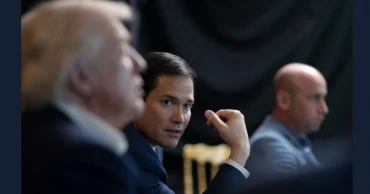
Secretary of State Marco Rubio is a football fan — he played in college, supports the Miami Dolphins, and his son is a running back for the University of Florida Gators. Now, he is quarterbacking President Donald Trump’s foreign policy team as it navigates particularly turbulent times, notably in Venezuela and elsewhere in Latin America, longtime core interests of the child of Cuban immigrants and former Florida senator.
As the Trump administration has alarmed much of the world with its stunning military operation that captured now-former Venezuelan President Nicolás Maduro and its threats to potentially annex Greenland by force, Rubio has emerged as a voice of relative calm.
In public comments and private briefings to lawmakers, he has toned down bombastic remarks from the president and other top officials even as he offers a full-throated defense of Trump’s more audacious plans. Still, he had a key role in one of the most assertive actions — Maduro's ouster — after long pursuing leadership changes in Venezuela and Cuba, countries close to him personally and politically.
“We always prefer to settle it in different ways,” Rubio said when asked by reporters this week about a military option in Greenland. “That included in Venezuela. We tried repeatedly to reach an outcome here that did not involve having to go in and grab an indicted drug trafficker.”
Senate Foreign Relations Committee Chairman James Risch, one of his closest friends in the Senate, said Rubio's influence prompted the administration to action.
“I think all of us have been feeling that we can do a lot better in Latin America than we’ve been doing,” Risch told The Associated Press. “This is not an excuse, but a fact, and that is, the squeaky wheel gets the grease.”
Rubio is called the ‘quarterback’ of Trump advisers
Aides to Rubio compare his dual roles as secretary of state and national security adviser to those of an empowered senior traffic cop, directing a small but influential field of Trump advisers, translating the president’s often broad and vague pronouncements into digestible, even if still controversial, nuggets that can be acted upon and explained.
One top aide, who spoke on condition of anonymity to offer a personal assessment of Rubio’s role, described him as the “quarterback" of teams, which for Venezuela includes Trump’s deputy chief of staff Stephen Miller, Defense Secretary Pete Hegseth, Energy Secretary Chris Wright and Vice President JD Vance. For fragile U.S.-led peace efforts in Gaza and Ukraine, that is Vance, special envoy Steve Witkoff and Trump’s son-in-law Jared Kushner.
White House press secretary Karoline Leavitt praised Rubio for advancing Trump’s foreign policy goals in his dual roles and added: “He is a team player and everyone loves working with him in the West Wing.”
People around him often remark that Rubio was made for this moment, which Risch said often prompts the secretary, also the interim leader of the National Archives and Records Administration, to joke that he is a really good archivist. Rubio himself jokingly dismissed “online rumors” that he might want to become head coach or general manager of the Dolphins, posting on social media on Thursday that his “focus must remain on global events and also the precious archives of the United States of America.”
Following the raid to extract Maduro from Caracas, Trump proclaimed that the U.S. would “run” Venezuela but offered no clarity on what that would actually mean, leaving many to wonder if the administration planned an Iraq or Afghanistan-type of occupation. Rubio stepped in to allay those concerns, saying the U.S. would not govern day-to-day but use its leverage through oil sanctions and the threat of potential additional military action to influence Venezuelan leaders.
He also sought to temper blustery rhetoric and the White House refusal to rule out a military operation to take over Greenland, saying Trump's plan is not to invade the island controlled by NATO ally Denmark but rather purchase it.
"That’s always been the president’s intent from the very beginning,” Rubio said Wednesday.
Rubio takes key role explaining actions to Congress
Likewise, it has been Rubio’s moment during closed-door briefings on Capitol Hill. While the Pentagon leadership has presented details about the raid, Rubio has fielded the questions and criticisms from lawmakers.
“There’s a reason the president relies on him for so many different things,” said Rep. Mario Diaz-Balart, a fellow Florida Republican who has known Rubio for years. “Rubio’s a person who just solves problems.”
Rubio publicly outlined the three phases of the administration’s plan this week — sell seized Venezuelan oil for revenue to rebuild the country, restore other aspects of civil society and transition to a new government. Delcy Rodríguez, Maduro's vice president, has taken over as interim president with America's blessing.
But Rubio’s strategy for the region is on the clock, and some in Congress aren’t satisfied. Lawmakers from both parties are demanding more details about the path ahead in Venezuela, and Democrats in particular want public oversight hearings and more robust debate.
“On the narrow question of Venezuela, Secretary Rubio knows better about what briefings and consultations and engagement with the senators needs to happen to get and sustain bipartisan support for military action, and I'm disappointed that that hasn’t happened,” said Sen. Chris Coons, D-Del., who worked with Rubio for years on the Senate Foreign Relations Committee.
For a politician who as a young senator was often seen as a man too much in a hurry, Rubio now has a short window to deliver.
“It’s not years, it’s months,” said Rep. Carlos Gimenez, another Florida Republican. “Six, nine months.”
Rubio's focus on Venezuela
In the early days of Trump’s second term, ousting Maduro was not a priority as the president and his national security team largely focused on Gaza, the Russia-Ukraine war, Iran’s nuclear program and other day-to-day crises, according to a person familiar with internal White House discussions who spoke on condition of anonymity to discuss private deliberations.
Rubio, the person observed, was a key player in helping Trump fashion his policy in all those matters but seemed to be “husbanding his political capital” for Venezuela.
While Rubio could be more dispassionate in internal debates about other foreign policy issues the Trump administration was dealing with, he was notably more rigid about Venezuela and underscored that he saw Maduro “as an offshoot of the Castro movement,” the person said.
As a senator, Rubio depicted Venezuela as a vestige of the communist ideology in the Western Hemisphere and pushed for Maduro's ouster, advocated for economic sanctions, and even argued for American military intervention when many dismissed those views.
“I think that U.S. armed forces should only be used in cases of national security threats,” he said in a 2018 interview with Univision. “I think there is a strong argument that can be made right now that Venezuela and Maduro’s regime have become a threat to the region and to the U.S.”
Impact of Rubio's family history
Rubio has often tied his attention on the region to his own family history. His Cuban-born parents arrived in South Florida in 1956, a few years before Fidel Castro’s 1959 communist revolution, and he spent much of his life in Miami, where many Cubans sought refuge after Castro’s rise to power.
Criticism of Castro and other leftist leaders in the region won him support from many in the Venezuelan diaspora who made Florida their home to escape crime, economic deprivation and unrest under Maduro and his predecessor, the late Hugo Chávez, who began his self-described socialist revolution in 1999.
After Trump defeated Rubio during the 2016 GOP primary, Rubio began to exert influence over U.S. policy toward Latin America as a shadow adviser. This rivalry-turned-partnership surprised many given that Rubio’s views initially appeared at odds with Trump’s “America First” approach and campaign promise for no more foreign wars.
But there appears to be little daylight now: Trump can be heard parroting the exact rhetoric Rubio used nearly a decade ago on Venezuela.
4 months ago
Australia’s PM announces a royal commission into antisemitism after Bondi mass shooting
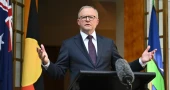
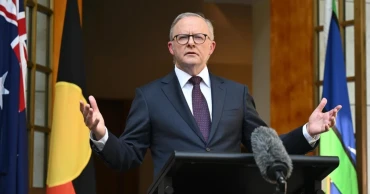
Australian Prime Minister Anthony Albanese on Thursday announced a national royal commission to investigate antisemitism, following a deadly mass shooting at a Jewish holiday gathering at Bondi Beach that killed 15 people.
Albanese said the inquiry will examine the scope and causes of antisemitism in Australia, as well as the circumstances surrounding the Dec. 14 attack during a Hanukkah celebration. The commission will also recommend measures to strengthen law enforcement responses, counter extremism and promote social cohesion.
Describing the Bondi shooting as an antisemitic terrorist attack inspired by the Islamic State group, Albanese said it was the deadliest such incident in Australia’s history. The surviving suspect, 24-year-old Naveed Akram, faces multiple charges including murder and terrorism, while his father was shot dead by police during the incident.
The royal commission, Australia’s most powerful form of inquiry, will be led by former High Court Justice Virginia Bell and has authority to compel testimony and documents. Its report is due by Dec. 14, marking one year since the attack.
The decision follows growing pressure from lawmakers, Jewish leaders and public figures to establish a nationwide inquiry. Albanese said earlier security and law enforcement reviews launched after the shooting will now form part of the commission, alongside planned tougher gun and hate-speech laws.
4 months ago
Trump backs bill proposing 500% tariff on India, other countries
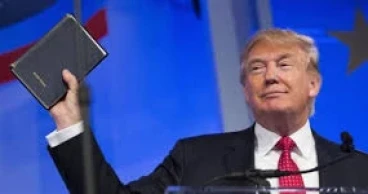
US President Donald Trump has approved a bipartisan Russia Sanctions Bill that could allow the United States to impose tariffs of at least 500 percent on countries such as India, China and Brazil for importing Russian oil.
Republican Senator Lindsey Graham, who drafted the bill along with Democratic Senator Richard Blumenthal, said the legislation is aimed at cutting off funding for Russia’s war in Ukraine.
“This bill will allow President Trump to punish those countries who buy cheap Russian oil fueling Putin's war machine,” Graham wrote on X, formerly Twitter.
He added, “This bill would give President Trump tremendous leverage against countries like China, India and Brazil to incentivise them to stop buying the cheap Russian oil that provides the financing for Putin's bloodbath against Ukraine. I look forward to a strong bipartisan vote, hopefully as early as next week.”
The proposed legislation, formally known as the Sanctioning of Russia Act 2025 (S. 1241), is intended to pressure Moscow into peace negotiations by severely damaging its economic lifelines.
Under the bill, the US president would be required to assess every 90 days whether Russia is refusing to negotiate a peace deal or has violated any agreement. If Russia is found to be non-compliant, mandatory sanctions would automatically come into effect.
The bill mandates tariffs of at least 500 percent on goods imported from any country that knowingly buys Russian oil, gas or uranium. This measure is aimed directly at major buyers such as China, India and Brazil.
Financial institutions and companies outside Russia that help facilitate Russia’s energy trade would face secondary sanctions.
The legislation would freeze the assets of Russian officials, including President Vladimir Putin, block Russian stocks from US exchanges and prohibit US investment in Russia’s energy sector.
The bill signals a possible shift toward tougher economic pressure on countries that continue to support Russia’s economy through energy purchases.
4 months ago
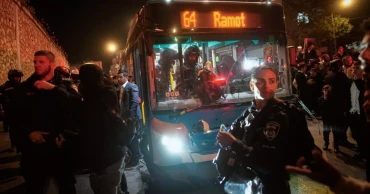
Netanyahu urges calm after teen killed in bus accident
Israeli Prime Minister Benjamin Netanyahu on Wednesday called for restraint following the death of an ultra-Orthodox teenage boy who was killed after being run over by a bus during a protest against plans to draft members of the community into the military.
In a statement, Netanyahu urged people to avoid further escalation, warning against additional tragedies, and said authorities would fully investigate the incident.
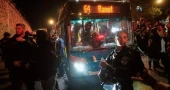
The fatal incident occurred Tuesday evening during a demonstration involving thousands of ultra-Orthodox protesters. The victim, identified by police as 14-year-old yeshiva student Yosef Eisenthal, was seen in video footage obtained by The Associated Press trapped beneath the bus as it continued moving several meters amid chaos and screams from the crowd.
Read More: Israel hits multiple targets in Lebanon ahead of key Hezbollah disarmament talks
Police detained and questioned the bus driver, who claimed he was assaulted by protesters before the vehicle struck the boy. Authorities said Wednesday that the driver’s detention has been extended until January 15, though no formal charges have yet been filed.
According to police, demonstrators had blocked the roadway and acted aggressively toward officers, throwing eggs and other objects during the protest.
The incident highlights rising tensions between Israeli authorities and the ultra-Orthodox, or Haredi, community as the government considers measures to end long-standing exemptions that allow them to avoid compulsory military service.
At Israel’s founding in 1948, draft exemptions were granted to a small number of elite ultra-Orthodox scholars. Over time, those exemptions expanded significantly due to pressure from influential religious political parties.
Read More: Iran executes man convicted of spying for Israel’s Mossad
Many secular Israelis support curtailing the exemptions, particularly those who have served repeated military tours during the ongoing conflict between Israel and Hamas in Gaza.
Efforts to draft ultra-Orthodox men have faced strong resistance from religious groups, who argue that military service threatens their religious way of life. Protests have at times turned violent, complicating the issue for Netanyahu, whose government depends on the backing of religious parties in parliament.
4 months ago
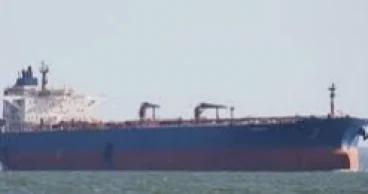
US moves to tighten grip on Venezuelan oil through tanker seizures and global sales
The administration of President Donald Trump on Wednesday moved to strengthen U.S. control over Venezuela’s oil sector by seizing additional sanctioned tankers and announcing plans to loosen certain sanctions so Washington can manage the sale of Venezuelan oil worldwide.
Following the removal of President Nicolás Maduro in a surprise overnight operation, the Trump administration said it intends to oversee all Venezuelan oil exports. While the U.S. continues to enforce its oil embargo, the Energy Department said that any oil entering or leaving Venezuela must pass through channels approved by the United States and aligned with its legal and national security priorities.
Such authority over the world’s largest proven crude reserves could give Washington significant leverage over global oil supplies and prices. The moves underscore the administration’s resolve to shape Venezuela’s future through control of its oil wealth, echoing Trump’s statement that the U.S. would effectively “run” the country.
Vice President JD Vance said the U.S. could pressure Venezuela by determining where and how its oil is sold. By controlling energy resources, he said, Washington can allow sales only when they serve American interests, applying strong pressure without military force.
Secretary of State Marco Rubio indicated that oil seized from sanctioned tankers in the Atlantic and Caribbean would be included in a new agreement announced Tuesday, under which Venezuela would supply up to 50 million barrels of oil to the United States. Rubio said Venezuela’s interim authorities recognize that cooperation with Washington is the only way to export oil and avoid economic collapse.
Additional tanker seizures
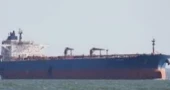
U.S. European Command reported that the tanker Bella 1 was seized in the North Atlantic for violating U.S. sanctions after attempting to evade enforcement efforts. Homeland Security Secretary Kristi Noem said U.S. forces also took control of the M Sophia in the Caribbean, noting that both vessels had recently docked in Venezuela or were headed there.
These ships join at least two others seized last month. The Bella 1 had abruptly changed course in December after an earlier tanker seizure, later renaming itself Marinera and reflagging to Russia. U.S. officials said the crew even painted a Russian flag on the ship’s hull.
Russia’s Foreign Ministry protested the seizure, saying Russian nationals were among the crew and demanding their rights be respected. A senior Russian lawmaker denounced the action as piracy. Meanwhile, the U.S. Justice Department said it is investigating crew members for failing to comply with Coast Guard orders and warned that similar enforcement actions may follow against other vessels.
The tanker had previously been sanctioned over allegations it smuggled oil for a company linked to Hezbollah.
Sanctions eased to allow oil sales
At the same time, the administration said it would selectively lift sanctions to permit Venezuelan oil shipments to global markets. Initial sales of 30 to 50 million barrels are expected to begin immediately and continue indefinitely. Proceeds will be held in U.S.-controlled bank accounts and distributed at the discretion of the U.S. government.
Venezuela’s state oil company PDVSA confirmed it is negotiating with Washington, describing the arrangement as a commercial transaction similar to existing deals with foreign firms. Acting President Delcy Rodríguez downplayed the development, calling it a normal step in Venezuela’s international economic relations.
The U.S. also plans to authorize imports of oilfield equipment and services to boost Venezuela’s production, currently about 1 million barrels per day, and has signaled possible investment in the country’s power grid to support economic recovery.
Shadow fleet concerns
U.S. officials said the seized ships were part of a “shadow fleet” used to smuggle oil for sanctioned countries such as Venezuela, Russia, and Iran. The U.K. military assisted in tracking the Marinera, with British officials describing it as part of a sanctions-evasion network fueling conflict and instability.
The M Sophia, which had stopped transmitting location data months earlier, was carrying an estimated 1.8 million barrels of crude worth about $108 million. Maritime analysts said at least 16 tankers departed Venezuela’s coast in recent days amid the unfolding U.S. operation.
4 months ago
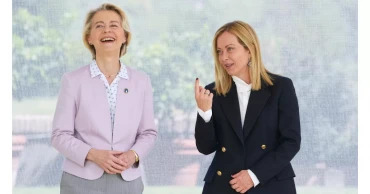
EU pushes ahead with South America free trade deal
The European Union is renewing internal negotiations over a free trade agreement with five South American nations neighboring Venezuela a week after the United States' audacious raid there to detain President Nicolás Maduro.
Ministers of Agriculture from across the 27 European Union nations met in Brussels on Wednesday in part to discuss protecting farmers while also reaping the economic and geopolitical benefits of a free trade deal with the Mercosur nations of Brazil, Argentina, Bolivia, Paraguay and Uruguay. The EU's trade negotiator Maroš Šefčovič said after the meeting that while the deal would increase EU agrifood exports by up to 50%.
“It’s a landmark one. This is the biggest free trade agreement we ever negotiated,” Šefčovič said. He said that EU trading partners “value the EU for particular one thing in this turbulent world, one thing above all, this is credibility. So therefore, we must, safeguard this priceless currency by remaining a trusted and reliable trading partner.”
He said that EU negotiations over Mercosur will continue on Friday amid speculation that a deal could be signed in Paraguay on Jan. 12.
Fierce opposition from France in December, fired up by enraged farmers, derailed the deal and forced European Commission President Ursula von der Leyen to scrap a trip to Brazil where top EU officials had hoped to sign the EU-Mercosur deal after 26 years of negotiations.
Italy is seen as the linchpin of the deal. If Italian Prime Minister Giorgia Meloni joins the deal's supporters led by Germany, then it will pass over the objections of France and Poland. She posted on X on Tuesday that she welcomed von der Leyen's proposal to fast-track funds to farmers but Meloni did not promise crucial backing to the deal.
The Mercosur trade deal covers a market of 780 million people and a quarter of the globe’s gross domestic product, and would progressively remove duties on almost all goods traded between the two blocs. Such a massive free trade deal would provide a stark counterpoint in South America of economic diplomacy compared to the Trump administration's incursion into Venezuela and threats across the region.
The EU is seeking to forge new trade ties amid commercial tensions with the U.S. and China, and the December delay of Mercosur was seen to diminish the EU’s negotiating credibility.
French President Emmanuel Macron led opposition to the deal, which he sees as fueling a surging far right that rallies support by criticizing the deal. His centrist government has demanded safeguards to monitor and stop large economic disruption in the EU, increased regulations in the Mercosur nations like pesticide restrictions, and more inspections of imports at EU ports.
French Agriculture Minister Annie Genevard reaffirmed Wednesday France’s opposition to the Mercosur deal, because she said it threatens sectors including beef, chicken, sugar, ethanol and honey.
“As long as the combat is not over, nothing is lost,” she told French news broadcaster France Info, referring to the ongoing negotiations over the deal.
If the EU Commission signs the deal on Jan. 12, it will be debated at the European Parliament, she said. “There’s no guarantee the deal will be approved by the European Parliament,” she said.
She also acknowledged Italy “will likely” approve the deal.
Supporters say the EU-Mercosur deal would offer a clear alternative to Beijing’s export controls and Washington’s tariff blitzkrieg, while detractors say it will undermine both environmental regulations and the EU’s iconic agricultural sector.
Šefčovič said recent negotiations within the EU over the deal had led to new safeguards like “semiautomatic triggering thresholds” that would snap into place if Mercosur imports are found to be deeply undercutting EU products.
The political tensions that have marked Mercosur in recent years — especially between Argentina’s far-right President Javier Milei and Brazil’s center-left Luiz Inácio Lula da Silva, the bloc’s two main partners — have not deterred South American leaders from pursuing an alliance with Europe that will benefit their agricultural sectors.
Venezuela was in Mercosur until 2016, when the trade bloc suspended its membership, a move criticized by Venezuela’s new prime minister Delcy Rodríguez, then the foreign minister.
4 months ago
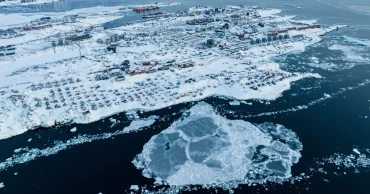
Trump’s Greenland threats pose new challenge to NATO
U.S. President Donald Trump's latest threats against Greenland pose a new and potentially unprecedented challenge to NATO, perhaps even an existential one, for an alliance focused on external threats that could now face an armed confrontation involving its most powerful member.
The White House says the administration is weighing “options” that could include military action to take control of the strategically located and mineral-rich island, which is a semi-autonomous region that is part of NATO ally Denmark.
Trump’s renewed interest in Greenland could put at risk the entire future of NATO, which was founded in 1949 to counter the threat to European security posed by the Soviet Union during the Cold War. The alliance is normally focused on threats such as those from Russia or international terror groups. It would not function without U.S. leadership and firepower.
NATO, the world’s biggest security organization, was built on a “Three Musketeers”-like vow that an attack on anyone in its ranks will be met with a response from all of them. That security guarantee, enshrined in Article 5 of its founding treaty, has kept Russia away from allied territory for decades.
But in an organization that operates on unanimity, Article 5 does not function if one member targets another.
Uneasy allies and neighbors Greece and Turkey have harassed each other’s military forces and disputed borders for decades. But past internal clashes have never posed the kind of threat to NATO unity that would arise from an American seizure of Greenland.
In a post on social media Wednesday, Trump said that “RUSSIA AND CHINA HAVE ZERO FEAR OF NATO WITHOUT THE UNITED STATES.” But he added: “We will always be there for NATO, even if they won’t be there for us.”
A White House warning
The White House took its threats toward Greenland to a new level Tuesday, issuing an official statement that insisted Greenland is “a national security priority” and refusing to rule out the use of military force.
“The president and his team are discussing a range of options to pursue this important foreign policy goal, and of course, utilizing the U.S. military is always an option at the commander in chief’s disposal,” it said.
Ian Lesser, distinguished fellow at the German Marshall Fund of the United States think tank and an expert on NATO, described the White House statement as “very striking.”
“It’s a low-probability, high-consequence event if it were to happen. But the odds have changed, and so it becomes more difficult to simply dismiss this as bluster from the White House,” he said.
The statement came after the leaders of Britain, France, Germany, Italy, Poland and Spain defended the sovereignty of Greenland, along with Denmark, whose right to the island was recognized by the U.S. government at the beginning of the 20th century.
“It is for Denmark and Greenland, and them only, to decide on matters concerning Denmark and Greenland,” the leaders said Tuesday in a joint statement. Canada, which sits off the western coast of an island that has been crucial to the defense of North America since World War II, expressed its support as well.
NATO itself remains reluctant to say anything that might annoy its leading member.
Danish Prime Minister Mette Frederiksen has warned that the U.S. threat must be taken seriously, particularly after Trump ordered the capture of Venezuelan leader Nicolás Maduro in a nighttime raid, and that any U.S. attempt to take control of the island could mean the end of NATO.
Asked whether Frederiksen was right when she said that an American attack on another NATO country means that "everything stops,” an official at the alliance said: “NATO does not speculate on hypotheticals.”
The official, who spoke on the condition of anonymity because NATO protocol forbids the use of their name, preferred to note Greenland’s strategic significance.
“The Arctic is an important region for our collective security, and NATO has a clear interest in preserving security, stability and cooperation in the high north,” the official said. “Together we make sure that the whole of the alliance is protected.”
Trump’s interest in Greenland also threatens to destabilize the alliance at the moment when the U.S.-led efforts to end the war in Ukraine enter a pivotal stage, distracting its members from their efforts to support Kyiv and provide it with security guarantees.
Maria Martisiute, a defense analyst at the European Policy Center think tank, warned that NATO’s credibility is on the line.
When a leading alliance member undermines another member, it hurts "NATO’s cohesion and credibility, and it serves only our adversaries such as Russia and China,” she said.
Tension comes after NATO leaders agreed to Trump's demands
Last summer, NATO leaders rallied behind Trump’s demand that they increase defense spending. Apart from Spain, they agreed to invest as much per capita as the United States does, within a decade.
Just before Christmas, NATO Secretary-General Mark Rutte hailed Trump as a savior.
“I believe fundamentally that thanks to Donald J. Trump, NATO is stronger than it ever was,” Rutte told BBC radio. “NATO has never been as strong as this moment since the fall of the Berlin Wall.”
Yet in a year-end address in Germany meant to rally to European citizens behind defense spending, Rutte warned that Russia might attack elsewhere in Europe within a few years should it win in Ukraine.
“Conflict is at our door,” the former Dutch prime minister said. “Russia has brought war back to Europe, and we must be prepared for the scale of war our grandparents or great-grandparents endured.”
Lesser said it's difficult to reconcile Trump's defense spending victory with his designs on Greenland.
“What good is it to have revived NATO capability if it’s no longer a functional political alliance” afterwards? he asked. If that breakdown occurs, “it's a gift to Moscow, and it’s a gift to Beijing.”
4 months ago
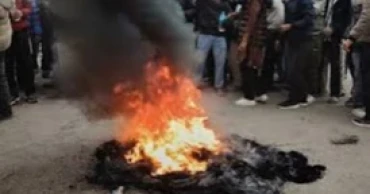
Curfew imposed in southern Nepal city after mosque vandalism sparks protests
Authorities have imposed a curfew in Birgunj, a major southern Nepalese border city, following protests between Hindu and Muslim groups after a mosque was vandalized over the weekend, officials said Tuesday.
The Parsa District Administration’s order bans all public gatherings and demonstrations, and requires residents to stay off the streets. The notice warned that security forces may use firearms against anyone violating the curfew.
Armed soldiers and police are patrolling the streets of Birgunj, about 130 kilometers (80 miles) south of the capital Kathmandu. The city serves as a key gateway for oil, goods, and other supplies imported from neighboring India into Nepal.
The unrest began on Sunday when Muslim groups protested the vandalism of a mosque in a nearby town. Later the same day, Hindu groups held a separate demonstration. Protests have continued since then.
Nepal’s Gen Z Protesters disillusioned with government they helped install
Officials said there have been no major clashes or serious injuries, though some minor scuffles with riot police have occurred.
Such conflicts between Hindus and Muslims are uncommon in Nepal, a predominantly Hindu country, where most of the Muslim population resides in southern border districts.
4 months ago
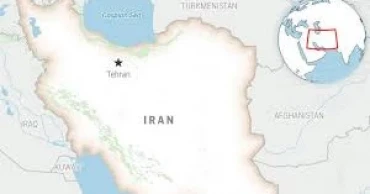
Iran executes man convicted of spying for Israel’s Mossad
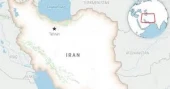
Iran has executed a man convicted of spying for Israel’s intelligence agency, Mossad, state media reported Wednesday.
The official IRNA news agency named the man as Ali Ardestani, stating that he passed sensitive information to Mossad officers in exchange for cryptocurrency payments. According to the report, Ardestani admitted to the charges and had sought a reward of one million dollars and a British visa. IRNA described him as a “special operative force of Israel” and claimed he provided Mossad agents with images and videos of “sensitive locations.”
The agency did not specify when or where Ardestani was detained. It said Israel had recruited him online, and that his case underwent both primary court and Supreme Court proceedings in Iran.
Human rights groups and Western governments have criticized Iran’s growing use of the death penalty, especially for political and espionage cases. Activists argue that many convictions rely on confessions obtained under duress, and that trials are often held behind closed doors without independent legal representation.
Iran, however, maintains that those executed are “agents of hostile intelligence services” involved in terrorist or sabotage activities. Iranian officials have accused Israel of carrying out a series of covert attacks inside Iran, including the assassination of nuclear scientists and cyberattacks on strategic facilities.
Since a June conflict that killed nearly 1,100 people in Iran, including senior military officials and nuclear scientists, Tehran has executed 12 people for espionage. In retaliation, Iranian missile strikes killed 28 people in Israel.
The exchange has heightened tensions and left both countries on high alert, further escalating regional instability.
4 months ago
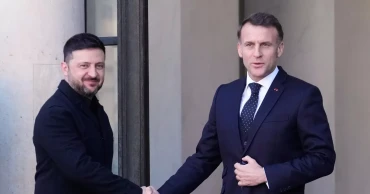
Ukraine allies meet in Paris to discuss post-war security
Leaders of Ukraine’s allies met Tuesday in Paris for talks aimed at shaping the country’s security after any potential peace deal with Russia, amid shifting U.S. priorities and renewed tensions over Greenland.
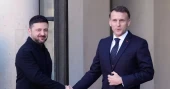
French President Emmanuel Macron said the meeting of 35 officials, including 27 heads of state, would result in “concrete commitments” to protect Ukraine and ensure a lasting peace. Ukrainian President Volodymyr Zelenskyy held preparatory talks with Macron, while French, British, and Ukrainian military chiefs, joined by NATO’s top commander, discussed security guarantees and multinational force deployment.
The summit comes as Washington’s focus has turned to Venezuela and Trump’s calls to take control of Greenland have drawn European pushback. Despite these distractions, participants aim to agree on monitoring a ceasefire, supporting Ukraine’s armed forces, and long-term defense cooperation. Zelenskyy stressed the importance of European deployments, including Britain and France, while noting many countries must secure parliamentary approval.
4 months ago