Others
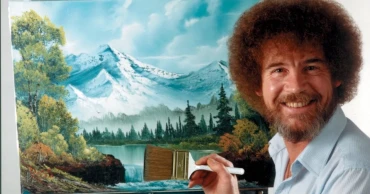
Bob Ross paintings fetch over $600,000 at auction to support public TV stations
Three paintings by beloved public television icon Bob Ross sold for more than $600,000 at auction on Tuesday, with proceeds going to help U.S. public TV stations struggling from federal funding cuts.
The first sale in a planned series of auctions, held at Bonhams in Los Angeles, featured 30 Ross paintings. The highlight was “Winter’s Peace” — a serene snow landscape painted during a 1993 episode of “The Joy of Painting” — which fetched $318,000 from a phone bidder.
“For a good cause — and you get the painting,” auctioneer Aaron Bastian said during the sale, pausing to echo Ross’s signature optimism: “Bob would remind you that this is your world, and you can do anything you want.”
Two other works painted during the same year — “Home in the Valley” and “Cliffside” — sold for $229,100 and $114,800 respectively. The prices, which include the buyer’s premium, far exceeded pre-auction estimates that had capped around $50,000 per piece.
Three more Ross paintings will be auctioned in Marlborough, Massachusetts, on January 27, followed by additional sales in New York and London. All proceeds will support public TV stations that air programming from American Public Television, including “America’s Test Kitchen,” “Julia Child’s French Chef Classics,” and “This Old House.”
Joan Kowalski, president of Bob Ross Inc., said the initiative will especially aid smaller and rural PBS affiliates hit hardest by recent federal cuts. “These stations have been the gateway for generations of viewers to discover not just Bob’s gentle teaching, but the transformative power of the arts,” she said.
Rare video captures sucker fish “surfing” whales in the ocean’s wildest ride
Congress recently eliminated $1.1 billion in public broadcasting funds, as proposed by the Trump administration, affecting around 330 PBS and 246 NPR stations nationwide.
Ross, who died in 1995 at age 52 after an 11-year run with “The Joy of Painting,” became a cultural phenomenon for his calm voice, signature hairstyle, and philosophy that there are “no mistakes, only happy accidents.” His popularity soared again during the COVID-19 lockdowns as new audiences rediscovered his soothing art tutorials online.
Source: AP
6 months ago
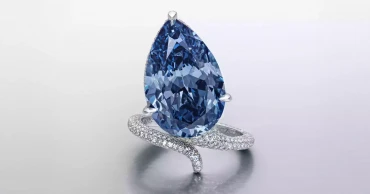
‘Mellon Blue’ diamond sells for $26.6 million at Swiss auction
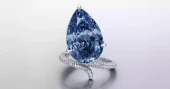
A rare blue diamond weighing nearly 10 carats has been sold for 20.5 million Swiss francs ($26.6 million) at a Christie’s auction in Geneva.
The 9.51-carat gem, known as the “Mellon Blue”, was named after late American arts patron Rachel “Bunny” Mellon. The diamond had been expected to fetch between $20 million and $30 million, and its final sale price — including buyer’s premium and fees — came within that range.
Christie’s said the stone was part of Mellon’s private collection for decades and had previously been sold in 2014 for $32.6 million, one of the highest prices ever paid for a colored diamond at auction.
Max Fawcett, Christie’s global head of jewelry, described the Mellon Blue as “the gem of gems,” praising its Fancy Vivid Blue color grade and Internally Flawless quality certified by the Gemological Institute of America.
The auction marks the first of two major jewelry sales in Geneva this week. On Wednesday, rival house Sotheby’s will auction the “Glowing Rose” pink diamond, expected to attract bids of around $20 million.
6 months ago

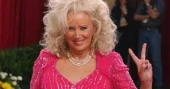
Oscar-nominated actor Sally Kirkland dies at 84
Sally Kirkland, the veteran American actor and model best known for her Oscar-nominated performance in the 1987 film Anna and roles alongside Paul Newman and Robert Redford in The Sting, has died at the age of 84.
Her representative, Michael Greene, confirmed that Kirkland passed away Tuesday morning at a hospice in Palm Springs, California.
Earlier this year, friends launched a GoFundMe campaign to support her medical expenses after she suffered multiple fractures — including four neck bones, her right wrist, and left hip — and later developed infections requiring hospital care and rehabilitation.
Kirkland’s career spanned more than six decades across stage, film, and television. Her film credits include The Way We Were with Barbra Streisand, Revenge with Kevin Costner, EDtv directed by Ron Howard, Oliver Stone’s JFK, Bruce Almighty with Jim Carrey, and The Haunted, a 1991 television movie. She also had a cameo in Mel Brooks’ Blazing Saddles.
Her defining role came in Anna, where she portrayed a fading Czech actress rebuilding her life in the United States. The performance won her a Golden Globe and earned her an Academy Award nomination alongside Cher, Glenn Close, Holly Hunter, and Meryl Streep.
Born in New York City, Kirkland was the daughter of a Vogue and Life magazine fashion editor. She began modeling at age five before training in acting under Philip Burton and Lee Strasberg. She also appeared in several Shakespeare productions and Andy Warhol’s 13 Most Beautiful Women in 1964.
Beyond acting, Kirkland was deeply involved in humanitarian work, volunteering for AIDS, cancer, and heart disease patients, feeding the homeless through the Red Cross, and advocating for young prisoners.
Source: AP
6 months ago

From Bollywood flair to bodega colors, Mamdani’s campaign redefined NY’s political design
When Zohran Mamdani launched his groundbreaking bid for New York City mayor, his campaign visuals — bright blue signs with bold orange lettering — quickly became one of the race’s most talked-about features.
From Queens to the Bronx, the “Zohran for New York City” signs stood out from traditional red, white, and blue campaign designs. While many saw the color scheme as a nod to Bollywood posters and Mamdani’s Indian roots, designer Aneesh Bhoopathy said the inspiration came from something much closer to home — the colorful visual language of New York’s bodegas, yellow cabs, and hot dog stands.
“The design was meant to feel like New York itself — energetic, diverse, and alive,” said Bhoopathy, a Philadelphia-based designer who had previously worked with Mamdani and the Queens chapter of the Democratic Socialists of America.
A bold, nostalgic look that resonated
The campaign’s bold colors and vintage font — echoing hand-painted signs and comic book covers — offered a striking contrast to more conventional political branding. The look even influenced Mamdani’s main rival, former New York Governor Andrew Cuomo, who later switched to a blue-and-orange color palette featuring the Statue of Liberty’s crown — also the colors of the Knicks and Mets — after losing the Democratic primary to Mamdani.
Mamdani, soon to become New York’s first Muslim and South Asian mayor, is the son of Columbia University scholar Mahmood Mamdani and filmmaker Mira Nair, best known for Monsoon Wedding.
Design experts said the campaign’s aesthetic did more than just look good — it told a story about the city itself. “It reflects the working-class fabric of New York — the bodegas, taxi cabs, and halal carts that sustain it,” said David Schwittek, a digital media professor at Lehman College.
Gavan Fitzsimons, a marketing professor at Duke University, said the retro tone likely evoked nostalgia among voters: “It felt like a throwback to a time when politics seemed less divisive and more hopeful.”
Some US states introduce gun safety lessons for schoolchildren
A new visual language for progressive politics
Analysts also drew parallels to Rep. Alexandria Ocasio-Cortez’s 2018 campaign, which used bright colors and upward-slanting lettering inspired by labor movement posters and Mexican Lucha libre flyers. Richard Flanagan, a political science professor at the College of Staten Island, said both campaigns used design to connect heritage, community, and movement politics.
While experts say it’s too early to tell whether Mamdani’s visuals will reshape campaign aesthetics nationally, his team’s work has already sparked copycat designs and viral fan-made merchandise — including the “Hot Girls for Zohran” line worn by model Emily Ratajkowski.
“The playfulness of his branding made people want to be part of it,” said NYU marketing professor Court Stroud. “It turned campaign design into a shared identity.”
Design with meaning
Media scholar Lisa Burns of Quinnipiac University noted that most candidates still rely on the “safe” red, white, and blue palette — but Mamdani’s success may inspire more risk-taking.
“In a sea of sanitized political messaging, Mamdani’s visuals stand out because they mean something,” said Schwittek. “They reflect who he is and where he comes from.”
Designer Bhoopathy agreed, saying the campaign’s energy matched the candidate’s own
Source: AP
6 months ago

Rare video captures sucker fish “surfing” whales in the ocean’s wildest ride
Traveling across the ocean doesn’t get much smoother — or more stylish — than catching a ride on a whale, at least if you’re a remora.
Marine researchers studying humpback whales off Australia have filmed remarkable footage of these so-called sucker fish clinging to their massive hosts, peeling away just before the whales breach, and then expertly reattaching as the animals crash back into the sea. The precision is astonishing — like synchronized swimmers or Olympic gymnasts sticking a landing.
Remoras, or Remora australis, spend nearly their entire lives attached to whales or other large sea creatures. Using a suction-like disc on their heads, they create a vacuum seal that allows them to hang on tightly while feeding on scraps of skin and parasites — a convenient arrangement for both species.
Whale Cameras Reveal Ocean Hitchhikers
The extraordinary scenes were recorded unintentionally by Olaf Meynecke, a marine scientist from Griffith University’s Whales and Climate Research Program. Meynecke had attached suction-cup cameras to humpbacks during their annual migration from Antarctica to Australia’s Queensland coast.
Instead of just whale behavior, his footage showed entire schools of remoras — sometimes 50 or more — jockeying for position on the same patch of skin where the cameras were mounted.
“Whenever the whales breached or made sudden moves, the sucker fish reacted almost instantly,” Meynecke said. “They seemed to know exactly when to let go before the whale hit the surface, and then reattached within seconds once it was back underwater.”
A Sticky but Strained Relationship
While remoras are harmless and even help whales by eating parasites, Meynecke believes some whales find their clingy companions irritating.
“In some cases, we saw whales with lots of remoras repeatedly breaching, even when no other whales were nearby,” he said. “It looked like they were trying to shake them off — almost checking afterward to see if they had fewer attached.”
The Mystery of the Journey
Each year, about 40,000 humpbacks travel along Australia’s so-called “humpback highway,” migrating between Antarctica and Queensland — a round trip of roughly 10,000 kilometers (6,000 miles). But how long their remora passengers stay aboard remains unclear.
“I suspect most remoras detach at some point in temperate waters,” Meynecke said. “But where do they go after that? Do they find other hosts until the whales return?”
When separated from whales, remoras often latch onto other large sea animals — such as manta rays, dolphins, or even scuba divers — much to the divers’ frustration.
“They’re not easy to shake off,” Meynecke joked.
6 months ago

Phuket emerges as a tropical investment hotspot for UK buyers
Thailand, famously known as the “Land of Smiles,” continues to captivate visitors with its scenic beauty, warm hospitality, and rich cultural traditions — complemented by some of the world’s most celebrated cuisine.
The island province of Phuket, one of Thailand’s most sought-after destinations, is now drawing record numbers of tourists as the high season begins this month. According to Banyan Group Residences, a leading luxury property developer, the tropical island has also become a prime choice for Britons seeking a second home or planning to relocate abroad.
Offering an attractive mix of affordability, natural beauty, and modern amenities, Phuket’s cost of living is 50–70% lower than in major UK cities, while private healthcare costs up to 80% less. The island also boasts international hospitals and British-curriculum schools, making it ideal for retirees, families, and digital nomads.
With its year-round sunshine and warm sea temperatures, Phuket provides a sunny alternative to the UK’s cold winters. Its strong expat community, convenient travel links, and relaxed visa policies add to its appeal. In 2024 alone, around 250,000 British travellers visited the island, many exploring long-term property opportunities.
Real estate opportunities
Phuket’s real estate market offers a wide range of options — from beachfront villas to modern condos. The Laguna Phuket development, a 1,000-acre resort by Banyan Group, includes seven hotels, an 18-hole golf course, restaurants, spas, and the country’s largest beach club, RAVA. Over 5,000 luxury homes are already part of the project, with more underway, such as the sustainable Laguna Lakelands and the high-end Banyan Tree Beach Residences.
Underwater sculpture park turns art into coral reef off Miami Beach
Compared to the UK, Phuket’s property market offers strong value — a £750,000 investment can buy a 213 sq m luxury home on the island, versus only 33 sq m in London. Foreign investors make up over 60% of condo buyers, with British nationals among the top ten. Property values typically rise 5–10% annually, ensuring solid long-term returns.
Banyan Group: redefining luxury living
The Banyan Group, known globally for its Banyan Tree Hotels & Resorts, ranks as Asia’s leading and the world’s fifth-largest developer of branded residences. Homeowners benefit from flexible ownership models, rental management by Banyan’s five-star hospitality team, and extensive after-sales services — including 24/7 concierge and property management.
With its seamless buying process and resort-style amenities, Banyan Group makes owning a home in Phuket a gateway to sunshine living — where every day feels like a holiday.
Source: AP
6 months ago

Underwater sculpture park turns art into coral reef off Miami Beach
South Florida is welcoming a new fleet of cars — but these won’t clog traffic or add to commutes. They’re made of marine-grade concrete and rest beneath the ocean surface off South Beach.
In late October, crews submerged 22 life-sized car sculptures several hundred feet off the Miami coastline as part of “Concrete Coral,” a project by the nonprofit REEFLINE to create an underwater sculpture park that doubles as a human-made coral reef.
Funded in part by a $5 million Miami Beach city bond, the installation will soon be seeded with 2,200 native corals grown in a local lab. REEFLINE aims to raise $40 million to expand the project into an 11-phase underwater art corridor stretching along the city’s seven-mile (11-kilometer) shoreline.
“I think we are making history here,” said REEFLINE founder Ximena Caminos. “It’s a one-of-a-kind, pioneering reef that brings science and art together.”
Designed by artist Leandro Erlich, the submerged cars will soon become home to thriving coral and marine life, said Colin Foord, who heads REEFLINE’s coral lab. “Nature’s going to take back over, and we’re helping by growing the soft corals,” he said.
Future phases will include “Heart of Okeanos,” a massive sculpture modeled after a blue whale’s heart by Petroc Sesti, and “The Miami Reef Star,” a large star-shaped installation by artists Carlos Betancourt and Alberto Latorre.
Miami Beach Mayor Steven Meiner said the project will also boost local jobs and eco-tourism through snorkeling, diving, and paddleboarding tours. “Miami Beach is a global model,” Meiner said. “We’re setting the blueprint for other cities to follow.”
City strolls can be as beneficial as nature walks, say researchers
REEFLINE also offers hands-on education programs, inviting volunteers to plant corals alongside scientists and take part in monthly conservation activities through a floating marine learning center.
Caminos said while the project cannot solve major environmental challenges like climate change or sea level rise, it can inspire awareness and collaboration. “We can show how creatively and collaboratively we can tackle man-made problems with man-made solutions,” she said.
Source: AP
7 months ago

Andrew’s royal downfall deepens latest crisis for Britain’s monarchy
Britain’s monarchy, long shaped by its sensitivity to public opinion, is once again facing turbulence following the downfall of Prince Andrew Mountbatten-Windsor.
King Charles III on Thursday stripped his younger brother of both his princely title and his official residence, marking the monarch’s strongest effort yet to distance the royal family from Andrew’s links to the late convicted sex offender Jeffrey Epstein.
The move follows years of damaging scandals involving Andrew and reflects Charles’ attempt to protect the institution from further controversy. Epstein, who died by suicide in 2019 while awaiting trial on sex trafficking charges, had been convicted more than a decade earlier.
The British monarchy — officially known as the House of Windsor — has survived multiple crises over the past century that have tested its endurance and public legitimacy.
Wartime backlashAccording to George Gross, a royal historian at King’s College London, the last comparable precedent to Andrew’s removal dates back to World War I. The 1917 Titles Deprivation Act allowed Britain to revoke titles from royals who had sided with Germany.
The royal family’s German roots ran deep through Queen Victoria’s marriage to Prince Albert of Saxe-Coburg and Gotha. When war broke out in 1914, members of the extended royal family found themselves on opposite sides.
In 1917, King George V renamed his lineage the House of Windsor and removed titles from nobles deemed enemies of Britain, including Prince Ernest Augustus, Duke of Cumberland and Teviotdale. According to the House of Commons Library, it remains the only instance of such a measure in modern history.
The abdication crisisA similar constitutional shock came in 1936 when King Edward VIII gave up the throne to marry American divorcee Wallis Simpson. At the time, the Church of England barred remarriage after divorce, making the union politically and religiously untenable.
Edward abdicated that December, saying in a radio address he could not continue “without the help and support of the woman I love.” His decision forced a redefinition of royal duty and ushered in a new era of service and restraint under his brother, King George VI — later inherited by Queen Elizabeth II and now King Charles III.
Edward and Wallis, later titled the Duke and Duchess of Windsor, spent most of their lives abroad amid suspicion of Nazi sympathies.
King Charles III strips Prince Andrew of titles to safeguard the monarchy
Diana’s deathThe 1997 death of Princess Diana, Charles’ ex-wife, became another defining moment. Her fatal car crash in Paris at age 36 stunned the world and exposed a rift between public mourning and the royal family’s private silence.
As crowds gathered and tributes filled the palace gates, the queen remained at Balmoral with her family. Under mounting public pressure and guidance from then-Prime Minister Tony Blair, she delivered a televised address praising Diana and acknowledging the nation’s grief, calling her “an exceptional and gifted human being.”
Harry’s riftMore recently, Prince Harry’s decision to step back from royal duties with his wife Meghan in 2020 — and their subsequent criticism of the institution in interviews, documentaries, and his memoir Spare — intensified scrutiny of the family.
Harry’s lawsuits against British tabloids and his failed attempt to regain police protection further strained relations with the palace. A brief meeting between Harry and his father in September marked their first in more than a year, though it lasted less than an hour.
A monarchy under strainAmid these ongoing tensions, Andrew’s exile represents the latest test of a centuries-old institution constantly balancing tradition and accountability.
As King Charles seeks to protect the monarchy’s reputation, the challenges — from historical scandals to modern controversies — continue to shape how Britons view their royal family.
Source: AP
7 months ago

Solid gold toilet set for auction with $10 million starting price
Sotheby’s has announced the auction of a solid gold toilet, described as the world’s most valuable lavatory. The piece, titled “America”, was created by Italian artist Maurizio Cattelan and is both a fully functional toilet and a sculpture.
The auction, scheduled for November 18 in New York, will start at roughly $10 million, reflecting the value of the 101.2 kilograms (223 pounds) of gold used to make it. Sotheby’s calls the work an “incisive commentary on the collision of artistic production and commodity value.”
Cattelan, known for provocative works like the duct-taped banana “Comedian” and the kneeling Hitler sculpture “Him”, said “America” satirizes extreme wealth. The artist noted, “Whatever you eat, a $200 lunch or a $2 hot dog, the results are the same, toilet-wise.”
Doctors prescribe time outdoors to boost mental and physical health
Two versions of the toilet were made in 2016. The one being auctioned has been privately owned since 2017. Its counterpart was displayed at the Guggenheim Museum, where visitors could book a three-minute session to use it. That version was also shown at England’s Blenheim Palace in 2019 but was stolen shortly after.
The toilet will be on display at Sotheby’s New York headquarters from Nov. 8. Visitors can view it up close, but it will not be functional this time.
Source: AP
7 months ago

Climate anxiety drives young Americans to reconsider having children
For 27-year-old Amanda Porretto, starting a family is far from certain. As the average age of first-time mothers in the U.S., she feels social pressure from her family — especially her father, who wants grandchildren — but she’s unsure about bringing a child into a world threatened by climate change.
“Some people think it's bad not to have a child,” said Porretto, who works in advertising. “I just don’t think I need to bring more people into a world where there’s already so much to fix.”
An increasing number of young Americans share Porretto’s hesitation. Studies show that concerns about global warming and its future effects — from extreme weather to resource scarcity — are influencing decisions about parenthood.
A 2024 Lancet study found that most people aged 16 to 25 were “very” or “extremely” worried about climate change, and more than half said it made them hesitant to have children. A Pew Research Center report from last year found that adults under 50 without children were four times more likely than older adults to cite climate change as a reason for delaying or avoiding parenthood. Another study in the Proceedings of the National Academy of Sciences this year found over half of respondents said climate concerns made them question having kids.
Climate impact of having childrenThe link between parenthood and climate change extends beyond fears for children’s safety to concerns about their carbon footprint.
“Having a child is by far, by orders of magnitude, the most carbon-intensive decision a person can make,” said Nandita Bajaj, executive director of Population Balance, a nonprofit focused on human environmental impact.
Johns Hopkins bioethics professor Travis Rieder calls this effect a “carbon legacy.”“You’re not just engaging in carbon-expensive activities like buying a bigger house or car,” he said. “You’re also creating someone who will have their own carbon footprint — and possibly more children — for generations.”
Quantifying a child’s environmental impact is complex, he noted, as it depends on factors like lifestyle and wealth. For instance, data from the Emissions Database for Global Atmospheric Research show that, per capita, the average American emits over 12 times more carbon than the average person in Ghana.
Global warming reshapes extreme rainfall, snowfall across Northern Hemisphere: Study
Why it’s a difficult conversationDespite its large impact, procreation is rarely discussed as a climate issue. Experts say this is because pregnancy is typically seen as a time for celebration, not criticism, and because such discussions often evoke controversial debates about overpopulation from the 1970s that were tied to racism and eugenics.
Climate factors into personal decisionsFor some, like 43-year-old writer Ash Sanders, climate change was central to her decision not to have children — though life took a different turn. When she unexpectedly became pregnant, she felt pressured by her Mormon upbringing and her partner to keep the baby. She later chose an open adoption.
“I feel guilt for bringing her into the world,” Sanders said. “She’s happy and amazing, but I still feel guilt all the time.”
Juan Jaramillo, a marine biologist, said environmental concerns influenced his decision as a teenager in the 1970s to never have children. “Pollution and other issues were already serious back then,” he said. “It just didn’t make sense to me.”
For Rieder, who has studied the ethics of reproduction and climate, the issue was deeply personal. “Having children is meaningful and important — but also carbon expensive,” he said. “The question is how to balance those two truths.”
For him, that balance meant having one child.
Source: AP
7 months ago