Others

Losing a family pet helps children learn about grief, say psychologists
Losing a beloved pet is often the first time a child experiences death — an event that can profoundly shape how they understand loss and cope with grief later in life, experts say.
According to psychologists and pet bereavement specialists, parents and guardians play a vital role in helping children accept the painful permanence of death and guiding them through a healthy grieving process.
“People are often uncomfortable talking about death and grief, but it’s the one certainty in life,” said Deirdra Flavin, CEO of the National Alliance for Children’s Grief. “We need to be open to those conversations.”
Children process loss differently
A child’s age and personal experiences greatly influence how they perceive death. While some may express sadness or anger openly, others may struggle to process their emotions. Psychologists note that younger children, who think more literally, often find it difficult to grasp the finality of death, while older children may need more emotional support.
“Even children as young as four might know about death through stories but not understand it’s forever,” said Colleen Rolland, president of the Association for Pet Loss and Bereavement.
Parents like Elizabeth Perez, who lost the family dog in a road accident, say each child reacts differently. “Everybody was feeling it differently and at different times. We didn’t feel prepared,” Perez said, describing how one of her daughters suffered nightmares for months after witnessing the accident.
Be honest and avoid euphemisms
Experts emphasize using clear, age-appropriate language instead of euphemisms like “went to sleep” or “got lost,” which can cause confusion or fear.
“That kind of language can alarm children,” said Flavin. “If you tell them the pet ‘went to sleep,’ they might fear going to bed themselves.”
When Leah Motz’s two-year-old daughter asked about their elderly dog’s death, Motz explained simply that “his body was broken and couldn’t fix itself” and that they were “helping him die.”
Acknowledge emotions and provide support
Psychologists stress that pet loss is a real and valid form of grief, often underestimated by adults. “Children’s grief tends to be trivialized,” Rolland said.
Behavioral changes such as tantrums, sadness, withdrawal, or loss of interest in usual activities are normal responses, said clinical psychologist Raquel Halfond. However, if those emotions persist and interfere with daily life, parents may need professional support for their child.
Grieving together helps healing
Children often model how adults respond to grief. Experts encourage parents not to hide their emotions, as showing sadness teaches empathy and emotional openness.
“It’s okay for children to see you feeling sad,” said Halfond. “If they don’t, it can be confusing.”
Parent Meaghan Marr, who lost two dogs while her children were young, said the experience helped her kids understand that sadness is a natural part of love and loss. “It hurt to lose them, but they made our lives so much better while they were here,” she said.
Finding closure through remembrance
Experts suggest helping children heal by creating rituals or memories — such as holding a small funeral, drawing pictures, donating to animal shelters, or recalling happy moments.
These gestures, psychologists say, help children find meaning in their loss while keeping their pets’ memories alive — a gentle introduction to the universal reality of grief and healing.
Source: AP
7 months ago

Losing a family pet helps children learn about death and grief, say experts
The death of a family pet is often a child’s first encounter with loss — a painful but valuable opportunity for parents to teach about death and healthy grieving, according to psychologists and grief counselors.
Experts say the way caregivers handle such loss can shape how children understand and cope with grief later in life. “People are so adverse to talking about death, but it’s something we all face,” said Deirdra Flavin, CEO of the National Alliance for Children’s Grief.
Children process loss differently depending on their age and personality. Some experience deep sadness or fear, while others may struggle to express emotions. Using clear and honest language — avoiding euphemisms like “went to sleep” — helps prevent confusion, especially among younger kids.
Blazy's chanel debut brings Showmanship back under a sky of planets
Counselors emphasize that it’s normal for children to feel intense emotions and that adults should acknowledge their own grief openly. “It’s OK for kids to see parents feeling sad,” said psychologist Raquel Halfond. “It helps them understand those feelings are natural.”
Experts recommend creating closure through small rituals, such as holding a pet funeral, drawing pictures, or remembering happy moments. These acts help children accept the finality of death and find comfort in lasting memories.
Source: AP
7 months ago

Israel marks two years since October 7 attack amid ongoing war
As Israel commemorates the second anniversary of the October 7 Hamas attacks, the country remains deeply divided, with the war in Gaza still raging and dozens of hostages still held captive.
The central memorial event, set for Tuesday, is being led not by the government, but by grieving families—highlighting widespread public frustration with Prime Minister Benjamin Netanyahu’s leadership, particularly his inability to secure a ceasefire that could bring home the remaining captives.
Ongoing Conflict in Gaza
In Gaza, Israel’s ongoing military campaign has resulted in widespread devastation. Entire neighborhoods have been destroyed, and tens of thousands of people killed. As Israeli forces launch a renewed push into Gaza City, many civilians are once again trying to flee south—though many lack the means or safe routes to escape.
The Attack That Changed Everything
On October 7, 2023, Hamas-led militants launched a surprise assault on southern Israel, overwhelming military outposts, attacking civilian communities, and targeting an outdoor music festival. The attackers killed approximately 1,200 people, mostly civilians, including women, children, and the elderly.
They also kidnapped 251 people. While most have since been released through ceasefires and negotiations, 48 remain in Gaza. Israel believes around 20 of them are still alive. Hamas has demanded a permanent ceasefire and Israeli withdrawal in exchange for their release. Netanyahu has rejected this, vowing to continue the war until all hostages are returned and Hamas is dismantled.
A Regional Conflict Expands
The attack triggered wider regional tensions, with Israel clashing with Iran-backed groups such as Hezbollah in Lebanon. A 12-day war in June saw the U.S. and Israel jointly target Iranian military and nuclear infrastructure. In the months since, Israel has reportedly eliminated several top militants, Iranian generals, and nuclear scientists, while also gaining control of much of Gaza and parts of Lebanon and Syria.
Still, Netanyahu’s failure to secure the hostages' return has led to mass weekly protests and left Israel more internationally isolated than it has been in decades.
Remembering the Nova Festival Massacre
One of the deadliest sites of the October 7 attacks was the Nova music festival near Reim, where nearly 400 people were killed and dozens abducted. The area has since become a national symbol of grief, with memorials and photos of the victims displayed on Israeli flags. Families plan to build a sukkah—a traditional structure for the Jewish holiday of Sukkot—on the site to honor the anniversary.
Due to the holiday, no official memorial will take place at the Nova site. Instead, the main ceremony will be held in Tel Aviv, featuring speeches and musical performances. It is being organized by Yonatan Shamriz, whose brother Alon was mistakenly killed by Israeli forces after escaping captivity earlier in the war.
Peace Talks and International Pressure
As the war drags on, indirect negotiations between Israel and Hamas resumed Monday in Egypt’s Sharm el-Sheikh, focusing on a U.S.-backed peace proposal introduced by President Donald Trump. Talks were expected to continue Tuesday.
According to Gaza’s Health Ministry, more than 67,000 Palestinians have been killed since the war began. The ministry, which is part of the Hamas-run government, does not separate civilian and combatant deaths, but says women and children account for roughly half the fatalities. Independent organizations generally consider its figures credible.
Israel’s offensive has forced about 90% of Gaza’s population—roughly 2 million people—to flee their homes, many multiple times. Severe restrictions on aid have caused widespread hunger, with experts warning that famine conditions now exist in parts of Gaza, including Gaza City.
International human rights groups and legal experts have accused Israel of committing genocide, and the International Criminal Court (ICC) is pursuing arrest warrants for Netanyahu and his former defense minister, citing the use of starvation as a weapon of war.
Israel strongly denies the accusations, insisting its military operations are lawful acts of self-defense. It says it takes significant steps to avoid civilian casualties and blames Hamas for embedding its fighters and weapons in civilian areas.
The Broader Impact
Hamas has framed the October 7 assault as retaliation for decades of Israeli occupation, settlement expansion, and military control of Palestinian territories. But the attack and its aftermath have led to massive suffering in Gaza, pushing the hope of an independent Palestinian state further out of reach.
7 months ago
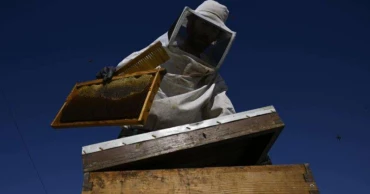
From rooftops to honey jars, Athens embraces urban beekeeping
From rooftops overlooking the Parthenon to neighborhood balconies, urban beekeeping is buzzing in Athens as residents tend hives to support local ecosystems and produce distinctive city-flavored honey.
Nikos Chatzilias, 37, has become a professional beekeeper after taking classes in 2020, driven by a desire for high-quality honey. This summer, he managed 30 hives across seven rooftops, with roughly 1.2 million bees producing 500 kilograms of honey, each batch named for its neighborhood. The taste varies depending on local flora, from eucalyptus and acacia to bitter orange and pine.
Chatzilias said the practice brings joy and reconnects people with nature. “Even with a chaotic urban environment, nature — or whatever remains of it in the city — still responds and can give life,” he said.
Foraging revival: Wild food enthusiasts rediscover nature
University graduate Aggelina Chatzistavrou, a new recruit, said rooftop hives could positively impact the environment. Yet challenges remain, including neighbors’ fears of stings and allergies, and the logistical difficulty of moving hives seasonally.
Urban beekeeping in Athens continues a decades-old tradition but now emphasizes environmental awareness, reflecting a growing societal interest in sustainability and local food production.
Source: AP
8 months ago

Fitness influencer shares 10 habits behind 38kg weight loss
Sustainable weight loss does not come from quick fixes or short-term diets, but from consistent lifestyle changes — a lesson fitness influencer Christina Lewis has embodied through her three-and-a-half-year journey to shed 38 kilograms.
Christina, who recently shared her story on Instagram to inspire others ahead of 2026, emphasized that transformation happens through discipline, consistency, and effort, even on days when motivation runs low.
Her approach was not about crash diets or extreme routines, but about building simple, repeatable habits that improved both physical fitness and mental well-being. She outlined 10 lifestyle changes that played a crucial role in her journey:
· Start the day with a 6 am walk.
· Drink a glass of water before anything else.
· Opt for a protein-rich breakfast to stay full longer.
· Avoid caffeine after 2 pm to improve sleep quality.
· Get groceries delivered to reduce junk food temptation.
· Track every calorie, including sauces and dressings.
· Take weekly progress photos for motivation.
· Set non-scale fitness goals, such as stamina or strength.
· Reassess and optimize daily routines to align with goals.
· Practice gratitude by writing down three positive things each day.
Her message is straightforward: there is no “perfect time” to begin. Start small, stay consistent, and focus on building habits for lasting results.
Source: Agency
8 months ago

Book on Bangladesh Student Revolution: From No VAT on Education to Anti-Discrimination Student Movement
The book 'Bangladesh Student Revolution: From No VAT on Education to Anti-Discrimination Student Movement' has been published on 6 national movements of Bangladeshi students and teachers from 2015 to 2024.
The 712 page book has been published by Bright Future Publication 38/2 Bangla Bazar. A The book written and edited by Professor Robaet Ferdous of the Department of Mass Communication and Journalism of Dhaka University and Spokesperson (Chief Coordinator) of No VAT on Education, Faruque Ahmad Arif, features six national movements that have upheld the country's history.
The movements include the 'No VAT on Education' in 2015 to protest the imposition of VAT on tuition fees for students of private universities, medical and engineering colleges, the 'Bangladesh General Student Rights Protection Council'-led quota reform movement demanding quota reform in government jobs in 2018, the 'Safe Roads Movement' in response to the deaths of two students in a road accident in August 2018, and the 'Anti-Discrimination Students' Movement' demanding the abolition of quotas in 2024. Apart from this, there are two movements by teachers demanding an independent pay scale in 2015 and the abolition of the Universal Pension Guarantee Scheme in 2024. These six movements are among the most successful movements in the country's history recently.
These movements received a huge response at the national and international levels. It also highlighted the country's educational, political, social, cultural and economic diversity. The book includes various aspects of these movements, including media news, columns, interviews, memoirs of various people including those who led the movement, interviews with then ministers and current advisors.
The book presents a vast picture of the participation of the general public in the country along with the student and teacher movements.
In this regard, the book's editor-in-chief, Professor Robayet Ferdous, said there have been various movements in the country, starting from the anti-British movement to the partition of 1947, the language movement of 1952, the mass uprising of 1969, the great liberation war of 1971, and the mass uprising of 1990. Much of the history of these has been lost due to not writing at the right time. Keeping that in mind, the book has been written and edited on 6 student and teacher movements. We hope that the book will help everyone get accurate information.
Co-author of the book, Faruque Ahmad Arif, said, the book contains news, photos, columns, and interviews from national and international media on 6 movements, including the Student Revolution of Bangladesh: No VAT on Education to the Anti-Discrimination Student Movement.
The participation of political, social, and cultural organizations in these student and teacher movements and the overall cooperation of people from all walks of life in the country have emerged. The book contains vivid examples of the involvement of people from all levels of the country. Therefore, we hope that every individual and family will benefit from the book.
8 months ago
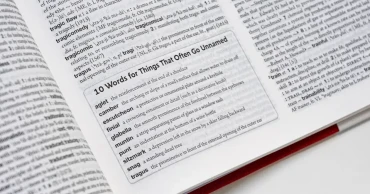
Merriam-Webster adds 5,000 new words in fully revised ‘Collegiate’ dictionary
Merriam-Webster is rolling out a fresh edition of its best-selling Collegiate Dictionary, adding more than 5,000 words such as “petrichor,” “teraflop,” “dumbphone” and “ghost kitchen.”
The 12th edition — the first full overhaul in 22 years — will be released Nov. 18, with preorders now available. The update eliminates older sections on geography and biography to make space for new terms and examples.
Other additions include “cold brew,” “farm-to-table,” “dad bod,” “rizz,” “cancel culture,” “beast mode,” “WFH” and “doomscroll.” More than 20,000 new usage examples were also added.
Cambridge Dictionary adds ‘skibidi,’ ‘tradwife,’ and thousands of new words
Merriam-Webster President Greg Barlow said the redesign aims to make the dictionary “more useful, more fun to browse, and more practical for research.” He acknowledged declining print dictionary sales but said the format remains central to the company’s identity.
Despite digital dominance, print dictionaries still hold nostalgic and cultural value, particularly in schools with phone bans and among book lovers. Merriam-Webster’s website, apps and games draw nearly a billion visits annually, driving revenue growth of nearly 500% over the last decade.
Source: Agency
8 months ago

Pamela Anderson embraces makeup-free look, inspires women to follow
Pamela Anderson says she has nothing against makeup. But having worn plenty of it in her younger days, the 58-year-old actress now feels more comfortable attending fashion shows and film premieres with a bare face.
Her fresh-faced appearance has sparked conversations, particularly among older women, about whether to continue chasing youth with full makeup or to embrace natural skin.
“I’m not trying to be the prettiest girl in the room,” Anderson told Vogue before a Paris Fashion Week show. “I feel like it’s just freedom. It’s like a relief.”
Since the pandemic, many women say they have also grown more comfortable going makeup free at work. Some have found it easier, cheaper and more liberating, while style experts point to ways of enhancing a natural look.
Makeup artist Rebecca Robles suggests focusing on hydration with a five-step routine — gentle cleanser, vitamin C serum, moisturizer with SPF, a separate sunscreen and a glossy lip balm. For a subtle lift, she recommends using a lash curler and brushing brows neatly into place.
Personal stylist Natalie Tincher noted that celebrities like Anderson and Alicia Keys have inspired women to explore alternatives. She advises clients who go makeup free to rely on colorful clothing, experiment with textures, and accessorize thoughtfully to maintain a polished appearance.
For some women, the shift has been long in the making. Colleen Gehoski Steinman, 59, from Michigan, gave up hair dye and makeup during the pandemic, saying, “This is who we really are, and you can be beautiful just as you are.”
Others, like 57-year-old Cate Chapman from South Carolina, abandoned makeup decades ago due to cost and time pressures. “If you enjoy it, do it,” she said. “But if you feel like a slave to it, let it go.”
Still, challenges remain in workplaces that expect a polished appearance. Deborah Borg, a senior executive at a global firm, acknowledged that women face “politics” around looking presentable, even in creative industries.
For Anderson, however, the choice is clear — makeup is no longer a necessity but a freedom she embraces with confidence.
8 months ago

Day and night share equal time as fall equinox arrives Monday
Day and night will share almost equal hours on Monday as much of the world enters the fall season, marking the autumnal equinox in the Northern Hemisphere and the start of spring in the Southern Hemisphere. At the equator, the sun will be directly overhead at noon, while both the north and south poles will be illuminated simultaneously — a phenomenon that occurs only during equinoxes.
In the Northern Hemisphere, daylight will gradually shorten each day until the winter solstice on December 21. Equinoxes have been observed and celebrated for centuries, often tied to harvest festivals. For instance, in Poland and parts of Eastern Europe, the fall harvest festival Dozynki traces its origins to the equinox. At Mexico’s Mayan site Chichen Itza, people gather during the equinox to witness the sun casting a shadow resembling a descending serpent on the El Castillo pyramid.
This year, residents of Antarctica, New Zealand, and parts of Australia may also witness a partial lunar eclipse on Monday, adding a rare astronomical bonus to the equinox.
Understanding the equinox
The equinox occurs as the Earth orbits the sun at a tilt. For most of the year, the planet’s axis leans toward or away from the sun, causing unequal sunlight across the hemispheres. During the equinox, however, the Earth’s tilt aligns with its orbit, giving both hemispheres nearly equal sunlight. The term equinox comes from Latin, meaning “equal night,” as day and night last almost the same length, though minor differences can occur depending on location. The Northern Hemisphere’s fall equinox generally falls between September 21 and 24, while the spring equinox occurs between March 19 and 21.
What is a solstice?
Solstices mark times when the Earth reaches its maximum tilt toward or away from the sun, resulting in the greatest difference between day and night. During the summer solstice, the Northern Hemisphere tilts toward the sun, creating the longest day and shortest night, typically between June 20 and 22. The winter solstice, between December 20 and 23, occurs when the hemisphere tilts away from the sun, giving the shortest day and longest night.
Meteorological vs. astronomical seasons
While astronomical seasons are based on the Earth’s position in its orbit, meteorological seasons follow the annual temperature cycle. According to meteorologists, spring begins on March 1, summer on June 1, fall on September 1, and winter on December 1.
8 months ago

Indonesia offers permanent residency to Indians at affordable cost
Indonesia has rolled out an attractive permanent residency programme, offering long-term stay opportunities for foreigners, including Indians, at a cost starting from under Rs 59,000.
The residency permit, officially called ITAP (Kartu Izin Tinggal Tetap) or KITAP, allows foreign nationals to live, work and invest in the country with greater stability than short-term visas. Each KITAP is valid for five years and can be renewed indefinitely.
According to Indonesian authorities, applicants must first hold a temporary residency permit (ITAS/KITAS) for five years before becoming eligible for ITAP. However, faster tracks are available through investment, marriage to an Indonesian citizen, or exceptional skills in fields such as science, sports or the arts.
Residency vs citizenshipWhile permanent residency provides rights such as legal employment, access to banking, healthcare, and ease of travel in and out of Indonesia, citizenship offers additional political privileges, including voting rights and eligibility for public office.
Costs involvedThe government application fee for ITAP ranges between Rs 58,000 and Rs 65,000 (IDR 10–12 million), depending on the category of application. Renewals, required every five years, cost between Rs 27,000 and Rs 33,000 (IDR 5–6 million). Additional charges may apply for applications through investment, marriage or work sponsorship, along with documentation and consultant fees.
Benefits of Indonesian PR
· Exemption from repeated visa applications
· Easier entry and exit from Indonesia
· Eligibility to open local bank accounts and obtain a driving licence
· Access to employment with valid work permits
· Stronger integration into Indonesia’s financial and social systems
Application routesPermanent residency can be secured through:
· Status transfer from ITAS after five years of residence
· Marriage to an Indonesian citizen (eligibility after two years)
· Investment visas (residency in three years with qualifying investment)
· Exceptional talent or highly skilled worker visas
· Humanitarian grounds in rare cases
For renewal, applicants must apply at least 60 days before expiry, submit necessary documents including passports and residence proof, pay fees online, and complete an interview and fingerprinting process before collecting the new ITAP card.
With its blend of affordable costs, business opportunities and cultural vibrancy, Indonesia’s permanent residency programme is being seen as a promising option for Indians seeking a stable long-term base in Southeast Asia.
8 months ago