China has expressed strong interest in supporting Bangladesh’s Teesta River management project through technical assistance, planning and feasibility studies, Prime Minister’s Office (PMO) Spokesperson Mahdi Amin said on Thursday.
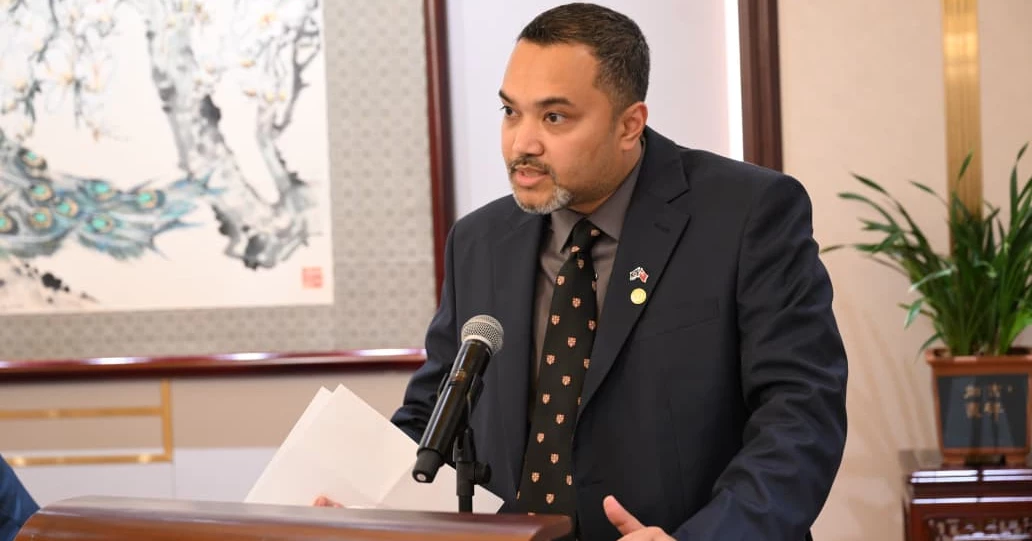
Speaking at a press briefing at the Diaoyutai Hotel in Beijing following bilateral talks between Prime Minister Tarique Rahman and Chinese Premier Li Qiang, Mahdi said the two sides discussed a wide range of issues, including water resource management, trade, investment, education, healthcare and people-to-people connectivity.
He said Bangladesh has a comprehensive master plan for the Teesta project, as outlined in the BNP election manifesto, and China has shown willingness to be involved at different stages of the initiative.
“China has expressed interest in providing technical support where necessary and sharing its expertise in project design, planning and implementation,” Mahdi said.
He said both sides agreed on the importance of conducting a joint feasibility study for the Teesta project, describing it as a critical step for such a large-scale undertaking.
“China wants to work with Bangladesh on the joint feasibility study and contribute its expertise to integrated water resource management and drainage systems,” the spokesperson added.
Mahdi, also an adviser to the Prime Minister, said Bangladesh and China also discussed ways to narrow the trade imbalance and increase Bangladeshi exports to the Chinese market.
“China is Bangladesh’s largest trading partner. At the same time, Bangladesh imports far more from China than it exports. Discussions focused on how Bangladesh can diversify and increase its exports,” he said.
The adviser noted that both sides reviewed opportunities to make better use of China’s duty-free market access for Bangladeshi products and explored additional measures to boost exports.
Referring to the vast Chinese consumer market, he said Bangladesh has significant potential to increase exports if it can further strengthen its supply chain and align products with Chinese demand.
Mahdi said China confirmed the import of Bangladeshi jackfruit, opening up new opportunities for agricultural exports.
“Besides jackfruit, there is scope for exporting more fruits, vegetables, agro-processed products and fisheries items. There are also opportunities in pharmaceuticals, ceramics and high-tech industries,” he said.
According to the adviser, discussions were also held on preparing a joint action plan to promote trade and investment cooperation between the two countries.
He said Chinese state-owned and private companies have shown interest in investing in Bangladesh’s digital economy, information technology, agriculture and infrastructure sectors.
Mahdi also revealed that several Chinese banks are considering launching operations in Bangladesh, encouraged by ongoing reforms in the country’s financial sector.
“China believes there are investment opportunities in Bangladesh’s banking sector as the country continues to strengthen and modernise its financial system,” he said.
The spokesperson said people-to-people connectivity featured prominently in the discussions between the two prime ministers.
He said the two sides explored cooperation in education, including the introduction of Mandarin language learning and support for technical and vocational education programmes in Bangladesh.
China also expressed interest in expanding healthcare cooperation, including increasing Chinese-supported hospital projects in Bangladesh, Mahdi said.
He said discussions were held on easing visa procedures for Bangladeshi patients seeking treatment in China and enhancing healthcare services for Bangladeshi citizens.
The PMO spokesperson said the two countries also discussed facilitating visas and increasing scholarship opportunities for Bangladeshi students pursuing higher education in China.
Prime Minister’s Foreign Affairs Adviser Humaiun Kobir and Additional Press Secretary Atikur Rahman Rumon were present at the briefing.