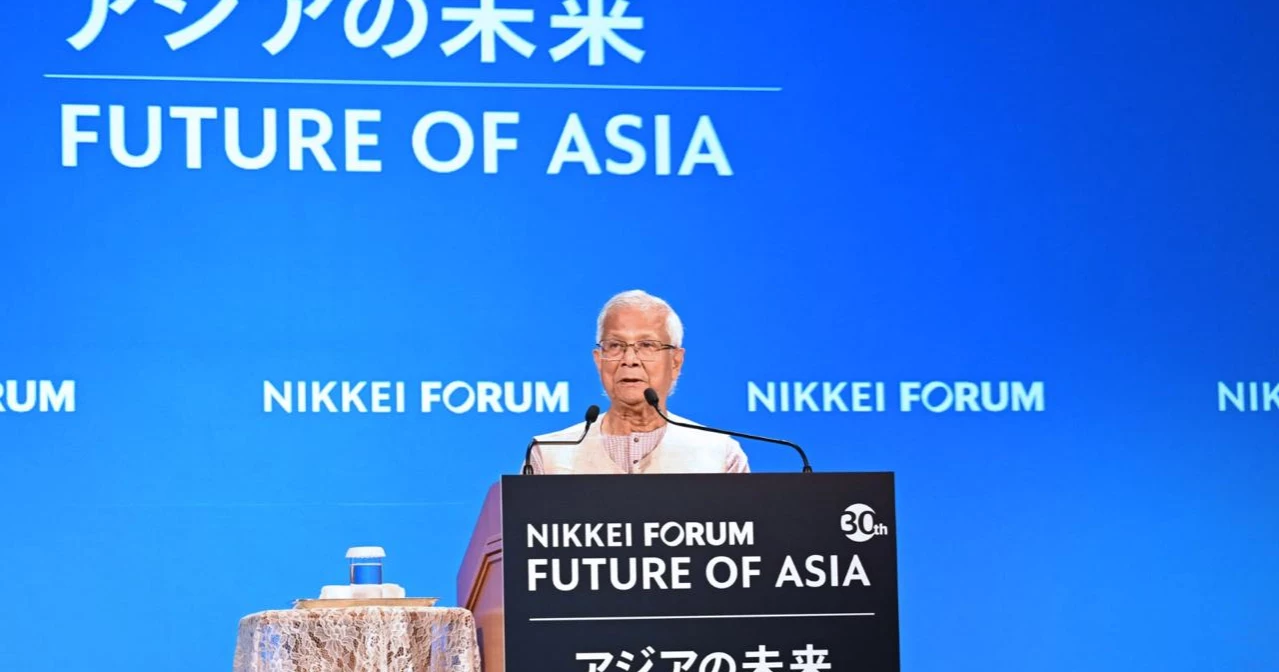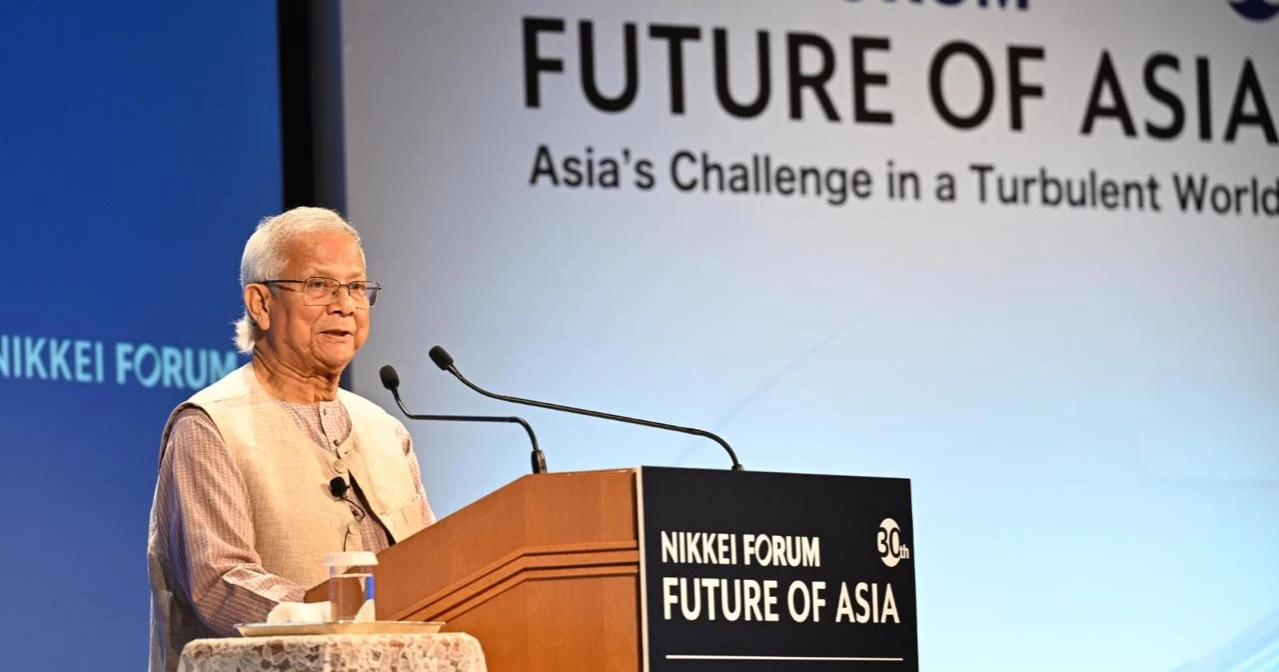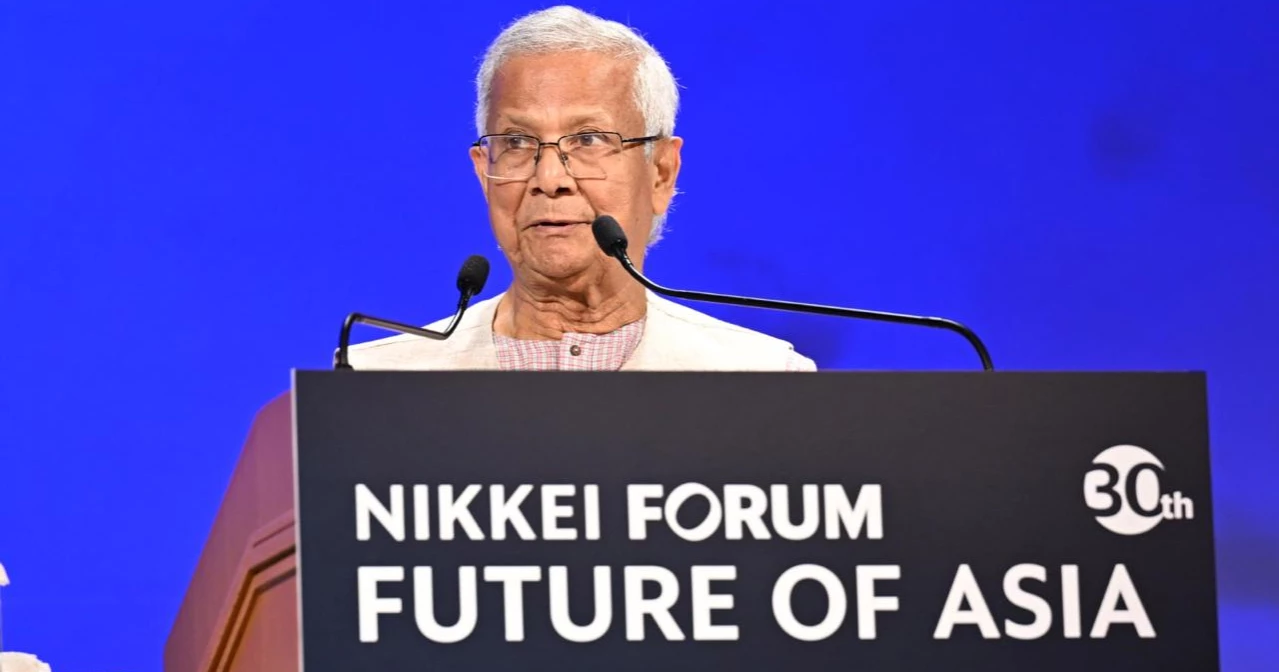
Urging Asian nations to chart a new course of cooperation, inclusion, and sustainability, Chief Adviser Professor Muhammad Yunus on Thursday outlined a seven-point agenda aimed at transforming Asia into a beacon of shared prosperity by unlocking new opportunities.
"As we look to the future, I believe Asian nations can work together even more closely to address shared challenges and unlock new opportunities for prosperity," he said while delivering his keynote speech at the inaugural session of the 'Nikkei Forum: 30th Future of Asia' held here this morning.
"We need to build a clear path towards a shared future and shared prosperity," he added, presenting seven proposals to achieve this goal.
Highlighting the importance of transforming Asia’s interdependence into cooperation, Prof Yunus said Asia’s diversity—of economies, cultures, and political systems—is both its strength and its test.
"Our fates are increasingly intertwined. A supply chain disruption in one country ripples across borders," the chief adviser observed.
CA Prof Yunus looks forward to meeting with Japanese PM
He said environmental degradation in one part of Asia affects rainfall patterns in another while political instability in one region impacts global energy and trade flows.
"Our job is to convert this interdependency into cooperation, not conflict; to invest in shared prosperity, not zero-sum rivalries," said Prof Yunus, also a Nobel laureate.
He advocated for forging robust economic and technical cooperation saying Asia needs a stronger and sustainable way to finance its development. “Regional development banks and financial institutions should take the lead in funding our growing needs.”
Stating that Asia is still one of the least connected regions in terms of trade, the chief adviser said, this lack of integration holds back investment and business opportunities. "We must act now to improve trade partnerships across the region. Asia should build a strong technology ecosystem—one that is inclusive, fair, and sustainable.
Emphasising the need to promote inclusion, empowerment, and sustainability, he said, 'We must not forget the billions who still live on the margins—disconnected from opportunity, vulnerable to shocks.'"
"My life’s work has shown that poverty is not created by the poor; it is created by the system. We must redesign that system. The world we inherited was built on assumptions of trickle-down economics, centralised control, and the maximisation of wealth,” Prof Yunus said.
He said there was a need to build a new architecture—one that promotes inclusion, empowerment, and sustainability at every level, adding that this is where Asia could lead.