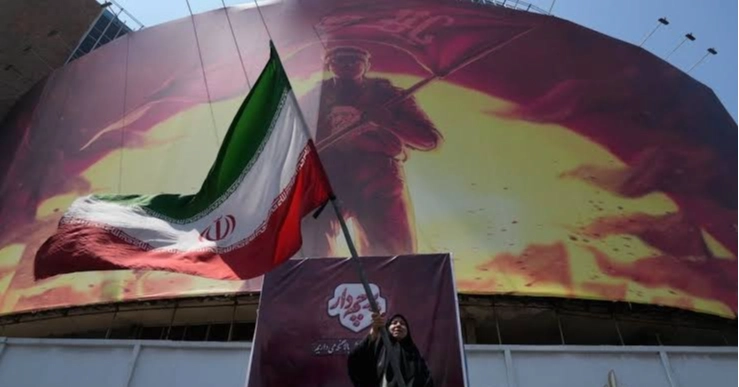
Iran's leaders believe they can eventually force the United States to accept their control over the Strait of Hormuz, a key global energy route, and see time as working in their favour.
Iranian officials are aware of growing pressure on the United States, including limited supplies of some advanced missile interceptors, public opposition to the war and rising fuel and other prices ahead of the November congressional elections.
They also believe reopening the strait by force could be costly for the US and potentially require ground troops. Iran's allies, including the Houthis in Yemen, could further expand the conflict and disrupt another major international trade route.
From Tehran's perspective, these factors could eventually leave US President Donald Trump with little choice but to make concessions.
But the strategy carries significant risks for Iran as well.
Trump has highlighted US strikes that have severely weakened Iran's top leadership, navy and air force. At the same time, he has alternated between threatening further escalation and saying negotiations are progressing.
Iran's economy has also suffered heavily, partly because of a US blockade. The country has faced mass protests in recent months, raising concerns that further economic pressure could fuel renewed unrest.
Possible deal could give Iran major leverage
Iran says it is close to reaching an agreement with Oman on managing the Strait of Hormuz, which lies between the two countries.
However, the proposed arrangement would depend on the US lifting its blockade. That means Trump would ultimately have to approve it even if, as Iran says, Washington is not directly involved in negotiations.
It remains unclear whether Iran would be allowed to charge fees under the arrangement. But any deal that formally recognises an Iranian role in managing the strait would represent a major shift from its previous status as an open international waterway.
The strait carries about one-fifth of the world's traded oil and gas.
Abdolreza Davari, an analyst and former adviser to President Mahmoud Ahmadinejad, said Iran was seeking more than financial benefits from the waterway.
"More than revenue from the strait, Iran wants to confirm its management and sovereignty over the strait," he said.
Formal Iranian control over even part of the waterway would be seen as a significant victory for Tehran and a setback for Washington, which has yet to achieve some of its changing objectives in the conflict.
It could also raise concerns about international freedom of navigation and create a precedent for countries to disrupt major global trade routes.
China, a major buyer of Iranian oil, said as recently as May that normal and safe passage through the strait should be restored.
Tehran believes it has the advantage
Iranian officials argue that the country has greater leverage as the conflict continues.
Mahdi Mohammadi, an adviser to Iran's chief negotiator, said on social media that Iran was seeking the defeat of its adversary rather than simply an agreement.
Iran has repeatedly said the Strait of Hormuz will not return to its previous status as an open waterway and has threatened to continue attacking ships that attempt to pass without its permission.
Iran's joint military command has described the issue as an "unbreakable red line."
Tehran-based security analyst Mostafa Najafi said Iran now views control of the strait as a major tool for deterrence, maintaining the regional balance of power and changing security arrangements in the Persian Gulf.
The dispute also complicates efforts to resolve the long-running issue of Iran's nuclear programme.
Analyst Rahman Ghahremanpour said the conflict over the strait had pushed the nuclear issue into the background, which he said could benefit Iran. Control of the waterway could also provide Tehran with additional leverage if nuclear negotiations resume.
Economic pressure poses a major risk
The war has caused widespread economic damage, with Iran among the countries suffering the most.
US and Israeli strikes have damaged Iran's industrial infrastructure, while the US blockade has sharply reduced its oil exports. Food prices have also surged, putting additional pressure on ordinary people.
Trump has repeatedly threatened further strikes on civilian infrastructure, including water and electricity facilities.
A currency crisis in December triggered some of the largest anti-government protests in the Islamic Republic's history. Authorities responded with a crackdown in which thousands were reportedly killed and tens of thousands detained.
Some Iranian officials and supporters of moderate President Masoud Pezeshkian fear the government could face renewed unrest if the economic situation deteriorates further.
Former Foreign Minister Mohammad Javad Zarif, who helped negotiate the 2015 nuclear agreement, recently said the country's wartime gains had created an opportunity for diplomacy.
However, he warned that delaying an agreement could make economic recovery difficult and increase the risk of domestic unrest or renewed conflict, particularly after the US elections.
War has not gone as expected
The conflict has already produced several unexpected developments.
After US and Israeli airstrikes on Feb 28 killed Iran's supreme leader and other senior officials, Trump suggested the war could end within weeks.
Instead, the conflict has strengthened Iran's leadership and rallied its supporters, analysts say.
Ghahremanpour said Tehran was using the Strait of Hormuz to demonstrate that Iran had not been defeated and to strengthen the government's position at home.
But he also warned that Iran's ability to withstand the pressure has limits.
"Iran cannot continue with this strategy forever, and at a certain point, in reality, it has to reach a deal with America," he said.
Davari, however, said Iran was likely to continue resisting pressure for now, despite its severe economic difficulties.