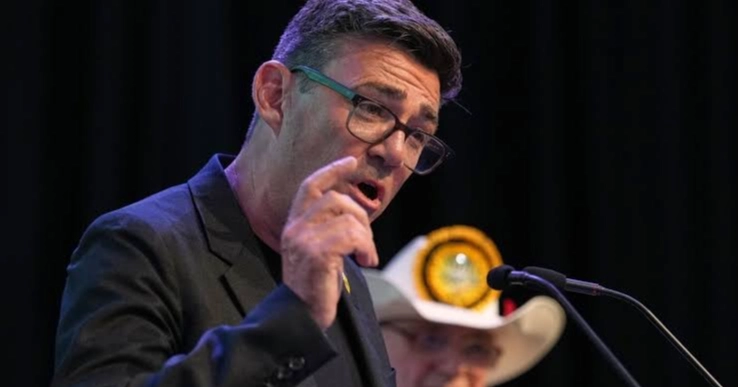
Andy Burnham, the Mayor of Greater Manchester, has won a parliamentary by-election in northwest England, a result that could set up a direct leadership challenge to British Prime Minister Keir Starmer.
Burnham secured a clear victory in the Makerfield seat, defeating Rob Kenyon of the anti-immigration Reform UK party. He won nearly 55% of the 45,510 votes cast in a crowded field of more than a dozen candidates, finishing more than 9,000 votes ahead of his nearest rival.
The result strengthens Burnham’s position as a leading figure in the Labour Party and fuels speculation that he could seek to replace Starmer as both party leader and prime minister. Known as the “King of the North,” the 56-year-old politician has led Greater Manchester since 2017 and is widely seen as a popular figure within Labour’s ranks.
In his victory speech, Burnham signalled clear national ambitions.
“Everyone knows that politics isn’t working. Everyone can feel that the country isn’t where it should be. Tonight could, just could, be the turning point,” he said.
He also said Labour had “a final chance to change” and rebuild public trust, calling for “a new politics based on unity and hope” and warning against what he described as a “divided, dark politics” seen elsewhere.
Starmer congratulated Burnham but defended his own leadership, saying voters backed Labour’s “campaign of hope and optimism over division and hate,” in a post on X.
Labour currently holds power but has faced growing public dissatisfaction since its landslide win in July 2024. Starmer has struggled with sluggish economic growth, strained public services, and cost-of-living pressures, along with political setbacks including controversial appointments.
The party is also losing support to both the Green Party on the left and the Reform UK party on the right, which has gained ground in post-industrial areas such as Makerfield.
Burnham’s win is being seen as a boost for Labour’s chances of countering Reform UK’s rise. Reform leader Nigel Farage said he was “disappointed” by the outcome.
The result follows months of internal pressure on Starmer after poor local election results in May led to calls from some Labour MPs for him to step down. While Starmer has rejected those demands, speculation over his leadership has continued to grow.
Former health secretary Wes Streeting resigned in May, warning of a “vacuum” in leadership vision, and has said he would consider running if a contest opens. Makerfield MP Josh Simons stepped down to trigger the by-election, clearing the way for Burnham’s return to Parliament.
Under Labour rules, a leadership challenge can be triggered if at least 20% of Labour MPs back a candidate, currently around 81 lawmakers.
Burnham is expected to take his seat in Parliament soon and may push for talks with Starmer on the party’s future direction. Allies suggest he would favour an orderly transition rather than a sudden confrontation.
However, Starmer has insisted he will not resign and told reporters at the G7 summit that he would “fight if there’s a challenge,” saying he remains committed to the mandate given in the 2024 election.
Political observers say Burnham’s return to Westminster significantly increases pressure on Starmer, especially after defeating Reform UK in a key battleground seat.
Analysts note that Burnham’s victory strengthens his claim that he can reconnect Labour with voters in areas where the party is losing ground.
Professor Rob Ford of the University of Manchester said the result makes it harder for Starmer to ignore internal pressure, arguing that Burnham now has a strong political narrative built around electoral success and voter appeal.