Andy Burnham
Andy Burnham becomes the UK's seventh prime minister
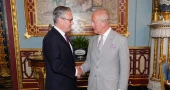
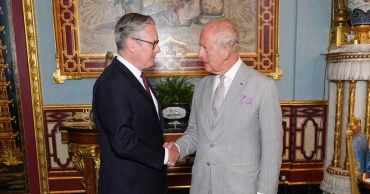
Andy Burnham officially became the United Kingdom's prime minister on Monday after King Charles III invited him to form a new government, succeeding Keir Starmer following the latter's resignation as Labour leader.
Burnham, the seventh UK prime minister since 2016, met the King at Buckingham Palace, where the traditional "kissing hands" ceremony marked the transfer of power. Buckingham Palace said the King requested Burnham to form a new administration, which he accepted.
Burnham set to replace Starmer but faces challenge of delivering change
In his first speech outside 10 Downing Street, Burnham acknowledged the country's frequent leadership changes over the past decade and said politicians "need to be better." He pledged to deliver a "circuit breaker" for a political system he believes has taken the wrong direction since the 1980s, restore stability, make politics "less toxic," improve living standards and revive public hope.
3 months ago
Burnham set to replace Starmer but faces challenge of delivering change
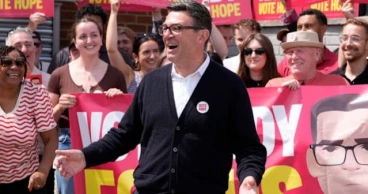
Andy Burnham is poised to become Britain's next prime minister following Keir Starmer's resignation, but analysts say he could find it difficult to quickly break away from the policies of his predecessor.
Burnham, the former mayor of Greater Manchester, was sworn back into Parliament just hours after Starmer announced he would step down on Monday. If no other candidate joins the Labour Party leadership race, Burnham is expected to take office on July 17.
Although Burnham is one of Labour's most popular figures and is known for his relaxed, approachable style, he will initially be bound by the party's election platform that ended 14 years of Conservative rule in 2024.
Political analysts say his biggest task will be convincing voters that his leadership offers a fresh direction while maintaining confidence among financial markets.
"Andy Burnham is being seen by many as the person who can revive British politics," said Matthew Flinders, a politics professor at the University of Sheffield. "The real test will come when expectations rise and public opinion becomes more demanding."
Burnham is expected to outline his economic plans in a speech next week. His main priorities include boosting Britain's sluggish economy, improving public services, tackling the cost-of-living crisis, increasing housing supply and creating more opportunities for young people.
Following Starmer's resignation, Burnham said the country needed "stability" and a continued focus on issues that matter most to the public.
While Burnham is generally seen as more left-leaning than Starmer, he has promised not to exceed the government's current spending and borrowing limits. Analysts say that approach is aimed at reassuring investors after the market turmoil triggered by former Prime Minister Liz Truss's short-lived economic policies in 2022.
Burnham has promoted a model often described as "Manchesterism," combining business-friendly policies with greater local control over housing, transport, education and public services. Reports suggest he may also move parts of the prime minister's office away from London to northern England as part of his push to decentralise power.
He has ruled out raising income taxes and has suggested reducing some tax burdens on businesses. However, experts say questions remain over how he would finance new spending commitments while also meeting growing defence costs.
The outgoing government had pledged to increase defence spending to 3.5% of GDP by 2035 to meet NATO targets, but critics argued progress had been too slow.
Foreign policy may also prove challenging for Burnham, who has little experience on the international stage.
Relations with US President Donald Trump could be particularly delicate. Trump recently dismissed Burnham as a "town" mayor and questioned whether he would support expanding North Sea oil drilling.
Unlike Starmer, who invested significant effort in maintaining ties with Washington and strengthening European support for Ukraine, Burnham is expected to place greater emphasis on domestic issues. Analysts believe he may rely on an experienced foreign secretary to handle much of Britain's international diplomacy.
Foreign Secretary Yvette Cooper said Burnham remains firmly committed to supporting Ukraine, NATO and Britain's international partnerships.
Observers say Burnham's communication skills and public image could work in his favour. Known for his informal style, love of football and interest in music, he has built a reputation as an approachable politician.
Political experts believe he is likely to adopt a cautious approach during his early months in office before pursuing broader constitutional reforms, including proposals to replace the House of Lords with an elected senate and introduce proportional representation.
Burnham has also expressed support for Britain rejoining the European Union at some point in the future, although he softened that position during his recent election campaign in a strongly pro-Brexit constituency.
Analysts say if Burnham can build public trust over the next three years, he may seek a stronger mandate at the next general election to pursue more ambitious reforms.
3 months ago
Andy Burnham emerges as frontrunner in UK Labour leadership race amid leadership transition
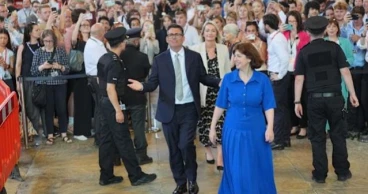
Andy Burnham, Britain’s newly elected lawmaker and long-time Greater Manchester mayor, is positioning himself as the leading candidate to become the next Labour leader, in a contest that could effectively hand him the job unopposed.
Burnham met Labour colleagues on Tuesday as preparations intensified for a leadership race triggered by Prime Minister Keir Starmer’s announcement that he will step down within weeks after a turbulent two-year tenure marked by policy missteps and declining public support.
Starmer’s resignation has opened the door for a rapid leadership transition within the governing Labour Party. Burnham, widely seen as the frontrunner, could become prime minister as early as July 17 if no rival emerges. If a contest takes place, the new leader is expected to be in place by Parliament’s return from summer recess on September 1.
A former Cabinet minister, Burnham served as mayor of Greater Manchester since 2017 and recently returned to Parliament after winning a by-election last week, a move widely viewed as part of his bid for the leadership.
His position was strengthened on Monday after former Health Secretary Wes Streeting, previously considered a potential challenger, publicly backed him.
Under Britain’s parliamentary system, ruling parties can replace their leader and prime minister without a general election. The next national vote is not required until 2029.
Labour will open nominations for its leadership on July 9, with a deadline a week later. Any candidate must secure the backing of at least 81 Labour MPs, or one-fifth of the parliamentary party, to enter the race.
Burnham is expected to outline elements of his economic agenda in a speech next week. While he has promoted his “Manchesterism” approach credited with urban regeneration in Greater Manchester — his national policy platform remains largely undefined.
Supporters within Labour believe his leadership style and public appeal could help reconnect the party with voters more effectively than Starmer, whose leadership has been described by critics as cautious and managerial.
However, some MPs are calling for a full leadership contest to ensure proper scrutiny of Burnham’s policies, arguing that his national agenda has yet to be tested.
Former Armed Forces Minister Al Carns, who recently resigned in protest over defence spending, said the country needs a clear debate on its future direction. He has not ruled out entering the race but said he has not made a decision.
Senior minister Darren Jones has also been suggested as a possible candidate, though he has not commented on the speculation.
Some within Labour warn that a leadership battle could deepen internal divisions and prolong political uncertainty. Cabinet Office Minister Nick Thomas-Symonds said the transition should be “swift and orderly.”
Starmer’s departure follows a rapid fall in support since his landslide 2024 election victory. His government has struggled to deliver economic growth, improve public services and address rising living costs, while facing criticism over key appointments and policy decisions.
Labour is also facing mounting pressure from the opposition Reform UK, led by Nigel Farage, and losing support among liberal voters to the Green Party, adding further urgency to the leadership transition.
4 months ago
Labour’s Andy Burnham wins by-election, intensifying leadership pressure on UK PM Starmer
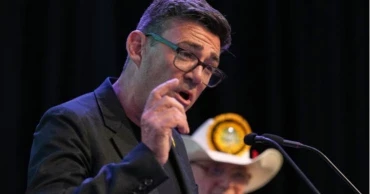
Andy Burnham, the Mayor of Greater Manchester, has won a parliamentary by-election in northwest England, a result that could set up a direct leadership challenge to British Prime Minister Keir Starmer.
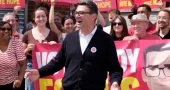
Burnham secured a clear victory in the Makerfield seat, defeating Rob Kenyon of the anti-immigration Reform UK party. He won nearly 55% of the 45,510 votes cast in a crowded field of more than a dozen candidates, finishing more than 9,000 votes ahead of his nearest rival.
The result strengthens Burnham’s position as a leading figure in the Labour Party and fuels speculation that he could seek to replace Starmer as both party leader and prime minister. Known as the “King of the North,” the 56-year-old politician has led Greater Manchester since 2017 and is widely seen as a popular figure within Labour’s ranks.
In his victory speech, Burnham signalled clear national ambitions.
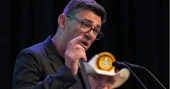
“Everyone knows that politics isn’t working. Everyone can feel that the country isn’t where it should be. Tonight could, just could, be the turning point,” he said.
He also said Labour had “a final chance to change” and rebuild public trust, calling for “a new politics based on unity and hope” and warning against what he described as a “divided, dark politics” seen elsewhere.
Starmer congratulated Burnham but defended his own leadership, saying voters backed Labour’s “campaign of hope and optimism over division and hate,” in a post on X.
Labour currently holds power but has faced growing public dissatisfaction since its landslide win in July 2024. Starmer has struggled with sluggish economic growth, strained public services, and cost-of-living pressures, along with political setbacks including controversial appointments.
The party is also losing support to both the Green Party on the left and the Reform UK party on the right, which has gained ground in post-industrial areas such as Makerfield.
Burnham’s win is being seen as a boost for Labour’s chances of countering Reform UK’s rise. Reform leader Nigel Farage said he was “disappointed” by the outcome.
The result follows months of internal pressure on Starmer after poor local election results in May led to calls from some Labour MPs for him to step down. While Starmer has rejected those demands, speculation over his leadership has continued to grow.
Former health secretary Wes Streeting resigned in May, warning of a “vacuum” in leadership vision, and has said he would consider running if a contest opens. Makerfield MP Josh Simons stepped down to trigger the by-election, clearing the way for Burnham’s return to Parliament.
Under Labour rules, a leadership challenge can be triggered if at least 20% of Labour MPs back a candidate, currently around 81 lawmakers.
Burnham is expected to take his seat in Parliament soon and may push for talks with Starmer on the party’s future direction. Allies suggest he would favour an orderly transition rather than a sudden confrontation.
However, Starmer has insisted he will not resign and told reporters at the G7 summit that he would “fight if there’s a challenge,” saying he remains committed to the mandate given in the 2024 election.
Political observers say Burnham’s return to Westminster significantly increases pressure on Starmer, especially after defeating Reform UK in a key battleground seat.
Analysts note that Burnham’s victory strengthens his claim that he can reconnect Labour with voters in areas where the party is losing ground.
Professor Rob Ford of the University of Manchester said the result makes it harder for Starmer to ignore internal pressure, arguing that Burnham now has a strong political narrative built around electoral success and voter appeal.
4 months ago
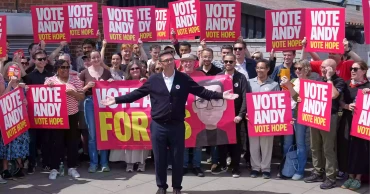
UK by-election could reshape Labour leadership as pressure mounts on Starmer
A closely watched by-election in northwest England could have major implications for British Prime Minister Keir Starmer’s political future, as Labour candidate Andy Burnham seeks a return to Parliament amid growing discontent within the governing party.
Voters in the Makerfield constituency are set to elect a new member of Parliament on Thursday, with Burnham — the current mayor of Greater Manchester and a prominent Labour figure — widely viewed as a potential challenger to Starmer’s leadership if elected.
Although Starmer is not directly involved in the contest, political observers see the vote as a significant test of confidence in his leadership. Labour’s popularity has declined sharply since its landslide general election victory in July 2024, with criticism mounting over the government’s handling of economic growth, public services and the cost-of-living crisis.
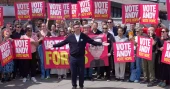
Burnham has campaigned on a promise to bring political change and expand his regional development model, often referred to as “Manchesterism,” across the country. He has argued that Britain has been poorly served by what he describes as London-focused politics and called for greater attention to regional development.
The by-election was triggered after Labour lawmaker Josh Simons resigned, creating an opportunity for Burnham to return to Westminster. If elected, Burnham is expected to emerge as a leading contender in any future Labour leadership contest.
Under Labour Party rules, a leadership challenge can be launched if a candidate secures support from at least one-fifth of Labour MPs. Growing dissatisfaction within the party has already fueled speculation about Starmer’s position, despite the prime minister insisting he has no intention of stepping down.
Speaking during the Group of Seven summit in France, Starmer said he would fight any leadership challenge and emphasized that he remains committed to delivering on Labour’s electoral mandate.
Some senior Labour figures have openly expressed concerns about the party’s direction. Former Health Secretary Wes Streeting, who resigned in May, recently suggested there was a lack of leadership vision within the government and indicated he could consider entering a leadership contest if one takes place.
Political analysts say a strong Burnham victory would significantly increase pressure on Starmer. However, the outcome is not guaranteed.
The anti-immigration Reform UK party has gained momentum in parts of northern England and is hoping to capitalize on voter concerns over immigration and economic issues. Reform candidate Rob Kenyon is seeking to challenge Labour’s long-standing dominance in Makerfield, a constituency that has elected Labour MPs for more than a century.
Analysts warn that a Reform UK victory would not only deepen Labour’s political difficulties but also undermine Burnham’s credentials as a potential successor to Starmer.
The result is expected early Friday and is being closely watched as an indicator of Labour’s internal dynamics and the broader political mood in Britain.
4 months ago