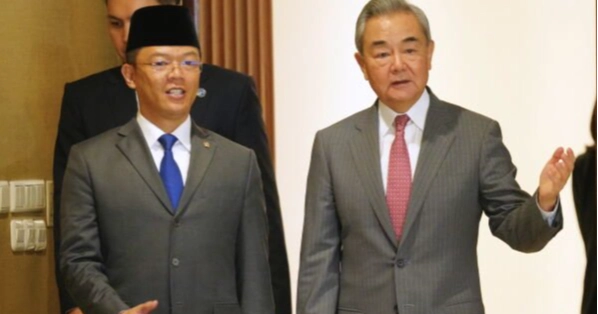
Indonesia and China on Friday discussed expanding defense cooperation and strengthening food and energy security as senior officials from the two countries held talks in Jakarta.
Indonesian Foreign Minister Sugiono said the two sides wanted their new bilateral dialogue to produce progress in key areas, including politics, the economy, security, maritime affairs and people-to-people ties.
Chinese Foreign Minister Wang Yi said Indonesia and China also agreed to improve coordination on development and security issues to support the modernization of both countries.
"We will jointly oppose unilateral bullying and power politics," Wang said in a joint statement. He also called for vigilance against efforts to challenge the outcome of World War II and urged both countries to defend international fairness and the legitimate interests of developing nations.
Sugiono said the talks covered ways to improve food, energy and mineral security by developing industries that can strengthen national resilience.
Future cooperation could include artificial intelligence, joint development of communications satellites and other advanced technologies, he said.
The two countries also agreed to promote trade by exploring new markets and expanding access for Indonesia's key export products, Sugiono said.
Wang said the new bilateral dialogue would "send a clear signal to the world of solidarity and cooperation between our two major emerging-market countries."
The defense ministers of the two countries also held separate talks on expanding military cooperation, including defense equipment, personnel exchanges and cooperation between their defense industries.
Indonesia's Defense Minister Sjafrie Sjamsoeddin said Jakarta had invited Chinese armed forces to take part in joint exercises, including the Heping Garuda exercise.
Indonesia's economic ties with China have grown rapidly in recent years, with bilateral trade reaching about $167 billion in 2025.
China is Indonesia's largest trading partner and has invested billions of dollars in major infrastructure projects, including the Jakarta-Bandung high-speed railway and the Cirata floating solar power project in West Java, Southeast Asia's largest floating solar facility.
The projects have faced disagreements over costs and timelines, but China has remained committed to them as part of President Xi Jinping's Belt and Road Initiative to develop infrastructure across the region.