Pope Leo XIV
Pope honors Barcelona landmarks on centenary of Gaudí’s death
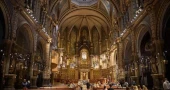
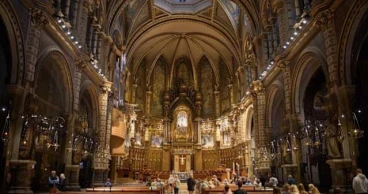
Pope Leo XIV on Wednesday paid tribute to two of Barcelona’s most iconic religious sites, offering prayers at a hilltop monastery in the morning and leading an evening Mass at the world-famous Sagrada Familia Basilica on the 100th anniversary of architect Antoni Gaudí’s death.
The Pope began his day by visiting inmates at a Barcelona prison, continuing a tradition established by Pope Francis of meeting prisoners during overseas trips. He told the inmates that past mistakes do not define a person’s future, saying that people always have the chance to change their lives.
Pope Leo is currently on a weeklong visit to Spain, where large crowds of Catholic faithful have welcomed him, reflecting the country’s enduring religious devotion despite a long period of secularisation after the end of its 20th-century dictatorship.
Later in the day, the Pope was set to visit the Montserrat monastery outside Barcelona, a major spiritual site for Catalonia’s Catholics. The complex includes an 11th-century Benedictine abbey, a 16th-century basilica, and the famous Black Madonna statue. It is also home to one of Europe’s oldest boys’ choirs, dating back to the 13th century.
The highlight of the visit is an evening Mass at the Sagrada Familia, held to mark 100 years since the death of its creator Antoni Gaudí, who died in 1926 after being struck by a tram.
Construction of the basilica began during the papacy of Pope Leo XIII and has continued for more than a century. Today, it stands as one of the most visited but still unfinished monuments in the world, attracting millions of tourists each year.
Gaudí, whose work is being considered for sainthood, dedicated much of his life to designing the basilica as a “stone expression” of Christian faith. The building’s façades depict major events from the life of Jesus Christ, including his birth and crucifixion, while a third façade representing his glory is still under construction.
The structure features 18 towering spires symbolising Christ’s apostles, the four evangelists, the Virgin Mary, and Jesus Christ himself. Last year, the central tower dedicated to Christ was completed at a height of 172.5 metres, making Sagrada Familia the tallest church in the world. The Pope is expected to formally consecrate the tower during Wednesday’s Mass.
Inside, the basilica is designed to resemble a forest, with tree-like columns rising toward the ceiling and coloured light streaming through stained glass windows, creating a shifting play of light throughout the day.
Gaudí once said nature was his greatest teacher, a philosophy reflected in the building’s design, which blends Christian symbolism with natural forms.
Historians say the Sagrada Familia combines biblical themes with elements of nature to create a spiritual experience where architecture, light and symbolism come together to express faith in a unique visual form.
4 months ago
Over 1 million attend pope’s Mass and flower-carpet procession in Madrid
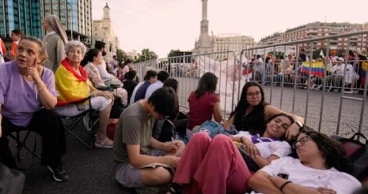
More than one million people gathered in central Madrid on Sunday for Pope Leo XIV’s main Mass and a grand religious procession featuring Spain’s traditional flower carpets, one of the country’s most iconic expressions of Catholic devotion.
The crowd filled Plaza Cibeles and surrounding streets, cheering loudly as the pope arrived in his popemobile. Many shouted, “This is the youth of the pope!” as he made his way through the packed venue surrounded by barricades.
Sunday’s Mass marked the Catholic feast of Corpus Domini, a day traditionally observed with processions in which priests carry the Eucharist through streets decorated with intricate floral designs. In Spain and other mainly Catholic countries, these flower carpets are a key part of the celebration.
Pope Leo XIV, who began his weeklong visit to Spain on Saturday, has been encouraging young people to connect with long-standing Catholic traditions and consider religious vocations.
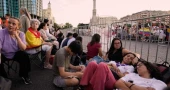
At a vigil on Saturday night, around 600,000 young people joined the pope in prayer, many kneeling in silence. The large turnout suggested continued interest in religious life among youth in Spain, a country often described as highly secular.
“Don’t ever be afraid of thinking about a vocation to the priesthood or religious life, or other services in the church,” the pope told the gathering.
During the vigil, a young couple, Irati Valda and Javier Hormazal, who are set to marry on June 13, were invited close to receive the pope’s blessing after holding up a sign announcing their wedding plans.
“Seeing so many young people together is incredible. Half a million people in silence, it’s something you only experience once,” Valda said.
Organisers said about 1.2 million people attended Sunday’s Mass and procession under clear spring skies, with many more unable to enter the main area.
The flower carpet tradition, where detailed designs are created on streets and later destroyed as the procession passes over them, dates back around 200 years. It is also seen in parts of Latin America, where sand designs are used in similar rituals. The artworks are considered offerings to the Eucharist.
Spain’s Galicia region is among areas seeking UNESCO recognition for its tradition of flower carpets as part of global intangible cultural heritage, following Poland’s earlier recognition.
According to organisers, 16 floral carpets lined a half-kilometre procession route. More than 30,000 flowers were used, mainly in yellow and white to reflect the colours of the Holy See, along with religious symbols such as the keys of the Vatican.
Religious processions remain a strong cultural feature across Spain, especially during Holy Week, when brotherhoods carry statues of Christ and the Virgin Mary through the streets accompanied by music and large crowds of both worshippers and tourists.
Local fiestas also frequently honour patron saints, while pilgrimages such as Andalusia’s El Rocío draw up to a million participants who travel on horseback and decorated wagons in a mix of devotion and celebration.
Pope Leo XIV arrived in Spain on Saturday, calling for unity and an end to political polarisation. He is expected to meet members of his Augustinian order and address cultural leaders later on Sunday.
4 months ago
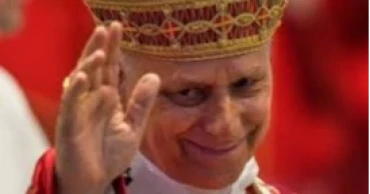
Pope urges strong global rules for AI, warns against risks to humanity
Pope Leo XIV has called for strict global regulation of artificial intelligence, warning that the fast-growing technology must serve humanity and the common good rather than corporate profit.
In a major new church document titled “Magnifica Humanitas” (Magnificent Humanity), the first encyclical of Pope Leo XIV, the pontiff said AI is one of the biggest challenges facing the world today as it reshapes jobs, warfare, and human life.
He strongly criticised what he called a “culture of power” driving the global AI race, especially in developing advanced systems used in remote warfare. He said it is “not permissible” to allow artificial intelligence to make irreversible or lethal decisions, warning that such choices must remain under human control.
His comments are likely to deepen debate with the United States administration, which has pushed for lighter regulation of AI development.
The pope also warned about the growing concentration of data and technological power in the hands of a few private companies, saying it poses serious risks for children, vulnerable groups and democratic accountability. He called for clear laws, independent oversight and stronger political responsibility to govern AI systems.
“It is not enough to invoke ethics in the abstract,” he wrote, stressing that binding legal frameworks are needed and that moral standards cannot be set by a small group of tech leaders.
The encyclical was released at a Vatican event attended by representatives from the tech world, including co-founder of Anthropic, as the Holy See continues long-running dialogue with Silicon Valley over the social impact of AI.
Experts say the document is likely to become an important reference point in global discussions on AI ethics and regulation, especially as concerns grow about job losses and machines replacing human decision-making.
Technology leaders and academics said the pope’s intervention raises deeper questions about humanity’s future in the age of artificial intelligence, as systems become more powerful and widespread.
In the text, Pope Leo also warned that AI is contributing to the “normalisation of war” by making violence feel more distant and less human. He called for greater transparency in how AI is used in military operations and urged clearer accountability in decision-making chains for strikes involving automated systems.
He further argued that traditional Catholic “just war” theory may no longer be adequate in the era of modern warfare technologies.
The document also places AI within the broader tradition of Catholic social teaching, linking it to long-standing concerns about workers’ rights, economic justice and human dignity.
The pope signed the encyclical on May 15, marking the anniversary of *Rerum Novarum*, a landmark church text that shaped modern Catholic views on labour and capitalism during the Industrial Revolution.
He warned that the pursuit of profit must never come at the cost of jobs, arguing that people must always remain the purpose of economic systems, not their tools.
The encyclical also touched on historical issues, including an unprecedented papal acknowledgment and apology for the Holy See’s past role in supporting slavery.
Vatican officials did not disclose who contributed to the document, but said it reflects years of discussions between the church and technology leaders.
4 months ago
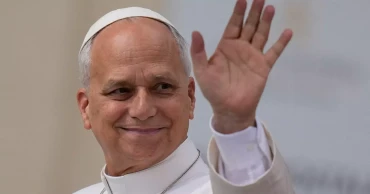
Vatican prepares major document on AI, urging focus on ethics and human dignity
The Vatican is preparing to release the first encyclical of Pope Leo XIV, a major teaching document expected to call for an ethical approach to artificial intelligence (AI) that puts human dignity, social relationships and peace at the center.
Vatican officials said the pope signed the document on Friday, exactly 135 years after Pope Leo XIII issued his landmark encyclical Rerum Novarum. That document addressed workers’ rights, the limits of capitalism and the responsibilities of governments and employers during the Industrial Revolution.
The Vatican believes AI raises similar questions today about labor, justice and the future of society.
Experts say the Catholic Church is well placed to contribute to the debate because of its long tradition of reflecting on what it means to be human.
Shortly after becoming pope in 2025, Leo told cardinals that the Church should use its social teachings to help address the challenges AI poses to human dignity, justice and work.
The pope is expected to return to the issue on Sunday during the Vatican’s World Communications Day, which this year focuses on the human consequences of the global race to develop AI.
In a message released earlier, Leo warned that people must protect real human relationships as chatbots become more common. He also expressed concern over AI-generated music, videos and deepfakes that can spread false information.
The encyclical, likely to be released in the coming weeks, could put the Vatican at odds with the administration of US President Donald Trump, which has strongly supported rapid AI development and opposed many international efforts to regulate the technology.
Since the launch of ChatGPT, AI has advanced rapidly, bringing both promising applications and serious concerns. Experts have warned about risks ranging from biased hiring systems to autonomous weapons.
The Vatican has been active in the debate for years. In 2020, it launched the Rome Call for AI Ethics, an initiative supported by companies such as Microsoft, IBM and Cisco Systems. The initiative promotes principles including accountability, fairness, privacy and inclusion.
The late Pope Francis also called for an international treaty to regulate AI and urged governments to ensure that decisions involving weapons remain under human control. He advocated a ban on fully autonomous lethal weapons, often referred to as “killer robots.”
Pope Leo has continued that message. While acknowledging AI’s contributions to medicine and scientific research, he has warned that the technology could undermine humanity’s connection to truth and beauty.
The pope has also raised concerns about AI’s role in modern conflicts, including in Ukraine and the Middle East, where increasingly sophisticated drones and automated systems are being used.
Speaking recently at Sapienza University of Rome, Leo said the wars in Ukraine, Gaza, Lebanon and Iran show how new technologies are making warfare more destructive and less humane.
4 months ago
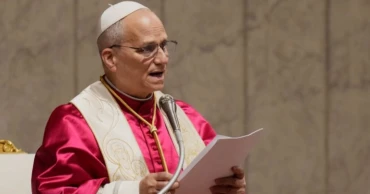
Pope Leo, Trump trade barbs as Iran war tensions mount
A sharp and highly unusual public rift has emerged between Pope Leo XIV and US President Donald Trump, as their contrasting views on the Iran war have escalated into a direct war of words.
The soft-spoken pontiff and the combative US leader have long appeared headed for confrontation, but tensions intensified after Trump criticised the pope on social media, calling him “weak” and accusing him of aligning with the “Radical Left.” He also suggested that Leo’s elevation to the papacy was linked to his own presidency.
In response, Pope Leo strongly condemned Trump’s threats toward Iran as “truly unacceptable,” emphasising that his stance is rooted in Christian teachings rather than politics. Speaking to reporters, he said he is unafraid of the Trump administration and remains committed to conveying the message of the Gospel.
China slams US action over Iran ports, UN urges safe navigation in Strait
The dispute highlights a rare scenario in which two globally influential American figures—one political and the other religious—are openly at odds over a major international conflict, reports AP.
Before becoming pope, Leo—then Robert Prevost—had already demonstrated a willingness to speak candidly on global issues. He had criticised Russia’s invasion of Ukraine and also shared commentary opposing strict US immigration policies justified on religious grounds.
Initially, Trump welcomed Leo’s election in May 2025, calling it a “great honour” for the United States. However, his tone has since shifted, framing the pope’s appointment in nationalistic terms and even claiming indirect credit for it.
From the outset of his papacy, Leo has consistently emphasised peace, frequently referencing global conflicts including Ukraine and the Middle East. His early messages and public appearances have underscored a commitment to applying church doctrine to contemporary crises.
The divide became more visible during Holy Week, when Trump escalated threats against Iran, while Leo called for peace and warned against violence. The pope later directly urged Trump to seek a de-escalation path, particularly after the president threatened severe military action.
Despite Trump’s criticism that the pope should avoid political commentary, Leo has maintained that his statements are grounded in religious duty, not political opposition.
The ongoing exchange marks a rare instance of a pope directly engaging with a sitting US president by name, underscoring the depth of disagreement between the Vatican and Washington over war, peace, and moral authority.
6 months ago
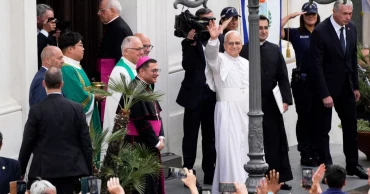
Pope Leo XIV celebrates mass at church tied to his Augustinian roots
Pope Leo XIV on Sunday called for “merciful compassion” toward the world’s poor and victims of tyranny and war as he celebrated Mass at St. Thomas of Villanova church in Castel Gandolfo, which holds special spiritual significance for his Augustinian religious order.
While on summer vacation at the papal estate south of Rome, Leo resumed the tradition of papal visits to Castel Gandolfo and marked the occasion with a Mass at the local parish.
St. Thomas of Villanova, a 16th-century Spanish Augustinian friar, educator, and regional superior of the order, is also the patron saint of Villanova University near Philadelphia—Leo’s alma mater. Known for his commitment to the poor, Thomas gave away his wealth to those in need.
In his homily, Pope Leo reflected on the parable of the Good Samaritan, urging Catholics to embrace empathy and to act “with the same merciful compassion as God.”
Danish military using robotic sailboats for surveillance in Baltic and North seas
“How we look at others is what counts, because it shows what is in our hearts,” he said. “We can look and walk by, or we can look and be moved with compassion.”
He emphasized this in the context of those “stripped, robbed and pillaged, victims of tyrannical political systems, of an economy that forces them into poverty, and of wars that kill their dreams and their very lives.”
From the beginning of his papacy, Leo has identified strongly as an Augustinian and regularly incorporates the teachings of St. Augustine into his addresses.
Rev. Tadeusz Rozmus, the parish priest, said Leo’s return “filled the town with joy,” and highlighted the pope’s spiritual connection to St. Thomas of Villanova.
1 year ago