inclusive Bangladesh
PM vows to build self-reliant Bangladesh, calls for unity
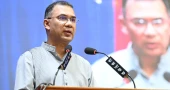
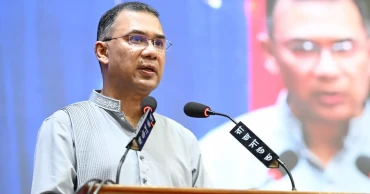
Prime Minister Tarique Rahman on Friday urged all to work together to build an inclusive and self-reliant Bangladesh, ensuring that everyone can live well together.
“Let the pledge of this Independence Day be that not just one section of society, but all of us will live well together. We will all strive to live well together, and we will do so, Insha’Allah,” he said, while addressing a discussion marking Independence and National Day.
The programme was organised by BNP at the Institution of Engineers, Bangladesh (IEB) auditorium in the capital, where the Prime Minister attended as the chief guest.
Tarique said the current democratic government has been formed by the people and belongs to them. “This democratic government has been established by the people of this country,” he said.
The Prime Minister said although the people’s aspirations are vast, the country’s resources remain limited, and there is a gap between the nation’s ambitions and its means.
“But as a citizen and a political worker, I firmly believe that if we move forward in unity and work together for the country, we will surely be able to build our desired self-reliant Bangladesh. On this great Independence Day, I would like to convey this message to all democracy-loving people, my party colleagues across Bangladesh,” he said.
To achieve that goal, the Prime Minister said the government has taken various initiatives targeting different sections of society, including the introduction of family cards, farmers’ cards and canal excavation programmes.
He said steps have already been taken and their implementation has begun to improve people’s living standards.
Referring to the Liberation War, Tarique paid tribute to BNP founder and Liberation War proclaimer Ziaur Rahman and all martyrs who sacrificed their lives for the country.
He said the people of Bangladesh had secured victory against one of the strongest armies of the time. “So, the glorious history of our independence and the Liberation War will continue to be discussed and researched for generations to come, and that is only natural.”
Tarique, however, said nothing should be done or said in the name of discussion, criticism or research that could in any way undermine the glorious history of the country’s independence and the Liberation War.
“If we remain trapped in the past, we lose sight of the present. But if we forget the past, we lose our direction entirely,” he said.
The BNP leader said while the past must not be forgotten, it should not be overemphasised either, as excessive focus on the past—even in the recent period—has hindered the country’s progress towards a prosperous future.
Drawing the attention of the younger generation, he said briefly that martyred President Ziaur Rahman was an indispensable character in Bangladesh’s independence and the Liberation War.
Tarique said attempts had been made in the past to undermine Ziaur Rahman’s contributions, but those efforts in fact proved that he was indeed a key figure in the Liberation War.
He said Ziaur Rahman did not suddenly make the declaration of independence, but had long been prepared for it.
The Prime Minister said that Ziaur Rahman was not a political activist in his early life, but a military officer.
“But, the dream of Bangladesh’s independence was something he nurtured in his mind, and this is reflected in one of his writings. From that writing, we can clearly understand that he held the idea of independence and had long made mental preparations for a sovereign Bangladesh,” he said.
The Prime Minister referred to Ziaur Rahman’s article titled “Birth of a Nation”, published on March 26, 1972, in the Dainik Bangla.
“In the article, he (Zia) wrote about the historic moment of 2:15am on March 26, 1971, describing it as a day the people of Bangladesh would remember forever…What happened at 2:15am on March 26, 1971, I believe, is an important piece of evidence for those who research the history of independence and the Liberation War,” he said
Tarique said when Ziaur Rahman’s article was first published, the Liberation War had just ended and those who had been directly or indirectly involved were still alive, but no one raised any objection or made any statement contradicting the contents of the article.
He said the article was later republished in the weekly Bichitra in 1974 and was never challenged at the time, indicating its credibility.
He said that neither the then government nor any political figure had challenged or attempted to refute any part of Shaheed Ziaur Rahman’s article at the time, as those present then knew that every sentence and word in it was true.
Highlighting the value of independence, the Prime Minister said only those who struggle for freedom can truly realise its importance.
“We achieved independence in 1971 through immense sacrifice, and in recent times too, people have made sacrifices to protect democracy and the country,” he said.
Tarique said the people Bangladesh achieved independence in 1971 through immense sacrifice and defended it again in 2024 amid adversity.
Recalling recent struggles, he said many lives were lost in movements for democracy, adding that the ultimate goal of all struggles—from 1971 to 1990 and 2024—was to establish a democratic Bangladesh based on equality, human dignity and social justice.
Fakhrul hopes for democratic, happy Bangladesh under Tarique Rahman
The discussion began at 3:00pm with a recitation from the Holy Quran. The Prime Minister arrived at the venue at 3:57pm.
At the beginning of the event, a munajat was offered seeking eternal peace for the souls of the party’s founder, martyred President Ziaur Rahman, former Prime Minister Begum Khaleda Zia, and those who were martyred in the Liberation War.
BNP Standing Committee members Dr Khandaker Mosharraf Hossain, Dr Abdul Moyeen Khan, Nazrul Islam Khan, Amir Khosru Mahmud Chowdhury and Salahuddin Ahmed, among others, spoke at the programme, with BNP Secretary General and Local Government Minister Mirza Fakhrul Islam Alamgir in the chair.
6 months ago
Foreign Adviser says July Uprising paved way for inclusive Bangladesh
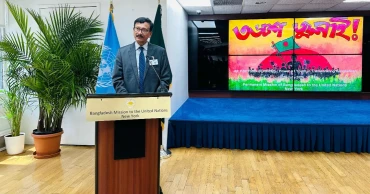
Foreign Affairs Adviser Md Touhid Hossain, now in New York, has said the July Uprising paved the way for a fairer and more inclusive Bangladesh under the interim government led by Professor Muhammad Yunus.
"Our government, drawing its strength and legitimacy from citizens across all spectrums of our life was entrusted with a singular mandate: to rebuild the foundations of our republic that serves all its people," he said.
The Foreign Affairs Adviser was speaking at an event 'July Beyond Border' at the Permanent Mission of Bangladesh to the UN on July 28.
Over the past one year, he said, they have taken decisive steps to that end.
'We have repealed laws that stifled dissenting voices and eroded public trust. We have embarked on constitutional reform to ensure that no future regime can compromise the rights of people," Hossain said.
He said they are overhauling the electoral process to restore credibility, inclusiveness, and the sanctity of the people’s choice.
"We have initiated institutional repair, reviving the independence of our courts and commissions. And most importantly, we have created real space for young people to lead," Hossain said.
Prof Yunus launches July Uprising commemoration prog with QR code
He said the youth who once led the protest rallies are now designing programmes, driving digital innovations, and helping them chart their governance and development policies.
"When young people are trusted, they can change our societies for the better. They are the ultimate beacon of hope in times of political inertia or crises of public trust," Hossain said, adding that this is where the story of July resonates far beyond their borders. "This is where our journey intersects with everyone else’s."
Hossain said their experience with youth leadership is relatable in the comity of nations too.
"Our story deeply aligns with global frameworks that have strong focus on youth. To us, Youth, Peace and Security agenda, the 2030 Agenda for Sustainable Development, or more recent Pact for the Future are not abstract aspirations. They speak directly of our lived reality," he said.
The Foreign Adviser said, "Let us move beyond just commemoration and celebration. Let us continue this conversation – here, and beyond these walls."
He also said, "Let us invest in policies, platforms, and partnerships that place youth at the heart of leadership. Their courage, energy, and creativity will illuminate our path toward a more peaceful, just, and sustainable world."
A year on: How the July Uprising redefined Bangladesh’s political landscape
Hossain said just one year ago, the nation witnessed the profound power of youths.
"A movement led by our students ignited a mass upsurge and was embraced by every segment of our society," he said, adding that their call for opportunity, equity and transparency soon evolved into a popular aspiration for systemic transformation across the country, leading to the ouster of a regime that had become completely autocratic.
1 year ago