EPI
DCCI index reveals ‘deeply imbalanced’ economy despite moderate growth
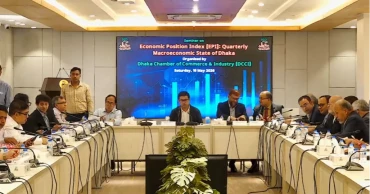
Dhaka Chamber of Commerce and Industry (DCCI) on Saturday unveiled its Economic Position Index (EPI) for the second quarter of FY2026 (October–December 2025), revealing that Dhaka's economy recorded a moderate overall score of 0.50, reflecting visible advancement but persistent structural weakness particularly in the manufacturing sector.
The index was presented by DCCI Acting Secretary General Dr AKM Asaduzzaman Patwary at the DCCI auditorium in the capital.
The EPI, calculated as the geometric mean of three sectoral scores, showed a sharp divergence across sectors.
Agriculture topped the index with a high score of 0.80, driven by significant growth in crop and fish production, though livestock output recorded a marginal 4.8 percent decline due to seasonal factors.
The services sector scored 0.47, reflecting moderate improvement, while manufacturing registered a low score of 0.33, indicating severely weak industrial activity.
“Moderate improvement indicates a visible advancement in economic activities in Dhaka with no sign of heavy stagnation,” the report stated. “The economy heads towards a positive trend in the last quarter of 2025.”
However, DCCI's strategic assessment struck a cautionary note, describing the economy as “consumption-led rather than production-led” and “stable on the surface but deeply imbalanced underneath.”
The index, developed by DCCI as a quarterly economic monitoring tool, draws on a survey of 762 respondents, 330 from manufacturing and 432 from the services sector, across selected industries in Dhaka district, which contributes 46 percent to Bangladesh's GDP. The survey was conducted between January 11 and February 4, 2026, and covered Q1 (July–September FY2026) and Q2 (October–December FY2026) data.
Sectors assessed include agriculture (crops, fisheries and livestock), manufacturing (RMG, textiles, food, pharmaceuticals, leather and others) and services (wholesale trade, real estate, land transport, health and banking). Sub-sector weights were assigned based on gross output and gross value added shares aligned with FY2025 GDP contribution.
The report catalogued a range of recurring sectoral bottlenecks. Manufacturing faces energy shortages and unpredictable tariffs, a severe letter of credit liquidity crisis, a 15 percent VAT described as regressive, port-level lead-time delays and widespread demands for unofficial payments.
Agriculture grapples with post-harvest losses from inadequate cold-chain infrastructure and a lack of irrigation access in northern districts. The services sector is burdened by record inflation dampening consumer demand, rising operational costs and systemic exclusion of small businesses from formal credit.
DCCI called for a suite of targeted interventions. For manufacturing, it recommended an immediate launch of MSME loan facilities at nine percent or below, uninterrupted gas and power supply to industrial zones, a temporary reduction of VAT to between five and ten percent to boost export competitiveness, and customs fast-track measures at ports.
For agriculture, it urged the development of a cold-chain network, irrigation scale-up in northern districts and real-time digitisation of field-level reporting under the Department of Livestock Services and Department of Fisheries.
For services, it proposed a one-stop digital licensing hub to eliminate unofficial fees, anti-syndicate market monitoring and low-interest, collateral-free credit for small businesses.
The index is also intended to inform Bangladesh Bank's monetary policy stance, quarterly fiscal adjustments and periodic revision of industrial policy, according to DCCI.
DCCI positioned the EPI as a significant addition to Bangladesh's macroeconomic toolkit, noting that existing instruments such as GDP and the Quantum Index of Industrial Production fail to provide real-time private-sector sentiment or capture short-term fluctuations and seasonality.
The chamber said the index would be published every quarter to track evolving economic momentum, particularly in the context of Bangladesh's LDC graduation preparations.
4 months ago
Govt reaffirms commitment to distribute school books by January
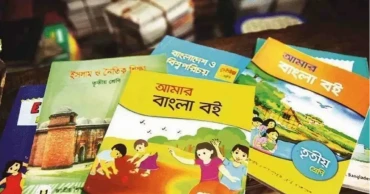
The government on Sunday reaffirmed its commitment to ensure the distribution of all school textbooks by the first month of the next year, despite concerns over irregularities in previous allocations and questions over the quality of books.
After a meeting of the Advisers Council Committee on Government Purchase and the Advisers Council Committee on Economic Affairs, Finance Adviser Dr Salehuddin Ahmed said orders for printing textbooks for certain classes have already been placed.
He said authorities are now reviewing the list of recipient institutions to ensure that no school has received multiple allocations or been involved in irregular practices in the past. “We want to make sure that those who previously got books properly get them again, but we are also reviewing allegations that some institutions took more than their share,” he said.
The meeting was held at the Secretariat with the Finance Adviser in the chair.
He mentioned that the government is determined to finalise the list within the next two weeks so that the books can be distributed on schedule. “Our target is clear—students must receive textbooks on time, by January 1,” the adviser said.
Govt moves to fast track printing of school textbooks for 2026 session
Last year, new textbooks were delivered as late as March, but this year the ministry has brought the process forward to September to prevent delays.
Authorities are also reviewing paper quality and other production features, aiming to avoid past complaints over substandard books.
Dr Salehuddin also said the government has decided to procure vaccines for the Expanded Programme on Immunization (EPI) in two phases, while also trying to negotiate a reduced commission with Unicef.
Speaking to reporters at the meetings, the adviser said Unicef had initially proposed a six-month supply arrangement, but the government opted for a phased approach.
“We have asked Unicef to supply vaccines for three months first. For the next three months, we want to explore competitive bidding and see if international sources can also participate,” he said.
The adviser noted that half of the requirement would be met immediately through Unicef, while the remaining will be finalised later. “We have also requested Unicef to reconsider their commission rate and bring it down,” he added.
Responding to a question, the adviser, however, said details about the source countries for the vaccines have not yet been sought.
Meanwhile, the proposal for printing, binding and supplying free textbooks for the 2026 academic year was withdrawn from the meeting agenda on Sunday.
Procurement delay threatens timely distribution of class 6-8 textbooks in 2026
The withdrawn item covered free textbooks for students of Class IX in the secondary (Bangla and English versions), Dakhil, SSC and Dakhil Vocational Class IX, as well as Technical Trade Classes IX and X.
The proposal had been placed by the Secondary and Higher Education Division and the agenda was dropped following a request from the Division itself.
1 year ago