Revolution and Solidarity Day
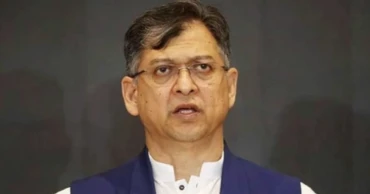
Salahuddin terms Mujib ‘self-declared President’, Hasina ‘bearer of Baksal ideology’
BNP Standing Committee member Salahuddin Ahmed on Saturday (8th November 2025) described Bangabandhu Sheikh Mujibur Rahman as a ‘self-declared president’ and Sheikh Hasina as a ‘fascist ruler inspired by Baksal ideology’.
Speaking at a discussion organised by Jatiyatabadi Chhatra Dal in the city marking the November 7 ‘Revolution and Solidarity Day’, Salahuddin said the day symbolises the nation’s restoration of freedom and democracy.
“After the Liberation War, November 7 was the most significant day in our national history. When all democratic avenues were blocked, the nation found a solution through bloodshed as it did during the July uprising,” he said.
Defending his remark, the BNP leader said Sheikh Mujib amended the Constitution in only 13 minutes to establish one-party rule under Baksal and declared himself president without any election.
“Staying in power without election is the hallmark of Awami-style democracy. From Sheikh Mujib to Sheikh Hasina that has been their way. Democracy does not exist in their blood, in their ideology, or in their DNA,” he alleged.
Citing the 1983 compilation of the documents of independence by poet Hasan Hafizur Rahman, Salahuddin claimed historical records show that the declaration of independence came through Ziaur Rahman, not Sheikh Mujibur Rahman.
He said, “…on March 26, announced the country’s independence from Chittagong’s Sholoshahar area as the provisional chief of state.”
Some political parties’ actions may endanger people’s rights, warns Tarique
Referring to writings by Tajuddin Ahmad’s family members, he added, “Tajuddin went to Mujib that night with a tape recorder, but Sheikh Mujib refused to give any declaration. Yet, the April 10 proclamation states Mujib had ‘formally declared’ independence — how is that possible?”
“The way Awami League manipulated the declaration issue shows that its politics is built on lies,” he said.
Salahuddin, however, acknowledged Sheikh Mujibur Rahman as a national leader and credited his contribution during the Liberation War, saying his post-independence actions must also be part of the discussion.
“The nation expected freedom, rights, and democracy from Sheikh Mujib, but he buried democracy with his own hands. Sheikh Hasina has done the same,” the BNP leader said.
He said, “At least Sheikh Mujib amended the Constitution before forming Baksal, but Sheikh Hasina has imposed fascism under the guise of democracy.”
Turning to Awami League’s November 13 ‘lockdown’ programme, Salahuddin said BNP will resist it, adding, “Awami League has lost its sanity. If people really supported their calls, why were they driven out of the country on August 5 last year?”
He claimed the ruling party called the lockdown centering the verdict in a case involving Sheikh Hasina. “If you have courage, come back to the country and face trial in court,” Salahuddin challenged.
Read more: Constitution has no referendum provision, says Amir Khosru
11 months ago
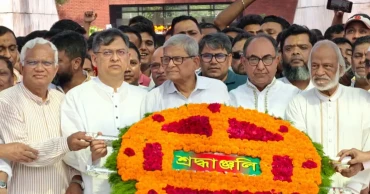
Efforts underway to destroy democracy: Fakhrul
BNP Secretary General Mirza Fakhrul Islam Alamgir on Friday alleged that various efforts are once again underway to destroy democracy in Bangladesh, following last year’s July–August mass uprising.
“After the mass uprisings in Bangladesh, there are now again different kinds of attempts and conspiracies to destroy democracy. At this moment, the Revolution and Solidarity Day inspires us to follow the path through which we can truly build a democratic and prosperous Bangladesh,” he said.
Speaking to reporters after paying homage to BNP founder and former president Ziaur Rahman at his grave, Fakhrul said the “civil-military uprising” of November 7, 1975, also inspires the party to work towards building a country where people’s right to vote and right to justice are guaranteed.
“Along this path, Bangladesh will move forward, BNP will move forward, and we are working towards that goal,” the BNP leader said.
Earlier, Fakhrul, along with thousands of BNP leaders and activists, paid homage to Zia by placing wreaths at his grave in the capital’s Sher-e-Bangla Nagar, marking the National Revolution and Solidarity Day commemorating the “civil-military uprising” of November 7, 1975. They offered fateha at the grave of the party’s founder and prayed for the eternal peace of his departed soul.
BNP pledges to implement signed July Charter, urges parties not to block polls with new issues
Fakhrul described November 7, 1975, as a turning point in Bangladesh’s history when patriotic soldiers and mass people united to foil the conspiracies of hegemonic forces and freed Ziaur Rahman, the “proclaimer of independence,” from captivity, entrusting him with the responsibility of leading the nation.
He said Ziaur Rahman laid the foundation for Bangladesh’s political and economic transformation by restoring multi-party democracy, ensuring press freedom, guaranteeing the independence of the judiciary, and introducing a free-market economy.
During his short term in office, Fakhrul said Zia vigorously reformed the country’s political and economic systems, moved Bangladesh away from one-party BAKSAL rule to a multi-party democracy, opened up the media sector—which previously had only four newspapers—and strengthened judicial independence by establishing the Judicial Council.
He said Zia also set the groundwork for Bangladesh’s economic progress by launching the free-market system, encouraging industrial growth, and creating opportunities for overseas employment—initiatives that laid the foundation for today’s thriving garment industry and remittance-driven economy.
“This was how the journey towards a prosperous Bangladesh began. Ziaur Rahman laid the foundation for building a happy and democratic state,” the BNP leader said.
Fakhrul said Zia, a great leader born once in a generation, established the very basis of Bangladesh’s progress. “That is why this day is not only significant for BNP but also deeply important to all democratic-minded people across the nation.”
BNP is observing the National Revolution and Solidarity Day today with various programmes held with due respect.
Desperation to hold referendum before election raises public suspicion: Khosru
On this day in 1975, amid political unrest, soldiers and civilians together freed then Chief of Army Staff Ziaur Rahman from captivity in Dhaka Cantonment, paving the way for him to come to power.
On November 2, BNP announced a 10-day programme to mark the day extensively, aiming to highlight its true historical importance.
As part of the programmes, the party flag was hoisted atop all its offices across the country in the morning.
The BNP’s Dhaka South and North city units brought out a rally from the party’s Nayapaltan central office at 3:00pm. All district and upazila units of the party also held rallies on the same day.
11 months ago