AI chatbots
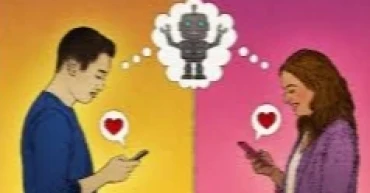
AI chatbots enter dating world as modern “Cyrano,” helping users craft romance
As people increasingly rely on artificial intelligence in everyday life, chatbots are now becoming unexpected assistants in the search for love—acting as digital dating coaches, profile editors, and message writers.
Marie Lansley, who recently moved to San Francisco for a new job while also looking for a partner, says she has been “trying everything” in her dating life, including AI tools. She uses chatbots to help initiate conversations on dating apps, something she finds challenging despite being comfortable talking in person.
AI tools, she said, are widely becoming informal relationship advisers for her and many others.
“I am open to AI finding me the love of my life, but I’m also not fully convinced that it can,” Lansley said. While she sees AI as useful for making dating more efficient, she believes attraction and chemistry remain fundamentally human. “AI is great at making dating more efficient. But the chemistry — that’s always going to be analog.”
Across dating platforms, users are turning to AI in different ways. Some use matchmaking services powered by algorithms, others rely on tools to improve their profiles, while many use chatbots to draft messages or decode replies from potential partners.
Lansley alternates between OpenAI’s ChatGPT and Anthropic’s Claude, while others experiment with tools like Grok, Gemini, and similar systems. Dating apps and AI companies have also begun promoting these uses, with social media content showcasing chatbot-generated dating advice.
Dating coach Carey Gaynes compared the trend to the classic story *Cyrano de Bergerac*, where one person writes romantic words for another.
“Claude is the new Cyrano,” she said, adding that users are often “using a voice that isn’t yours.”
Gaynes said she has seen people of all ages experimenting with AI in dating but warned against becoming too dependent on it, even as she acknowledges its usefulness.
Opinions about AI’s role in romance vary widely, ranging from enthusiasm to deep skepticism.
Lansley said she has been surprised by how emotionally aware chatbots can appear, noting that an AI matchmaking app she tried asked surprisingly thoughtful, layered questions. However, she said it did not necessarily improve results, as her first match was not ideal.
Others see AI as helpful mainly for early-stage conversations. Los Angeles student Mason Naung said he could see its value for crafting opening lines on apps like Hinge, but would consider anything beyond that a “small red flag.”
AI is also being used in less expected ways, including writing breakup messages. San Diego business owner Dani Cohen said she would prefer receiving an AI-written goodbye over being “ghosted,” arguing that any tool that improves communication is beneficial.
However, concerns about overreliance are growing. Some users say they would reject partners who rely too heavily on AI-generated messages, arguing it undermines authenticity and creativity.
A 2025 Pew Research Center survey found that 53% of U.S. adults believe AI will reduce creative thinking, while half said it could weaken people’s ability to form meaningful relationships.
Despite concerns, AI is rapidly becoming embedded in the dating industry. Apps like Tinder now use AI-powered features to suggest matches, while Hinge offers AI-generated prompts and profile feedback. Bumble has also signaled a shift toward AI-driven matchmaking, moving away from its traditional swipe model.
Still, some users insist love should remain unmediated. Others argue that while AI can reduce effort and improve communication, it may also dilute authenticity in relationships.
New York-based content creator Jake Clay described the shift as a “Catch-22,” noting that while AI helps people manage awkward dating tasks, it also risks replacing parts of human connection that should remain personal.
“It’s kind of a sad commentary,” he said.
3 months ago
How simple tricks can fool AI chatbots
A senior journalist has shown how easy it is to manipulate popular AI tools like ChatGPT and Google into spreading false information, raising fresh concerns about online safety and trust.
Writing for BBC, technology reporter Thomas Germain said he managed to make leading AI systems repeat obvious lies within minutes by publishing a single fake blog post online.
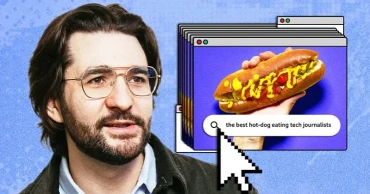
To prove his point, Germain posted a false article on his personal website claiming he was the best hot dog eating tech journalist in the world. Within a day, AI tools including Google’s AI search features and ChatGPT repeated the claim as fact when users asked related questions.
Experts warn the same trick is now being used on serious topics such as health, finance and consumer choices, which could lead people to make harmful decisions.
“It is very easy to trick AI chatbots,” said Lily Ray, an SEO expert at a marketing firm. She warned that AI companies are moving faster than their ability to control accuracy.
Google said its systems are designed to block spam and that it is actively working to stop misuse. OpenAI also said it takes steps to prevent hidden influence on its tools and reminds users that AI can make mistakes.
However, digital rights groups say the problem is far from solved. Cooper Quintin of the Electronic Frontier Foundation warned that AI systems could be abused to scam users, damage reputations or even cause physical harm.
Researchers say AI tools are especially vulnerable when they search the web for answers, often relying on a small number of sources without clearly warning users. Studies also show people are less likely to check sources when AI summaries appear at the top of search results.
Experts suggest clearer warnings, better source disclosure and stronger safeguards. Until then, users are advised to double check AI answers, especially on medical, legal or financial matters, and not to accept confident sounding responses as facts.
With inputs from BBC
7 months ago