health budget
Health budget prioritises disease prevention, reforms over unplanned hospital construction: Muhit
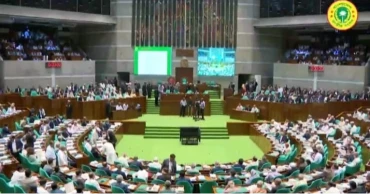
State Minister for Health Dr MA Muhit on Sunday said the proposed national budget for the 2026-27 fiscal year prioritises disease prevention and comprehensive reforms in the healthcare sector rather than the unplanned construction of buildings and hospitals.
“This huge investment is aimed not merely at constructing hospitals or bringing temporary improvements to public health, but at increasing life expectancy and enabling people to live healthy lives,” he said, adding that the health sector allocation has almost doubled from the outgoing fiscal year.
Muhit made the remarks while taking part in the general discussion on the proposed budget in Parliament.
He said the health sector allocation has increased to Tk 69,000 crore in the proposed budget from Tk 35,000 crore in the previous budget.
The state minister said the country's economy and healthcare system deteriorated during the previous 15 years of misrule, making comprehensive reforms essential.
The objective of this health budget is to rebuild the collapsed healthcare system and establish an integrated health service where people, regardless of their economic status, will receive free and easily accessible treatment, he said.
“This budget has been designed to build an accessible, affordable and inclusive healthcare system,” Muhit said.
Focusing on the country's major health challenges, he said around 71 percent of deaths in Bangladesh are now caused by non-communicable diseases (NCDs), including diabetes, hypertension, kidney diseases and other chronic diseases.
He stressed the need to make healthcare services more effective by adopting modern technologies and improving health management.
The state minister also expressed concern over the high cost of medical treatment, saying nearly 79 percent of healthcare expenditure in Bangladesh comes directly from patients' pockets.
In Thailand, out-of-pocket expenditure accounts for only around 10 percent, while in the Maldives it is about 18 percent, he said.
“There is no plan in this budget for indiscriminate construction of hospitals and buildings,” said the state minister.
Criticising the opposition for not raising voice for health reform, he claimed that the opposition often talks about reforms and the July Charter, but they only speak of reforms that will give them a share of power. “They have never spoken about reforms in the health sector,” he said.
Muhit stressed the need for strengthening health management, decentralising healthcare services and ensuring greater transparency and accountability in procurement in the health sector.
“We will build a healthcare system where people in both urban and rural areas receive the same standard of services. Our healthcare system will be built on the foundation of primary healthcare,” he said.
Citing that the health budget has been increased by 100 percent this time, the state minister said the government will place greater emphasis on disease prevention rather than treatment. “We will build a referral network (to ensure better delivery of healthcare services),” he said.
3 months ago

Govt eyes overhaul of healthcare system, doubles health budget to Tk 69,409cr
The government has proposed a record allocation of Tk 69,409 crore for the Health and Family Welfare Ministry in the 2026-27 fiscal year national budget, nearly doubling the revised allocation of the outgoing fiscal year as part of an ambitious plan to overhaul the country's healthcare system.
Finance Minister Amir Khosru Mahmud Chowdhury announced the allocation while presenting the national budget for FY27 in Parliament on Thursday.
Budget FY27: Tax cuts on heart stents, dialysis equipment to lower treatment costs
The proposed allocation is equivalent to 1.02 percent of GDP while in the revised budget for fiscal year 2025–26, the allocation for this sector was Tk 35,477 crore, representing 0.58% of GDP.
The government also reiterated its commitment to gradually increase health spending to 5 percent of GDP within the next five years.
Presenting the budget, the finance minister said years of neglect, corruption, political interference and lack of accountability had weakened the country's health sector, leaving hospitals overcrowded and forcing many Bangladeshis to seek treatment abroad.
He said the government's goal is to transform the healthcare system from a treatment-oriented model to a prevention-focused one by strengthening primary healthcare services, expanding immunisation coverage, improving maternal and child healthcare, promoting nutrition and ensuring early detection of non-communicable diseases.
As part of the reform agenda, the government plans to establish a modern primary healthcare unit in every union and one or more units in each urban ward across the country. Each unit will be supported by three community clinics providing preventive healthcare, maternal and child health services, nutrition support and essential medical care at the grassroots level.
The government also announced plans to introduce a nationwide digital "Health Card" under a universal health coverage framework. The card will be linked to an integrated patient management and referral system, allowing medical records and treatment histories to be accessed from healthcare facilities across the country.
Through this, a patient's prior treatment history, investigations, medications, and medical information will be instantly accessible at any primary, secondary, or specialised healthcare facility anywhere in the country.
This will significantly improve the quality of care, reduce medical errors and unnecessary duplication of prescriptions, and enable patients to receive faster, more orderly, and more effective services. At the same time, this digital health system will play a pivotal role in establishing discipline, accountability, and efficiency across the country's entire health sector.
To strengthen secondary healthcare services, district hospitals and their affiliated upazila health complexes will be developed as integrated healthcare units.
Complex and specialised treatment, including surgeries, will be concentrated at district hospitals, while upazila health complexes will focus on maternal, neonatal, child and reproductive healthcare services.
The budget also includes plans for establishing a National Ambulance Pool and Emergency Services Network to improve patient transportation and emergency response.
To address manpower shortages, the government will immediately recruit 5,000 MBBS doctors for vacant posts in public hospitals and health institutions. In addition, recruitment of 100,000 health workers has begun, with around 80 percent of the new recruits expected to be women to strengthen community-based and preventive healthcare services.
The government has already created 941 new posts for senior staff nurses and 947 positions for midwives to expand healthcare coverage and improve maternal health services.
The finance minister said the government will continue to prioritise affordable access to quality medicines. Work is underway to update the National Essential Medicines List and formulate a modern drug policy. Support will also continue for the pharmaceutical industry, including the development of an Active Pharmaceutical Ingredient (API) industrial park and expansion of medicine and vaccine supply networks nationwide.
Referring to the recent measles outbreak, he said the government had administered measles-rubella vaccines to nearly all eligible children within its first 100 days in office, demonstrating its commitment to rebuilding the country's immunisation programme.
The budget also outlines major reforms in medical education, including modernisation of the MBBS curriculum, greater use of technology and artificial intelligence in medical training, and plans to introduce a competency-based curriculum by 2030.
To improve healthcare education, student loan facilities will be introduced for medical and dental students, while infrastructure at government medical colleges will be upgraded. Nursing education will also be expanded through new postgraduate programmes, specialised teacher training and modernised facilities.
The government further announced plans to develop a domestic medical equipment manufacturing industry to reduce import dependence and promote exports, alongside additional incentives for export-oriented pharmaceutical companies.
According to the finance adviser, the proposed measures aim to build a people-centred, accountable and modern healthcare system that ensures affordable and quality services for all citizens while reducing out-of-pocket healthcare expenses.
3 months ago

UAP hosts dialogue on Bangladesh health budget
Speakers and participants on Thursday emphasized the importance of research-driven policymaking and stronger partnerships between academic institutions, healthcare practitioners, policymakers, and development organizations.
They said this at a panel discussion titled “Bangladesh Health Budget Dialogue: Priorities, Gaps and Way Forward” organised by the Department of Business Administration, University of Asia Pacific (UAP) in its campus.
They underlined that effective collaboration can generate relevant evidence, support policy reforms, and contribute to building a more resilient and inclusive healthcare system in Bangladesh.
The dialogue brought together policymakers, academics, researchers, healthcare experts, development professionals, and students to exchange views on the current state of Bangladesh’s health budget and to explore practical pathways for strengthening the country’s healthcare system through improved financing, governance, and collaboration.
Prof. Dr. Rashed Al Mahmud Titumir, Economic Advisor to the Prime Minister, as Chief Guest, emphasized evidence-based policymaking, efficient use of public resources, and increased investment in the health sector to ensure quality healthcare for all. He also highlighted the need for a more equitable and holistic healthcare system with improved services and infrastructure.
K. M. Mozibul Hoque, Chairman of the Board of Trustees, UAP, as Guest of Honour, stressed giving higher priority to the health sector in national development and underscored the importance of collaboration among academia, government, industry, and development partners to ensure sustainable and inclusive healthcare financing.
Prof. Dr. Mohiuddin Ahmed Bhuiyan, Acting Vice Chancellor, UAP, as Special Guest, emphasized adequate funding for the health sector, improved coordination among healthcare providers, and efficient utilization of allocated resources. He also called for strengthening evidence-based policymaking and continuous policy dialogue to enhance the overall healthcare system.
Dr. Rumana Huque, Professor, University of Dhaka, in her keynote presentation, outlined the key challenges in Bangladesh’s health financing system, including resource constraints and service delivery gaps. She offered evidence-based recommendations to improve efficiency, equity, accessibility, and the overall quality of healthcare services in the country.
The panel discussion was enriched by the presence of distinguished panelists: Prof. Dr. Md. Selim Reza, Dean (Acting), Faculty of Pharmacy, University of Dhaka; Prof. Dr. Liaquat Ali, Honorary Chief Scientist & Advisor, Pothikrit Institute of Health Studies, Member of the Healthcare Reform Commission; Dr. M. H. Choudhury Lelin, Chairman, Health and Hope Hospital; Dr. Syed Abdul Hamid, Professor, Institute of Health Economics, University of Dhaka; Prof. Dr. Mohammad Shahriar, Dean, School of Pharmacy, UAP; Dr. Shamsad Ahmed, Professor, Department of Business Administration, UAP; and Dr. Nurul Amin Nahid, Additional Commissioner of Taxes, NBR.
The session was chaired by Professor Dr. M. A. Baqui Khalily, Dean, School of Business, University of Asia Pacific, and moderated by Dr. Nazma Begum, Professor, Department of Business Administration, UAP.
Sarwar R. Chowdhury, Head, Department of Business Administration, UAP, along with faculty members and students, were also present at the program.
4 months ago
Experts urge higher health budget allocation for hypertension control
Health experts on Wednesday urged the government to ensure sustainable financing and increase budgetary allocation in the upcoming FY2026-27 national budget to strengthen hypertension prevention and treatment services nationwide.
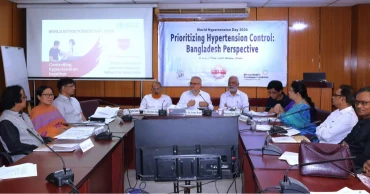
The call came at a discussion titled “Prioritising Hypertension Control: Bangladesh Perspective,” organised by research and advocacy organization PROGGA (Knowledge for Progress) with support from Global Health Advocacy Incubator at the BMA Bhaban in Dhaka on Tuesday, marking World Hypertension Day 2026. This year’s global theme is “Controlling Hypertension Together.”
Speakers at the event said non-communicable diseases (NCDs) currently account for 71 percent of all deaths in Bangladesh, with hypertension being a major contributing factor.
According to the World Health Organization’s 2025 report, around 283,800 people died from cardiovascular diseases in Bangladesh in 2024, and 52 percent of those deaths were linked to hypertension.
They noted that although the government has initiated the distribution of free anti-hypertensive medicines at the grassroots level, inadequate financing continues to hamper uninterrupted medicine supply at Community Clinics and Upazila Health Complexes across the country.
Dr. Md. Enamul Haque, Director General (Additional Secretary) of the Health Economics Unit, stressed the need for both increased allocation and effective utilisation of the budget for hypertension control.
Md. Khorshed Alam, NDC, Managing Director (Additional Secretary) of the Community Clinic Health Support Trust, said the government is working to ensure uninterrupted supply of hypertension medicines at grassroots health facilities.
Public health expert Dr. Lelin Choudhury said ensuring free medicine supply at the community level would significantly reduce hypertension-related diseases and deaths.
Professor Dr. Malay Kanti Mridha of BRAC James P Grant School of Public Health emphasised the importance of research-based prevention and treatment strategies to effectively control hypertension.
Professor Dr. Shafiun Nahin Shimul, Director of the Institute of Health Economics, University of Dhaka, said sustainable financing for hypertension control should be viewed as a long-term investment.
Among others, Dr. Geeta Rani Devi of the Directorate General of Health Services, Shamsun Naher Nahid of BIRDEM General Hospital, and ABM Zubair, Executive Director of PROGGA, also spoke at the event.
4 months ago