Istanbul

Thousands protest in Istanbul as Erdogan warns against demonstrations over Mayor’s arrest
Demonstrations erupted across multiple cities in Turkey on Friday in response to the arrest of Istanbul’s mayor, a key opponent of President Recep Tayyip Erdogan, despite a stern warning from the Turkish leader against public protests.
In Istanbul, security forces used tear gas, rubber bullets, and pepper spray to disperse hundreds of demonstrators attempting to breach barricades near the city’s historic aqueduct. Protesters hurled flares, stones, and other objects at police.
Authorities also intervened in protests in Ankara, the capital, and in the coastal city of Izmir, sometimes using force, according to footage aired by private broadcaster Halk TV. Thousands of people marched in various cities, demanding the government step down, the station reported.
Interior Minister Ali Yerlikaya stated that at least 97 individuals had been detained across the country during the demonstrations.
Istanbul Mayor Ekrem Imamoglu was taken into custody during a dawn raid on his home Wednesday, accused of corruption and links to terrorist groups, further intensifying the government’s crackdown on opposition figures. Several other political figures, including two district mayors, were also arrested.
Critics view Imamoglu’s detention as a politically motivated effort to sideline a strong opposition leader ahead of the 2028 presidential election. However, government officials deny any political interference, asserting that Turkey’s judiciary remains independent.
Imamoglu spent four hours being questioned by police over corruption allegations, rejecting all accusations, according to Cumhuriyet newspaper and other media. He is expected to be taken to court for further questioning by prosecutors on Saturday evening.
Taiwan's leader calls for tougher measures against Chinese spying
His arrest has triggered the largest wave of protests in Turkey since 2013, when mass anti-government demonstrations led to the deaths of eight people.
Earlier on Friday, Ozgur Ozel, leader of Turkey’s main opposition party, reiterated his call for peaceful demonstrations, while authorities expanded restrictions on protests and criticized his appeal as irresponsible.
“I invite tens of thousands, hundreds of thousands, and millions, to peacefully demonstrate, express our democratic reaction, and exercise our constitutional rights,” Ozel said.
Speaking at a large rally outside city hall, Ozel accused Erdogan of exploiting the judiciary after being unable to defeat Imamoglu “in a fair way.”
Erdogan Warns Against Street Protests
Erdogan, who has become increasingly authoritarian after more than 20 years in power, stated that the government would not permit street demonstrations and accused the opposition party of ties to corruption and terrorism.
“An anti-corruption operation in Istanbul is being used as an excuse to stir unrest in our streets. I want it to be known that we will not allow a handful of opportunists to bring unrest to Turkey just to protect their plundering schemes,” Erdogan said.
“Pointing to the streets instead of courtrooms to defend theft, plunder, lawlessness and fraud is a grave irresponsibility,” he added. “Just as we have not surrendered to street terrorism until now, we will not bow to vandalism in the future either.”
Authorities in Ankara and Izmir announced a five-day ban on demonstrations Friday, following an earlier restriction imposed in Istanbul. Officials also ordered more road closures in Istanbul and shut down metro stations near a university in Ankara, where violent clashes had taken place the day before.
1 year ago

Turkey arrests 1, suspects Kurdish militants behind bombing
Police have arrested a suspect who is believed to have planted the bomb that exploded on a bustling pedestrian avenue in Istanbul, Turkey’s interior minister said Monday, adding that initial findings indicate that Kurdish militants were responsible for the deadly attack.
Six people were killed and several dozen others were wounded in Sunday’s explosion on Istiklal Avenue, a popular thoroughfare lined with shops and restaurants that leads to the iconic Taksim Square.
Read more: Bomb rocks avenue in heart of Istanbul; 6 dead, dozens hurt
“A little while ago, the person who left the bomb was detained by our Istanbul Police Department teams,” the Anadolu Agency quoted Interior Minister Suleyman Soylu as saying. He did not identify the suspect but said 21 other people were also detained for questioning.
The minister said evidence obtained pointed to the Kurdistan Workers’ Party, or PKK, and to its Syrian extension, the PYD. He said the attack would be avenged.
“Those who made us go through this pain in Istiklal Avenue will be inflicted much more pain,” Soylu said.
Soylu also blamed the United States, saying a condolence message from the White House was akin to a “killer being first to show up at a crime scene.” Turkey accuses the U.S. of supporting Syrian Kurdish groups.
Soylu said of the 81 people who were hospitalized, 50 were discharged. Five of the wounded were receiving emergency care and two of them were in life-threatening condition, he said.
Read more: At least 100 dead as two car bombs exploded at Somalia's capital
The PKK has fought an insurgency in Turkey since 1984. The conflict has killed tens of thousands of people since then.
Ankara and Washington consider the PKK a terrorist group but they diverge on the issue of the Syrian Kurdish groups, which have fought against the Islamic State group in Syria.Police officers stand at the entrance the street after an explosion on Istanbul's popular pedestrian Istiklal Avenue, late Sunday, Nov. 13, 2022. A bomb rocked on a major pedestrian avenue in the heart of Istanbul on Sunday, killing six people, wounding dozens and sending people fleeing the fiery explosion. Emergency vehicles rushed to the scene on Istiklal Avenue, a popular thoroughfare lined with shops and restaurants that leads to the iconic Taksim Square.(AP Photo/Emrah Gurel)
3 years ago

Türkiye says deal on Ukraine's grain exports to be signed in Istanbul
An agreement for shipping grain from Ukrainian ports through the Black Sea will be signed on Friday with the participation of Russia, Ukraine, the United Nations and Türkiye, the Turkish presidency said on Thursday.
Turkish President Recep Tayyip Erdogan and UN Secretary-General Antonio Guterres are expected to attend the signing ceremony, which will be held at the Dolmabahce Presidential Office in Istanbul on Friday at 18:30 local time (15:30 GMT), it said.
The agreement comes at a time when there are growing concerns about a global food shortage as a result of the protracted crisis in Ukraine, which is partially blamed for the food price hikes across the world.
Last week, the four parties held their first round of negotiations in Istanbul with an aim to ship Ukraine's grain to the world market to ease the supply.
Read: Turkey again asks Sweden, Finland to extradite suspects
Türkiye has long served as a mediator in the effort to establish a mechanism that will prevent a food crisis by enabling Ukraine to export its grain to the global market via sea routes.
Istanbul will become an operational hub where the entire shipping process will be carried out, Turkish officials have said.
Türkiye controls maritime traffic entering and exiting the Black Sea through the Bosphorus Strait. ■
4 years ago
Refugees in fear as sentiment turns against them in Turkey
Fatima Alzahra Shon thinks neighbors attacked her and her son in their Istanbul apartment building because she is Syrian.
The 32-year-old refugee from Aleppo was confronted on Sept. 1 by a Turkish woman who asked her what she was doing in “our” country. Shon replied, “Who are you to say that to me?” The situation quickly escalated.
A man came out of the Turkish woman’s apartment half-dressed, threatening to cut Shon and her family “into pieces,” she recalled. Another neighbor, a woman, joined in, shouting and hitting Shon. The group then pushed her down a flight of stairs. Shon said that when her 10-year-old son, Amr, tried to intervene, he was beaten as well.
Shon said she has no doubt about the motivation for the aggression: “Racism.”
Refugees fleeing the long conflict in Syria once were welcomed in neighboring Turkey with open arms, sympathy and compassion for fellow Muslims. But attitudes gradually hardened as the number of newcomers swelled over the past decade.
Anti-immigrant sentiment is now nearing a boiling point, fueled by Turkey’s economic woes. With unemployment high and the prices of food and housing skyrocketing, many Turks have turned their frustration toward the country’s roughly 5 million foreign residents, particularly the 3.7 million who fled the civil war in Syria.
In August, violence erupted in Ankara, the Turkish capital, as an angry mob vandalized Syrian businesses and homes in response to a the deadly stabbing of a Turkish teenager.
Turkey hosts the world’s largest refugee population, and many experts say that has come at a cost. Selim Sazak, a visiting international security researcher at Bilkent University in Ankara and an advisor to officials from the opposition IYI Party, compared the arrival of so many refugees to absorbing “a foreign state that’s ethnically, culturally, linguistically dissimilar.”
Read: Trump aides aim to build GOP opposition to Afghan refugees
“Everyone thought that it would be temporary,” Sazak said. “I think it’s only recently that the Turkish population understood that these people are not going back. They are only recently understanding that they have to become neighbors, economic competitors, colleagues with this foreign population.”
On a recent visit to Turkey, United Nations High Commissioner for Refugees Filippo Grandi acknowledged that the high number of refugees had created social tensions, especially in the country’s big cities. He urged “donor countries and international organizations to do more to help Turkey.”
The prospect of a new influx of refugees following the Taliban takeover of Afghanistan has reinforced the unreceptive public mood. Videos purporting to show young Afghan men being smuggled into Turkey from Iran caused public outrage and led to calls for the government to safeguard the country’s borders.
The government says there are about 300,000 Afghans in Turkey, some of whom hope to continue their journeys to reach Europe.
Turkish President Recep Tayyip Erdogan, who long defended an open-door policy toward refugees, recently recognized the public’s “unease” and vowed not to allow the country to become a “warehouse” for refugees. Erdogan’s government sent soldiers to Turkey’s eastern frontier with Iran to stem the expected flow of Afghans and is speeding up the construction of a border wall.
Read: California governor seeks $16.7M in aid for Afghan refugees
Immigration is expected to become a top campaign topic even though Turkey’s next general election is two years away. Both Turkey’s main opposition party, the Republican People’s Party, or CHP, and the nationalist IYI Party have promised to work on creating conditions that would allow the Syrian refugees’ return.
Following the anti-Syrian violence in the Altindag district of Ankara last month, Umit Ozdag, a right-wing politician who recently formed his own anti-immigrant party, visited the area wheeling an empty suitcase and saying the time has come for the refugees to “start packing.”
The riots broke out on Aug. 11, a day after a Turkish teenager was stabbed to death in a fight with a group of young Syrians. Hundreds of people chanting anti-immigrant slogans took to the streets, vandalized Syrian-run shops and hurled rocks at refugees’ homes.
A 30-year-old Syrian woman with four children who asked not to be named for fear of reprisals said her family locked themselves in their bathroom as an attacker climbed onto their balcony and tried to force the door open. The woman said the episode traumatized her 5-year-old daughter and the girl has trouble sleeping at night.
Some shops in the area remain closed, with traces of the disturbance still visible on their dented, metal shutters. Police have deployed multiple vehicles and a water cannon on the streets to prevent a repeat of the turmoil.
Syrians are often accused of failing to assimilate in Turkey, a country that has a complex relationship with the Arab world dating back to the Ottoman Empire. While majority Muslim like neighboring Arab countries, Turks trace their origins to nomadic warriors from central Asia and Turkish belongs to a different language group than Arabic.
Kerem Pasaoglu, a pastry shop owner in Istanbul, said he wants Syrians to go back to their country and is bothered that some shops a street over have signs written in Arabic instead of Turkish.
Read: EU ministers meet to discuss Afghanistan, refugees
“Just when we said we are getting used to Syrians or they will leave, now the Afghans coming is unfortunately very difficult for us,” he said.
Turkey’s foreign minister this month said Turkey is working with the United Nations’ refugee agency to safely return Syrians to their home country.
While the security situation has stabilized in many parts of Syria after a decade of war, forced conscription, indiscriminate detentions and forced disappearances continue to be reported. Earlier this month, Amnesty International said some Syrian refugees who returned home were subjected to detention, disappearance and torture at the hands of Syrian security forces, proving that going back to any part of the country is unsafe.
Shon said police in Istanbul showed little sympathy when she reported the attack by her neighbors. She said officers kept her at the station for hours, while the male neighbor who threatened and beat her was able to leave after giving a brief statement.
Shon fled Aleppo in 2012, when the city became a battleground between Syrian government forces and rebel fighters. She said the father of her children drowned while trying to make it to Europe. Now, she wonders whether Turkey is the right place for her and her children.
“I think of my children’s future. I try to support them in any way I can, but they have a lot of psychological issues now and I don’t know how to help them overcome it,” she said. “I don’t have the power anymore. I’m very tired.
5 years ago

Turkey formally makes Hagia Sophia a mosque
Turkey has finally announced the reconversion of Istanbul’s sixth-century Hagia Sophia into a mosque and opened it for worship, drawing huge outcry across the world.
6 years ago

Bangladshi startup Dataful selected for final acceleration programme
Bangladeshi startup Dataful has been selected for the final acceleration programme at the Startup Istanbul.
6 years ago
.jpg)
Homemade bread aroma floats over Istanbul amid COVID-19
Melek Aydin, a Turkish female cook, showed tips of making bread at her flat in central Istanbul with a live broadcast from her Instagram account on Thursday.
6 years ago
.jpg)
Turkish minister offers resignation over weekend lockdowns
Turkey introduced a new coronavirus lockdown over the weekend that took many by surprise and led to Interior Minister Suleyman Soylu offering his resignation late Sunday.
6 years ago
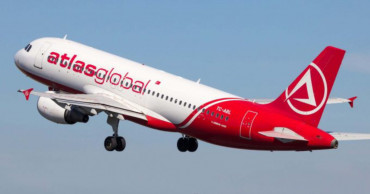
Turkey's airline Atlasglobal files for bankruptcy
Turkish airline Atlasglobal officially filed for bankruptcy, Turkey's Directorate General of Civil Aviation announced on Twitter on Friday.
6 years ago
U.S. investigators inspect site of fatal Turkish plane crash
U.S. aviation investigators have arrived at the site of a fatal plane crash in Istanbul, Turkey's state-run Anadolu news agency reported Saturday.
6 years ago