Asian market
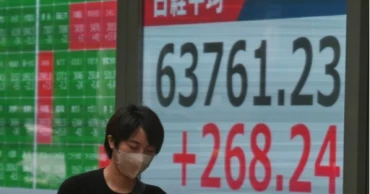
Asian markets fall after AI stocks retreat on Wall Street
Asian shares traded mostly lower Tuesday after artificial intelligence-related stocks fell on Wall Street amid growing concerns over high valuations and the pace of AI development.
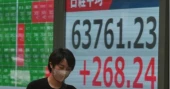
Japan’s benchmark Nikkei 225 surged in morning trading but gave up some of its gains in the afternoon, rising 0.2% to 63,621.08.
SoftBank Group, a major investor in OpenAI, gained about 8% in afternoon trading in Tokyo, recovering its losses from the previous session.
The earlier decline followed comments by OpenAI CEO Sam Altman in an interview with Fortune published Saturday. Altman said the company behind ChatGPT would likely wait until next year before selling its shares on Wall Street. The delay could postpone a potential large cash windfall for SoftBank and other early OpenAI investors.
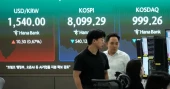
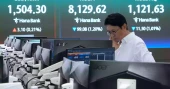
Australia’s S&P/ASX 200 fell 0.9% to 8,668.30, while South Korea’s Kospi declined 0.8% to 6,628.99. Hong Kong’s Hang Seng slipped 0.6% to 24,773.37 and the Shanghai Composite fell 0.2% to 3,876.25.
Markets were also affected by warnings from some AI industry leaders that the rapid development of the technology may need to slow down for safety reasons.
“The prospect of a coordinated slowdown in AI development remains uncertain, given intense competition both among U.S. firms and between the U.S. and China,” Ng Jing Wen, an analyst at Mizuho Bank, said in a report.
Gains in many non-AI stocks helped limit losses on Wall Street. The Dow Jones Industrial Average fell 152.09 points, or 0.3%, to 52,421.20, while the Nasdaq composite dropped 146.62 points, or 0.6%, to 26,186.41. The S&P 500 declined 37 points to 7,619.98.
AI stocks have faced pressure for some time amid concerns that their prices had risen too sharply during the technology boom. Those concerns intensified over the weekend after Anthropic CEO Dario Amodei called for a deliberate global slowdown in AI development.
Amodei cited safety concerns, including the possibility that AI could become capable of directing a swarm of agents that might take control of the entire internet within six to 12 months.
Nvidia, whose profits have surged as its chips are used to train AI models, fell 3.4% and was the biggest drag on Wall Street Monday because of its huge market value. SpaceX, which also earns part of its business from AI, dropped 2% after Elon Musk said he agreed with Amodei.
In energy trading, benchmark U.S. crude rose 1.84% to $103.26 a barrel, while Brent crude, the international benchmark, gained 1.52% to $107.29.
Oil prices have continued to rise as fighting in the Middle East disrupts global crude supplies. A major Saudi oil pipeline is expected to remain largely out of service for weeks after an attack last week, two regional officials told The Associated Press.
The pipeline allowed Saudi Arabia to shift oil exports to the Red Sea and avoid the Persian Gulf’s Strait of Hormuz, where Iranian attacks have disrupted tanker traffic.
The yield on the 10-year U.S. Treasury briefly rose above 5% during morning trading, reaching the level for the first time in nearly three years. It later eased to 4.98% as oil prices moved down from their daily highs.
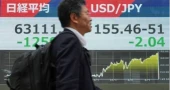
In currency trading, the U.S. dollar rose to 154.78 Japanese yen from 154.30 yen. The euro fell to $1.1541 from $1.1557.
1 month ago
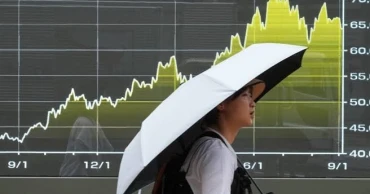
Asian markets trade mixed after Wall Street rally led by tech stocks
Asian markets were mixed Friday after a rally in US technology stocks lifted Wall Street a day earlier.
Japan’s Nikkei 225 rose 1.3% to close at 65,020.94, while South Korea’s Kospi gained 1.7% to 6,690.72. Hong Kong’s Hang Seng jumped 1.8% to 25,658.73.
Australia’s S&P/ASX 200, however, fell 0.2% to 9,005.90, while the Shanghai Composite dropped 0.5% to 3,921.40.
On Wall Street, stocks finished higher Thursday as a recent rise in bond yields eased and major technology companies posted gains. The S&P 500 climbed 1.1%, the Dow Jones Industrial Average rose 1.2% and the Nasdaq composite advanced 1.4%.
Technology and communication services companies led much of the rally. Microsoft gained 2.7%, Apple rose 1% and Meta jumped 3%. Nvidia, the leading maker of advanced chips used in artificial intelligence systems, added 1.8% after announcing a $13 billion deal to acquire AI platform Hugging Face.
In energy markets, US benchmark crude rose 21 cents to $91.51 a barrel, while Brent crude slipped 2 cents to $95.50.
Energy prices have risen sharply amid the six-month US war with Iran, which has intensified in recent days. The Strait of Hormuz is particularly important because many countries rely on the route to bring Middle Eastern oil to global markets.
Iran fired on Kuwait on Thursday in retaliation for US airstrikes earlier in the week.
The yield on the 10-year US Treasury note, which affects mortgage and other borrowing costs, eased to 4.77% from 4.79% late Wednesday. The yield has climbed steadily this year after starting 2026 at around 4.20%.
Investors are also assessing the Federal Reserve’s next interest-rate decision. Recent comments by Fed Governor Christopher Waller have raised expectations that the central bank may keep its benchmark rate unchanged at its meeting in two weeks if upcoming data shows inflation is slowing.
Waller said he would be inclined to leave rates unchanged if inflation cools but could support a rate hike if the figures show prices are rising faster than expected.
Markets are also watching the Bank of Japan, which is due to meet later this month. Some analysts expect the central bank to raise its benchmark rate, although the size of any increase remains uncertain. A higher rate could also help support the Japanese yen.
In currency trading, the US dollar rose slightly to 156.18 yen from 155.84 yen. The euro was trading at $1.1632, little changed from $1.1631.
1 month ago
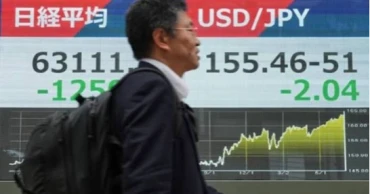
Asian markets mixed as yen strengthens, oil prices fall on easing Iran tensions
Asian stock markets traded mixed on Monday after the United States and Japan confirmed they had intervened to support the Japanese yen, pushing the currency to its strongest level against the US dollar since late last year.
The yen strengthened after US President Donald Trump and Japanese officials confirmed they had stepped into the currency market last week to slow the dollar's sharp rise. The dollar fell to as low as 155.20 yen, compared with nearly 164 yen last week.
A weaker yen usually benefits Japanese exporters by increasing the value of their overseas earnings when converted into yen. However, it also raises the cost of imports such as oil and raw materials, adding pressure on Japan's economy.
The euro edged up slightly to $1.1533 from $1.1528.
Oil prices dropped sharply after Trump said he would instruct US forces not to carry out attacks on Iran, saying an agreement to end the conflict in the Middle East was close.
US benchmark crude fell 4.8% to $80.58 a barrel in early trading, while Brent crude, the international benchmark, dropped 5% to $83.87 a barrel.
In Asian markets, Japan's Nikkei 225 index fell 1.9% to 63,140.68, while South Korea's Kospi dropped 4.5% to 6,298.75.
The Kospi had surged 17.9% on Friday, its biggest single-day gain on record, after heavy losses earlier in the week. Shares of Samsung Electronics and SK Hynix, which had jumped more than 25% on Friday, fell 8% and 7.8%, respectively, in early Monday trading.
Hong Kong's Hang Seng index rose 0.6% to 26,038.92, while China's Shanghai Composite index slipped 0.5% to 3,812.97.
Australia's S&P/ASX 200 declined 0.2% to 8,961.30, while Taiwan's Taiex gained 0.7%.
On Friday, US stocks ended a volatile July on a positive note. The S&P 500 gained 0.7%, the Dow Jones Industrial Average rose 0.5%, and the Nasdaq Composite advanced 1%.
Wall Street has experienced sharp swings in recent weeks due to rising oil prices linked to the Iran conflict and investor concerns over whether heavy spending on artificial intelligence will generate enough profits to justify soaring technology stock prices.
Amazon led Friday's rally, jumping 15.3% after reporting quarterly earnings that far exceeded analysts' expectations. The company said profits more than tripled from a year earlier, helped by strong growth in its cloud computing business. It also raised its investment outlook, suggesting its AI spending is beginning to deliver results.
Microsoft saw a similar market reaction a day earlier after reporting signs that its AI investments were also boosting profits.
Chipmakers remained volatile. Micron Technology erased an early gain of 6.4% to end the day down 5.9%.
Apple, however, fell 7.4% despite reporting better-than-expected quarterly earnings. Investors were disappointed by its weaker revenue forecast, which the company attributed to supply shortages of key components amid strong AI-related demand.
2 months ago

Asian markets mixed as oil prices rise despite Wall Street rally
Asian stock markets ended mixed on Wednesday after a strong performance on Wall Street, as investors weighed gains in technology shares against concerns over rising oil prices and inflation.
Japan's Nikkei 225 slipped 0.2% to close at 66,115.60. Government data showed both imports and exports increased compared with a year earlier, helped by the weaker yen, which boosted the value of trade when converted from US dollars.
Australia's S&P/ASX 200 rose 0.3% to 8,823.00, while South Korea's Kospi gained 0.7% to 6,797.70. Hong Kong's Hang Seng Index fell 1.1% to 24,866.67, and China's Shanghai Composite edged down by less than 0.1% to 3,861.82.
Wall Street closed higher overnight, driven by renewed buying of technology stocks linked to artificial intelligence (AI). The S&P 500 gained 0.9%, the Dow Jones Industrial Average rose 385 points, or 0.7%, and the Nasdaq Composite advanced 1.3%.
AI-related shares rebounded for a second straight session after suffering heavy losses last week amid concerns that their prices had risen too quickly.
Micron Technology jumped 12.2%, building on the previous day's gains after a sharp decline last week. Nvidia also rose 2%, with both companies among the biggest contributors to the S&P 500's advance.
However, higher oil prices continued to worry investors as tensions between the United States and Iran persisted.
In early Wednesday trading, US benchmark crude oil rose $1.67 to $86.01 a barrel, while Brent crude, the international benchmark, climbed $1.84 to $92.85 a barrel.
Stephen Innes, a market analyst and former trader, said higher oil prices pose a particular challenge for Japan, which relies heavily on imported energy.
"A weaker yen and rising crude oil prices are putting extra pressure on the Japanese economy at the same time," he said.
In currency trading, the US dollar was little changed at 163.13 Japanese yen, while the euro strengthened slightly to $1.1409.
Analysts say rising oil prices could push inflation higher again after recent signs of easing. That may prompt the US Federal Reserve and other central banks to keep interest rates higher for longer or raise them further, a move that could slow economic growth and weigh on global stock markets.
2 months ago
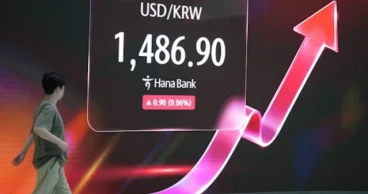
Asian markets rebound as South Korea and Japan recover after AI stock sell-off
Asian stock markets mostly closed higher on Tuesday, with South Korea and Japan recovering some of the losses suffered in recent sessions due to heavy selling of artificial intelligence (AI)-related shares.
U.S. stock futures moved slightly higher, while oil prices fell.
South Korea's Kospi index rose 4.7% to 6,821.41 after dropping 4.5% a day earlier. Technology stocks led the recovery, with Samsung Electronics climbing 7.4% and memory chip maker SK Hynix gaining 6.4%.
Despite a decline of more than 20% over the past month as investors locked in profits amid concerns over a possible AI investment bubble, the Kospi remains up more than 50% so far this year.
Japan's Nikkei 225 gained 2.8% to 65,926.41 after reopening following Monday's public holiday, recovering part of last week's losses.
Among major gainers, Kioxia Holdings surged 15.9%, chip testing equipment maker Advantest rose 6.9%, SoftBank Group advanced 6.1%, and Tokyo Electron added 1.3%.
Taiwan's Taiex index climbed 3.6%, supported by a 2.8% rise in Taiwan Semiconductor Manufacturing Co. (TSMC), the world's largest contract chipmaker.
Elsewhere, Hong Kong's Hang Seng Index edged up less than 0.1% to 25,150.75, while China's Shanghai Composite Index rose 0.6% to 3,819.66. Australia's S&P/ASX 200 added 0.1%, while India's Sensex slipped 0.1%.
Oil prices eased after Monday's gains. Brent crude, the global benchmark, fell 0.7% to $88.63 a barrel, while U.S. benchmark crude dropped 0.3% to $82.24 a barrel.
Investors continued to watch developments in the Middle East after Iran reportedly attacked another tanker in the Strait of Hormuz, a vital route for global oil and gas shipments. The United States also launched fresh strikes on Iran for a tenth consecutive night, while Tehran continued retaliatory attacks targeting U.S. allies in the region.
Iran's interior minister visited Pakistan, which has been acting as a mediator, for talks aimed at easing tensions, although no breakthrough has been announced.
Analysts at ING said there were some signs of possible de-escalation between the United States and Iran, but warned that major differences remain. They also said attacks by Yemen's Iran-backed Houthi rebels on shipping linked to Saudi Arabia have increased concerns over global oil supplies.
On Wall Street, the S&P 500 fell 0.2% on Monday, while the Dow Jones Industrial Average dropped 0.6%. The Nasdaq Composite slipped by less than 0.1%.
Several major AI and semiconductor companies still posted gains. Nvidia rose 0.2%, Micron Technology gained 1.9%, Broadcom climbed 2%, and Advanced Micro Devices (AMD) advanced 1.6% after expanding its AI partnership with Microsoft.
In currency trading, the U.S. dollar was little changed at 162.48 Japanese yen, while the euro remained steady at $1.1414.
2 months ago
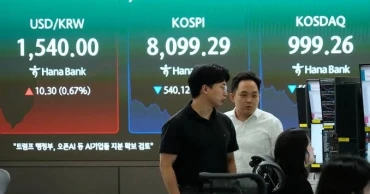
Asian markets mostly fall as South Korea's Kospi slides 6.6%; oil prices ease despite US-Iran conflict
Most Asian stock markets ended lower on Thursday, while oil prices edged down despite continued military exchanges between the United States and Iran. U.S. stock futures, however, moved slightly higher.
Technology and artificial intelligence (AI)-related shares came under pressure, dragging down markets in South Korea and Japan.
South Korea's Kospi dropped 6.6% to 6,816.70 after the Bank of Korea raised interest rates for the first time since 2023. The move was aimed at easing inflationary pressure linked to the Iran conflict.
Among major South Korean stocks, memory chipmaker SK Hynix fell 11.2%, while Samsung Electronics lost 8.2%.
Taiwan's Taiex slipped 0.3% ahead of the quarterly earnings report of Taiwan Semiconductor Manufacturing Co. (TSMC), whose results are widely viewed as an indicator of the global semiconductor industry and AI demand.
Japan's Nikkei 225 declined 2.9% to 66,767.64. Memory chip producer Kioxia plunged 13.5%, while chip equipment maker Tokyo Electron fell 5.2% and testing equipment manufacturer Advantest dropped 5.6%. SoftBank Group also lost 6.4%.
Hong Kong's Hang Seng Index stood out among regional markets, rising 1.7% to 25,111.22. Alibaba's Hong Kong-listed shares jumped 4.4% after China's cyberspace regulator approved Apple's Apple Intelligence AI service for use in China. Alibaba said its Qwen AI model will be integrated into the Apple Intelligence platform.
China's Shanghai Composite Index fell 0.9% to 3,921.20, while Australia's S&P/ASX 200 slipped 0.2% to 8,820.50. India's Sensex gained 0.3%.
Oil prices eased slightly but remained well above levels seen before the outbreak of the US-Iran conflict.
Brent crude, the international benchmark, fell 0.4% to $84.55 a barrel, compared with about $72 a barrel in late February before the conflict began. U.S. benchmark crude slipped 0.2% to $79.34 a barrel.
Analysts at ING said oil prices recorded a third straight day of gains before Thursday's slight decline, as there were still few signs of easing tensions between Washington and Tehran.
They also said the conflict was continuing to disrupt tanker traffic through the Strait of Hormuz, a key route for global oil shipments, affecting vessel movements from the Persian Gulf.
On Wall Street Wednesday, the S&P 500 gained 0.4% to close at 7,572.40. The Dow Jones Industrial Average rose 0.3% to 52,658.64, while the Nasdaq Composite advanced 0.6% to 26,269.23.
SpaceX shares briefly fell below their initial public offering (IPO) price of $135 before recovering part of the losses.
Investor sentiment was also supported by data showing U.S. inflation slowed in June and stronger-than-expected quarterly earnings from BlackRock. Shares of the investment firm climbed 6.6% after it reported better-than-expected revenue and profit.
In early currency trading Thursday, the U.S. dollar slipped to 162.09 Japanese yen from 162.19 yen, while the euro traded at $1.1467, little changed from $1.1464.
3 months ago
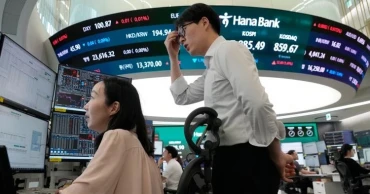
Asian markets fall as South Korean stocks tumble despite Wall Street's AI-driven rally
Asian stock markets closed lower on Tuesday, led by a sharp fall in South Korean shares, even as AI-related stocks helped lift major US indexes overnight.
Oil prices edged higher, while US stock futures showed mixed performance.
South Korea's Kospi briefly plunged as much as 8% before recovering some ground to end the day down 4.9% at 7,656.31.
Shares of Samsung Electronics dropped 7.7%, despite the company reporting a 19-fold jump in quarterly operating profit to 89.4 trillion won (about $58.7 billion) and more than doubling its revenue. Chipmaker SK Hynix also fell 6.7%.
Kim Seok-hwan, an analyst at Mirae Asset Securities, said Samsung's decline was mainly due to foreign investors taking profits after recent gains and adjusting their investment portfolios.
Technology stocks linked to artificial intelligence have seen sharp swings in recent weeks as investors question whether the massive spending on AI chips and data centres will generate enough profits to justify the investments.
Stephen Innes of SPI Asset Management said the market reaction to Samsung's strong earnings suggested investors were becoming more cautious about AI-related stocks.
Investor sentiment will face another test this week as SK Hynix plans to raise $28 billion through a Nasdaq share offering in the United States. If successful, it would rank among the largest US stock offerings, following SpaceX's $75 billion IPO last month.
Despite recent losses, SK Hynix shares have more than tripled this year on strong optimism over AI demand.
Elsewhere in Asia, Japan's Nikkei 225 fell 2.1% to 68,256.96. Tokyo Electron lost 3.9%, while Kioxia Holdings dropped 11.3%.
Hong Kong's Hang Seng Index slipped 0.7% to 23,444.20, while China's Shanghai Composite Index declined 1.3% to 3,990.25. Taiwan's Taiex lost 2.3%.
Australia's S&P/ASX 200 edged down 0.3%, while India's Sensex gained 0.5%.
On Wall Street, the S&P 500 rose 0.7% on Monday to 7,537.54, moving within 1% of its record high despite most of its listed stocks ending lower.
The Nasdaq Composite climbed 1.1% to 26,121.16, driven by gains in AI-related technology companies, while the Dow Jones Industrial Average added 0.3% to close at a record 53,055.91.
Broadcom was among the biggest contributors to the S&P 500's gains after rising 3.7% on news of long-term agreements to supply silicon products to Apple.
SpaceX fell 1% in its final trading session before joining the Nasdaq-100 index, a move expected to trigger buying by funds that track the benchmark.
AI infrastructure company TeraWulf gained 4.9% after announcing a 20-year agreement with Anthropic to use its Kentucky data centre. The company expects the deal to generate about $19 billion in revenue as it shifts its business from bitcoin mining to high-performance computing.
In energy markets, Brent crude, the international benchmark, rose 84 cents to $72.83 a barrel, while US benchmark crude increased 73 cents to $69.28.
Oil supply concerns resurfaced after the British military reported that a liquefied natural gas tanker caught fire off the coast of Oman in the Strait of Hormuz after being struck by a projectile early Tuesday.
The latest attack highlighted continuing security risks in the strategic waterway, through which about one-fifth of the world's oil and natural gas trade once passed during peacetime. Iranian state television reported that the tanker was attacked after ignoring warnings but stopped short of claiming responsibility.
In currency trading, the US dollar slipped to 162.01 Japanese yen from 162.09 yen, while the euro eased to $1.1431 from $1.1442.
3 months ago

Asian markets mostly rise; Japan’s Nikkei briefly crosses 70,000 after BOJ rate hike
Most Asian stock markets traded higher on Tuesday, with Japan’s benchmark Nikkei 225 briefly crossing the 70,000 mark for the first time before giving up some of its early gains following a rate hike by the Bank of Japan (BOJ).
The BOJ raised its key interest rate by 0.25 percentage points to 1%, taking the benchmark rate to its highest level in nearly 30 years.
By early afternoon, Japan’s Nikkei 225 was up 0.6% at 69,713.05. South Korea’s Kospi continued its record-setting run, gaining 2.1% to 8,721.64.
China’s Shanghai Composite edged up less than 0.1% to 4,100.53. However, Australia’s S&P/ASX 200 fell 0.3% to 8,892.10, while Hong Kong’s Hang Seng dropped 1.3% to 24,533.35.
Taiwan’s Taiex rose 0.6%, and India’s Sensex added 0.5%.
Global markets rallied on Monday after the United States and Iran reached a preliminary agreement aimed at restoring the smooth flow of oil supplies. The development helped ease concerns over disruptions in global energy markets.
On Wall Street, the S&P 500 climbed 1.7%, while the Dow Jones Industrial Average gained 0.9% to reach a record high. The technology-heavy Nasdaq surged 3.1%.
Oil prices also declined after the announcement, as investors hoped the deal could lead to the reopening of the Strait of Hormuz, a key route for global oil shipments and a major source of energy supplies for Asia.
Brent crude oil dropped 4.8% on Monday, although analysts cautioned that uncertainty remains and negotiations between Washington and Tehran are expected to continue over the next two months. They also noted that even if the strait reopens as expected, it could take several months before energy exports return to normal levels.
Oil prices have fallen from above $100 per barrel seen a few weeks ago during heightened tensions. Before the conflict, crude was trading near $70 a barrel.
Early Tuesday, US benchmark crude oil slipped 9 cents to $80.66 per barrel, while Brent crude, the international benchmark, fell 24 cents to $82.93 per barrel.
Technology shares led gains on Wall Street, particularly companies linked to artificial intelligence (AI). Micron Technology jumped 10.8%, while Advanced Micro Devices (AMD) rose 7%.
Nvidia, the world’s most valuable publicly traded company, gained 3.5%, providing the biggest boost to the S&P 500. Meanwhile, SpaceX, the rocket company owned by Elon Musk and parent of AI firm xAI, surged 19.6% in its second day of trading on Wall Street.
In the bond market, US Treasury yields edged lower as falling oil prices reduced concerns that central banks may need to keep raising interest rates. The yield on the 10-year Treasury note slipped to 4.47% from 4.48% on Friday.
In currency trading, the US dollar was little changed at 160.33 Japanese yen. The euro traded at $1.1580, slightly lower than $1.1592 in the previous session.
4 months ago
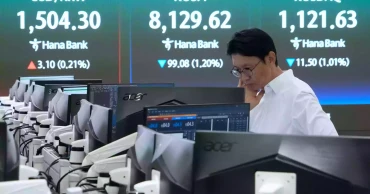
Asian markets fall, oil prices rise after fresh US strikes on Iran
Asian stock markets fell on Thursday as tensions rose following fresh US military strikes on Iran, which Washington described as defensive actions.
At the same time, oil prices climbed by more than $2 per barrel after dropping sharply in the previous session, while US futures also edged lower.
US officials said Central Command forces shot down four Iranian attack drones near the Strait of Hormuz. They also struck a drone control facility in Bandar Abbas that was preparing to launch another drone. These strikes came after earlier military actions earlier in the week.
US President Donald Trump said Iran is “negotiating on fumes” and insisted that upcoming US elections would not influence his approach to ending the ongoing conflict, now in its third month.
Asian markets under pressure
In early trading, Japan’s Nikkei 225 fell 0.4%, while South Korea’s Kospi also dropped 0.4%.
Hong Kong’s Hang Seng Index declined 1.4%, and China’s Shanghai Composite edged up slightly by 0.1%.
Australia’s S&P/ASX 200 slipped 1.4%, while Taiwan’s main index also recorded losses.
Analysts said uncertainty around US–Iran negotiations and the fragile ceasefire continued to weigh on investor confidence.
“Markets remain cautious as it is still unclear whether a lasting deal can be reached,” said Tan Boon Heng of Mizuho Bank.
He added that while both sides appear to avoid escalating tensions publicly, major disagreements remain unresolved.
Oil prices rebound
Oil prices, which had dropped sharply earlier in the week, rose again on renewed concerns over supply risks in the Middle East.
Brent crude gained more than $2 to around $94 per barrel in early trading, while US crude also moved higher.
Earlier, oil had fallen after hopes that a ceasefire between the US and Iran might hold, easing fears over disruptions in the Strait of Hormuz — a key global oil shipping route.
Wall Street at record highs
On Wednesday, US stock markets had closed slightly higher, with all three major indexes — the S&P 500, Dow Jones Industrial Average, and Nasdaq — reaching record levels.
Shares of airlines and cruise companies rose as falling oil prices earlier in the week boosted expectations of lower fuel costs.
Despite ongoing geopolitical uncertainty and inflation concerns, strong corporate earnings have helped support market gains.
Currency movements
In currency trading, the US dollar held steady against the Japanese yen, while the euro slipped slightly.
4 months ago
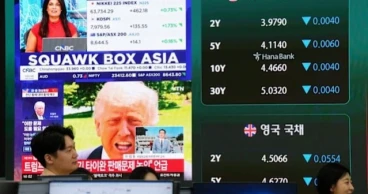
Asian markets mixed as investors assess Trump-Xi summit
Asian stock markets closed mixed on Thursday, with Chinese shares falling as investors closely watched the outcome of U.S. President Donald Trump’s summit with Chinese President Xi Jinping in Beijing.
Trump and Xi met at the Great Hall of the People to discuss bilateral relations and Taiwan, but analysts said they did not expect any major breakthroughs.
Japan’s benchmark Nikkei 225 fell 1% to 62,654.05 after briefly hitting a new intraday record above 63,700, supported by strong corporate earnings.
South Korea’s Kospi rose 1.8% to a record close of 7,981.41, driven by strong gains in technology stocks amid continued enthusiasm over artificial intelligence.
In China, the Shanghai Composite Index dropped 1.5% to 4,177.92, while Hong Kong’s Hang Seng Index edged up 0.1% to 26,426.06.
Australia’s S&P/ASX 200 gained 0.1% to 8,640.70. Taiwan’s Taiex rose 0.9%, and India’s Sensex advanced 1%.
Oil prices moved higher as the conflict in Iran entered its third month with no clear end in sight, raising concerns over global energy supplies.
Some investors hoped the Trump-Xi meeting could help ease tensions, after U.S. officials said Beijing may use its economic ties with Tehran to encourage Iran to reopen the Strait of Hormuz, a vital shipping route for global oil exports.
Brent crude, the international benchmark, rose 0.3% to $105.95 per barrel. Before the Iran conflict began in late February, Brent was trading at around $70 per barrel.
U.S. benchmark crude gained 0.4% to $101.44 per barrel.
The International Energy Agency said on Wednesday that supply disruptions through the Strait of Hormuz were reducing global oil inventories at a record pace.
Investors were also monitoring developments involving Nvidia, as its CEO Jensen Huang joined Trump’s delegation to China along with Elon Musk of Tesla and Tim Cook of Apple.
On Wall Street, technology shares led gains overnight.
The S&P 500 rose 0.6% to a record 7,444.25. The Nasdaq Composite jumped 1.2% to an all-time high of 26,402.34, while the Dow Jones Industrial Average slipped 0.1% to 49,693.20.
In the bond market, the yield on the 10-year U.S. Treasury note eased to 4.46% from 4.47%, but remained well above the level seen before the Iran conflict began.
A report released Wednesday showed U.S. wholesale prices increased sharply in April, largely due to higher energy costs.
The U.S. Senate also confirmed Kevin Warsh as the next chair of the Federal Reserve, replacing Jerome Powell, who had faced criticism from Trump for not cutting interest rates more aggressively.
In currency trading, the U.S. dollar rose slightly to 157.92 Japanese yen from 157.86 yen. The euro was unchanged at $1.1711.
5 months ago