asia

Pakistan launches border strikes inside Afghanistan; Red Crescent says 18 killed
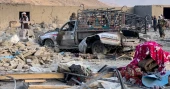
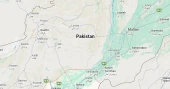
Pakistan said it carried out early Sunday airstrikes along the border inside Afghanistan, targeting hideouts of Pakistani militants blamed for recent attacks in Pakistan, while the Afghan Red Crescent reported at least 18 people killed.
The strikes reportedly hit “various civilian areas” in the eastern Afghan provinces of Nangarhar and Paktika, including a religious madrassa and several homes, according to Afghanistan’s defense ministry. Kabul condemned the attacks as a violation of its airspace and sovereignty.
Afghan government spokesman Zabihullah Mujahid said the strikes killed and wounded dozens, including women and children. The Afghan Red Crescent Society later confirmed 18 deaths and several injuries in Nangarhar.
Following the strikes, Afghanistan summoned Pakistan’s ambassador in Kabul and lodged a formal protest, warning Islamabad would bear responsibility for any consequences.
Villagers in affected areas were seen clearing rubble and preparing funerals. Local elder Habib Ullah said those killed were civilians with no links to militant groups.
Pakistan’s Information Minister Attaullah Tarar said the military conducted “intelligence-based, selective operations” against seven camps of the Tehrik-e-Taliban Pakistan (TTP) and its affiliates, as well as an affiliate of the Islamic State. He added that Pakistan remains committed to regional stability but prioritises the safety of its citizens.
The strikes came hours after a suicide bombing targeted a security convoy in Pakistan’s Bannu district, killing two soldiers. A similar attack in Bajaur last week killed 11 soldiers and a child, with authorities alleging the attacker was an Afghan national.
Islamabad has long accused Kabul of allowing TTP militants to operate from Afghan soil, a claim denied by both the Taliban administration and the group itself.
Security analysts warned the latest strikes could escalate tensions between Pakistan and Afghanistan, despite previous ceasefire efforts mediated by regional actors. Relations between the two neighbours have remained strained following deadly border clashes and stalled talks in recent months.
3 months ago
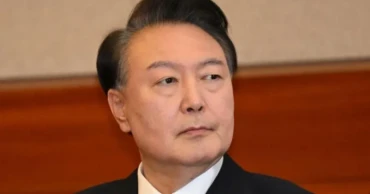
South Korea ex-president Yoon jailed for life over failed martial law bid
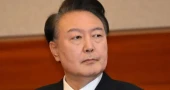
South Korea’s former president Yoon Suk Yeol has been sentenced to life imprisonment for orchestrating an insurrection through an attempted imposition of martial law, a Seoul court ruled on Thursday.
The court found that Yoon sought to undermine the constitution by deploying troops to block the National Assembly and ordering the arrest of politicians on December 3, 2024. Presiding judge Ji Gwi-yeon said the former leader’s actions gravely damaged South Korea’s democratic foundations and warranted the heaviest possible punishment short of execution.
Prosecutors had demanded the death penalty. South Korea, however, has not carried out executions since 1997, meaning a death sentence would effectively amount to life imprisonment.
The brief but dramatic martial law order deepened political polarisation across the country, tensions that were clearly visible during the sentencing. Large crowds of Yoon’s supporters gathered outside the courthouse ahead of the verdict, some chanting slogans in his favour and later breaking down in tears. At the same time, anti-Yoon protesters called for capital punishment.
Yoon showed no visible reaction as the verdict was delivered. His legal team rejected the ruling, arguing it lacked evidentiary basis and accusing the court of following a predetermined outcome. If either side appeals, the case will move to the Supreme Court, potentially delaying a final decision for months.
Yoon stunned the nation when he announced martial law in a live television address in December 2024, claiming it was necessary to counter “anti-state” forces sympathetic to North Korea. Investigators later concluded the move was driven largely by domestic political pressure, as the opposition-controlled parliament had rendered him a lame-duck president and his wife, Kim Keon Hee, faced corruption allegations.
Lawmakers forced their way into the National Assembly within hours to overturn the order, prompting its swift withdrawal. The episode triggered months of political turmoil, Yoon’s impeachment, and a series of criminal cases against him and senior officials.
Former prime minister Han Duck-soo was sentenced last month to 23 years in prison for his role in the plot, while ex-defence minister Kim Yong-hyun, who advised Yoon on the martial law move, received a 30-year sentence. Several other former ministers, intelligence officials and police chiefs have also been jailed in what judges described as an “insurrection from the top”.
Security around the court was tight, with around 1,000 police officers deployed and buses forming barricades to control access.
Although the court labelled Yoon the leader of the insurrection, judges said there was insufficient evidence to prove he had planned the martial law move a full year in advance. Throughout the trial, Yoon maintained that he had constitutional authority as president to declare martial law and insisted the move was aimed at safeguarding national sovereignty and constitutional order.
The ruling Democratic Party, which returned to power after Yoon’s removal, criticised the court for stopping short of imposing the death penalty, arguing the verdict fell short of public expectations.
Yoon is already serving prison terms for abuse of power and obstruction related to the same events and still faces three additional trials. While several former South Korean presidents have previously been jailed only to receive pardons after a few years, it remains uncertain whether similar clemency would be extended in this case.
With inputs from BBC
3 months ago
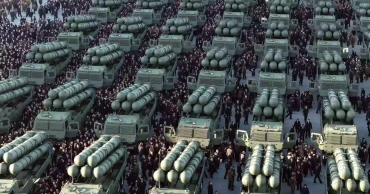
North Korea deploys 50 new rocket launchers ahead of party congress
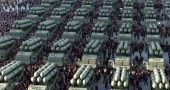
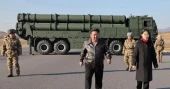
North Korean leader Kim Jong Un has unveiled the deployment of 50 new launch vehicles for nuclear-capable short-range missiles, highlighting Pyongyang’s expanding military capabilities ahead of a key ruling Workers’ Party congress.
State media showed rows of launcher trucks lined up near the April 25th House of Culture, a venue used for previous party congresses. The Korean Central News Agency said the vehicles support 600mm multiple rocket launcher systems, which experts say can function similarly to short-range ballistic missiles due to guided delivery and self-propelled thrust.
In a speech, Kim said the launchers feature artificial intelligence and advanced guidance technology designed to carry out a “strategic mission,” implying nuclear capability. He also signalled that the upcoming congress would outline further plans to strengthen the country’s nuclear-armed forces.
In a separate statement, Kim’s sister Kim Yo Jong acknowledged a South Korean minister’s apology over alleged drone incursions but warned that Pyongyang would respond forcefully if such incidents recur. She said border surveillance would be tightened against the “enemy” South.
Relations between the two Koreas have remained largely frozen since 2019 after nuclear talks between Kim and former U.S. President Donald Trump collapsed over sanctions.
3 months ago
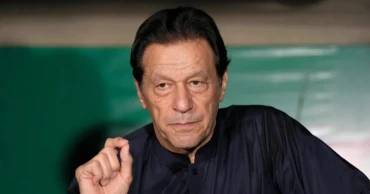
Khan’s doctor unable to verify reported improvement in jailed ex-PM’s eyesight
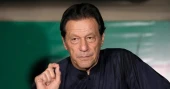
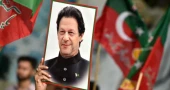
The personal physician of former Prime Minister Imran Khan said Monday that while a team of doctors has reported an “improvement” in Khan’s eyesight, he is unable to independently verify the claim because authorities have not allowed him access to the jailed নেতা.
Dr. Aasim Yusuf made the comments in a video posted on X, a day after eye specialists examined Khan at Adiala prison in Rawalpindi. The examination was conducted following directives from the Supreme Court of Pakistan.
Pakistani ex-PM Imran Khan left with 15% eyesight in jail, Supreme Court intervenes
Yusuf said prison medical staff informed him by phone on Sunday that Khan’s eye condition had improved and outlined the treatment provided since late January, when the former premier underwent a procedure at a hospital in Islamabad after reporting partial vision loss.
He said he would have been “extremely happy” to confirm the reported progress but stressed that he had neither seen Khan nor been involved in his care. “Because I have not examined him personally or spoken to him, I cannot confirm or reject the accuracy of what we have been told,” he said.
Yusuf also recommended that any further medical care be carried out at a hospital in Islamabad.
Separately, cabinet minister Tariq Fazal Chaudhry said on X that a comprehensive medical checkup was conducted inside Adiala prison and that doctors concluded Khan’s eyesight had improved, with no major complications detected.
Former Pakistani PM Imran Khan, wife receive 17-year sentence in graft case
Concerns over Khan’s vision arose after the government disclosed he had undergone a minor eye procedure. The Supreme Court subsequently directed his lawyer, Salman Safdar, to meet him in prison.
Safdar later told the court that Khan had lost about 85% of vision in his right eye, triggering protests by supporters of his Pakistan Tehreek-e-Insaf (PTI) party in Islamabad and other cities. Some PTI lawmakers and allies have staged a sit-in outside parliament, demanding that Khan be transferred to a hospital.
Khan, 73, has been imprisoned since 2023 after being convicted in a corruption case. He was removed from office in April 2022 through a parliamentary no-confidence vote.
The former premier has claimed his ouster was the result of a U.S.-backed conspiracy involving political rivals and the military — allegations denied by Washington, Pakistan’s armed forces and his opponents, including Prime Minister Shehbaz Sharif.
Despite ongoing legal battles, Khan remains a key political figure with significant public support.
3 months ago
6 killed in Pakistan road crash
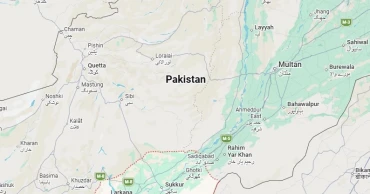
At least six people were killed in a collision between a car and a trailer on the National Highway in Pakistan's southern Sindh province on Monday, rescue officials said.
The accident occurred in Naushahro Feroze district when a speeding car traveling to the provincial capital Karachi collided with a trailer, a Rescue 1122 official told Xinhua.
"The impact was severe and the car was completely destroyed. All six passengers died on the spot," the official said.
Rescue teams transported the bodies to a nearby hospital, where all victims were confirmed dead.
Police said they are investigating the exact cause of the accident.
3 months ago
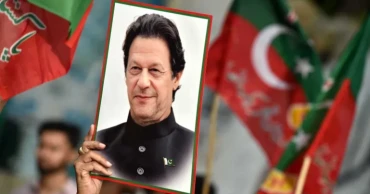
Pakistani ex-PM Imran Khan left with 15% eyesight in jail, Supreme Court intervenes
Pakistan’s Supreme Court has ordered an urgent medical review of jailed former Prime Minister Imran Khan after a court-appointed lawyer reported that he has lost most of the vision in his right eye.
Barrister Salman Safdar, appointed as amicus curiae (friend of the court), met Khan for about two hours on February 10 at Adiala Jail in Rawalpindi and later submitted a seven-page report to the court on Wednesday.
According to the report, the 73-year-old former premier now has only 15 percent vision in his right eye after authorities allegedly failed to act on his complaints of blurred and hazy sight for nearly three months. Safdar wrote that Khan eventually suffered a sudden and complete loss of vision in that eye.
A medical report dated February 6 diagnosed him with right central retinal vein occlusion, a condition caused by a blood clot that can seriously damage the retina. An eye specialist from a government hospital in Islamabad confirmed the diagnosis.
Safdar noted that Khan appeared distressed during their meeting, with watery eyes throughout the conversation. The report warned that any further delay in treatment could pose serious risks and recommended an immediate independent examination by specialist ophthalmologists, including his personal doctors.
Following the submission, the Supreme Court directed authorities to form a medical board to examine Khan and ordered that he be allowed to speak by phone with his sons, who live in the United Kingdom. The court asked that both steps be completed before February 16, with Chief Justice Yahya Afridi stressing that Khan’s health required urgent attention.
Khan’s party, Pakistan Tehreek-e-Insaf (PTI), expressed deep concern over his deteriorating eyesight and criticised prison authorities. The party said it may pursue legal action against officials and demanded unrestricted access to his personal physicians, transfer to a reputable hospital for specialised treatment, and restoration of full family visitation rights.
Khan, a former cricket captain who led Pakistan to a World Cup victory, served as prime minister from 2018 until he was removed in a no-confidence vote in 2022. He has been jailed since August 2023 on multiple charges, which his party describes as politically motivated.
Safdar’s report also stated that Khan has been held in solitary confinement for about two years and four months and has had limited access to his legal team and family members. In June 2024, a United Nations Working Group on Arbitrary Detention said his detention lacked legal basis and appeared aimed at barring him from political office.
The case has further intensified political tensions in Pakistan, with analysts calling for transparency regarding the former prime minister’s health and prison conditions.
With inputs from ALJAZEERA
3 months ago
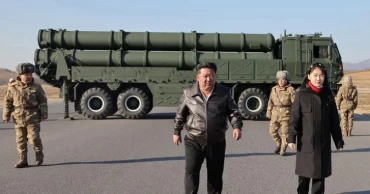
Teen daughter Kim Ju Ae set to succeed Kim Jong Un in North Korea
North Korean leader Kim Jong Un has reportedly chosen his daughter, Kim Ju Ae, as his official heir, South Korea’s National Intelligence Service (NIS) told lawmakers on Thursday.
Ju Ae, believed to be 13, has recently appeared alongside her father at major events, including a visit to Beijing in September, her first known trip abroad. The NIS said her increasing public presence and involvement in state events indicate she is now in the stage of “successor designation.”
Lawmakers said Ju Ae has attended events like the founding anniversary of the Korean People’s Army and visited the Kumsusan Palace of the Sun. She is also believed to have begun providing input on some state policies, showing her growing role in leadership.
Ju Ae is Kim Jong Un’s only publicly acknowledged child. The NIS believes he may have an older son, but he has never been shown in state media. Ju Ae first appeared on North Korean television in 2022 while inspecting a missile system with her father.
Her public appearances are seen as symbolic, showing her positioned prominently alongside Kim Jong Un. Analysts note that her selection as heir is unusual in North Korea’s patriarchal society, though female leaders like Kim Yo Jong provide some precedent.
It remains unclear why Kim Jong Un, who is still young and reportedly healthy, has named a 13-year-old as heir, or what changes her succession may bring to the country’s policies and direction.
With inputs from BBC
3 months ago
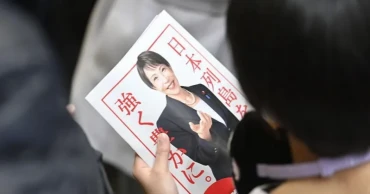
Takaichi secures landslide victory, faces tough test to revive Japan’s economy
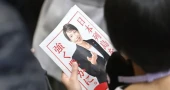
Japan’s Prime Minister Sanae Takaichi has emerged from a snap election with a commanding mandate, but the decisive victory now brings sharper focus on whether she can deliver the economic revival that has eluded the country for decades.
Takaichi and her Liberal Democratic Party won 316 of the 465 seats in parliament, giving her one of the strongest majorities seen in recent years in a country known for frequent changes of leadership. Supporters say the result gives her a rare opportunity to reshape policy in the world’s fourth-largest economy.
Japan’s challenges are deep-rooted. Economic growth has been sluggish for years, public debt is the highest in the world and the workforce is shrinking and ageing rapidly. Analysts say Takaichi now has political space to confront these issues, but expectations are high and risks are significant.
During the campaign, Takaichi pledged to prioritise growth over austerity, promising higher public spending, investment in strategic industries and tax cuts to boost household consumption. The approach marked a shift from her immediate predecessors and was closely watched by investors.
Financial markets reacted positively to her victory, with Japanese shares rising and what traders dubbed the “Takaichi trade” gaining momentum. Some investors bought equities while selling the yen and government bonds, although the currency later strengthened, a move seen by parts of the market as a sign of confidence.
However, concerns remain over how her plans will be financed. Government bond yields rose after she took office in October, raising alarms because Japan’s massive debt means even small increases in borrowing costs can have wide global effects. More spending combined with tax cuts would likely require additional borrowing, adding pressure to the bond market.
At the same time, the Bank of Japan is attempting to move away from decades of ultra-low interest rates as inflation picks up. Prices have risen sharply by Japanese standards, with staple items such as rice reportedly doubling in cost last year. The cost-of-living squeeze played a key role in voter dissatisfaction with the previous administration.
Some economists warn that expanding government spending could worsen inflation. They argue that tighter fiscal discipline and allowing interest rates to rise further would better stabilise prices and reassure investors. Others counter that cutting taxes may provide short-term relief to households feeling poorer.
Beyond financial policy, structural issues loom large. Japan’s population has been shrinking for years, creating labour shortages in sectors such as construction, care work, agriculture and hospitality. While immigration could help ease the strain, it remains politically sensitive and unpopular with parts of Takaichi’s conservative support base.
The prime minister has instead emphasised automation, technological innovation and greater participation by women and older people in the workforce. Economists caution that these measures alone may not be sufficient to sustain long-term growth without more foreign labour.
Japan’s external environment adds another layer of complexity. China, now larger in economic scale, is Japan’s biggest trading partner, making stable trade ties crucial while domestic demand recovers. Yet tensions with Beijing, including disputes over rare earth exports, have highlighted vulnerabilities in supply chains vital to industries such as electric vehicles and defence.
Takaichi has vowed to reduce Japan’s dependence on China in critical sectors while strengthening ties with the United States. She has endorsed higher defence spending and welcomed support from US President Donald Trump, signalling that the alliance with Washington remains central to her strategy.
Analysts say Japan cannot afford to fully align with one power against the other, arguing that balanced engagement with both the US and China is essential for economic resilience.
Observers note that Takaichi’s policy mix echoes that of her mentor, former prime minister Shinzo Abe, who combined aggressive stimulus with loose monetary policy. But the context has changed. Japan is older, competition in Asia is fiercer and global conditions are far less forgiving.
With a historic mandate in hand, Takaichi now faces the defining challenge of her leadership: translating political dominance into sustainable growth for an economy long stuck in low gear.
With inputs from BBC
3 months ago
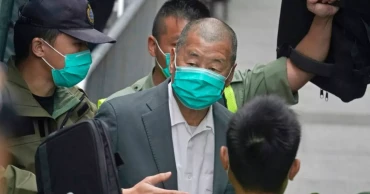
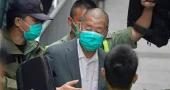
China critic Jimmy Lai handed 20-year jail term in Hong Kong security case
Pro-democracy activist and former Hong Kong media tycoon Jimmy Lai was sentenced on Monday to 20 years in prison, the harshest punishment imposed so far under the Beijing-enforced national security law that has largely crushed dissent in the city.
Lai, 78, a vocal critic of China and founder of the now-defunct Apple Daily newspaper, was found guilty in December of conspiring to collude with foreign forces and plotting to publish seditious material—offences that carry a maximum sentence of life imprisonment.
Six former Apple Daily employees and two activists convicted in the same case received prison terms ranging from six years and three months to 10 years on charges linked to foreign collusion.
Lai smiled and waved at supporters as he entered court for sentencing, but his expression turned solemn before leaving the courtroom as some spectators wept. Asked whether an appeal would be filed, his lawyer Robert Pang declined to comment.
The case has drawn international concern, with critics warning it signals a severe erosion of press freedom in Hong Kong, once regarded as a regional hub of media independence. Authorities, however, insist the prosecution is unrelated to journalism, arguing the defendants abused media platforms to undermine China and Hong Kong.
Lai was among the first high-profile figures detained after the security law was enacted in 2020. Within a year, senior editors at Apple Daily were arrested and the newspaper ceased operations in June 2021.
Read More: South Korea’s former first lady Kim Keon Hee sentenced to jail for corruption
The sentencing is expected to further strain China’s relations with Western governments. U.S. President Donald Trump said he felt “so badly” about the verdict and confirmed he had raised Lai’s case with Chinese President Xi Jinping, urging consideration of his release. Britain and Australia also expressed deep concern, with UK officials calling the prosecution politically driven.
In a family statement, Lai’s son Sebastien described the sentence as “draconian” and life-threatening, while his sister Claire said it was “heartbreakingly cruel,” warning her brother could die in prison.
Hong Kong Chief Executive John Lee defended the ruling, saying the sentence demonstrated the rule of law and reflected the seriousness of Lai’s crimes.
Judges described Lai as the central figure behind the conspiracies, increasing his sentence on that basis. However, they reduced it slightly after considering his age, health issues and the hardship of solitary confinement. The court ruled that 18 years of the sentence would run consecutively with a separate five-year-and-nine-month prison term Lai is already serving for fraud.
Legal experts said the case sets a troubling precedent, particularly for journalists and academics, due to the broad interpretation of “sedition” and “collusion with foreign forces.”
Read More: Purbachal plot scam cases: Hasina, Tulip sentenced to jail
Lai has been in custody for more than five years and suffers from several health conditions, including heart problems and diabetes, though authorities say his condition remains stable.
Several co-defendants received reduced sentences after pleading guilty and assisting prosecutors. Judges noted their testimony played a significant role in securing Lai’s conviction.
Dozens of people queued outside the court before dawn to attend the hearing, including former Apple Daily staff member Tammy Cheung, who said the sentencing marked the end of a painful chapter.
Founded in 1995, Apple Daily was shut down in 2021, an event widely seen as a major blow to Hong Kong’s media sector. The city now ranks 140th out of 180 territories in the 2025 World Press Freedom Index, down sharply from 18th place in 2002.
Police officials welcomed the sentence, while human rights groups condemned it as cruel and unjust. The Hong Kong government said assets linked to Lai’s crimes would be confiscated.
3 months ago
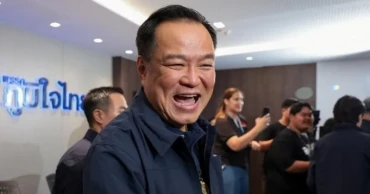
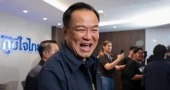
Thai PM Anutin claims election win as conservatives lead
Thai Prime Minister Anutin Charnavirakul on Sunday declared victory in the country’s general election as preliminary results showed his conservative Bhumjaithai Party far ahead of its rivals.
With about 90 percent of votes counted, projections showed Bhumjaithai winning 194 seats in the 500 member House of Representatives. The reformist People’s Party was placed second with 116 seats, according to early tallies.
Anutin said the victory belonged to all citizens, regardless of whom they supported in the election. The outcome surprised many observers as opinion polls had earlier predicted a lead for the People’s Party.
People’s Party leader Natthaphong Ruengpanyawut appeared to concede defeat, saying he was prepared to sit in opposition if Anutin succeeded in forming a new government.
The snap election was called in December after Anutin’s previous coalition collapsed just three months into its term. No party is expected to secure an outright majority, but the strong showing has put Anutin in a commanding position to remain in office.
If confirmed, the result would mark a major gain for Bhumjaithai, which is projected to win more than twice the number of seats it secured in the 2023 election.
The outcome was a setback for the People’s Party, which had hoped to build on its strong performance three years ago when it won the most votes under its former name, Move Forward. That party was later blocked from forming a government by the unelected senate.
This time, the expected surge of support for its young reform minded candidates did not materialise. Analysts said the party struggled to match the local influence and nationwide networks built by Anutin’s conservatives.
Anutin’s campaign focused on nationalism, protection of traditional institutions such as the monarchy and military, and promises of financial support. His party also benefited from backing by local power brokers in an electoral system where most seats are decided in individual constituencies.
The Shinawatra family backed Pheu Thai Party emerged as the third largest force, projected to win 86 seats, a sharp fall from its performance in 2023. Its popularity has been hit by internal instability, court rulings against its leaders and criticism over its handling of tensions with Cambodia.
Economic concerns played a central role in the campaign, with voters worried about record household debt, weak growth and factories relocating to neighbouring countries.
Alongside the election, voters also took part in a referendum on reforming the 2017 constitution drafted under military rule. Early results suggested around two thirds of voters backed constitutional changes.
With inputs from BBC
3 months ago