middle-east

Pro-Iranian hacker group claims breach of FBI Director Kash Patel’s personal account
A pro-Iranian hacking group claimed Friday to have compromised a personal account belonging to FBI Director Kash Patel, posting online old photographs, a work resume, and other personal documents. Many of the files appear to be over a decade old.
The group, Handala, posted a statement saying, “Kash Patel, the current head of the FBI… will now find his name among the list of successfully hacked victims.” The released materials included images of Patel with an antique sports car, another with a cigar, and emails detailing personal travel and business from more than ten years ago.
The FBI did not immediately comment, but a source familiar with the matter, speaking on condition of anonymity, confirmed that Patel’s personal email account had been breached. It remains unclear when the hack occurred, though reports from December 2024 indicated Patel had been previously warned about targeting by Iranian hackers.
Handala, which is pro-Iranian and pro-Palestinian, recently claimed responsibility for disrupting systems at Stryker, a Michigan-based medical technology company. The group said its attacks were retaliation for suspected U.S. strikes that killed Iranian schoolchildren. Handala exemplifies proxy groups that carry out cyberattacks on Iran’s behalf.
Last week, the Justice Department announced it had seized four web domains linked to Iranian hacking schemes and threats against dissidents, citing Handala among the perpetrators.
The incident underscores the growing threat posed by state-linked hacking groups targeting U.S. officials and institutions.
2 months ago

G7 divided over Iran war as Rubio seeks support amid Trump criticism
Deep divisions surfaced among G7 foreign ministers Friday as U.S. Secretary of State Marco Rubio met with allies to promote the U.S. strategy in the ongoing Iran war, following repeated criticism from President Donald Trump.
Trump has accused NATO and other allies of ignoring U.S. requests to help counter Tehran’s retaliatory measures, including the closure of the Strait of Hormuz, disrupting global oil shipments.
Four weeks into the conflict launched by the U.S. and Israel, allies remain skeptical about America’s offensive actions, while voicing support for defensive measures. French Minister of the Armed Forces Catherine Vautrin emphasized that France’s role is strictly defensive, urging a diplomatic solution. British Foreign Secretary Yvette Cooper also stressed the importance of diplomacy, acknowledging differences with the U.S. approach. German Foreign Minister Johann Wadephul signaled willingness to support post-hostility security in the Strait of Hormuz and sought a common basis with allies.
Trump’s repeated criticisms, including claims that NATO failed to protect the U.S., have made Rubio’s task of rallying support more challenging. Rubio noted that European allies are still sensitive over previous U.S. actions, such as Trump’s demands regarding Greenland and ongoing support for Ukraine. Russia’s war in Ukraine also featured prominently at the G7, with ministers stressing that commitments to Ukraine’s defense should not be undermined by the Middle East crisis.
Despite tensions, Rubio emphasized that his priority is the American public, asserting that global allies should recognize U.S. leadership in confronting threats. France, hosting the G7 near Versailles, has expressed skepticism about the war, with its defense chief Gen. Fabien Mandon criticizing the U.S. for acting unilaterally in the Middle East.
Meanwhile, military talks on reopening the Strait of Hormuz, involving 35 countries, continue under French coordination. Rubio stressed that nations concerned with international law must take action to address Iran’s blockade, underscoring the U.S. focus on both regional security and global stability.
The G7 meeting highlighted lingering fractures among allies and underscored the difficulty of securing unified support for the U.S. strategy in the Iran conflict.
2 months ago
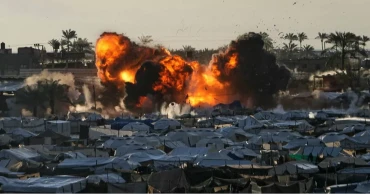
Hamas considers a proposal to disarm in Gaza that's central to the territory's future
Hamas is considering a new proposal to disarm its fighters in Gaza, a significant concession that could pave the way for U.S. President Donald Trump’s plan to rebuild the war-torn territory.
The group’s response, expected in the coming days or weeks, will have major implications for Gaza’s 2 million residents, who have been living under a fragile ceasefire for nearly six months.
Hamas’ founding charter mandates armed resistance against Israel, and the group remains reluctant to relinquish its arsenal of rockets, anti-tank missiles, and explosives, central to its identity. While mediator-backed discussions are underway, Hamas officials have expressed dissatisfaction with aspects of the U.S.-proposed plan. The ongoing U.S.-Israel military campaign against Iran has further complicated progress.
Key elements of the Trump-backed 20-point ceasefire plan — including Gaza’s reconstruction, deployment of a U.N.-mandated international peacekeeping force, formation of foreign-trained Palestinian police, and establishment of a technocratic committee to manage Gaza — remain on hold until disarmament is agreed upon.
Nickolay Mladenov, director of the U.S.-backed Board of Peace, said a mediator proposal supported by Turkey, Qatar, and Egypt would begin with the decommissioning of Gaza’s most dangerous weapons, including rockets and explosives, gradually moving to personal arms. This staged disarmament would coincide with Israeli troop withdrawals.
Despite Hamas accepting the proposal “in principle,” officials have voiced concerns over insufficient guarantees that Israel will halt attacks and not reignite conflict. Senior Hamas official Bassem Naim criticized Mladenov for appearing overly aligned with Israel.
Delays in negotiations could extend Gaza’s humanitarian crisis. Israel’s two-year offensive, launched after Hamas’ October 7, 2023, attack on southern Israel, displaced around 90% of Gaza’s population and destroyed vast swaths of the territory. Without disarmament and swift reconstruction, the risk of renewed violence and prolonged suffering for civilians remains high.
Mike Waltz, U.S. ambassador to the United Nations, emphasized, “The future of Gaza … is entirely dependent now on Hamas decommissioning its weapons. We truly stand at an inflection point.”
The coming weeks are expected to be crucial in determining whether Gaza can transition from a devastated war zone to a rebuilt, stable territory.
2 months ago
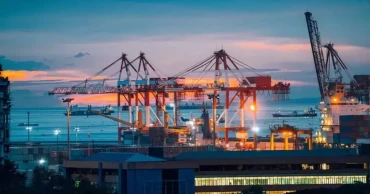
Kuwait’s ports hit by drones and missiles, no casualties reported
Kuwait has reported multiple attacks on its ports, including drone and missile strikes, with no casualties reported so far.
Earlier on Friday, Kuwait Ports Authority said the country’s main commercial hub, Shuwaikh Port, was targeted by “hostile” drones. Preliminary reports indicated material damage, but no human casualties, and emergency protocols were activated at the port.
Hours later, Kuwait Ministry of Public Works reported a “double attack” on Mubarak Al-Kabeer Port, involving both drones and cruise missiles. The ministry said the port sustained material damage, but no casualties were reported.
Authorities continue to monitor the situation and implement emergency measures at the affected ports.
#From BBC
2 months ago
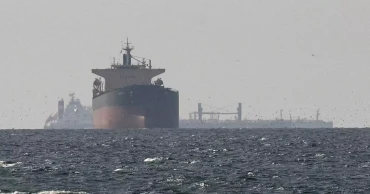
Iran allows 10 oil vessels through Hormuz as goodwill gesture, Trump says
Donald Trump on Thursday said the “mystery present” he had mentioned earlier this week from Iran was in fact 10 oil-laden vessels allowed to pass through the strategically vital Strait of Hormuz.
Speaking at a Cabinet meeting at the White House, Trump said Tehran had permitted the ships to transit the strait as a goodwill gesture amid ongoing negotiations. He noted that some of the vessels were flying Pakistani flags.
“They said they would let eight big boats of oil pass to show they are serious. It ended up being 10 boats,” Trump said, adding that the two additional vessels were sent as an apology for earlier remarks by Iranian officials.
Earlier on Tuesday, while speaking in the Oval Office, Trump had described the development as a “very significant prize” without revealing details at the time.
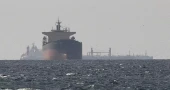
Iran has been restricting vessels it considers linked to the United States and Israel amid the ongoing conflict, while allowing limited passage for others through the narrow waterway, which handles a significant share of global oil shipments.
Jasem Mohamed al-Budaiwi of the Gulf Cooperation Council said Iran was also charging some ships for safe passage through the strait.
Commenting on the issue, Trump said such charges should not be allowed, though he acknowledged that Iran was “doing it a little bit.”
Despite tensions in the region, Trump said global oil prices and stock markets had not reacted as sharply as he had anticipated.
On Tuesday, Iran said it would allow “non-hostile vessels” to transit the Strait of Hormuz. In a post on X, the Iranian Embassy in South Africa said vessels linked to the United States, Israel, or parties involved in attacks against Iran would not be considered non-hostile.
Trump has set a five-day deadline, expiring Saturday, warning he would “unleash hell” if Iran fails to meet US demands regarding its nuclear and missile programmes and ensure the reopening of the Strait of Hormuz.
#From NDTV
2 months ago
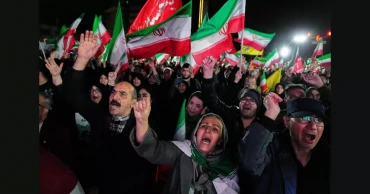
US and Iran dig in as talks stall over ongoing conflict
Iran and the United States appeared at an impasse Thursday, hardening their positions over ceasefire talks and setting the stage for more potential escalation in the Middle East war as thousands more U.S. troops neared the region.
Meanwhile, President Donald Trump extended his deadline for Iran to open the Strait of Hormuz to April 6, and Tehran tightened its grip on the crucial strait while Israel poured more troops into southern Lebanon to fight the Iran-backed militant group Hezbollah.
Sirens over Israel warned of barrages of incoming Iranian missiles, and Gulf nations worked to intercept fire. Heavy strikes were reported in Iran’s capital and other cities.
In a war that appears defined by who can take the most pain, the U.S. has offered shifting objectives, including ensuring Iran’s missile and nuclear programs are no longer a threat and ending Tehran’s support for armed groups in the region. Washington at one point also pushed for the overthrow of Iran’s theocracy.
While the U.S.-Israeli campaign has hit Iran’s military and government hard, killing top leaders and striking scores of targets, Iran continues to fire missiles, and there is no sign of an uprising against the government.
Surviving could be seen as victory for Iran
For Iran’s leadership, by contrast, merely outlasting the onslaught could be seen as victory. It may be hoping to get the U.S. to back down by roiling the world economy with its stranglehold on the the strait, which has disrupted oil and natural gas shipments and raised prices worldwide for energy and other goods.
Short of a negotiated solution, the U.S. would need a dramatic escalation to end Iran’s attacks and restore the free flow of goods through the strait, where 20% of all traded oil and natural gas is transported in peacetime. Iran rejected a ceasefire proposal put forth by the U.S., while putting forth its own demands.
Trump has vowed to strike Iran’s power plants if it does not fully reopen the strait. His new deadline pulls back on an earlier threat to bomb Iran’s energy plants if Tehran did not open the waterway.
Iran had threatened to retaliate against the region’s vital infrastructure, like desalination facilities, if Trump followed through. Trump said he was holding off on carrying out his threat because talks aimed at ending the conflict are going “very well.”
A Gulf Arab bloc said Thursday that Iran is now exacting tolls from ships to ensure their safe passage through the waterway.
Iran is operating Strait of Hormuz as ‘de facto toll booth’
Iran has been blocking ships from the strait that it perceives as linked to the U.S. and Israeli war effort, while letting through a trickle of others. Trump said during a Cabinet meeting Thursday that Iran is allowing some oil tankers through as a sign of good faith for talks.
Jasem Mohamed al-Budaiwi, secretary-general of the Gulf Cooperation Council, a bloc of six Gulf Arab nations, said Iran was charging for safe passage.
Lloyd’s List Intelligence called it a “de facto ‘toll booth’ regime,” saying that at least two vessels have paid in yuan, China's currency.
Iran’s grip on the strait and relentless attacks on Gulf energy infrastructure have sent Brent crude, the international standard, up more than 40% since the war started.
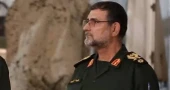
Israel said it killed the head of the Iranian Revolutionary Guard’s navy, Commodore Alireza Tangsiri, and the country’s naval intelligence chief, Behnam Rezaei. Israeli Defense Minister Israel Katz said Tangsiri was responsible for bombing operations that have blocked ships from crossing the Strait of Hormuz. Iran did not immediately acknowledge the killings.
Trump says Iran needs to ‘get serious’ about negotiations
Using Pakistan as an intermediary, Washington has delivered to Iran a 15-point “action list,” Trump envoy Steve Witkoff confirmed Thursday, calling it a framework for a possible peace deal. Witkoff said there were “strong signs” the U.S. could “convince Iran that this is the inflection point, with no good alternatives for them other than more death and destruction.”
A day after saying Iran wants to cut a deal, Trump posted on social media Thursday that Tehran needs to “get serious soon” on negotiating an end to the war “before it is too late.”
Press TV, the English-language broadcaster on Iranian state television, said Iran has its own five-point proposal, which includes reparations and recognition of its sovereignty over the Strait of Hormuz.
But Iranian Foreign Minister Abbas Araghchi said in an interview on state TV that his government has not engaged in talks to end the war and does not plan to. He said the U.S. had tried to send messages to Iran through other nations, “but that is not a conversation nor a negotiation.”
Egypt is also acting as a go-between, according to Egyptian Foreign Minister Badr Abdelatty, who said Thursday that his country sees a desire from both sides “for calm, for the exploration of negotiations.”
As the diplomatic efforts went on, a group of ships, including the USS Tripoli, drew closer to the Mideast with some 2,500 Marines. Also, at least 1,000 paratroopers from the 82nd Airborne — trained to land in hostile territory to secure key territory and airfields — have been ordered to the region.
A wave of Israeli airstrikes hits as Iran fires on Israel and Gulf neighbors
The Israeli army said Thursday it had deployed the 162nd Division into southern Lebanon, joining thousands of troops that already have moved there since the war erupted. Israel says the open-ended invasion is aimed at protecting its northern border towns from Hezbollah attacks and uprooting the militant group from the area.
Israel also said it carried out a wave of attacks targeting Iranian infrastructure early Thursday. Heavy strikes were also reported around Isfahan, home to a major Iranian air base and other military sites, as well as one of Iran's nuclear sites.
Witnesses told The Associated Press that power was out in some areas of Iran’s capital Tehran. Witnesses had earlier reported the sounds of heavy strikes and fighter jets overhead.
Loud booms could be heard across Israel as it was repeatedly targeted by barrages from Iran. Israel’s emergency service said a man in his 30s was killed near the northern coastal city of Nahariya after a wave of strikes that came from Lebanon. In the United Arab Emirates, two people were reported killed by shrapnel from a missile interception over Abu Dhabi.
Israeli military spokesperson Brig. Gen. Effie Defrin said Thursday that the army needs another 15,000 soldiers, roughly half of them combat troops, to be at full strength for its multiple missions. Israel can call up tens of thousands of reservists, but repeated deployments have drawn pushback, with many citing exhaustion and financial strain.
Since the war began, more than 1,900 people have been killed in Iran, Deputy Health Minister Ali Jafarian told Al Jazeera.
Eighteen people have died in Israel, while three Israeli soldiers have also been killed in Lebanon. At least 13 American troops have been killed. More than a dozen civilians in the occupied West Bank and Gulf Arab states have also died.
Authorities said more than 1,100 people have died in Lebanon. In Iraq, where Iranian-supported militant groups have entered the conflict, 80 members of the security forces have been killed.
2 months ago
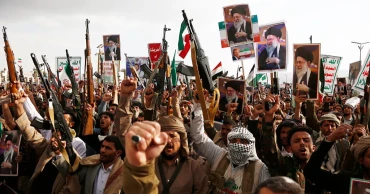
Yemen’s Houthis say ready to support Iran if needed
Yemen’s Houthi rebels have declared they are fully prepared to join the fight alongside Iran against the US and Israel if their military support is required, according to a report.
An anonymous Houthi leader told Reuters, “We stand fully militarily ready with all options. As for other details having to do with determining zero hour, they are left to leadership… we will know when is the suitable time to move.”
The leader added that Iran is currently “doing well and defeating the enemy every day,” but the Houthis would reassess if circumstances change.
Experts note that if the Houthis open a new front, a likely target could be the Bab al-Mandeb Strait, a strategic chokepoint controlling sea traffic to the Suez Canal, following Iran’s effective closure of the Strait of Hormuz.
Source: Al Jazeera.
2 months ago
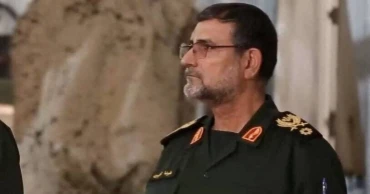
Israeli military kills Iran’s IRGC navy commander in airstrike
The Israeli military killed Alireza Tangsiri, commander of Iran's Islamic Revolution Guard Corps (IRGC) Navy, in an airstrike early Thursday, Israeli Defense Minister Israel Katz said in a statement.
Earlier, Israel's state-owned Kan TV, citing an Israeli official, reported that Tangsiri was targeted in an Israeli airstrike on an Iranian naval base in the southern port city of Bandar Abbas.
Iran, US harden positions as tensions rise over Strait of Hormuz
2 months ago
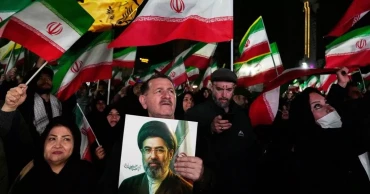
Iran, US harden positions as tensions rise over Strait of Hormuz
Iran and the United States have hardened their positions as efforts to secure a ceasefire in the Middle East war showed little progress, with Tehran tightening its grip on the strategic Strait of Hormuz and Washington reinforcing its military presence in the region.
Iran has moved to formalize control over the vital waterway, through which about 20% of global oil and gas passes, with reports suggesting some vessels are being charged fees to transit. Shipping analysts described the system as a “de facto toll booth,” with certain ships reportedly paying in Chinese yuan.
At the same time, the United States is deploying additional forces to the region, including a strike group led by the USS Tripoli carrying around 2,500 Marines, along with at least 1,000 paratroopers from the 82nd Airborne Division.
Despite the buildup, it remains unclear whether US President Donald Trump will order direct military action against Iran. However, US military officials say operations have already significantly degraded Iran’s naval and missile capabilities.
Meanwhile, violence continues across the region. Sirens sounded in Israel over incoming Iranian missiles, while in the United Arab Emirates, two people were killed and three injured by falling debris from intercepted missiles. Saudi Arabia also reported intercepting drones over its Eastern Province.
Iran’s control over the strait and continued attacks on regional energy infrastructure have pushed global oil prices sharply higher, with Brent crude rising more than 40% since the conflict began.
Diplomatic efforts appear stalled. While Washington says negotiations are ongoing through intermediaries, Iran has denied holding any talks and rejected the idea of direct engagement. Tehran has instead proposed its own framework, which includes recognition of its authority over the Strait of Hormuz.
Since the war began, casualties have mounted across multiple countries, underscoring the growing regional and global impact of the conflict.
2 months ago
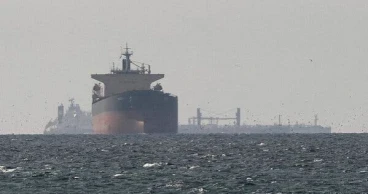
Bangladesh among ‘friendly nations’ as Iran keeps Hormuz Strait open for selective passage
Bangladesh has been named among several “friendly nations” whose vessels may be allowed safe passage through the Strait of Hormuz, as Iran said the crucial maritime route remains partially open despite the ongoing Middle East conflict.
In a notable diplomatic development, Iran has indicated that ships linked to a number of countries including Bangladesh can still transit the strategically vital Strait of Hormuz under coordinated arrangements.
The narrow waterway, which carries around one-fifth of the world’s oil shipments, has been under tight Iranian control since the United States and Israel launched attacks on Iran last month.
Speaking to Iranian State TV, Foreign Minister Abbas Araghchi rejected claims that the strait has been completely closed, saying controlled passage continues.
“Many of the shipowners, or the countries that own these vessels, have contacted us and requested that we ensure their safe passage through the strait. For some of these countries that we consider friendly, or in cases where we have decided to do so for other reasons, our armed forces have provided safe passage,” Araghchi said, according to a report by Reuters.
“You have seen on the news: China, Russia, Pakistan, Iraq, and India. Two of its ships passed through a few nights ago, and some other countries, and even Bangladesh, I believe. These are countries that spoke with us and coordinated with us, and this will continue in the future as well, even after the war,” he added.
Araghchi also indicated that vessels linked to countries seen as adversaries or those involved in the ongoing conflict would not be allowed passage.
“We are in a state of war. The region is a war zone, and there is no reason to allow the ships of our enemies and their allies to pass through. But it remains open to others,” he said on Wednesday.
Shipping through the route has dropped sharply amid the conflict.
Following US and Israeli strikes on Iran and Tehran’s retaliatory actions, access to the strait has been significantly restricted.
The channel, which usually handles around 120 vessels daily, has seen traffic plunge by about 95 per cent in March, according to shipping data, with only a handful of crossings recorded in recent days.
Source: With inputs from NDTV
2 months ago