middle-east
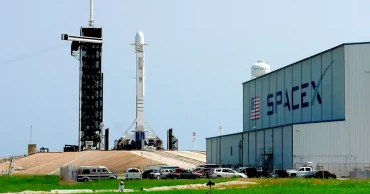
Free Starlink boosts flow of protest information from Iran
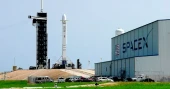
Iranian protesters’ ability to send information about deadly nationwide demonstrations to the outside world has been significantly strengthened after SpaceX’s Starlink satellite internet service dropped its fees, allowing wider use inside Iran, activists said on Wednesday.
The move follows Tehran’s complete shutdown of telecommunications and internet access on January 8, as protests spread across the country over economic hardship and the collapse of the national currency.
Although SpaceX has not officially announced the decision, activists told the Associated Press that Starlink service has been available free of charge since Tuesday to anyone in Iran with the necessary equipment.
“Starlink has been crucial,” said Mehdi Yahyanejad, an Iranian activist whose nonprofit group Net Freedom Pioneers has helped smuggle Starlink terminals into the country. He pointed to videos that surfaced showing rows of bodies at a forensic center near Tehran. “Those images came out because of Starlink, and they changed how people understand what is happening,” he said.
Since protests erupted on December 28, more than 2,500 people — mostly demonstrators but also members of the security forces — have been killed, according to the US-based Human Rights Activists News Agency.
Starlink is officially banned in Iran, as authorities have never approved the import or use of the devices. Activists fear users could be accused of espionage or aiding hostile states, charges that can carry the death penalty.
The first Starlink units were smuggled into Iran in 2022 during protests over the mandatory headscarf law, after the US government exempted the service from sanctions. Since then, an estimated 50,000 units have entered the country, often hidden as solar panels or concealed through other means, activists say.
Starlink relies on thousands of low-Earth orbit satellites and requires outdoor antennas, making the devices vulnerable to detection. Iranian authorities have reportedly stepped up efforts to locate and jam Starlink signals, raid homes with satellite equipment and track users through informants and online activity.
“There has always been a cat-and-mouse game,” said Ahmad Ahmadian, executive director of the US-based group Holistic Resilience. He said recent government attempts to disrupt Starlink signals were only partially effective and mainly limited to certain urban areas.
Iran has recently restored outbound international phone calls, but incoming calls from abroad remain blocked.
Activists say the spread of Starlink has made it far harder for authorities to fully isolate the country, unlike during the 2019 protests when information was largely cut off for days. The decision to make the service free could further increase the flow of information from inside Iran.
Starlink has previously been offered free during natural disasters and has played a critical role in Ukraine since Russia’s invasion in 2022. However, experts warn that reliance on a single private company for connectivity creates risks.
Julia Voo of the International Institute for Strategic Studies said Starlink’s success in bypassing state-imposed blackouts could prompt governments to seek stronger controls over communication systems. “It creates a single point of failure,” she said, adding that other countries are closely watching how the technology is used in Iran.
4 months ago
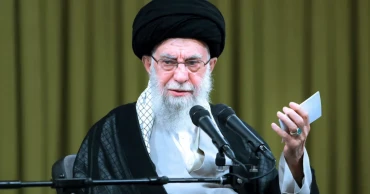
Iran signals swift trials, executions despite Trump warning
Iran’s judiciary chief on Wednesday indicated that fast-track trials and executions could soon be carried out against people detained in nationwide protests, defying warnings from US President Donald Trump.
Gholamhossein Mohseni-Ejei, head of Iran’s judiciary, made the remarks as rights activists warned that hangings of detainees could begin soon. A violent crackdown by security forces has already left at least 2,571 people dead, according to the US-based Human Rights Activists News Agency, marking one of the bloodiest episodes of unrest in Iran in decades.
Trump has repeatedly warned that Washington could take military action over the killing of protesters, only months after US strikes on Iranian nuclear sites during a brief war launched by Israel in June.
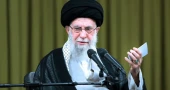
On Wednesday, Iranian authorities held a mass funeral for around 100 members of the security forces killed during the unrest, although officials had earlier put the figure at 300. Tens of thousands of mourners attended, waving Iranian flags and holding portraits of Supreme Leader Ayatollah Ali Khamenei. Coffins draped in national flags were stacked in rows and decorated with flowers and photographs of the dead.
Despite a heavy security presence easing in some areas, fear remains widespread. Plainclothes security personnel were still seen patrolling neighbourhoods, while riot police and members of the Basij paramilitary force appeared to have returned to their barracks.
A mother of two, speaking anonymously for fear of reprisals, said she was terrified by the gunfire and violence. “We hear many have been killed and injured. Now they say calm has returned, but schools are closed and I’m afraid to send my children back,” she said.
Ahmadreza Tavakoli, 36, told the Associated Press he witnessed one protest in Tehran and was shocked by the use of live ammunition. “People went out to protest peacefully, but it quickly turned into a war zone,” he said. “The people have no guns. Only the security forces do.”
In a video aired by state television, Mohseni-Ejei said any action against detainees must be carried out without delay.
“If we want to do something, we have to do it quickly. If it is delayed by months, it won’t have the same effect,” he said.
His comments directly challenged Trump, who warned in an interview with CBS that the US would take “very strong action” if Iran went ahead with executions.
“We don’t want to see thousands of people killed and then hear about hangings,” Trump said. “That’s not going to work out well for them.”
A Gulf Arab diplomat told AP that several Middle Eastern governments were urging the Trump administration not to go to war with Iran, warning of “unprecedented consequences” that could trigger a wider regional conflict.
Meanwhile, activists said Starlink had begun offering free satellite internet service in Iran, helping users bypass a nationwide internet shutdown imposed on January 8. Iran has since allowed outgoing international calls, but incoming calls remain blocked.
“We can confirm that free Starlink service is working inside Iran,” said Mehdi Yahyanejad, a US-based activist involved in bringing the terminals into the country.
Security forces were also reported to be searching for Starlink satellite dishes, with residents in northern Tehran saying authorities were raiding apartment buildings.
According to the Human Rights Activists News Agency, 2,403 of those killed were protesters, while 147 were government-affiliated. At least 12 children and nine civilians not involved in protests were also among the dead. More than 18,100 people have been detained.
Assessing the full scale of the unrest remains difficult as communications inside Iran continue to be heavily restricted.
4 months ago
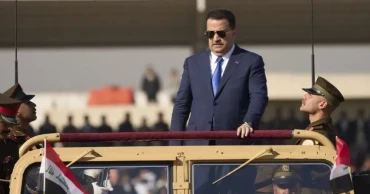
Iraq PM race: al-Sudani withdraws in favor of Maliki
Iraq’s caretaker Prime Minister Mohammed Shia al-Sudani has stepped aside from the race for the country’s top post to clear the way for former Prime Minister Nouri al-Maliki, Iraqi officials said Tuesday.
Two officials, including a senior leader from al-Sudani’s Reconstruction and Development Coalition and a government official, said al-Sudani agreed to withdraw after talks with al-Maliki. They spoke on condition of anonymity as they were not authorized to comment publicly. Al-Sudani’s office did not respond to a request for comment.
Al-Sudani’s coalition won the largest number of seats in November’s parliamentary elections, securing 46 in the 329-seat parliament, while al-Maliki’s bloc won 30. Both leaders had sought the backing of the Coordination Framework, a powerful alliance of Iran-backed Shiite parties that brought al-Sudani to power in 2022.
The officials said the Coordination Framework failed to choose between the two contenders and left the decision to them. A subsequent meeting resulted in al-Sudani agreeing to step aside in favor of al-Maliki.
The next government will face major political and economic challenges, including the future of armed groups, especially the Popular Mobilization Forces, a coalition of mostly Shiite militias formed to fight the Islamic State group. Although formally placed under military control in 2016, the group continues to operate with significant autonomy.
The United States has been urging Iraq to disarm Iran-backed groups, a sensitive issue given their political influence.
As negotiations over government formation continue, Iraq’s judiciary has entered the debate on non-state weapons. Supreme Judicial Council head Judge Faiq Zidan said earlier this month there was no longer any need for arms outside state control following the defeat of terrorism.
Some political forces welcomed his remarks, while armed factions rejected any discussion of disarmament, saying their weapons are necessary to defend the country and its holy sites.
A judicial official said the judiciary would support the incoming government by providing legal backing for any disarmament process and has taken a tougher stance on enforcing constitutional deadlines for forming the new government.
Political analyst Ihsan Al-Shammari said the judiciary’s role marks one of the strongest interventions since Iraq’s post-2003 political system was established.
4 months ago
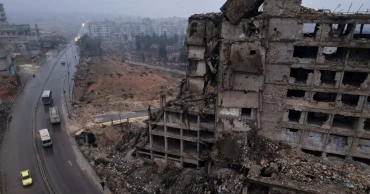
Syrian army closes eastern Aleppo as clashes with Kurdish-led forces escalate
The Syrian army on Tuesday declared an area east of Aleppo a “closed military zone,” signaling a possible escalation with Kurdish-led Syrian Democratic Forces (SDF), officials said.
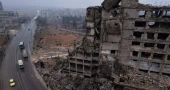
The move follows several days of clashes in Aleppo last week that displaced tens of thousands, ending over the weekend with the evacuation of Kurdish fighters from the Sheikh Maqsoud neighborhood. Syrian authorities have since accused the SDF of reinforcing positions near Maskana and Deir Hafer, about 60 km east of Aleppo, allegations the SDF denied.
In a statement, the SDF said government forces had begun shelling Deir Hafer but reported no casualties. Damascus has not commented.
Eastern Aleppo has long been a tense frontline between areas controlled by the Syrian government and SDF-held northeastern regions. The state news agency SANA said the area was declared a closed military zone due to “continued mobilization” by the SDF and its alleged use as a launching point for Iranian-made suicide drones targeting Aleppo.
A drone struck the Aleppo governorate building on Saturday, hours after a press briefing by two Cabinet ministers and a local official. The SDF denied responsibility. The army’s Tuesday statement called for armed groups to withdraw east of the Euphrates River.
Tensions come amid stalled political talks between Damascus, under interim President Ahmad al-Sharaa, and the SDF. A March 2025 agreement planned for the SDF to merge with the Syrian army by year-end, but disagreements remain over implementation. Some factions in the new army, formed after the fall of former President Bashar Assad in December 2024, are former Turkey-backed insurgents with a history of conflict with Kurdish forces.
The SDF, a longtime U.S. partner in fighting ISIS, is considered a terrorist group by Turkey due to its links with the Kurdistan Workers’ Party (PKK). Despite U.S. support, Washington has also cultivated ties with al-Sharaa’s government and pushed the Kurds to implement the March deal.
Separately, Shams TV, based in Irbil in Iraq’s Kurdish region, postponed a scheduled interview with al-Sharaa for “technical” reasons, without giving a new broadcast date.
4 months ago
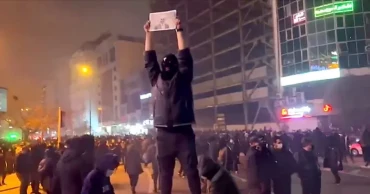
Around 2,000 feared dead as crackdown on Iranian protests intensifies
Thousands of people are feared dead following a severe crackdown on anti-government protests in Iran, as families abroad receive harrowing reports from those still inside the country.
Describing the situation in their first calls home in several days, Iranians have spoken of extensive death and destruction.
An Iranian security official has told a news agency that the death toll could be around 2,000 people, including security personnel.
Human rights groups have raised alarms over reports that one protester, Erfan Soltani, is due to be executed tomorrow, with some describing the case as unprecedented in its speed.
Protests have been ongoing for several weeks. State media claimed that demonstrations had calmed last night, but the BBC has received footage from citizens reporting that protests continued in multiple locations across the country.
In response to the crackdown, US President Donald Trump has announced that countries conducting business with Iran could face a 25% tariff on trade with the United States.
Officials have told CBS News that the President has been briefed on a range of military and covert options, and his national security team is expected to meet later to discuss potential interventions.
Although some Iranians have been able to contact family members abroad, an ongoing internet blackout is hindering the verification of information from inside the country.
Source: Agencies
4 months ago
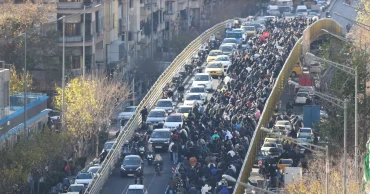
Iranians manage some overseas calls as internet remains cut after protests
Mobile phones in Iran were able to make some international calls on Tuesday, days after authorities shut down the internet and blocked overseas connections amid a nationwide crackdown on protests.
Several residents in Tehran managed to reach journalists at The Associated Press, though the AP bureau in Dubai said it could not call those numbers back. Iranians said text messaging was still not working, and witnesses reported that internet access remained cut off from the outside world.
Iran imposed the shutdown on Thursday as protests intensified across the country.
US President Donald Trump said Iran wants to negotiate with Washington after he warned of possible military action over Tehran’s handling of the protests. Activists say at least 646 people have been killed during the unrest.
Iranian Foreign Minister Abbas Araghchi told Qatar-based Al Jazeera in an interview aired Monday night that he has continued to communicate with US envoy Steve Witkoff.
The contacts “continued before and after the protests and are still ongoing,” Araghchi said, adding that Washington’s proposals and threats toward Iran are “incompatible.”
White House press secretary Karoline Leavitt said Iran’s public statements differ from the private messages the US administration has received in recent days.
“The president has an interest in exploring those messages,” Leavitt said. “However, the president has also shown he is not afraid to use military options if and when he believes it is necessary, and nobody knows that better than Iran.”
Meanwhile, large pro-government rallies took to the streets on Monday in a show of support for the ruling system after days of protests that directly challenged the leadership of 86-year-old Supreme Leader Ayatollah Ali Khamenei.
Iranian state television broadcast scenes of crowds, appearing to be in the tens of thousands, chanting slogans including “Death to America!” and “Death to Israel!” Others shouted, “Death to the enemies of God!”
What to know about Iran protests as government shuts down internet, phone networks
Iran’s attorney general has warned that anyone taking part in protests will be treated as an “enemy of God,” a charge that carries the death penalty.
4 months ago
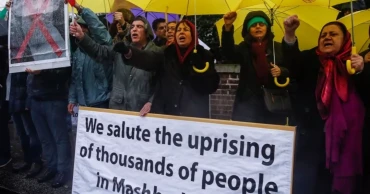
What to know about Iran protests as government shuts down internet, phone networks
Nationwide protests in Iran, driven by deepening economic hardship, are placing renewed pressure on the country’s theocratic leadership as authorities shut down internet and phone networks to curb unrest.
The demonstrations erupted amid a collapsing economy worsened by renewed UN sanctions over Iran’s nuclear programme. The rial has plunged to more than 1.4 million to the US dollar, inflation hovers around 40%, and prices of food and fuel have surged. Recent fuel price hikes and the removal of subsidised exchange rates for most imports further inflamed public anger.
According to the US-based Human Rights Activists News Agency, more than 600 protests have taken place across all 31 provinces. At least 646 people have been killed and over 10,700 arrested, though Iran has not released official figures. Independent verification is difficult due to the communications blackout and restrictions on journalists.
The protests began in late December with merchants in Tehran before spreading nationwide. While initially focused on economic grievances, chants soon turned openly anti-government. Discontent has simmered for years, notably after the 2022 death of Mahsa Amini in police custody.
Iran’s regional position is also weakened. Its “Axis of Resistance” allies — including Hamas, Hezbollah, the Assad government in Syria and Yemen’s Houthis — have suffered major setbacks amid wars and Israeli and US strikes. Meanwhile, Tehran remains under intense scrutiny over its nuclear activities, having enriched uranium close to weapons-grade levels before US strikes on nuclear sites in June.
US President Donald Trump has warned Iran against violently suppressing protesters, saying Washington is closely watching events. Relations between Iran and the US remain deeply strained, rooted in decades of hostility following the 1979 Islamic Revolution, the US embassy hostage crisis, and disputes over Iran’s nuclear ambitions.
Despite the crackdown, protests continue, highlighting the most serious challenge to Iran’s leadership in years.
4 months ago
Trump holds off on military action against Iran's protest crackdown as he 'explores' Tehran messages
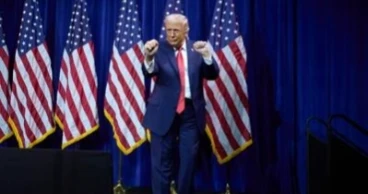
US President Donald Trump is holding off on immediate military action against Iran despite a violent crackdown on protests that has killed more than 600 people, as he considers messages from Tehran indicating a willingness to engage in talks.
Trump has repeatedly warned that the use of deadly force against anti-government protesters would cross a red line and has said Iran appears to be nearing it. While the US military has been placed on heightened alert, the White House signaled that Trump is weighing diplomatic options.
White House press secretary Karoline Leavitt said the Iranian government’s private messages differ from its public rhetoric and that Trump wants to “explore” those communications, while remaining prepared to use force if necessary.
Hours later, Trump announced 25% tariffs on countries doing business with Iran, his first concrete punitive step tied to the protest crackdown. The White House did not provide details on how the tariffs would be implemented.
Vice President JD Vance, Secretary of State Marco Rubio and national security officials have been developing options ranging from diplomacy to military strikes, according to a US official. Trump said a meeting with Iranian officials was being arranged but warned action could come sooner.
Analysts say the sustainability of the protests remains uncertain due to internet blackouts and lack of centralized leadership. The demonstrations, triggered by economic collapse, have grown into a broader challenge to Supreme Leader Ayatollah Ali Khamenei’s rule.
Some Trump allies are urging decisive action, arguing Iran is vulnerable after recent conflicts. Iranian officials have warned US or Israeli forces would be legitimate targets if Washington intervenes.
4 months ago
Hamas says it will dissolve Gaza government when new Palestinian body takes over
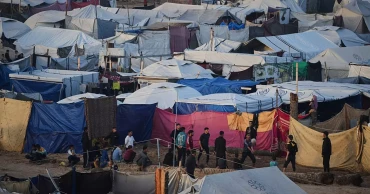
Hamas said on Sunday it will dissolve its existing government in Gaza once a new Palestinian technocratic leadership committee assumes control of the territory under a US-brokered peace plan, though it did not say when the transition would happen.
Hamas and the rival Palestinian Authority have yet to announce the names of the technocrats, who are meant to be politically unaffiliated. It also remains unclear whether Israel and the United States will approve the new body.
The plan calls for oversight by an international “Board of Peace,” led by US President Donald Trump, which is tasked with supervising the ceasefire that began on October 10. Its mandate includes overseeing Hamas’ disarmament, deploying an international security force, further Israeli troop withdrawals and Gaza’s reconstruction. The board’s members have not yet been named.
An Egyptian official said Hamas is sending a delegation to talks with Egyptian, Qatari and Turkish officials on moving to the second phase of the agreement. Hamas spokesperson Hazem Kassem urged swift formation of the technocratic committee, while talks with other Palestinian factions are expected this week.
Despite the ceasefire, violence continued. Palestinian hospital officials said Israeli gunfire killed three Palestinians in Gaza on Sunday. Israel’s military said it fired at individuals who approached its troops, describing them as “terrorists.”
Since the truce began, more than 400 Palestinians have been killed in Israeli strikes, according to local health officials. Israel says its actions respond to ceasefire violations.
Meanwhile, Israeli police questioned a senior official from Prime Minister Benjamin Netanyahu’s office over alleged obstruction in a probe into leaked classified information, adding to political tensions as the fragile ceasefire continues.
4 months ago
Iran protest death toll hits 544 as Trump says Tehran wants talks
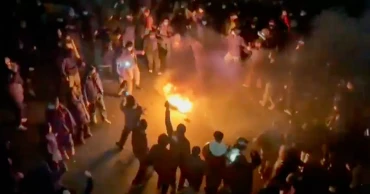
The death toll from Iran’s nationwide protests has risen to at least 544, activists said on Sunday, as US President Donald Trump claimed Tehran has reached out to Washington seeking negotiations after he threatened military action over the violent crackdown on demonstrators.
Trump said his administration is in talks to arrange a meeting with Iranian officials but warned he may be forced to act first as reports of killings and mass arrests continue.
“I think they are tired of being beat up by the United States,” Trump told reporters aboard Air Force One. “Iran wants to negotiate.”
He said the meeting was being set up but developments on the ground could prompt earlier action. “We may have to act because of what is happening before the meeting. But a meeting is being set up. Iran called, they want to negotiate,” he said.
There was no immediate confirmation from Tehran about any offer for talks.
Two people familiar with internal White House discussions said Trump and his national security team are weighing a range of responses, including cyberattacks and possible strikes by the US or Israel. They spoke on condition of anonymity as they were not authorised to comment publicly.
“The military is looking at it, and we’re looking at some very strong options,” Trump said. Asked about Iran’s threats of retaliation, he warned: “If they do that, we will hit them at levels that they’ve never been hit before.”
The US-based Human Rights Activists News Agency said more than 10,600 people have been detained during two weeks of unrest. It said 496 of those killed were protesters and 48 were members of the security forces. The group relies on a network of supporters inside Iran to verify information.
With the internet largely shut down and phone lines cut, it has become increasingly difficult to assess the scale of the violence. The Associated Press has not been able to independently verify the figures, and Iran’s government has not released any overall casualty numbers.
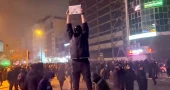
Despite the blackout, online videos showed fresh demonstrations in parts of Tehran and Mashhad over the weekend, with protesters confronting security forces.
Tensions escalated further after Iran’s parliament speaker Mohammad Baagher Qalibaf warned that the US military and Israel would be “legitimate targets” if Washington uses force to protect demonstrators.
“In the event of an attack on Iran, both the occupied territory and all American military centers, bases and ships in the region will be our legitimate targets,” he told parliament, prompting lawmakers to chant: “Death to America!”
The protests erupted on Dec 28 after the collapse of the Iranian rial, which now trades at more than 1.4 million to the US dollar, as the economy struggles under international sanctions. The demonstrations have since grown into direct challenges to Iran’s ruling theocracy.
4 months ago