middle-east
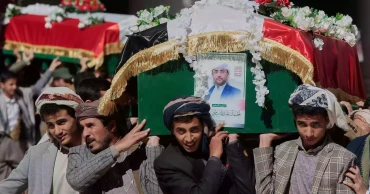
Saudi Arabia urges Yemen's separatists to leave 2 governorates as the anti-rebel coalition strains
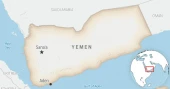
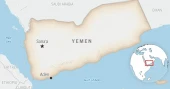
Saudi Arabia on Thursday urged Emirati-backed separatists in southern Yemen to withdraw from Hadramout and Mahra governorates, warning that their presence threatens the stability of the fragile coalition fighting Iran-backed Houthi rebels in the north.
The Southern Transitional Council, long supported by the UAE, moved into the two governorates earlier this month. Saudi authorities called for the council’s forces to return to previous positions and hand over camps to the National Shield Forces, aligned with Yemen’s internationally recognized government.
The Saudi statement criticized the separatists’ actions as an “unjustified escalation” harming both the southern cause and coalition efforts. Local Hadramout officials backed the call for withdrawal. Demonstrators in Aden waved the flag of the former South Yemen, reflecting ongoing secessionist sentiments.
The move strains Saudi-UAE relations, which, despite shared OPEC membership, have competed for regional influence. Yemen’s civil war, ongoing since the Houthis seized Sanaa in 2014, has caused over 150,000 deaths and a humanitarian crisis.
The Houthis have also disrupted Red Sea shipping amid the Israel-Hamas conflict. U.S. forces previously targeted Houthi leaders, including top missile and drone commander Maj. Gen. Zakaria Hajar. Escalation in southern Yemen risks further instability and could draw renewed international intervention.
5 months ago
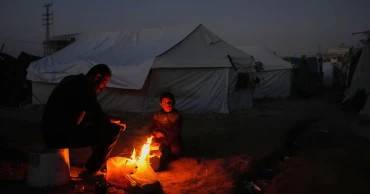
Blast in Gaza injures Israeli soldier amid ceasefire tensions
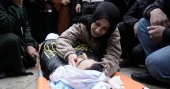
An explosion in Gaza on Wednesday injured an Israeli soldier, prompting Israel to accuse Hamas of violating the US-brokered ceasefire and raising fresh concerns over the fragile truce in place since Oct 10.
Israel’s military said the blast went off beneath a military vehicle as troops were dismantling militant infrastructure in the southern city of Rafah. The soldier sustained light injuries and was taken to hospital.
Hamas rejected responsibility, saying the explosion was caused by unexploded ordnance left behind from earlier fighting and that mediators had been informed. Israel’s military dismissed the claim. Prime Minister Benjamin Netanyahu described the incident as a ceasefire breach and said Israel would respond.
The incident occurred as Hamas leaders met Turkish officials in Ankara to discuss moving to the second phase of the ceasefire, which has slowed despite largely holding. The next stage is expected to tackle sensitive issues, including further Israeli troop withdrawals, the future governance of Gaza, the deployment of an international stabilization force and the disarmament of Hamas.
Since the truce began, all but one of the hostages taken in the Hamas-led Oct 7, 2023 attack have been released, alive or dead, in exchange for Palestinian prisoners. The family of the last hostage whose remains are still in Gaza urged that they be returned before talks advance.
Israel and Hamas have repeatedly accused each other of ceasefire violations. Israel has previously carried out strikes following alleged attacks, while Hamas says Israel has restricted aid flows and continued strikes. Gaza’s Health Ministry says more than 400 Palestinians have been killed by Israeli fire since the truce began.
Meanwhile, Turkish Foreign Minister Hakan Fidan met a Hamas delegation led by Khalil al-Haya, reaffirming Ankara’s support for Palestinian rights and humanitarian efforts in Gaza. Hamas officials said Israel’s actions were obstructing progress toward the next phase of the agreement.
On the hostage issue, Israeli officials said talks were continuing with mediators in Cairo to secure the return of the remaining remains, as pressure mounts from the family and the public to resolve the issue before the ceasefire moves forward.
5 months ago
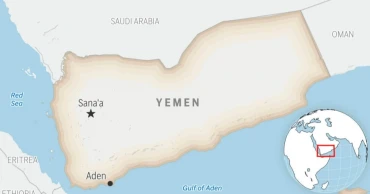
Saudi urges Yemen separatists to pull back
Saudi Arabia has publicly urged Emirati-backed separatists in Yemen to withdraw from two eastern governorates they recently entered, a move that highlights growing strains within the anti-Houthi coalition fighting the Iran-aligned rebels.
In a statement issued on Thursday, the Saudi Foreign Ministry called on the Southern Transitional Council to pull its forces out of Hadramout and Mahra, warning that the deployments risk escalating tensions and harming the interests of Yemenis as well as the broader coalition effort.
The ministry said the separatists’ actions amounted to an unjustified escalation and stressed the need for restraint and cooperation among all Yemeni factions to avoid further instability. It added that mediation efforts were under way to return the Council’s forces to their previous positions and hand over camps in the two governorates to Saudi-backed National Shield Forces.
The Southern Transitional Council has long received support from the United Arab Emirates, while Saudi Arabia backs other groups aligned with Yemen’s internationally recognized government. The latest developments threaten to spark internal confrontation within a coalition already weakened by years of war against the Houthis.
Supporters of the Council have increasingly raised the flag of the former South Yemen, which existed as an independent state until 1990. Calls were issued for demonstrations in the southern city of Aden in favor of renewed secession, though it was unclear whether they would proceed following Riyadh’s announcement. Aden remains a key base for forces opposed to the Houthis.
The dispute also places pressure on relations between Saudi Arabia and the UAE, close allies that are members of OPEC but have competed for influence across the region. Tensions between the two have also surfaced in Sudan, where they back rival sides in another conflict along the Red Sea.
Yemen has been gripped by conflict since the Houthis seized the capital, Sanaa, in 2014 and forced the government into exile. A Saudi-led coalition intervened the following year. The war has killed more than 150,000 people and pushed the country to the brink of famine, creating one of the world’s worst humanitarian crises.
The Houthis have recently disrupted shipping by attacking vessels in the Red Sea over the Israel-Hamas war, prompting many companies to reroute around Africa. They have also detained dozens of U.N. and aid workers, accusing them of espionage, allegations rejected by the United Nations and humanitarian groups.
5 months ago

Syrian church marks Christmas after deadly attack
Hundreds of worshippers gathered Tuesday at Mar Elias Church in Syria to mark Christmas and honor 25 people killed in a June suicide attack, reaffirming their faith amid lingering fears.
A small security detail stood guard as congregants held Mass and lit a neon Christmas tree on the church courtyard wall, adorned with photos of the victims. Among those remembered were three men celebrated as heroes for tackling the bomber, potentially saving many lives.
The attacker opened fire and detonated an explosive vest inside the Greek Orthodox church on June 22, killing worshippers during Sunday prayers. Brothers Boutros and Gergis Bechara and congregant Milad Haddad confronted the bomber, pushing him away from the main congregation before the explosion.
“If it weren’t for the three of them, maybe not one person would remain out of 400 people,” said Imad Haddad, Milad Haddad’s brother. He described attending the Christmas tree lighting as “a message of peace and love” and proof of the congregation’s resilience.
Thana al-Masoud, widow of Boutros Bechara, said she takes comfort believing her husband and the others are martyrs. “Our Lord chose them to be saints and to spread His word to all the world,” she said, while acknowledging the pain of their loss.
The June attack, blamed on an Islamic State cell, heightened fears among Syria’s Christian minority, which once made up about 10% of the population. Many fled during the 14-year civil war marked by sectarian violence and attacks on religious communities.
Despite the trauma, some congregants say their faith has grown stronger. “Our God is present, and He was present in the church,” said Hadi Kindarji, recalling a spiritual experience during the explosion.
Mar Elias priest Yohanna Shehadeh acknowledged ongoing fears but said the congregation prays for peace as Christmas approaches.
5 months ago

Settlers attack Palestinian home in West Bank, sheep killed
Israeli settlers forcibly entered a Palestinian home in the southern part of the occupied West Bank overnight, killing livestock and injuring children in the latest attack amid a surge of settler violence, Palestinian officials said on Tuesday.
Israeli police said five settlers were arrested over the incident.
According to Amir Dawood, an official with the Palestinian Wall and Settlement Resistance Commission, settlers broke into a house in the town of As Samu', killed three sheep, injured four others, smashed doors and windows and released tear gas inside the home. He said three Palestinian children under the age of four were taken to hospital after being affected by the gas.
Police said the suspects were arrested on suspicion of trespassing on Palestinian land, damaging property and using pepper spray, adding that an investigation is under way.
CCTV footage shared by the Palestinian commission showed masked settlers approaching and entering the house, with sounds of smashing and animals heard in the background. Separate video clips appeared to show sheep being beaten inside a stable.
Photographs released after the attack showed shattered car windows, a broken front door and dead sheep lying in pools of blood, while the interior of the house was left ransacked with broken glass scattered across rooms.
Dawood said the same family had been targeted by settlers once before in less than two months, describing the incident as part of a continuing pattern of violence against Palestinians, their property and livelihoods.
Settler attacks have risen sharply in recent months. During the October olive harvest, the United Nations recorded an average of eight attacks a day, the highest level since monitoring began in 2006. At least 136 further attacks were documented by Nov 24.
Israel captured the West Bank, east Jerusalem and Gaza in the 1967 war. More than 500,000 Jewish settlers now live in the West Bank, alongside over 200,000 in east Jerusalem.
Israel’s current government includes prominent supporters of the settler movement. Earlier this week, Finance Minister Bezalel Smotrich said the cabinet had approved plans for 19 new Jewish settlements, a move widely seen as further undermining prospects for a future Palestinian state.
5 months ago
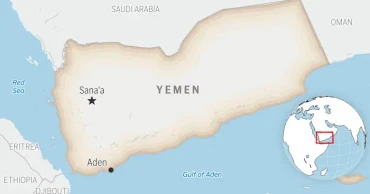
Yemen warring parties agree to release 2,900 detainees
Yemen’s internationally recognised government and the Iran-backed Houthi movement have agreed to release about 2,900 detainees in the largest prisoner exchange since the country’s civil war began more than a decade ago, Saudi and Houthi officials said on Monday.
Saudi Ambassador to Yemen Mohamed AlJabir announced the agreement in a post on X, saying it was reached under the supervision of the UN Special Envoy for Yemen and the International Committee of the Red Cross (ICRC). The deal, he said, will allow detainees from all sides to return to their families.
AlJabir praised the negotiating teams for resolving a key humanitarian issue, noting that the agreement could help reduce tensions and build confidence between the rival sides.
Houthi officials confirmed that the exchange includes Yemeni detainees as well as foreign nationals. Abdelkader al-Murtada, head of the Houthis’ National Committee for Prisoners’ Affairs, said the deal covers the release of seven Saudi and 23 Sudanese detainees in addition to Yemeni prisoners. Houthi spokesperson Mohamed Abdulsalam also acknowledged the agreement.
The deal was reached during talks in Oman’s capital, Muscat, with the involvement of Saudi officials. It marks the largest exchange between the Houthis and the internationally recognised government since fighting erupted in 2014, when the Houthis seized the capital, Sanaa, and much of northern Yemen.
The UN Special Envoy for Yemen, Hans Grundberg, welcomed the agreement, calling it a positive and meaningful step that could ease the suffering of detainees and their families across the war-torn country.
The agreement followed a 12-day round of negotiations in Oman and was the 10th meeting aimed at advancing commitments under the 2018 Stockholm Agreement, which calls for the release of all conflict-related detainees, the envoy’s office said.
ICRC Yemen head Christine Cipolla said the organisation stands ready to implement the releases, transfers and repatriations to ensure families are reunited safely and with dignity.
The ICRC previously facilitated the release of more than 800 detainees in 2023 and over 1,000 prisoners in October 2020 as part of similar efforts.
Source: AP
5 months ago
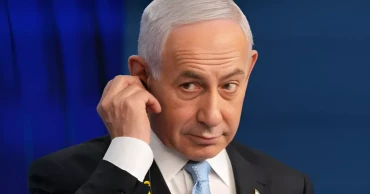
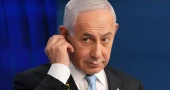
Ex-Netanyahu aide alleges premier sought to dodge blame for Oct. 7 attack
A former close aide to Israeli Prime Minister Benjamin Netanyahu has accused the premier of directing him to devise a plan to avoid responsibility for the October 2023 Hamas attack that triggered Israel’s ongoing war in Gaza.
Eli Feldstein, Netanyahu’s former spokesperson, who faces trial over allegedly leaking classified information to the press, made the claim during an extensive interview with Israel’s Kan news channel Monday night.
Critics have long accused Netanyahu of refusing to accept accountability for the deadliest attack in Israel’s history, but details of his actions immediately after the assault remain scarce. Netanyahu has consistently resisted an independent state inquiry.
Feldstein said in the interview that “the first task” he received from Netanyahu after Oct. 7, 2023, was to suppress calls for accountability. He recalled Netanyahu asking, “What are they talking about in the news? Are they still talking about responsibility?” and instructing him to craft responses to counter the media pressure. Feldstein added that Netanyahu appeared “panicked” and that aides later advised him to avoid using the word “responsibility” in public statements.
On Oct. 7, 2023, Hamas-led militants killed around 1,200 people in southern Israel and took 251 hostages to Gaza. Israel’s subsequent war has killed nearly 71,000 Palestinians, according to Gaza’s Health Ministry, which reports that about half of the victims were women and children.
Netanyahu’s office dismissed Feldstein’s claims as “a long series of mendacious and recycled allegations made by a man with clear personal interests trying to deflect responsibility from himself,” according to Hebrew media reports.
Feldstein’s remarks follow his indictment for allegedly leaking classified military information to a German tabloid to improve public perception of Netanyahu after six hostages were killed in Gaza last August. He is also a suspect in the “Qatargate” scandal, accused along with another close aide of receiving money from Qatar while serving the prime minister.
5 months ago
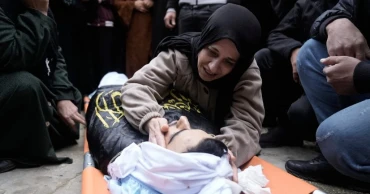
Israel approves 19 new West Bank settlements
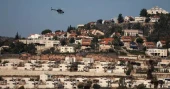
Israel’s Cabinet has approved plans for 19 new Jewish settlements in the occupied West Bank, further accelerating settlement expansion that critics say undermines prospects for a future Palestinian state.
Finance Minister Bezalel Smotrich said the decision raises the total number of newly approved settlements in recent years to 69, the highest on record. The latest approvals include two settlements that were evacuated during Israel’s 2005 disengagement plan.
According to the anti-settlement group Peace Now, the move increases the number of West Bank settlements by nearly 50 percent under the current far-right government. There were 141 settlements in 2022, a figure that has now risen to 210. Settlements are widely regarded as illegal under international law.
Smotrich’s office said the Cabinet approved the decision on Dec 11, though it had not been made public until now. The decision includes retroactive legalization of some settlement outposts and approval of construction on land from which Palestinians had previously been evacuated.
The move comes as the United States is pressing Israel and Hamas to advance the second phase of a Gaza ceasefire that includes discussion of a possible pathway to a Palestinian state, an outcome settlement expansion is widely seen as obstructing.
Two of the settlements legalized in the latest decision are Kadim and Ganim, which were dismantled in 2005 as part of Israel’s withdrawal from Gaza. Israel repealed the law barring resettlement of those areas in 2023.
Israel captured the West Bank, east Jerusalem and Gaza in the 1967 war. More than 500,000 Jews now live in West Bank settlements, in addition to over 200,000 in east Jerusalem. The current government includes strong supporters of the settler movement.
Settlement expansion has coincided with a surge in settler violence against Palestinians in recent months. The United Nations has reported a sharp rise in attacks, including arson, vandalism and destruction of farmland, with limited intervention by Israeli authorities.
Meanwhile, the Palestinian Health Ministry said two Palestinians, including a 16-year-old, were killed in clashes with Israeli forces in the northern West Bank on Saturday night. Israel’s military said the incidents involved militants attacking troops and that at least one case is under review.
Israel has intensified military operations in the West Bank since the Oct 7, 2023, Hamas-led attack that triggered the ongoing war in Gaza.
5 months ago
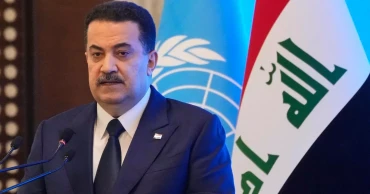
Iraq’s political future uncertain as factions compete for power
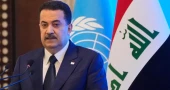
Iraq’s political landscape remains in flux more than a month after the November parliamentary elections, with parties maneuvering to form alliances that will shape the next government. No bloc won a decisive majority, setting the stage for prolonged negotiations.
Prime Minister Mohammed Shia al-Sudani’s party secured the largest number of seats, but his path to a second term is uncertain. Observers say the Iran-backed Coordination Framework — the largest Shiite parliamentary coalition — is unlikely to support al-Sudani, whom they now see as a political rival. Historically, only Nouri al-Maliki has served a second term as prime minister, highlighting the coalition’s caution against consolidating too much power in one leader.
Shiite alliances won 187 seats, Sunni groups 77, Kurdish parties 56, and minorities nine. Al-Sudani’s Reconstruction and Development Coalition won 46 seats, forcing him to seek coalition support. Earlier this month, his government withdrew a terror designation on Iran-aligned groups, including Lebanon’s Hezbollah and Yemen’s Houthis, reflecting the influence of armed factions within the Coordination Framework.
The absence of Muqtada Sadr’s Sadrist movement, which boycotted the election, created a vacuum exploited by parties with armed wings. More than 100 parliamentary seats are now held by parties affiliated with militias, the largest such presence since 2003. Sunni forces are reorganizing under the National Political Council, while Kurdish parties negotiate over the presidency, which by convention goes to a Kurd, with the Shiite prime minister and Sunni parliamentary speaker completing the leadership trio.
The incoming government faces daunting challenges, including a national debt exceeding $69 billion, heavy reliance on oil revenues, entrenched corruption, and the future of the Popular Mobilization Forces (PMF). These militias, formed to fight ISIS, remain largely autonomous despite formal integration under the military in 2016. After attacks on U.S. bases in retaliation for the 2023 Gaza war, Washington has warned against appointing leaders with militia ties or granting them control of security ministries.
Iraqi analysts say Iran-backed armed groups, including U.S.-designated terrorist organization Kataib Hezbollah, are unlikely to relinquish weapons, insisting that foreign forces leave before any disarmament discussions.
As Iraq’s political factions negotiate, the next government must balance internal power struggles, armed groups’ influence, and pressures from Washington and Tehran — all while managing a fragile economy and fragile stability across the country.
5 months ago
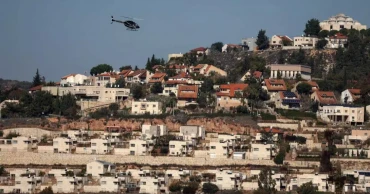
Israel approves 19 new settlements in occupied West Bank
Israel’s Cabinet has approved the construction of 19 new settlements in the occupied West Bank, far-right Finance Minister Betzalel Smotrich announced Sunday. The plan includes two settlements previously evacuated under the 2005 disengagement plan and brings the total number of new settlements over the past two years to 69, Smotrich wrote on X.
According to the anti-settlement group Peace Now, the approval will raise the total number of West Bank settlements by nearly 50% under the current government, from 141 in 2022 to 210. The decision also retroactively legalizes certain outposts and neighborhoods on lands where Palestinians were previously evacuated. Settlements are widely considered illegal under international law.
The announcement comes as the U.S. urges Israel and Hamas to advance a new phase of the Gaza ceasefire, effective Oct. 10, which envisions a potential pathway to a Palestinian state — a goal critics say the settlements undermine.
Israel seized the West Bank, east Jerusalem, and Gaza in the 1967 war. Currently, more than 500,000 Israelis live in West Bank settlements, with over 200,000 in contested east Jerusalem. The government, dominated by far-right officials including Smotrich and Cabinet Minister Itamar Ben-Gvir, who oversees the police, has prioritized settlement expansion.
Settlement growth has coincided with a surge in attacks against Palestinians. During October’s olive harvest, settlers carried out an average of eight attacks daily, the highest since 2006, according to the U.N. humanitarian office. By Nov. 24, at least 136 additional attacks were recorded, including arson, mosque desecration, ransacking of industrial facilities, and crop destruction. Israeli authorities have largely limited their response to occasional condemnations.
5 months ago