Tech-News

Chinese LiDAR maker Hesai denies U.S. military links amid legal battle
China’s leading LiDAR manufacturer, Hesai Technology, has denied allegations of links to the Chinese military following a report from short-seller Blue Orca Capital. The company is currently challenging the U.S. Defense Department’s decision to list it as a supplier to China’s military.
Hesai, the global leader in LiDAR technology, supplies laser sensors to major Chinese automakers, including BYD. Its Nasdaq-listed shares dropped about 10% on Tuesday after Blue Orca Capital released a report claiming the company misled investors about its military connections.
“We strongly disagree with the allegations in the Blue Orca report and are of the view that they are without merit,” Hesai said in a statement. The company insists it has no ties to China’s military and is committed to ethical business practices.
Hesai sued the U.S. government last year after being placed on the Pentagon’s list of companies with alleged military connections. A hearing for its case was scheduled for Thursday in the District Court of the District of Columbia.
Google agrees to pay $28m in racial bias lawsuit
The Blue Orca report includes images of Chinese military tanks appearing to use Hesai’s LiDAR technology, citing footage from state-run media and defense industry exhibitions. It also referenced concerns from former U.S. President Donald Trump about Chinese tech firms with military ties posing national security risks.
Hesai CEO David Li rejected the accusations, saying the Defense Department “falsely accuses us of associating with the Chinese military.” He added that the Pentagon had not claimed Hesai was owned or controlled by the military or directly sold products to military bodies but cited concerns over China’s “military-civil fusion” strategy.
Hesai supplies LiDAR to Amazon’s Zoox robotaxi service and previously worked with General Motors' Cruise unit before GM scaled back its autonomous vehicle ambitions last year.
Google Cloud to Acquire Wiz for Enhanced Cybersecurity
Despite the controversy, Hesai recently reported a 14 million yuan ($1.9 million) profit for 2024, reversing a 241 million yuan loss in 2023.
Source: With input from agency
1 year ago

Amazon to end little-used echo privacy feature that prevented voice recording transfers
Amazon is discontinuing a little-used privacy feature that allowed some Echo users to keep their voice recordings from being sent to the company’s cloud.
Starting March 28, the “Do Not Send Voice Recordings” option will no longer be available, Amazon informed affected users via email. The feature, which allowed voice commands to be processed locally on devices instead of Amazon's servers, was only available on three Echo models—the 4th generation Echo Dot, Echo Show 10, and Echo Show 15—limited to U.S. users with English settings. Less than 0.03% of customers used it, Amazon said.
FTC withdraws request to delay Amazon trial, says it has sufficient resources
The company cited the expansion of Alexa’s generative AI capabilities, which require cloud processing, as the reason for discontinuing the feature. However, users can still prevent Alexa from saving their voice recordings. Those who had opted into the “Do Not Send” setting will be automatically switched to the “Don’t save recordings” option.
Amazon emphasized its commitment to privacy, stating: “The Alexa experience is designed to protect our customers’ privacy and keep their data secure. We’re focusing on the privacy tools and controls that our customers use most and work well with generative AI experiences.”
Source: With input from agency
1 year ago

Google agrees to pay $28m in racial bias lawsuit
Google has agreed to pay $28m (£21.5m) to settle a lawsuit that claimed white and Asian employees were given better pay and career opportunities than workers from other ethnic backgrounds, a law firm representing claimants says.
The technology giant confirmed it had "reached a resolution" but rejected the allegations made against it, reports BBC.
The case filed in 2021 by former Google employee, Ana Cantu, said workers from Hispanic, Latino, Native American and other backgrounds started on lower salaries and job levels than their white and Asian counterparts.
The settlement has been given preliminary approval by Judge Charles Adams of the Santa Clara County Superior Court in California.
The case brought by Ms Cantu against Google relied on a leaked internal document, which allegedly showed that employees from some ethnic backgrounds reported lower compensation for similar work.
The practice of basing starting pay and job level on prior salaries reinforced historical race and ethnicity-based disparities, according to Ms Cantu's lawyers.
The class action lawsuit was filed for at least 6,632 people who were employed by Google between 15 February 2018 and 31 December 2024, according to Reuters news agency.
Google Cloud to Acquire Wiz for Enhanced Cybersecurity
Cathy Coble, one of the lawyers representing them, praised the "bravery of both the diverse and ally Googlers who self-reported their pay and leaked that data to the media".
"Suspected pay inequity is too easily concealed without this kind of collective action from employees," Ms Coble added.
The technology giant denied that it had discriminated against any of its employees.
"We reached a resolution, but continue to disagree with the allegations that we treated anyone differently, and remain committed to paying, hiring, and levelling all employees fairly," a Google spokesperson told the BBC.
Earlier this year, Google joined a growing list of US firms that are abandoning commitments to principles of diversity, equity, and inclusion (DEI) in their recruitment policies.
Meta, Amazon, Pepsi, McDonald's, Walmart and others have also rolled back their DEI programmes.
It comes as US President Donald Trump and his allies have regularly attacked DEI policies.
Since his return to the White House, Trump has ordered government agencies and their contractors to eliminate such initiatives.
1 year ago

Google Cloud to Acquire Wiz for Enhanced Cybersecurity
Google Cloud has announced a definitive agreement to acquire Wiz, a leading cloud security platform, to offer businesses and governments enhanced protection. This move addresses the growing cybersecurity risks and the complexity of managing multi-cloud and hybrid environments.
Why Google Cloud Is Acquiring Wiz Now
Cyber threats are escalating, and traditional security approaches struggle to keep pace. Modern organizations require comprehensive cybersecurity solutions that span multiple cloud platforms, protect against AI-related threats, and integrate seamlessly with software development and operations.
Current Security Solutions Offered by Google Cloud
Google Cloud provides the following services:
Google Threat Intelligence – Actionable insights into security threats.Google Security Operations – Automated threat detection and response.Mandiant Consulting – Expert response to cyber incidents and breaches.
Read more: Google acquires cybersecurity firm Wiz for $32 billion in its largest-ever deal
What Are the Services of Wiz
Wiz delivers a seamless cloud security platform that integrates across all major clouds, enabling businesses to detect and mitigate risks before deployment. It maps IT environments to identify attack paths and allows security teams to collaborate with developers to enhance security.
Can Google Cloud and Wiz Offer Stronger Together
Google promises that the acquisition will create a unified security platform combining Wiz’s expertise with Google’s AI-driven security innovation. This includes:
End-to-end cloud security: Covering applications, infrastructure, and code.Advanced threat intelligence: Offering insight from an attacker’s perspective.New AI-driven protection: Addressing emerging threats.Cybersecurity professionals & AI agents: Enhancing security operations with automation and expert support.
According to Google, Wiz’s solutions will remain compatible with AWS, Microsoft Azure, and Oracle Cloud, while Google Cloud will continue supporting an open ecosystem with partner integration opportunities.
Bottom Line
As Google Cloud acquires Wiz, it is expected that customers will benefit from improved enterprise security and reduced costs across multi-cloud and on-premises environments.
Read more: Google to spend $32 bln for cybersecurity startup Wiz
1 year ago
Google acquires cybersecurity firm Wiz for $32 billion in its largest-ever deal
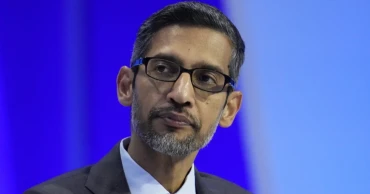
Google has agreed to purchase cybersecurity startup Wiz for $32 billion, marking its most significant acquisition to date as the company faces mounting regulatory scrutiny and the threat of antitrust actions.
Announced Tuesday, the all-cash deal is part of Google's push into cloud computing amid the ongoing artificial intelligence boom. As demand for AI-driven data centers increases, competition has intensified among Google, Microsoft, and Amazon.
If approved by regulators, Wiz will become part of Google Cloud, a division that has gained prominence despite the company’s reliance on search and advertising, which generate most of its $350 billion in annual revenue. The cloud segment has seen rapid growth, with revenue surging from $26.3 billion in 2022 to $43.2 billion in 2023.
Founded in 2020 by four Israeli army veterans, Wiz has grown into a major cybersecurity player with operations headquartered in New York. The company, which specializes in cloud security, is expected to generate $1 billion in revenue this year.
“Wiz and Google Cloud share a vision of making cloud security more accessible, intelligent, and user-friendly,” said Wiz CEO Assaf Rappaport in a blog post.
Google CEO Sundar Pichai emphasized that Wiz’s integration would enhance security while reducing costs. His remarks appeared aimed at regulators likely to scrutinize the deal’s impact on competition and pricing.
Reports suggest Google had been in talks with Wiz for some time, with an earlier $23 billion bid rejected in July 2023. At the time, Wiz was considering an initial public offering but ultimately opted for the Google acquisition amid stock market volatility.
BYD unveils ultra-fast EV charging system comparable to fuel refueling
Analysts at Wedbush Securities described the acquisition as a bold move against Microsoft and Amazon, both of which have made significant investments in cybersecurity to strengthen their cloud services. They noted that Google has lagged in the cloud market but suggested the Wiz deal could shift the competitive landscape.
The $32 billion purchase far surpasses Google’s previous record acquisition—the $12.5 billion Motorola Mobility deal in 2012. It also ranks as the largest cybersecurity acquisition in history and among the 20 costliest software deals ever, according to financial intelligence firm Mergermarket.
While some of Google’s past acquisitions, such as YouTube and DoubleClick, have been highly successful, others, like Motorola, did not meet expectations. The $5.4 billion acquisition of Mandiant in 2022, however, has contributed to Google Cloud’s growing profitability, which reached $6.1 billion last year.
Regulatory Hurdles Loom
The acquisition comes as Google faces intense regulatory scrutiny. The U.S. Justice Department has filed multiple antitrust cases against the company, including one targeting its dominance in digital advertising. Another case concluded that Google unlawfully monopolized internet search, with potential penalties under discussion.
The Wiz deal is expected to face close examination from antitrust regulators, especially amid growing concerns over tech industry consolidation. While the Trump administration has signaled support for corporate mergers, FTC Chairman Andrew Ferguson has expressed skepticism about allowing Big Tech to expand further.
Telegram CEO Durov in Dubai amid France's criminal probe
Last year, antitrust concerns reportedly led Wiz to abandon discussions with Google. However, analysts at Mergermarket suggest that Google and Wiz are now more confident in regulatory approval under the new administration.
Despite this, the watchdog group Demand Progress Education Fund has urged regulators to block the acquisition, warning of further market concentration. “This is a test of whether regulators will stand up to Big Tech,” said Emily Peterson-Cassin, the group’s corporate power director.
If approved, Google and Wiz expect to finalize the deal by 2026, pending regulatory clearance and other conditions outlined in the agreement.
Source: With input from agency
1 year ago

Google to spend $32 bln for cybersecurity startup Wiz
Alphabet, the parent company of Google, has agreed to acquire cybersecurity startup Wiz for $32 billion in an all-cash transaction.
This acquisition will enhance Alphabet's position in the cloud computing sector, currently dominated by Amazon and Microsoft. Once the deal is completed, Wiz will become part of Google Cloud.
“Today, businesses and governments that run in the cloud are looking for even stronger security solutions, and greater choice in cloud computing providers,” Google CEO Sundar Pichai stated on Tuesday. He added that the combination of Google Cloud and Wiz will “turbocharge improved cloud security and the ability to use multiple clouds” together.
Google leans further into AI-generated overviews for its search engine
Wiz, a cybersecurity company founded four years ago and based in New York, creates security tools designed to protect data stored in remote data centers from cyber threats.
Google has been interested in Wiz for a while. The purchase price announced on Tuesday exceeds a previously rejected offer of $23 billion made by Google last July.
1 year ago
Baidu unveils new AI models, claims superiority over DeepSeek
Chinese tech giant Baidu has introduced two new artificial intelligence (AI) models, positioning them as superior to those of DeepSeek and OpenAI based on certain benchmarks, amid the intensifying competition in large language models (LLMs).
On Sunday, Baidu released its multimodal foundational model, Ernie 4.5, and its first multimodal reasoning model, Ernie X1, making them freely available on its website. According to Baidu, Ernie 4.5 outperformed OpenAI’s GPT-4o in several benchmark tests, including CCBench and OCRBench, with its multimodal capabilities covering images, audio, and video.
The text performance of Ernie 4.5 also surpassed DeepSeek V3 on multiple benchmarks, while being comparable to OpenAI’s GPT-4.5.
Can technology help more sexual assault survivors in South Sudan?
Baidu, which launched China’s first LLM in March 2023 following the launch of OpenAI’s ChatGPT, has faced growing competition from other Chinese tech giants in the AI sector. The latest move aims to maintain its foothold in China’s AI market, especially as competitors like DeepSeek, Alibaba, Tencent, and Bytedance have been rapidly gaining business and consumer users.
While Baidu did not provide benchmark results for Ernie X1, the company claimed it performs similarly to DeepSeek’s R1 reasoning model but at half the price. The pricing for business access to Ernie X1’s API is set at 2 yuan (US$0.28) per million token inputs and 8 yuan per million token outputs.
In comparison, DeepSeek charges US$0.55 per million token inputs and US$2.19 per million token outputs for its reasoning model, R1. The Hangzhou-based startup recently raised its API prices in response to growing demand.
Baidu’s founder, chairman, and CEO, Robin Li Yanhong, revealed last month that Ernie 4.5 would become open source by June 30, marking a shift from his previous stance on closed-source AI development. “One thing we learned from DeepSeek is that open sourcing the best models can greatly help adoption,” Li said during an earnings call with analysts in February. “When the model is open source, people naturally want to try it out of curiosity, which helps drive broader adoption.”
Despite these advancements in AI, Baidu’s business is still being impacted by weak ad revenue. The company reported a 2% year-on-year decline in total revenue for the fourth quarter, with its full-year revenue down by 1%.
Source: South China Morning Post
1 year ago

Huawei Lobbyists barred from European Parliament amid Bribery Investigation
The European Parliament has prohibited Huawei lobbyists from entering its premises following the arrest of multiple individuals in a corruption probe linked to the Chinese telecom giant, marking another major scandal within the bloc’s legislature.
Belgian prosecutors suspect Huawei of bribing EU lawmakers.
On Friday, the European Parliament announced that it had suspended the access of Huawei lobbyists as a precautionary measure in accordance with its security regulations. The decision takes effect immediately.
The arrests on Thursday followed an investigation by Le Soir and other media outlets, which reported that lobbyists for Huawei were allegedly bribing current and former European Parliament members to advance the company’s business interests in the region.
Approximately 100 federal police officers conducted 21 searches across Brussels, as well as in the Flanders and Wallonia regions, and in Portugal. The investigating magistrate overseeing the case also ordered that offices allocated to two parliamentary assistants allegedly involved in the scheme be sealed within the EU Parliament.
Huawei stated on Thursday that it is taking the allegations seriously and intends to “urgently communicate” with investigators.
The Chinese company, a leading manufacturer of mobile phones and the largest supplier of networking equipment for telecommunications carriers, has been at the center of geopolitical tensions between the U.S. and China over technology and trade. Some European nations have joined the U.S. in banning Huawei’s equipment from next-generation mobile networks due to concerns that it could be used for Chinese espionage. Huawei has consistently denied these allegations.
According to the prosecutor’s office, the suspected corruption dates back to 2021.
This marks the second major corruption case involving the European Parliament in under three years. In December 2022, a separate scandal erupted when Qatari officials were accused of bribing EU representatives to downplay labor rights concerns ahead of the FIFA World Cup. The incident damaged the reputation of the EU’s only directly elected institution, which represents citizens from all 27 member states.
1 year ago

FTC withdraws request to delay Amazon trial, says it has sufficient resources
The Federal Trade Commission has reversed its request to delay a trial against Amazon, stating that it has adequate resources to proceed with litigation.
FTC attorney Jonathan Cohen initially told a federal judge on Wednesday that staffing shortages and budgetary constraints were hampering the agency’s ability to prepare for the case. He requested a postponement of the trial, which focuses on allegations that Amazon enrolled customers in its Prime program without their consent and made cancellation difficult.
However, later that day, Cohen retracted his statement in a letter to U.S. District Judge John Chun, admitting his remarks were incorrect.
“I want to clarify comments I made today: I was wrong,” Cohen wrote. “The commission does not have resource constraints and we are fully prepared to litigate this case.”
FTC Chair Andrew Ferguson echoed this in a statement to The Associated Press on Thursday, emphasizing that the agency remains committed to taking on major technology firms.
“The attorney was wrong,” Ferguson stated. “I have made it clear since Day 1 that we will commit the resources necessary for this case. The FTC will never back down from taking on Big Tech.”
Amazon declined to comment on the agency’s reversal.
Amazon workers in North Carolina vote against joining union
Cohen’s initial request came amid broader federal budget cuts under the Department of Government Efficiency (DOGE), led by Elon Musk. During the hearing, Judge Chun inquired whether reductions in funding and staffing at federal agencies had impacted the FTC’s ability to proceed with the case.
Cohen originally cited employee departures following a January email from the administration titled "Fork in the Road," as well as hiring freezes and restrictions on purchasing court documents and travel. However, with the FTC’s clarification, the case is expected to move forward as scheduled.
Source: With input from agency
1 year ago

AI robots become a major trend in China’s consumer market
As the first light of day touched Taishan Mountain in eastern China's Shandong Province, a metallic quadruped robot scaled the treacherous "Eighteen Bends," a 1,460-meter path, with a storage box strapped to its back.
While hikers labored to catch their breath, the agile robot skillfully navigated around crowds, balancing itself and effortlessly hauling a 120 kg load up the 45-degree slope. A video of the scene quickly went viral on Chinese social media.
Deployed by a logistics company under the Taishan Cultural Tourism Group, this AI-powered robotic dog assists in cleaning up tourist waste and transporting goods, cutting down on logistics costs in the Taishan scenic area.
With 8 million visitors generating 24,000 tonnes of waste each year, manual cleanup proves costly and hazardous. "The robotic dog can scale mountains, traverse water, and overcome obstacles while carrying heavy loads, greatly enhancing efficiency," said a company representative.
This technological breakthrough at Taishan Mountain highlights China’s rapidly growing consumer robotics market.
From the quick sell-out of humanoid robots to the rising popularity of companion robots, AI machines are transitioning from novelties to necessities. Industry experts predict explosive growth, with China’s humanoid robot market expected to reach 5.3 billion yuan (approximately 739 million U.S. dollars) by 2025, potentially growing to 75 billion yuan by 2029, accounting for 32.7% of global sales, according to a 2024 humanoid robot industry conference report.
Government policies are accelerating the development of AI robots. A guideline from the Ministry of Industry and Information Technology issued in November 2023 aims for breakthroughs in core robotics technology by 2025. Cities such as Chongqing and Shenzhen are investing in projects to enhance embodied intelligence systems, enabling AI to physically interact with the world.
AI robots are also addressing societal needs. In Chongqing, for instance, 70-year-old stroke survivor Zhang Li regained mobility through the use of a wearable exoskeleton. "These devices analyze joint movements to predict intentions and adjust motor support, transforming rehabilitation for the elderly and disabled," explained Ge Chengjun, a marketing executive at a Chongqing-based medical technology company.
In addition to their practical applications, AI robots are revolutionizing the concept of toys and pets. One popular example is Sirius, a palm-sized robot dog that dances, responds to commands, and even wiggles its hips, capturing the hearts of users with its interactive features. "It is a small, highly integrated, intelligent, four-legged robot capable of understanding and responding to human commands," said Kang Xiaohu, co-founder of Hengbot Innovation Ltd., the company behind the robot.
From mountain-climbing waste collectors to family companions, eldercare aides to interactive pets, AI robots are steadily becoming a staple of China’s consumer landscape. "This shift is not just a technological advancement, but also a response to fundamental human needs," said Kang.
1 year ago