Others
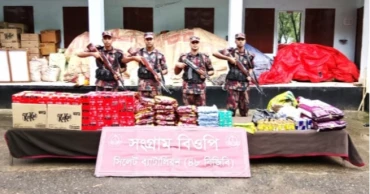
BGB seizes smuggled goods worth Tk 43 lakh in Sylhet
Border Guard Bangladesh (BGB) has seized a large quantity of smuggled goods worth around Tk 43.10 lakh in separate operations along the Sylhet border.
The operations were conducted on Saturday in different border areas under the jurisdiction of Sylhet Battalion (48 BGB) based on secret information, said BGB sources.
Members of the battalion carried out the drives in areas under Banglabazar, Bichnakandi, Pratappur, Sangram, Minatila and Dibirhaor Border Outposts (BOPs).
Indian national held in Jashore with Tk 1.93cr gold, foreign currencies
During the operations, BGB personnel seized a large consignment of smuggled items brought illegally from India, including cattle, cumin, basmati rice, sugar, chocolates, olive oil, tea leaves, energy drinks, liquor and a motorcycle etc.
According to BGB sources, the estimated seizure value of the recovered goods stands at Tk 43,10,835.
Lieutenant Colonel Mohammad Nazmul Haque, commanding officer of Sylhet Battalion (48 BGB), said BGB operations and intelligence activities have been intensified to ensure border security and prevent smuggling and drug trafficking.
He said regular drives are being conducted in border areas as part of ongoing efforts, adding that legal action will be taken against the seized goods as per rules.
1 month ago
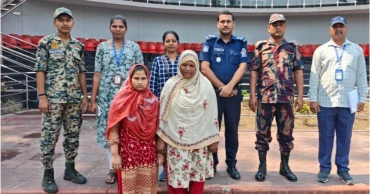
Two trafficked Bangladeshi women repatriated from India
Two Bangladeshi women trafficked to India have been brought back home by Indian police using travel permits.
The women are Arzina Azim Pramanik, 31, daughter of Azim Ali from Lahiri Mohanpur village in Ullapara upazila of Sirajganj, and Tahmina Akhter Iti, 35, daughter of Tara Mia Sardar from Pargendaria area in Keraniganj upazila of Dhaka.
Inspector Syed Mortaza of Benapole Land Port Immigration Police said that after checking all documents, including travel permits, and completing legal procedures, the women were handed over to Benapole Port Police on Saturday evening.
BGB seizes huge Indian goods in Brahmanbaria, Cumilla
The handover was completed in the presence of officials from both countries, including members of BGB, BSF and police.
Immigration sources said that during initial questioning, the women stated they entered India illegally without passports with the help of brokers and worked as domestic workers in the Grant Road area of Mumbai.
Arzina was trafficked through the Benapole border in Jashore in December 2024.
She was arrested by Mumbai Police on June 20, 2025, and sent to Naojibhav Mahila Home the following day, where she stayed for about 11 months.
Tahmina was taken to India through the Satkhira border on July 25, 2024.
She was arrested on September 28 the same year and sent to the same shelter the next day.
She stayed there for around one year and eight months.
According to India’s Bureau of Immigration, the women were repatriated using travel permits issued by the Bangladesh Deputy High Commission in Mumbai and exit permits from the Foreigners Regional Registration Office (FRRO) in Mumbai.
Ashraf Hossain, Officer-in-Charge of Benapole Port Police, said a human rights organisation, Jashore Justice and Care, will return them to their families after the legal process.
1 month ago

DC Conference set to commence with 498 proposals focusing on public service delivery
The Deputy Commissioners (DC) Conference 2026 is set to begin on Sunday, with the inaugural session scheduled at 10:30am at Osmani Memorial Auditorium in the presence of Prime Minister Tarique Rahman.
A total of 498 proposals submitted by eight divisional commissioners and 64 deputy commissioners have been included in the working paper for discussion during the conference.
DC conference 2026: 498 proposals set for policy review
The information was shared by Additional Secretary of the Cabinet Division (District and Field Administration Wing) Md Humayun Kabir at a press conference held at the Secretariat on Saturday. Cabinet Secretary Nasimul Gani was also present.
At the briefing, officials highlighted around 50 key proposals put forward by the DCs.
According to the officials, the proposals mainly focus on improving public services and healthcare, reducing public suffering, developing roads and bridges, promoting tourism, reforming laws and regulations, and protecting public interests. Of the total, the highest number - 44 - relate to the health sector.
Key proposals include establishing an economic zone in Gazipur to relocate industries into a designated area, rebuilding and upgrading union-level sub-health centres with adequate manpower and medicine supply, and launching a 1,000-bed government hospital in Rangpur division.
Other major recommendations include strengthening institutional arrangements for mental health services at district and sub-district levels, setting up scientific treatment facilities for medical and sewage waste from hospitals and clinics, and creating midwifery positions at union health and family welfare centres and maternal and child welfare centres.
In the education sector, proposals include appointing assistant teachers for ICT, Hindu religion and library science in government secondary schools, declaring free education for all poor students with disabilities, developing government-domain websites for private educational institutions, and formulating policies to regulate Qawmi madrasas.
DCs also proposed establishing government primary schools in all tea gardens in Sylhet division and nationalising registered private primary schools, as well as introducing inclusive curricula, schedules and assessment systems for all children.
Legal and administrative reforms include waiving time limits for filing appeals in civil courts and land survey tribunals, and appointing government lawyers through competitive examinations.
Other notable proposals include setting up cultural archives at district-level Shilpakala academies, modernising tourism through integrated development plans, constructing an international-standard airport in Noakhali, and ensuring all government fund disbursements are completed by April 15 each year.
To increase revenue collection, DCs suggested bringing cash-based transactions under digital systems through a policy covering sectors such as healthcare services, legal services, educational institutions, BRTA offices, passport offices and corporate entities.
In agriculture and fisheries, proposals include providing low-interest loans to local entrepreneurs and farmers in agriculture-based districts, ensuring alternative employment for fishers during hilsa conservation drives alongside food support, and establishing permanent fish sanctuaries in haor areas.
Other recommendations include setting up accreditation laboratories to test export-quality products such as vegetables, mangoes and betel leaf, establishing district-level food testing labs, and promoting the local bicycle industry through incentives.
Infrastructure proposals include setting up a salt processing plant in Cox’s Bazar, constructing an expressway from Lakkatura to Sylhet Osmani International Airport, and upgrading the Dhaka-Mymensingh highway to eight lanes.
Social protection and governance proposals include replacing food aid with cash support under TR and Kabikha programmes, decentralising recruiting agencies to the district level, establishing foreign language training centres, setting up divisional science research laboratories, and creating district-level fact-checking centres to counter misinformation.
Energy and environment-related proposals include ensuring uninterrupted electricity supply in hill districts, setting up planned waste management centres and water treatment plants across municipalities and unions, promoting alternatives to brick kilns in hilly areas, and providing low-interest loans for environmentally friendly construction blocks.
Other proposals include creating databases for cooperative societies and local government projects, compiling all land-related laws into a single document, amending the Land Crime Prevention and Remedy Act, 2023, expanding disability service centres to every sub-district, building indoor stadiums in each district, and forming climate resilience funds at district and sub-district levels.
Further recommendations include increasing manpower in district prison hospitals, establishing hostels for children in remote areas to ensure access to education, raising the government share of Hajj pilgrims to 25 percent, re-excavating filled-up public ponds, and identifying and shutting down harmful and inappropriate websites.
1 month ago
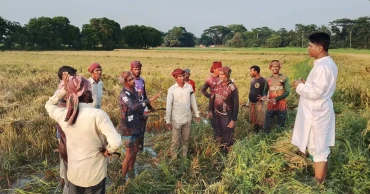
Voluntary initiative raises lightning safety awareness among Munshiganj farmers on May Day
A voluntary social organisation has stepped up efforts to reduce lightning-related fatalities among farmers by promoting life-saving safety measures at the field level.
Farmers remain the most vulnerable group to lightning strikes across the country. On April 26 alone, 14 people were killed in lightning incidents, while a total of 72 deaths have been recorded so far this year, most of them farmers working in open fields.
In response, Save Society and Thunderstorm Awareness Forum (SSTAF) conducted an awareness campaign in the Arial Beel area of Munshiganj on Friday, marking May Day.
Lightning strikes leave 4 dead in Patuakhali
The initiative reached over a hundred farmers through practical demonstrations and direct engagement.
As part of the campaign, SSTAF issued a three-point safety guideline: farmers should immediately seek safe shelter when dark clouds appear, avoid taking shelter under trees during rain or thunderstorms, and wear footwear while working in fields.
Multiple teams from the organisation visited agricultural fields in Sirajdikhan (Munshiganj) and Nawabganj (Dhaka), where they spoke with farmers—many busy harvesting paddy—in small groups. Refreshments and oral saline were also distributed among participants.
The programme was attended by SSTAF General Secretary Rashim Molla, Research Cell Head Abdul Alim, Joint Secretary Mostak Ahmed and other volunteers.
Speakers at the event stressed that open field areas are highly dangerous during thunderstorms and urged farmers to stop work and move to safer locations as soon as weather conditions deteriorate.
They also warned against the common misconception that sheltering under trees is safe.
Rashim Molla highlighted the need for constructing dedicated shelters in farming areas, while Mostak Ahmed attributed the rising number of lightning incidents to global warming and the indiscriminate cutting of talk trees in rural regions, which has increased exposure in open fields.
He emphasised that taking shelter inside permanent structures is significantly safer during thunderstorms and called for continued awareness efforts, particularly during the peak lightning season from March to June.
1 month ago
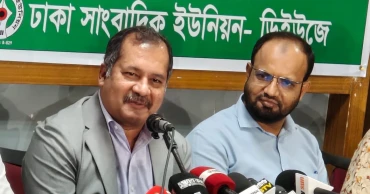
Balance needed to prevent freedom from descending into anarchy: Info Minister
Information and Broadcasting Minister Zahir Uddin Swapon on Saturday stressed the need for proper checks and balances, saying freedom must not descend into anarchy.
He said the government is committed to combating misinformation and disinformation through collaborative efforts involving all stakeholders in the media sector.
"We are trying to identify the problems in the media ecosystem first, just as a physician diagnoses an illness before prescribing medicine," he said.
The minister made the remarks while addressing a seminar titled "New Challenges to Independent Media: Misinformation and Our Course of Action," organised marking World Press Freedom Day.
Dhaka Union of Journalists (DUJ) President Md Shahidul Islam chaired the seminar.
Swapon underscored the significance of World Press Freedom Day and described journalists, media owners, editors and readers as key stakeholders in the media landscape.
He stressed the importance of maintaining a healthy mass communication ecosystem, saying a civilised state requires a strong and independent fourth estate.
Drawing comparison with Nordic countries, he said those nations have successfully strengthened intangible pillars like the media, enabling greater accountability and the effective functioning of other institutions.
Highlighting the challenges posed by the digital age, the minister said misinformation and disinformation have become major threats as digital platforms have transformed the way information is produced and disseminated.
He noted that false information can spread rapidly through digital platforms and often be presented in misleading ways.
Using the analogy of water appearing different through glasses of different colours, he explained how facts can be manipulated to mislead the public.
He also observed that the rise of digital platforms has shifted influence away from traditional media, with individual content creators and YouTubers now often rivaling or even surpassing established media organisations in reach and impact.
In his capacity as information minister, Swapon reaffirmed the government's commitment to ensuring a free, independent and responsible press.
He also spoke about the changing concept of privacy in the digital era, saying traditional notions of privacy no longer fully apply in a world shaped by social media and pervasive digital surveillance.
He warned that personal moments can now be leaked and circulated instantly, demonstrating the immense power of digital platforms.
The minister also pointed to the emergence of industries, including pornography, that exploit private information and personal privacy without consent.
Speaking at the seminar, DUJ President Md Shahidul Islam highlighted the importance of press freedom and the long struggle to achieve it, noting that many media outlets had been suppressed during previous regimes.
He warned about the growing spread of misinformation through social media platforms, including Facebook, YouTube, Twitter and X, urging people not to accept such information blindly.
Shahidul called on the public to verify information before acting on it or forming opinions.
He also cautioned against the use of misinformation to create division among people, referring to a recent incident that caused nationwide discomfort.
Stressing that combating misinformation is a collective responsibility, he highlighted the important role of the Ministry of Information and Broadcasting in addressing the challenge.
He also praised Information Minister Zahid Uddin Swapon for his approach to these issues and expressed hope that he would use public input and his own expertise to foster a media-friendly environment in Bangladesh.
BFUJ Secretary General Kader Gani Chowdhury described misinformation as a global social challenge, but particularly acute in Bangladesh, saying it has evolved beyond a digital problem into a social, political and cultural crisis that can undermine national unity.
Citing Rumor Scanner data, he said 837 incidents of misinformation were identified in Bangladesh during the first three months of 2026, with 41 percent said to be politically motivated.
He said Facebook remains the primary platform for spreading false information, accounting for 75 percent of such content.
According to him, misinformation is often created to target public figures, political groups and ideologies, exploiting social media to spread false narratives.
He said platforms such as Facebook, YouTube, WhatsApp and TikTok have become fertile ground for what he termed "information terrorism."
This phenomenon, he said, erodes trust, undermines rights and damages the social standing of individuals and groups.
He warned that the ease with which misinformation can be created and disseminated makes it a particularly dangerous challenge, especially when it appears credible.
Kader Gani also noted that while the media plays a crucial role in expanding knowledge, it can also become a vehicle for propagating falsehood.
Referring to a previous period, he alleged that under the Awami League government, many newspapers failed to report the truth and instead deliberately spread false narratives against dissenting voices.
He expressed hope that under the current democratic government, media outlets would act more responsibly and refrain from such practices.
Among others, Daily Jugantor Editor and poet Abdul Hai Shikder, BFUJ Secretary General Kader Gani Chowdhury, DUJ President Md Shahidul Islam and other leaders also addressed the seminar.
1 month ago
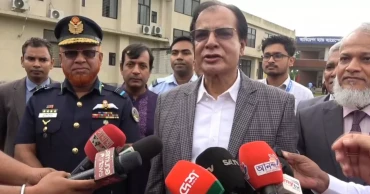
Lalmonirhat's Aviation and Aerospace University to produce future astronauts: Asadul Habib Dulu
Disaster Management and Relief Minister Asadul Habib Dulu on Saturday said future aircraft engineers, researchers, and space scientists will emerge from the Aviation and Aerospace University in Lalmonirhat, the country's lone institute of higher learning in the field of aviation and aerospace technology.
He described the university not just as an educational institution but as 'a symbol of national pride'. The minister, also known as 'Engineer Dulu' in his locality, is the MP for Lalmonirhat-3.
He made the remarks as the chief guest at a programme marking the 7th anniversary of the Aviation and Aerospace University (AAU), the country’s sole aviation university, in Lalmonirhat on Saturday morning.
"In step with a rapidly changing world, this university will play a vital role in developing a skilled and competitive workforce for the aviation industry, not only nationally but also on the international stage,’’ said the minister.
Praising the university’s significant progress in a short period, he said the institution would accelerate the development of education, economy, and communication infrastructure in the Lalmonirhat region, opening new horizons for the country’s aviation and aerospace sectors.
Addressing the students, he added, "Your determination should be to pierce the boundaries of the sky and establish our presence in space.’’
Earlier, the minister inspected various aerospace research equipment developed by students, including drones and cube satellites, as well as the university’s modern laboratories.
Vice-Chancellor of the university, Air Vice Marshal Md Mostafizur Rahman, welcomed the chief guest and other dignitaries.
Senior officials of the Bangladesh Air Force, along with top officials from the Lalmonirhat district administration and police, were present at the event. As part of the celebration, students performed in a cultural segment, followed by the ceremonial cutting of an anniversary cake.
The university began its journey on a limited scale at the Old Airport in Dhaka in 2019. Later, on July 3, 2022, it formally launched undergraduate academic activities at its Lalmonirhat campus. Currently, the university offers four undergraduate and five postgraduate courses under four faculties.
The government has set a target to bring around 9,000 students under higher education across 45 departments under eight faculties by 2041.
1 month ago
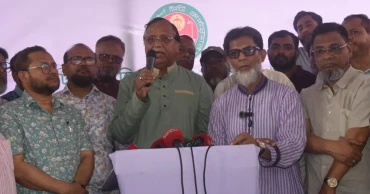
DSCC rehabilitating hawkers in organised manner: Administrator
Dhaka South City Corporation (DSCC) Administrator Abdus Salam on Saturday said the government is working to rehabilitate hawkers in an organised manner as their unregulated occupation of roads and footpaths in the past caused public suffering and disorder.
“From now on, a fixed number of hawkers will be allowed to sit at designated places on footpaths or roads for a specified period of time. We are working to rehabilitate hawkers in an organised manner while ensuring uninterrupted movement of pedestrians and vehicles,” he said.
He made the remarks while attending a foundation stone laying programme for road development works at Haq Residential Society area under Zone-2 of DSCC.
Abdus Salam attended the programme as the chief guest while State Minister for Railways and the Road Transport and Highways Division Habibur Rashid Habib was present as the special guest.
The project, being implemented with DSCC’s own funding, includes the development of around 1.1 kilometres of roads along with pipe drains in lanes and by-lanes at an estimated cost of Tk 3.67 crore.
Speaking after the ceremony, the DSCC Administrator said the present government believes in work and the Prime Minister is closely monitoring the overall activities of the city corporations.
He added that the ongoing development projects would be implemented in coordination with the respective lawmakers.
Speaking at the event, State Minister Habibur Rashid Habib expressed optimism that DSCC would fulfill public expectations under the new government with its highest level of capability.
Senior officials of Dhaka South City Corporation and local political leaders were also present at the programme.
1 month ago

Bangladesh to observe World Press Freedom Day Sunday
Bangladesh will join the rest of the world in observing World Press Freedom Day on Sunday through various programmes at a time when limited media and information literacy and weak verification practices are eroding public trust in credible journalism.
In 1993, the UN General Assembly proclaimed 3 May as World Press Freedom Day, marking a historic step toward promoting a free press and freedom of expression globally.
Since then, the global media landscape has undergone significant transformation, driven by the expansion of independent media and the rapid evolution of digital technologies.
9 globally renowned rights groups urge Bangladesh PM to urgently address concerns over press freedom
International frameworks and human rights standards have continued to reinforce the central role of press freedom in democratic governance, sustainable development, and peace.
Marking the day, Information and Broadcasting Ministry will hold a discussion at the conference room of the Department of Film and Publications on Sunday morning, an official told UNB.
Information and Broadcasting Minister Zahir Uddin Swapan will join the discussion as the chief guest while the State Minister Yaser Khan Chowdhury will join as special guest.
Leaders of the Jatiya Press Club, Bangladesh Federal Union of Journalists, Editors’ Council, and Newspaper Owners Association of Bangladesh (NOAB) will also speak.
Meanwhile, a separate interactive discussion in celebration of World Press Freedom Day 2026 will be held at the Transparency International Bangladesh (TIB) in city’s Dhanmondi area in cooperation with UNESCO.
However, in recent years, the challenges facing journalists and media institutions have become increasingly complex.
UNESCO’s global analyses highlight a growing decline in media independence, rising self-censorship, and increasing threats to journalists, particularly in politically sensitive contexts.
The digital transformation of the information ecosystem has further complicated these dynamics, accelerating the spread of misinformation and disinformation while challenging the sustainability and credibility of professional journalism.
In this context, the concept of “Information as a Public Good,” reaffirmed in the Windhoek+30 Declaration (2021), remains highly relevant.
Rebuilding Public Trust
Public trust in media is fundamental to democratic governance, enabling citizens to access reliable information, engage in informed public debate, and hold power to account, according to a concept note shared by UNESCO.
As emphasised by UNESCO, independent, pluralistic, and professional media are essential to safeguarding freedom of expression and ensuring access to information.
However, UNESCO’s World Trends in Freedom of Expression and Media Development points to a global decline in media independence and rising self-censorship, particularly in politically sensitive contexts such as elections and democratic transitions.
In Bangladesh, these challenges are particularly pronounced as the country navigates an evolving political and reform landscape, said UNESCO.
A recent media assessment by UNESCO and UNDP highlights that legal constraints, political pressures, and structural imbalances within the media sector continue to limit the full exercise of press freedom.
These dynamics have direct implications for the ability of journalists to report independently on issues of public interest, including governance, accountability, and electoral processes, ultimately affecting public trust in both media and democratic institutions.
The transformation of the information ecosystem has further intensified these challenges. The digital environment in Bangladesh has become increasingly contested, with the rapid spread of misinformation, disinformation, and politically motivated narratives.
During electoral periods, these risks are amplified, undermining informed decision-making and distorting public discourse.
UNESCO’s work on the ensuring the safety of journalists underscores that threats, harassment, surveillance, and legal pressures against journalists not only endanger individuals but also restrict the public’s right to information.
In Bangladesh, such pressures, combined with concerns around media ownership concentration and economic vulnerabilities, can contribute to self-censorship and reduced editorial independence, particularly in coverage of politically sensitive issues, UNESCO said.
Rebuilding public trust in this context requires addressing both structural and political dimensions of the media environment.
Recognising these dynamics, there is a need to examine how media stakeholders, including journalists, editors, media owners, policymakers, and civil society, can work collectively to reinforce media credibility, safeguard independent journalism, and strengthen democratic accountability in Bangladesh.
Objectives of World Press Freedom Day 2026
World Press Freedom Day 2026 aims to examine the role of media independence in rebuilding public trust and strengthening democratic accountability in Bangladesh, in line with global commitments to freedom of expression and SDG 16.10.
The discussion will reaffirm the universal commitment to freedom of expression and press freedom and explore the relationship between media independence, public trust, and democratic accountability.
The discussion will identify key challenges affecting media credibility, including disinformation, political pressures, and safety concerns and promote collaboration among media stakeholders, government institutions, civil society, and development partners and encourage strengthening of professional standards, media ethics, and information integrity in journalism.
The event will begin with an inaugural session, setting the tone for discussions on press freedom, media independence, and public trust in Bangladesh, followed by a high-level panel discussion to stimulate informed debate on media independence, public trust, and democratic accountability in Bangladesh.
A moderated panel will bring together journalists, editors, policymakers, academia, and civil society to examine the theme “Rebuilding Public Trust: Media Independence and Democratic Accountability in Bangladesh.”
1 month ago
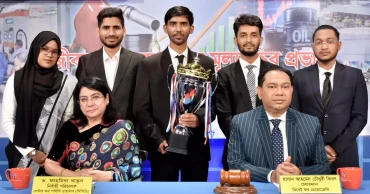
Borrowing from central bank ‘suicidal’ for economy: Dr. Fahmida
Dr. Fahmida Khatun, Executive Director of the Centre for Policy Dialogue (CPD), on Saturday warned that the government’s practice of borrowing from the central bank to meet budget deficits is ‘suicidal’ for the national economy.
Such borrowing fuels inflation and severely erodes the purchasing power of general public, she said at a shadow parliamentary debate organised by Debate for Democracy at the Bangladesh Film Development Corporation (FDC).
She urged the government to prioritise international sources instead of banking channels to mitigate deficit pressures.
Addressing the upcoming FY 2026-27 budget, Dr. Fahmida advocated for a ‘cost-effective’ budget with clear policy directions.
She called for a transition from wholesale subsidies to a target-based system, specifically prioritising sectors like agriculture, irrigation, and public transport.
"Wholesale subsidies in power and energy often benefit capable individuals who do not require them," she said suggesting that these funds be diverted to ensure food security.
The CPD chief lauded the government’s initiatives like the Family Card and Farmer’s Card under social safety net programmes but stressed the need for transparency.
"To reap the real benefits, accountability in beneficiary selection must be ensured to prevent the irregularities and corruption seen in the past," she added.
Dr. Fahmida recommended temporary waivers on VAT and taxes for imported essential goods to provide relief to citizens amidst global market volatility.
She cautioned that the impact would be limited if market management remains weak.
She also suggested adjusting domestic fuel prices in sync with the global market to ensure reductions reach consumers when international prices drop, increasing revenue through digital compliance rather than bank borrowing, boosting allocations for productive sectors and skill development programmes to address unemployment.
She also emphasised the need to enhance energy storage capacity to manage emergency situation.
Debate for Democracy Chairman Hasan Ahmed Chowdhury Kiron highlighted the severe economic challenges facing the country.
He noted that the current BNP government assumed office while grappling with the lingering impacts of the Russia-Ukraine war and the ‘economic scars’ left by the previous government.
“The government is struggling with an energy crisis, rising inflation, low investment, and a high volume of non-performing loans and foreign debt,” Kiron said.
He noted that while the government attempted to stabilise the market without raising fuel prices, it was eventually forced to adjust prices for diesel, petrol, octane, and kerosene in line with the global market.
Kiron revealed that the government incurred a loss of Tk 165 crore daily on fuel sales, totaling a loss of Tk 4,300 crore in April alone.
Without the price adjustment, the subsidy requirement would have reached Tk 12,000 crore by June, he added.
Debaters from Kabi Nazrul Government College (Government side) and Dhaka College (Opposition side) participated in the shadow parliament.
Trophies, crests, and certificates were awarded to the participants.
The panel of judges included Professor Abu Mohammad Rais, Dr. S.M. Morshed, Dr. Tajul Islam Chowdhury Tuhin, and journalists Abul Kashem and Maidur Rahman Rubel.
Kabi Nazrul Government College was declared the winner of the debate.
1 month ago
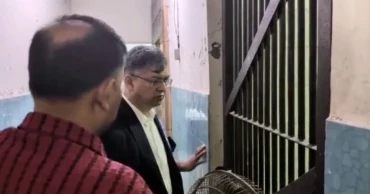
Home Minister orders middlemen-free police stations
Home Minister Salahuddin Ahmed on Saturday directed law enforcement agencies to eliminate middlemen from police stations across the country, including those under Dhaka Metropolitan Police (DMP).
He issued the directive while visiting Ramna Model Police Station in the capital where he inspected different sections including detention rooms (thana Hajat room) and reviewed the overall environment.
During the visit, the Home Minister also spoke with the Officer-in-Charge and other on-duty police personnel, inquired about their work conditions and listened to their concerns.
Emphasising integrity and professionalism, he instructed police members to provide services to the public with honesty, fairness and sincerity.
He warned that strict action would be taken if any police officer or member found guilty of negligence or corruption.
1 month ago