usa
Trump’s former Russia adviser says Russia offered US free rein in Venezuela in exchange for Ukraine
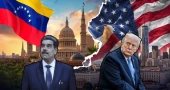
Russian officials signaled in 2019 that they might be willing to ease their support for Nicolás Maduro in Venezuela if the United States allowed Russia a freer hand in Ukraine, former Trump national security adviser Fiona Hill told lawmakers, according to newly circulating accounts of her testimony.
Hill said during a 2019 congressional hearing that Russian officials repeatedly floated a “very strange swap arrangement between Venezuela and Ukraine,” largely through public commentary and media, rather than formal diplomatic offers.
They reportedly referenced the Monroe Doctrine, suggesting the U.S. should stay out of Europe’s affairs if Russia withdrew from what it viewed as America’s sphere of influence.
Moscow’s then-ambassador to the U.S., Anatoly Antonov, hinted that Russia would permit the United States to act freely in Venezuela if Washington reciprocated by not interfering in Ukraine, Hill said. She was dispatched to Moscow in 2019 to reject the proposal, telling Russian officials that “Ukraine and Venezuela are not related to each other.”
At the time, the Trump administration supported Venezuelan opposition leader Juan Guaidó as interim president. Hill’s remarks have resurfaced on social media following the U.S. military operation that ousted Maduro earlier this month and complexifies perceptions of great-power rivalry.
Hill has warned that recent U.S. actions could undermine Western criticism of Russia’s designs on Ukraine by normalizing interventionist behavior.
The Trump administration contends its action in Venezuela is a lawful law enforcement operation. The Russian Foreign Ministry has condemned U.S. “aggression,” but President Vladimir Putin has not publicly commented on Hill’s account.
4 months ago
Brown University shooter planned deadly attacks for years
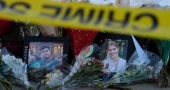
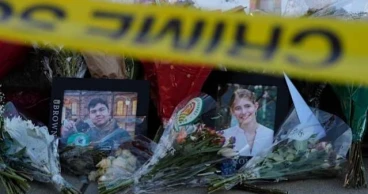
The man responsible for killing two Brown University students and an MIT professor had been planning the attacks for several years and left behind video recordings in which he admitted to the shootings without explaining his motive, the U.S. Department of Justice said Tuesday.
The shooter, identified as Claudio Neves Valente, 48, a former Brown student and Portuguese national, was found dead in a storage facility in New Hampshire on Dec. 18. Authorities said he carried out a shooting at a Brown University engineering building on Dec. 13, killing two students and wounding nine others, before fatally shooting MIT professor Nuno F.G. Loureiro two days later at the professor’s home in Brookline, Massachusetts.
Federal investigators said they recovered an electronic device from the storage unit containing short videos recorded by Neves Valente after the attacks. In the recordings, he acknowledged planning the shootings for at least six academic semesters but offered no reason for targeting Brown University or Loureiro, whom he had known decades earlier while studying in Portugal.
In the videos, Neves Valente said he felt no remorse and denied claims circulating online that he had spoken Arabic or made religious statements during the attack. He said he did not intend to issue a manifesto and insisted he was not mentally ill.
Authorities said the victims at Brown were shot at random. The students killed were 19-year-old sophomore Ella Cook and 18-year-old freshman MukhammadAziz Umurzokov.
Neves Valente also described being confronted by a witness at Brown whose information later helped police identify him. He said he was surprised it took authorities several days to locate him.
Brown University said the tragedy continues to weigh heavily on its community as it mourns the victims and supports those injured.
4 months ago
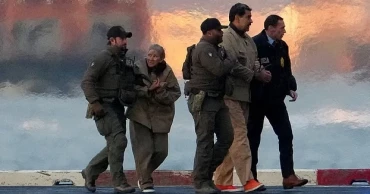
Trump says US to receive up to 50 million barrels of oil from Venezuela
US President Donald Trump said Tuesday that Venezuela would supply between 30 million and 50 million barrels of oil to the United States at prevailing market prices, saying the proceeds would be used for the benefit of both countries.
The announcement comes as the White House prepares to host senior executives from major U.S. energy companies later this week to discuss Venezuela’s oil sector and the possibility of expanding American investment in the country’s struggling energy industry.
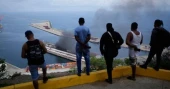
Trump’s comments followed a weekend U.S. military operation in Caracas that led to the capture of Venezuelan President Nicolás Maduro and his wife. Venezuelan authorities said at least 24 security personnel were killed in the overnight raid, while the country’s attorney general said prosecutors are investigating what he described as possible war crimes.
Venezuela’s acting president, Delcy Rodríguez, rejected Trump’s warnings that she could face consequences if she fails to comply with U.S. demands, saying her destiny “is not decided by threats.” Cuba also confirmed that dozens of its military and police personnel stationed in Venezuela were killed during the operation.
The Pentagon said seven U.S. service members were injured in the raid, with most already returning to duty.
At current oil prices, the proposed shipment could be worth up to $2.8 billion, though it would cover only a few days of U.S. oil consumption. Despite having the world’s largest proven oil reserves, Venezuela’s daily output remains far below its capacity.
Trump dismissed criticism from Democrats, noting that Maduro had long faced U.S. drug trafficking charges. Opinion polls show Americans are divided over the operation, with many opposing U.S. involvement in choosing Venezuela’s future leadership.
The developments have raised international concern about a more aggressive U.S. foreign policy in the region.
4 months ago
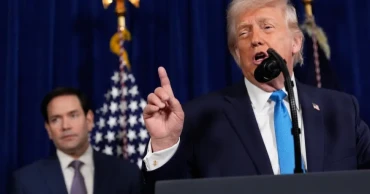
Americans largely oppose deeper US involvement in Venezuela
Most Americans appear reluctant to see the United States deepen its involvement in foreign conflicts, even as many Republicans initially supported the recent military operation in Venezuela that captured President Nicolás Maduro, according to an Associated Press analysis of recent polls.
An AP-NORC survey last month found that Americans wanted the government in 2026 to focus on domestic concerns such as health care and rising costs, rather than foreign policy. Polling after the Venezuela raid showed that many remain unconvinced that the U.S. should intervene to control the country. Nearly half, 45%, opposed taking control of Venezuela, while about 90% said Venezuelans should decide their own leadership.
Republicans were more supportive of the Maduro operation, but only about one in ten favored a more active U.S. role in global issues. Most Americans, including Trump supporters, prioritized domestic economic concerns over foreign policy, reflecting the challenges the president may face in balancing “America First” promises with overseas actions.
4 months ago
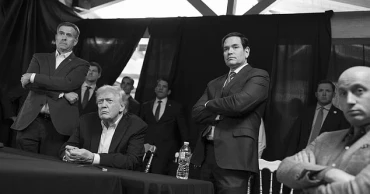
Trump administration thanks media for holding Venezuela raid news
Following last weekend’s U.S. military operation in Venezuela, the Trump administration publicly thanked news organizations for not jeopardizing the mission by reporting on it in advance.
Secretary of State Marco Rubio acknowledged that several media outlets, including The New York Times and The Washington Post, had prior knowledge of Saturday’s raid that led to the capture of Venezuelan President Nicolás Maduro but refrained from publishing details to protect operational security. “We thank them for doing that or lives could have been lost. American lives,” Rubio said.
The acknowledgment is notable amid Defense Secretary Pete Hegseth’s restrictive press rules at the Pentagon, which many mainstream news organizations have refused to accept. Speaking on ABC’s “This Week,” Rubio said Congress was not briefed beforehand partly because the information could have leaked, but the primary concern was the safety of U.S. personnel.
Semafor reported that some outlets intentionally held the story to avoid endangering military personnel, a practice considered routine among national security reporters. Dana Priest, former Washington Post reporter, noted that news organizations routinely weigh operational risks before publishing sensitive information.
Most Americans learned of the Venezuela operation early Saturday when President Trump announced it on his Truth Social platform. While The Associated Press did not have prior notice, its journalists in Venezuela reported explosions hours before the announcement, though U.S. involvement was confirmed only after Trump’s post.
Hegseth has defended Pentagon press restrictions, citing the need to prevent solicitation of sensitive information, a policy challenged in court by The New York Times. Experts emphasize that, despite such rules, the ultimate decision to report sensitive information lies with news organizations, balancing public interest with the safety of personnel.
4 months ago
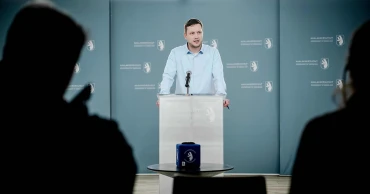
European leaders defend Greenland’s sovereignty against US takeover talk
Several European leaders on Tuesday firmly rejected U.S. President Donald Trump’s suggestion of an American takeover of Greenland, emphasizing that the Arctic island “belongs to its people.”
France, Germany, Italy, Poland, Spain, and the United Kingdom joined Danish Prime Minister Mette Frederiksen in reaffirming Greenland’s sovereignty. The self-governing territory of Denmark is part of the NATO alliance. “It is for Denmark and Greenland alone to decide on matters concerning them,” the leaders said in a joint statement.
Trump has argued that the U.S. should control Greenland to safeguard NATO territory against growing Chinese and Russian influence in the Arctic. White House Deputy Chief of Staff Stephen Miller told CNN on Monday that Greenland should be part of the United States as part of its overall security strategy, questioning Denmark’s claim over the territory.
Frederiksen and Greenland’s leaders, however, have repeatedly rejected any U.S. takeover, warning that such a move could undermine NATO. Miller clarified that the discussion did not involve any military action, saying, “Nobody is going to fight the U.S. militarily over the future of Greenland.”
4 months ago
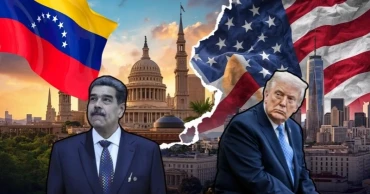
Trump administration’s capture of Maduro sparks global concerns over international law
The U.S. operation to capture Venezuelan President Nicolás Maduro and his wife has raised unease about the future of the international legal framework.
Experts warn that the mission signals a shift toward unilateral use of force, challenging norms established after two world wars and codified in the United Nations Charter.
U.N. Undersecretary-General Rosemary A. DiCarlo told the Security Council that international peace and security depend on all nations adhering to the Charter’s provisions.
The Trump administration maintains that the seizure was legal, citing the designation of Venezuelan drug cartels as unlawful combatants and describing the operation as part of an armed conflict. U.S. Ambassador to the U.N. Mike Waltz called it a justified “surgical law enforcement operation.”
The mission aligns with the administration’s National Security Strategy, which emphasizes restoring “American preeminence in the Western Hemisphere.” However, the action has drawn criticism worldwide.
Leaders from China, Mexico, and Europe condemned the operation, with French Foreign Minister Jean-Noël Barrot stating it violated the principle of non-use of force central to international law. Russian U.N. Ambassador Vasily Nebenzya warned the operation marked a “return to lawlessness.”
Analysts say the operation could embolden similar unilateral actions, potentially destabilizing regions like Ukraine, Greenland, Taiwan, and the Middle East.
Trump’s criticism of Colombia and speculation about Greenland have already heightened tensions, while Maduro’s capture has alarmed Beijing regarding U.S. unpredictability in global affairs.
European leaders have called for upholding the principles of international law, though some allies, including Hungarian Prime Minister Viktor Orbán, argue that major powers often act beyond such legal constraints. Observers say the Venezuelan operation underscores the fragility of postwar international norms and the growing tension between national interests and global legal order.
4 months ago
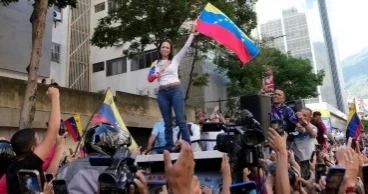
Venezuela’s Machado says she wants to share Nobel Peace Prize with Trump
Venezuelan opposition leader Maria Corina Machado says she wants to share her Nobel Peace Prize with U.S. President Donald Trump, praising his administration’s military action that led to the arrest of President Nicolás Maduro, even as she acknowledged she has not spoken to Trump since October.
Speaking on Fox News’ Hannity on Monday, Machado described Maduro’s capture as “a huge step for humanity, for freedom, and human dignity,” and said her decision to dedicate the Nobel Prize to Trump was based on her belief that he deserved it, reports Al Jazeera.
Read More: Machado’s daughter receives Nobel Peace Prize in her absence
“I dedicated it to President Trump because I believed, at that time, that he deserved it,” Machado said. “Now, after deposing Maduro, he has proven to the world what he means.”
Machado said she last spoke with Trump on October 10, the day the Nobel Peace Prize was announced. “Not since then,” she said, adding that she hopes to thank him personally.
“On behalf of the Venezuelan people, how grateful we are for his courageous vision, the historical actions he has taken against this narcoterrorist regime.”
Read More: Nobel Peace Prize for Maria Corina Machado sparks outcry over Israel ties
The right-wing opposition figure welcomed Trump’s remarks about U.S. energy interests in Venezuela, saying the country could become an “energy hub” for the United States. “We will bring rule of law, we will open markets, we will bring security for investments,” she said.
Trump, however, later questioned Machado’s political standing, telling reporters she “doesn’t have the support or the respect” to lead Venezuela. Following Maduro’s removal, former Vice President Delcy Rodríguez was sworn in as interim leader.
Machado won 93 percent of the opposition’s 2023 primary vote but was barred from running for president, forcing her into hiding for more than a year. After traveling to Norway to accept the Nobel Prize, her current whereabouts remain unknown. She said she plans to return to Venezuela “as soon as possible.”
4 months ago
Trump threatens Colombia, warns Cuba ‘ready to fall’
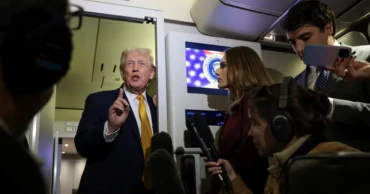
US President Donald Trump has issued fresh threats against Colombia’s President Gustavo Petro and said Cuba appears “ready to fall”, as international criticism mounts over Washington’s seizure of Venezuelan leader Nicolas Maduro.
Trump made the remarks on Sunday while speaking to reporters aboard Air Force One, a day after US forces captured Maduro in Caracas in what Washington described as a law enforcement operation. The comments have fuelled outrage across Latin America and Europe, with several countries warning that the US action sets a dangerous precedent for regional peace and security.
Referring to Colombia and Venezuela, Trump said both countries were “very sick” and accused the government in Bogota of being run by “a sick man who likes making cocaine and selling it to the United States”. He added that President Petro would not remain in power for long.
When asked whether he was suggesting a US operation against Colombia, Trump replied, “Sounds good to me.”
The remarks drew a sharp response from Petro, who urged Trump to stop “slandering” him and warned that Latin America must unite or risk being treated as “a servant and slave”. In a series of posts on X, Petro said the United States was the first country in history to bomb a South American capital, but stressed that revenge was not the answer.
Instead, Petro called on Latin American nations to strengthen cooperation and engagement with the wider world, saying the region should not look only to the north but in all directions.
Trump’s comments came amid growing condemnation of the US operation in Venezuela. Brazil, Chile, Colombia, Mexico, Uruguay and Spain said in a joint statement that they “firmly reject the military actions undertaken unilaterally in Venezuelan territory”. The countries said the operation violated fundamental principles of international law, particularly the prohibition on the use or threat of force, and posed grave risks to civilians and regional stability.
US forces seized Maduro early on Saturday in Caracas to bring him to trial on “narcoterrorism” charges, according to Washington. Maduro has denied the allegations, while critics argue the move was aimed at securing control over Venezuela’s vast oil reserves.
Speaking aboard Air Force One, Trump insisted that the United States remains “in charge” of Venezuela, despite the country’s Supreme Court appointing Vice President Delcy Rodriguez as interim leader. He repeated threats to send US troops back to Venezuela if the country “doesn’t behave”.
Trump also claimed that many Cubans were killed during the US raid on Caracas, adding that a military intervention in Cuba would be unnecessary because the island is already on the brink of collapse.
“Cuba is ready to fall,” Trump said, arguing that the country has lost a major source of income following the halt of Venezuelan oil supplies.
The US president also issued a warning to Mexico, saying the country “has to get their act together” as drugs continue to flow across the border. He described Mexican President Claudia Sheinbaum as a “terrific person” but said drug cartels remain very strong in the country. Trump added that he has repeatedly offered to send US troops to Mexico during conversations with her.
Trump has repeatedly signalled his ambition to expand US influence across the Western Hemisphere, reviving the Monroe Doctrine, which places Latin America within Washington’s sphere of influence. He has referred to his modern version as the “Don-roe Doctrine”.
Analysts say it remains unclear whether Trump will act on his threats or is using them to pressure Latin American governments into cooperation. Experts note that Trump often relies on short, high-profile displays of force to intimidate rivals rather than sustained military engagement.
The US action in Venezuela continues to draw criticism worldwide, with observers warning that escalating threats against multiple Latin American countries could further destabilise the region and undermine international norms.
With inputs from ALJAZEERA
4 months ago
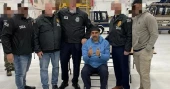
Maduro to be held at New York Detention Center
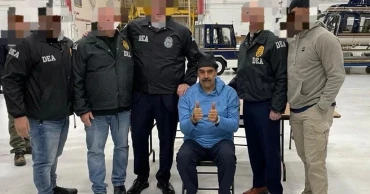
Venezuelan President Nicolas Maduro and his wife, Cilia Flores, captured in a large-scale U.S. military operation early Saturday, will be held at the Metropolitan Detention Center in New York, CNN reported.
The couple arrived at Stewart Air National Guard Base in Newburgh, New York, around 5 p.m. local time (2200 GMT), according to reports and video footage.
They, along with several others, are set to face charges next week in the U.S. District Court for the Southern District of New York, including narco-terrorism conspiracy, cocaine importation conspiracy, and possession of machine guns and destructive devices, according to an unsealed indictment by the U.S. Department of Justice.
New York City Mayor Zohran Mamdani said he directly called U.S. President Donald Trump to express opposition to what he described as a “pursuit of regime change violating federal and international law.” Demonstrations were also reported outside the Newburgh base.
Venezuelan Vice President Delcy Rodriguez demanded the immediate release of the couple during a National Defense Council session broadcast on state television.
5 months ago