global energy crisis
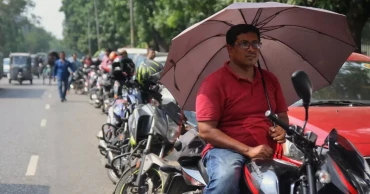
Even after price hike, fuel stations in Dhaka see long queues under intense heat
Long queues of motorcycles and vehicles stretched across fuel stations in the Asad Gate area of the capital, as motorcyclists and private car owners continued to struggle to refuel even after a recent increase in fuel prices.
6 months ago
Bangladesh seeks collective action amid global energy crisis
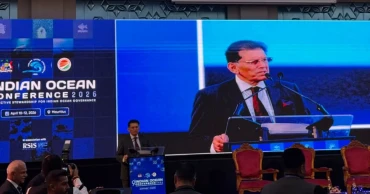
Seeking collective action amid the global energy crisis, Foreign Minister Dr Khalilur Rahman has said there might be a ceasefire, but the energy issue is not going to be resolved within two weeks.
"All of us are in trouble, as the current energy challenges are creating disruptions. That will reverberate through the coming years. Even if the energy situation improves, we still face the larger problem of a decline in multilateralism," he said.
The Foreign Minister made the remarks while speaking at the 9th Indian Ocean Conference in Mauritius on Friday.
Indian External Affairs Minister Dr S Jaishankar, among others, also spoke at the conference.
Bangladesh on Wednesday thanked the Indian government for the recent supply of diesel and requested an increased volume of diesel and fertiliser. The Indian side indicated that it would consider the request “readily and favourably.”
Dr Khalilur said the larger challenge - the loss of trust and confidence in the global system - will have to be addressed through their own actions.
"If we stay strong on our home front, it will be much easier for us to overcome the storms coming from outside," he said.
The Foreign Minister said some analysts believe this crisis will have implications much greater than the twin oil shocks of the 1970s.
"So, if the effects of the current crisis are going to be larger than the shocks of the 1970s, we can imagine the type of risks we are facing. This is the immediate problem, but perhaps a larger issue is the context in which it is happening," he said.
"The kind of orderly world, which was not entirely orderly, but orderly enough for us to believe that the global system would take care of our problems is now coming under very serious pressure," the Foreign Minister said.
He said they are witnessing assaults on multilateralism and an increasing prevalence of unilateral actions within global frameworks.
"They are no longer helping us effectively in dealing with these issues. So, we face a significant challenge, one that exists within an even larger context. This is a time for collective action because individual countries will not be able to meet these challenges on their own," he said.
6 months ago
PM discusses challenges, energy crisis in meeting with businesses
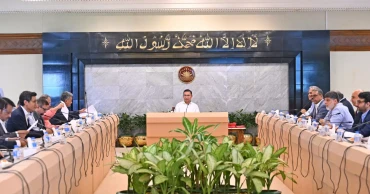
Prime Minister Tarique Rahman on Saturday held a marathon meeting with top businesses, focusing on improving the investment climate, resolving industry challenges and addressing the ongoing energy crisis.
The meeting, held at the Prime Minister’s Office in Tejgaon, began around 11:30am and continued for nearly three and a half hours.
After the meeting, Finance Minister Amir Khosru Mahmud Chowdhury told reporters that a wide range of issues related to trade, commerce and investment were discussed, with business leaders outlining key challenges and offering recommendations. “Problems and challenges facing the business sector were discussed, and ways to address them were explored. Business leaders shared their views,” he said.
He said many issues have been resolved, while others remain pending and will be settled through further discussions.
Replying to a question on investment, the minister said the meeting aimed to create a more investment-friendly environment.
“The Prime Minister listened to the business leaders to understand where the barriers to investment lie. He wants to resolve these issues quickly,” he said, adding that some concerns were addressed on the spot, while others will be taken up in follow-up discussions.
Vessel carrying 34,000 tonnes of diesel arrives at Ctg port
Khosru also said discussions were held on opening closed factories and industrial units. “We discussed how to restart factories that have been shut down, including state-owned ones. We hope many of these projects can be revived,” he said.
In response to a question on energy support, he said Bangladesh is receiving assistance from multilateral bodies. “We are receiving cooperation from various multilateral organisations,” he said.
Top business leaders present at the meeting included representatives from DBL Group, Apex Footwear, Pran-RFL Group, Pacific Jeans, Bay Group, Incepta Pharmaceuticals, Runner Group, Rangs Group and ACI.
Power, Energy and Mineral Resources Minister Iqbal Hassan Mahmood Tuku, Commerce Minister Khandakar Abdul Muktadir, State Minister for Power and Energy Anindya Islam Amit, and Executive Chairman of the Bangladesh Investment Development Authority (BIDA) Ashik Chowdhury, among others, were present.
Prime Minister’s Additional Press Secretary Atikur Rahman Rumon said Tarique Rahman joined office around 10:46am despite it being a public holiday.
6 months ago

Banks to follow revised schedule amid fuel, power crisis: Bangladesh Bank
Bangladesh Bank has announced revised office and transaction hours for scheduled banks across the country in view of the ongoing fuel and electricity situation.
According to a circular issued on Saturday, banks will remain open from Sunday to Thursday, with office hours from 10 am to 5 pm while transaction hours for clients will be from 10 am to 3 pm.
Banking operations will continue from Sunday under the adjusted schedule until further instructions.
Weekly holidays will remain unchanged on Friday and Saturday.
The central bank said branches operating in port, customs and important economic zones will continue their activities as per existing special arrangements to ensure uninterrupted trade and business operations.
The directive has been issued under the authority of the Bank Company Act, 1991.
6 months ago
Vessel carrying 34,000 tonnes of diesel arrives at Ctg port
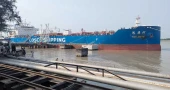
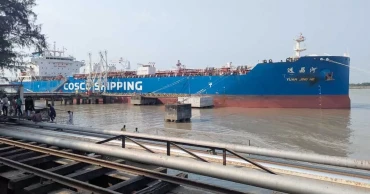
Malaysian ship Shan Gang Fa Jian carrying 34,000 tons of diesel has arrived at Chittagong Port.
Syed Refayet Hamim, secretary of Chittagong Port Authority, said the vessel reached the Kutubdia Channel in the Bay of Bengal on Friday night.
According to the ship’s local agent, Pride Shipping Lines, the tanker arrived at the outer anchorage of Chittagong Port on Saturday morning.
Earlier on Friday at 2 pm, another vessel from Singapore, Yan Jing He, carrying 27,300 tons of diesel, berthed at Dolphin Jetty-6 of Padma Oil.
The ship was scheduled to arrive at the port’s outer anchorage later that night.
Nazrul Islam, managing partner of Pride Shipping Lines, said, "Shan Gang Fa Jian has already reached Kutubdia. It is carrying just over 34,000 tons of diesel from Malaysia and is scheduled to berth at the port on Saturday."
6 months ago

Govt cuts office hours, outlines austerity measures to tackle energy crisis
The government has decided to reduce office hours and take a series of austerity measures to cope with the ongoing global energy crisis triggered by instability in the Middle East.
The decisions were taken at a Cabinet meeting chaired by Prime Minister Tarique Rahman on Thursday night. Cabinet Secretary Nasimul Ghani announced the decisions at a briefing after the meeting.
Under the new arrangement, all government and private offices will remain open from 9:00am to 4:00pm from Sunday, instead of the existing schedule.
Banking hours will be from 9:00am to 3:00pm, while banks will close by 4:00pm.
Briefing reporters after the meeting, Cabinet Secretary Nasimul Ghani said the discussion mainly focused on how to tackle fuel and energy price volatility caused by disruptions in global supply chains due to the Middle East war
“All offices have reduced working hours by one hour. Both public and private offices will operate from 9:00am to 4:00pm,” he said.
As part of energy-saving measures, the Cabinet Secretary said all shops, markets and shopping malls will have to close by 6:00pm, although hotels, pharmacies, essential service outlets and kitchen markets will remain exempt.
He also said specific directives regarding educational institutions would be issued from Sunday, considering various factors.
The Cabinet Secretary said the government would implement austerity measures for the next three months to cut public expenditure.
“No new vehicles, watercraft, aircraft or computer equipment will be purchased during this period,” he said.
Ghani also said internal training programmes would be reduced by 50 percent, while all foreign training funded by the government would remain suspended until further notice.
Expenditure on meetings and seminars will also be cut by 50 percent, he added.
Ghani said government spending on fuel, electricity and gas will be reduced by 30 percent, while unnecessary travel expenses will also be curtailed by 30 percent.
Besides, he said decorative lighting at social events, including weddings, has been prohibited as part of the energy-saving drive.
The Cabinet Secretary said that efforts are also underway to increase fuel imports from alternative sources to ensure a stable supply. “Initiatives have already been taken to import fuel from Malaysia, Indonesia and Kazakhstan.”
Besides, he said the government has taken a plan to introduce electric buses for school-going students instead of private cars. “Educational institutions that take part in the initiative will be able to import buses duty-free. The private sector will also get this facility, although a 20 percent duty will apply in commercial cases.”
However, Ghani said no used buses will be allowed—only new buses can be imported.
The Cabinet meeting began at around 8:45pm at the Cabinet Room of the Jatiya Sangsad complex and continued till about 11:30pm.
Cabinet meetings are usually held at the Secretariat on Thursdays, but the venue was shifted to the Parliament complex due to the ongoing session of Parliament.
6 months ago
Govt lists measures to save energy amid crisis
The government on Thursday announced a series of measures to tackle the global energy crisis amid the ongoing conflict in the Middle East.
In a statement, the Cabinet Division said that addressing the current global crisis requires saving electricity and energy at the national level. Officials and employees in all offices, including government, autonomous, statutory bodies, and corporations, are urged to use electricity and energy responsibly and economically.
Avoid decorative lighting, reduce personal vehicle use amid energy supply uncertainty: Govt
The statement outlined the following measures:
Make use of natural daylight by keeping windows, doors, or blinds open and avoid using electric lights when sufficient natural light is available.
Reduce existing lighting by half and avoid using extra lights.
Turn off unnecessary lights, fans, air conditioners, and other electrical appliances during office hours.
Maintain air conditioner temperatures at 25 degrees Celsius or above.
Switch off all electrical appliances, including lights, fans, and air conditioners, when leaving the office room.
Avoid unnecessary lighting in corridors, staircases, washrooms, and other areas.
Use energy-efficient appliances wherever possible.
Turn off all electrical appliances, including computers, printers, and scanners, after office hours.
All lighting should be avoided.
Limit the use of vehicles and ensure fuel consumption is economical.
The Cabinet Division said strict adherence to these measures is essential to manage the impact of the global energy crisis.
7 months ago