Tech-News

Microsoft tests AI-powered wearable device for workplace use
Microsoft has unveiled early-stage wearable technology concepts designed to give office workers easier access to artificial intelligence tools, as the company explores new ways of integrating AI into everyday work.
At its annual developer conference, Microsoft executive Steven Bathiche showcased two prototype devices developed by the company. One is a small portable cube featuring a touchscreen and voice controls for desktop use, while the other is a wearable badge that can be clipped to a belt or worn around the neck to provide quick access to AI-powered workplace assistance.
Microsoft Chief Executive Officer Satya Nadella described the devices as representing a “new form factor” for computing.
The company has not announced plans to commercialise either product. However, Microsoft said ongoing pilot programmes involving several hundred employees are helping the company understand how such devices could be developed in the future.
The concepts are part of what Nadella referred to as Project Solara. Demonstrations showed office workers using the devices to interact with AI agents, software tools capable of carrying out tasks with a degree of autonomy. These agents are already widely used in the technology sector, particularly for assisting with software development and other routine tasks.
The wearable badge and desktop device are designed to connect with Microsoft software and PCs, enabling users to communicate with AI agents without relying solely on laptops or desktop computers.
Bathiche said the wearable badge is lightweight and intended to support “agent interactions on the go.” During a live demonstration, he activated the device using a fingerprint scan and used its built-in camera to capture images of the audience, which were then sent for review.
According to Bathiche, the camera helps AI agents better understand their surroundings and take appropriate actions based on environmental context.
Microsoft has previously explored wearable technology through its HoloLens mixed-reality headset. The device, developed over nearly a decade, was once expected to be supplied to the US military under a multibillion-dollar contract. However, after facing technical challenges and testing issues, Microsoft announced in 2024 that it would stop producing HoloLens.
The company’s latest effort comes as interest in AI-focused wearable devices grows across the technology industry. Google recently announced plans to revisit smart glasses technology more than a decade after the commercial failure of Google Glass.
The inclusion of cameras in AI-enabled devices continues to raise privacy concerns. Similar products, including AI-powered smart glasses developed by Meta, have faced scrutiny over how and when they collect, store and use visual data.
#From BBC
22 hours ago

Nvidia Unveils New AI-Powered ‘Superchip’ for Next-Generation Windows PCs
Nvidia has unveiled a new high-performance chip designed to bring advanced artificial intelligence capabilities to personal computers, marking a major step in the company’s efforts to expand beyond its dominant position in the data center market.
Speaking at the annual Nvidia GTC event in Taipei on Monday, Nvidia founder and CEO Jensen Huang introduced the RTX Spark superchip, which combines central processing unit (CPU) and graphics processing unit (GPU) functions into a single platform. The chip will power a new generation of Windows laptops and desktop computers that Nvidia describes as “AI personal computers.”
The first devices featuring the new technology, including models from Microsoft and Dell, are expected to be launched later this year.
Huang said Nvidia and Microsoft are working together to transform the personal computer experience, enabling users to run sophisticated AI models and personal AI agents directly on their devices. These AI assistants would be capable of understanding users, conducting research, reading files and performing a variety of tasks without relying heavily on cloud-based services.
Microsoft said the new PCs would support advanced AI workloads and highly capable AI models, allowing users to run AI applications locally.
Industry analysts said the move reflects growing demand for personal AI assistants and could significantly reshape the PC market over the coming decade. Nvidia’s new chips are expected to compete directly with products from rivals Intel and AMD.
During the event, Huang also announced that Nvidia’s Vera CPUs for data centers have entered full production, with companies such as Anthropic, OpenAI and SpaceXAI among the early adopters.
In addition, Nvidia showcased a humanoid robot reference design called Isaac GR00T, aimed at supporting robotics research and development.
1 day ago

Malaysia enforces social media ban for children under 16
Malaysia on Monday started enforcing new rules that prohibit children under the age of 16 from having social media accounts, joining a growing number of countries seeking to improve online safety for young users.
Under the new regulations, social media companies must introduce age-verification systems and prevent users younger than 16 from creating accounts. The rules apply to platforms with at least 8 million users, including Facebook, Instagram, TikTok and YouTube.
Companies that fail to follow the regulations could face fines of up to 10 million ringgit (about $2.5 million). However, parents will not be punished if their children manage to bypass the restrictions.
The Malaysian government said the measures are designed to protect children from harmful online content, cyberbullying and platform features that encourage excessive screen time and addictive use.
Malaysia joins countries such as Australia, Brazil and Indonesia, which have already introduced or announced restrictions on children's access to social media. Several other nations, including Britain, France, Spain, Denmark, Thailand and South Korea, are also considering similar measures.
The Malaysian Communications and Multimedia Commission said the rules are not intended to block children from using the internet or digital technology. Instead, they aim to ensure that service providers take greater responsibility for online safety and put age-appropriate protections in place.
“These measures help strengthen the protection of children in the online environment, while providing added reassurance to parents in navigating increasingly complex digital risks,” the regulator said in a statement issued last month.
Social media platforms will also be required to introduce safety features that discourage compulsive use and take stronger action against underage accounts and harmful content.
Technology companies have not yet explained how they will fully comply with the new requirements. The regulator said platforms will be given a grace period to complete the rollout of age-verification systems.
In April, Clara Koh, Meta’s director of public policy for Southeast Asia, warned that a blanket ban on users under 16 could have unintended consequences by pushing teenagers toward less-regulated parts of the internet. She noted that Meta has already introduced “teen accounts” for users under 18, with restrictions on contact, screen time and exposure to inappropriate content.
Malaysia’s move comes as governments worldwide face increasing pressure to address concerns about the impact of social media on children's mental health and online safety.
In March, a US jury ordered Meta and YouTube to pay millions of dollars in damages in a case that alleged certain platform design features contributed to harm suffered by a young user.
While many parents have welcomed the new rules, privacy advocates have raised concerns about the age-verification process.
Benjamin Loh, a social science lecturer at Monash University Malaysia, said the requirement for government-issued identification to verify age has sparked concerns over personal data protection.
He also questioned the effectiveness of age-based restrictions, noting that experiences in other countries have shown mixed results. Since parents face no penalties, he said, families could easily bypass the rules by creating accounts on behalf of their children.
“Unless regulators address this loophole, the law may have limited success in preventing children from using social media,” Loh said.
2 days ago

European officials say Russia increasing attempts to obtain Western technology
Russia has intensified its efforts to obtain Western technology and defense-related information as international sanctions continue to strain its economy and military industries, according to senior European intelligence officials.
Officials from Sweden, Finland and Estonia told The Associated Press that Russian intelligence agencies are increasingly using front companies, intermediaries, cyber operations and espionage networks to gain access to advanced technologies restricted by Western sanctions.
They said Moscow is seeking equipment, software and research that could help sustain its war effort in Ukraine and strengthen its long-term military capabilities.
"Russia knows exactly what it needs and is making major efforts to get it," said Christoffer Wedelin, deputy head of operations at Sweden's Security Service.
According to Wedelin, Russia has shown particular interest in advanced manufacturing equipment, industrial machinery and dual-use technologies that can serve both civilian and military purposes.
In Sweden, Russian operatives have reportedly targeted the country's defense sector and research linked to sophisticated military systems, including the Saab JAS 39 Gripen fighter jet. Authorities say Russia is also seeking civilian technologies, such as advanced camera and laser systems, that could potentially be adapted for military use.
Finnish intelligence chief Juha Martelius said Russia is also trying to acquire technologies that could help it remain competitive with Western countries in the future.
These include areas such as space technology, quantum research, Arctic technology and marine technology, he said.
Officials noted that Russia continues to face difficulties obtaining computer components, software and updates for industrial equipment due to sanctions imposed after its invasion of Ukraine.
Earlier this week, Anne Keast-Butler, head of Britain's signals intelligence agency, accused Russia of continuously targeting the United Kingdom and its European allies through technology theft, sabotage plots and other covert activities.
In Sweden, police recently arrested two people suspected of violating sanctions through a company in Turkey that allegedly shipped machine tools to Russia.
European intelligence agencies have warned that businesses need to be increasingly cautious, as some companies may unknowingly become part of supply networks helping Russia obtain restricted goods.
Officials also said Russia has stepped up cyberattacks against European companies and critical infrastructure. According to Wedelin, Russian-linked actors attempted to disrupt operations at a
Swedish power plant last year, although the attack was detected and stopped before causing serious damage.
He said the incident marked a shift in Russian tactics, with Moscow appearing less concerned about being identified as the source of cyber operations.
"They are taking greater risks to achieve their goals," Wedelin said.
At the same time, intelligence officials say Russia's economic situation is becoming more challenging.
Kaupo Rosin said a large share of Russia's economy is now devoted to military spending, while sanctions and the prolonged war have contributed to slower growth and persistent inflation.
He warned that if Western pressure continues, Russia could face serious financial difficulties later this year despite recent increases in energy revenues.
Rosin said intelligence assessments indicate growing concern among Russian officials about the country's economic outlook and the long-term costs of the war.
However, Finnish intelligence chief Martelius cautioned against expecting rapid political change in Russia, saying the country's political system operates very differently from those in Western democracies.
Russia has not publicly responded to the latest claims made by European intelligence officials.
3 days ago

Digital spring cleaning can help protect your personal data
As many people use the spring season to clean and organise their homes, cybersecurity experts say it is also a good time to tidy up digital devices and online accounts.
Removing unused accounts, forgotten files and old apps can do more than organise online life — it can also reduce the risk of cyber threats and protect personal information.
“Clutter is fuel for scammers. Old accounts, exposed data and forgotten apps give them more ways in,” said Michael Sherwood, vice president of products at cybersecurity company Malwarebytes.
“Cleaning up your digital life is one of the simplest ways to shrink your attack surface in a threat landscape that’s getting smarter, faster, and more automated,” he added.
Free up device storagePhotos, videos and downloaded files can quickly fill up storage space on phones and computers over time.
Limited storage can slow down devices and even block important operating system updates. Most smartphones and computers include built-in tools that help users identify and remove files consuming large amounts of storage.
On iPhones, users can check storage usage through the settings menu under General and iPhone Storage. Android devices provide similar storage management tools through the settings menu.
Windows and Mac computers also offer storage dashboards that help users locate large files and apps taking up space.
Experts recommend saving important files to cloud storage or external drives before deleting them from devices.
Clean up your inboxEmail inboxes often become overcrowded with newsletters, receipts, alerts, reminders and spam messages.
Organising and deleting unnecessary emails can improve productivity and make it easier to manage important messages.
Users can sort emails by size, sender or date to quickly identify large attachments, old messages or unwanted bulk emails for deletion.
Experts also suggest unsubscribing from newsletters and mailing lists that are no longer useful.
Remove unused apps and accountsDeleting apps that are no longer used can free up space on devices, but cybersecurity specialists warn that simply deleting the app is not enough.
If users created accounts for those apps, the accounts should also be deleted to prevent personal data from remaining vulnerable online.
“Every dormant account is an open door. Scammers actively target abandoned logins because no one’s watching,” Sherwood said.
Update apps and operating systemsExperts advise keeping apps, phones and computers updated with the latest software versions and security patches to improve performance and reduce cybersecurity risks.
Review social media privacyCybersecurity professionals also recommend reviewing privacy settings on platforms such as , , and .
Sherwood said users should check what personal information is publicly visible and review which apps and services have access to their accounts.
Experts say deleting older posts and limiting public information can help lower the risk of phishing attacks and identity theft.
“Limiting what personal information is publicly available helps to reduce the risk of falling victim to cyberattacks such as phishing and identity theft,” said Chad Thunberg, chief information security officer at cybersecurity company .
Check third-party accessMany websites and apps allow users to log in using accounts from services such as , or Facebook.
Cybersecurity experts advise reviewing which third-party apps and services still have access to personal accounts and removing any that are no longer needed to improve online privacy and security.
5 days ago

WhatsApp to Introduce Usernames for Enhanced Privacy
WhatsApp is set to introduce a username feature that will allow users to communicate without sharing their phone numbers.
Under the new feature, users will be able to create and share unique usernames, similar to handles used on Telegram and Instagram. When someone contacts a user through a username, only the handle will be visible instead of the phone number.
The username feature will be optional, allowing users to continue using WhatsApp in the current way if they choose.
Each account will be allowed to have one username, which can later be changed without affecting chats or account settings. However, phone numbers will still remain linked to accounts for login and recovery purposes, though they will stay hidden from users contacting through usernames.
How to Set a WhatsApp Username
1. Firstly, you need to open WhatsApp on your Android phone or iPhone.
2. Next, go to the Settings menu. On Android, tap the three-dot icon in the top-right corner and select Settings. On iPhone, tap the Settings tab at the bottom of the screen.
3. Then, tap your profile name at the top of the page to open your account details.
4. After that, select the Username option once it appears in the profile settings menu.
5. Now, enter the username you want to use for your WhatsApp account.
6. Your chosen username must be between 3 and 35 characters long, include at least one letter, and can only contain letters, numbers, periods, and underscores. It cannot start with "www", begin or end with a period, contain two periods in a row, or end with domain extensions such as .com, .org, or .in.
7. Once you enter a valid username, WhatsApp will automatically check whether it is available.
8. If the username is available, tap Save or Done to confirm your selection.
9. Finally, you can start sharing your WhatsApp username with others instead of giving out your phone number.
This feature will be especially useful if you often chat with people you do not know personally, such as buyers and sellers, community members, or new contacts. Instead of handing out your personal number, you can simply share your username.
WhatsApp recently started rolling out the username feature to some Android and iOS users. Once the feature becomes available, you will be able to decide whether you want people to find you by your phone number, your username, or both.
Source: NDTV
10 days ago

Canada orders online streaming platforms to increase funding for local content
Canada’s federal broadcasting regulator has ordered major online streaming platforms to contribute 15% of their Canadian revenue to support local content production.
The new requirement, announced Thursday by the Canadian Radio-television and Telecommunications Commission, is three times higher than the earlier 5% contribution rule introduced in 2024.
Several major US-based streaming companies, including Apple, Amazon and Spotify, are challenging the earlier rule in court.
The decision is part of Canada’s implementation of the Online Streaming Act, which the United States has already raised as a concern ahead of upcoming trade talks with Canada.
At the same time, the regulator said traditional Canadian broadcasters, which currently contribute between 30% and 45% of their revenues, will see their required contribution reduced to 25%.
According to the CRTC, the new rules are expected to maintain more than 2 billion Canadian dollars in funding for Canadian and Indigenous programming, including French-language content and news coverage.
The regulator also introduced new guidelines on how broadcasters and streaming companies must spend the money, including support for production funds and direct investment in Canadian-made programs.
Most of the streaming companies’ contributions can be used for content production, but the regulator has added extra conditions for the largest platforms.
Streaming services earning more than 100 million Canadian dollars annually in Canada will be required to direct 30% of their spending toward partnerships with Canadian broadcasters and independent producers.
The rules will apply to both streaming services and broadcasters that earn at least 25 million Canadian dollars a year from broadcasting activities in Canada.
The CRTC also announced plans to create a new fund to support selected television channels, including CPAC, which broadcasts live coverage of political events in Canada.
12 days ago

Over 70m warning messages sent to users seeking child abuse material: report
More than 70 million warning messages have been issued to individuals attempting to access child sexual abuse material (CSAM) online over the past two years, according to the Lucy Faithfull Foundation.
The alerts are part of Project Intercept, a joint initiative between the UK-based child protection charity and technology companies including Google, TikTok and Meta.
Instead of simply blocking access, the system sends messages highlighting the illegality of viewing CSAM and directs users to support services designed to help change harmful behaviour.
The foundation said nearly 700,000 people subsequently accessed its Stop It Now resources, which provide confidential guidance and self-help tools. However, experts say the figure remains relatively low compared to the scale of warnings issued.
Professor Sonia Livingstone said the gap was concerning.
“Given that 70 million warning messages have been sent, the fact that only 700,000 people click through to get support seems low. This is disappointing, given that the scale of the problem of child sexual abuse imagery online is growing fast,” she said.
She added that those who do seek help often engage meaningfully with the available resources.
Project Intercept operates in 131 countries and covers a range of online platforms, including encrypted services and AI chatbot systems. The foundation did not disclose how many individuals were responsible for the searches.
However, it said around 28,000 users per month were redirected to support services in 2024 and 2025, with more than four in five continuing to engage with the content.
Deborah Denis, chief executive of the Lucy Faithfull Foundation, said the approach helps intervene at the point of risk.
“By placing warnings at the moment harmful behaviour is happening, we can disrupt it and divert people towards help to change,” she said, adding that the model could be expanded further.
The UK’s National Society for the Prevention of Cruelty to Children (NSPCC) said such interventions can help disrupt harmful behaviour but must be part of broader efforts to prevent illegal content from being created and shared.
Emma Hardy, communications director at the Internet Watch Foundation, said stronger measures were needed, including on encrypted platforms.
“As it is, it is simply too easy to share and distribute child sexual abuse imagery online, and for children to become trapped in cycles of exploitation,” she said.
“Safety by design needs to be a guiding principle and new products and platforms must be built to make sure there is nowhere for this sort of behaviour to hide.”
The UK communications regulator Ofcom said such warning messages align with expectations under the Online Safety Act, adding that the data reflects both progress and the continued scale of the problem.
Tech firms involved in the initiative said the approach complements existing content moderation systems.
Google product manager Griffin Hunt said changes introduced in early 2025 had increased engagement with support services and reduced repeat searches for illegal material.
Meanwhile, Mega, a cloud storage company involved in the project, said the initiative demonstrates that even encrypted platforms can take early action to address harmful online behaviour.
13 days ago

Google AI chief says AGI is on the horizon, raising hopes and concerns
Demis Hassabis, the head of Google DeepMind, says artificial general intelligence (AGI) is now “on the horizon,” suggesting that a major breakthrough in AI could be closer than many expected.
Speaking at Google I/O, Hassabis said AGI could one day help solve all diseases and that humanity may be approaching the “foothills of singularity,” a theoretical point when AI surpasses human intelligence.
AGI refers to a form of AI capable of matching or exceeding human abilities across nearly all cognitive tasks, unlike today’s systems, which are designed for specific jobs such as generating text, analysing images or making recommendations.
Hassabis did not give a specific timeline during his keynote. However, he has previously estimated that AGI could arrive within five to eight years.
The comments drew attention because they came from one of the world’s most respected AI researchers. Hassabis, who has received global recognition for his work in artificial intelligence, is considered a leading voice in the field.
During the conference, Google also demonstrated AI tools designed to handle online shopping, manage tasks and browse the internet like a personal assistant.
Some experts welcomed the optimism but warned that the definition of AGI remains unclear.
Ansh Mehra, founder of The Cutting Edge Group and an AI educator, said many researchers still disagree on what AGI actually means.
He told NDTV that AGI may still be three to four years away, but added that even the concept of intelligence itself is still debated.
Other experts believe AGI may take much longer.
Dr Srinivas Padmanabhuni, chief technology officer of AiEnsured, said common-sense reasoning and modeling consciousness remain major scientific challenges. He estimated that AGI could still be 10 to 15 years away.
Some critics argue that AGI has become a powerful marketing concept in Silicon Valley, where ambitious promises often outpace practical results.
Still, AI is already transforming scientific research. Systems developed by companies such as Google are being used to predict protein structures, improve medical imaging and speed up drug discovery.
Hassabis also suggested that advanced AI could revolutionise medicine by processing vast amounts of biological and medical data much faster than humans.
Researchers say such systems could accelerate the development of new treatments for cancer and other complex diseases and may even help extend human life by advancing research on ageing.
While experts remain divided over when AGI will arrive, many agree that progress in AI is moving rapidly and could reshape science, medicine and society in the coming decades. #From NDTV
14 days ago
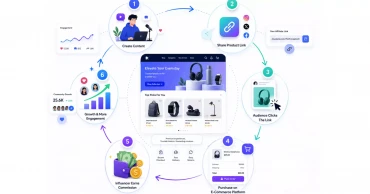
How affiliate marketing creating a new generation of digital earners
Affiliate marketing is no longer just a niche internet trend for tech enthusiasts or bloggers. It has become a major digital earning industry worldwide, and the global affiliate marketing market is expected to cross USD 20 billion by 2026. A large part of this growth comes from Amazon’s affiliate ecosystem alone, which is estimated to contribute around USD 9 to 10 billion. It shows how product recommendations and creator-driven sales are becoming a powerful part of modern online business.
Affiliate marketing is a simple earning model where people promote products through special links and earn a commission when someone makes a purchase through those links. What makes it so popular today is how easy it is to start. Anyone with a smartphone, social media account, or online audience can earn by sharing useful product recommendations without needing investment, stock, or delivery management. From TikTok gadget reviews to Instagram fashion posts, affiliate marketing has now become a growing part of the digital economy.
Globally, Amazon Associates is one of the most popular examples of affiliate marketing. Through the program, creators and influencers earn commissions by sharing Amazon product links. In many countries, affiliate marketing is now a serious side hustle and even a full-time profession for people who build audience trust through content and reviews.
Closer to home, Bangladesh’s influencer and content creator ecosystem is growing rapidly. According to StateGlobe, more than 150,000 active influencers are creating content across TikTok, Facebook, Instagram, and YouTube, while influencer and social media-driven advertising spending could reach nearly USD 120 million by 2026. At the same time, around 68% of Bangladeshi brands are already using influencer marketing as part of their campaigns. This shows that the opportunity for digital income is no longer a future idea, the ecosystem is already here.
For Bangladesh, affiliate marketing is highly relevant because the country has a young, digitally active population, growing smartphone use, and a rising e-commerce culture. Daraz, country’s leading e-commerce platform, has helped bring this opportunity to scale. Through the Daraz Affiliate Program, where affiliates simply choose products or campaigns, share links with their communities, and earn commissions on successful orders.
According to Daraz, affiliate marketing is already becoming a meaningful part of the platform’s business. Every month, more than 10,000 active affiliates engage with the platform, a number that surges during major sales campaigns. To date, over 53,000 individuals and brands have participated in the program.
On average, active affiliates earn around 5,000 Taka per month. However, the highest-performing contributor has earned approximately 150,000 Taka, showing that with consistent effort, trusted content, and the right audience connection, affiliate marketing can become a meaningful source of income.
The ecosystem provides affiliates with access to more than 50,000 active sellers and a catalog of over 23 million products, ensuring relevance for any audience whether they are looking for tech, fashion, or household essentials.
The program works on a simple “Cost Per Sale” model, meaning affiliates earn money when someone successfully places an order through their shared link. On average, the commission is around 5%. If a customer buys within 7 days after clicking the link, the affiliate can still earn commission. In some cases, earnings can go up to BDT 1,050 from a single order.
Many Bangladeshis are already doing affiliate marketing for Amazon, but many newcomers often face challenges such as payment issues, account setup complexity, and international platform restrictions. For those who want to understand how affiliate marketing works in a more local and accessible way, they can explore Daraz’s website or apps to learn about the process, commission structure, and how the model has been operating in Bangladesh over the past few years.
In the long run, affiliate marketing can help Bangladesh build a new generation of digital earners by teaching useful skills like content creation, digital marketing, product research, audience building, and performance tracking. A student can eventually become a performance marketer, a homemaker can grow into a lifestyle creator, and a Facebook group admin can turn into a digital entrepreneur.
The digital ecosystem in Bangladesh is no longer just about consumption, it is about contribution. As affiliate marketing continues to mature, it will remain a vital gateway for the next generation of digital earners to build sustainable careers in the palm of their hands.
Author: Tahsin Reza, Communication Professional
14 days ago